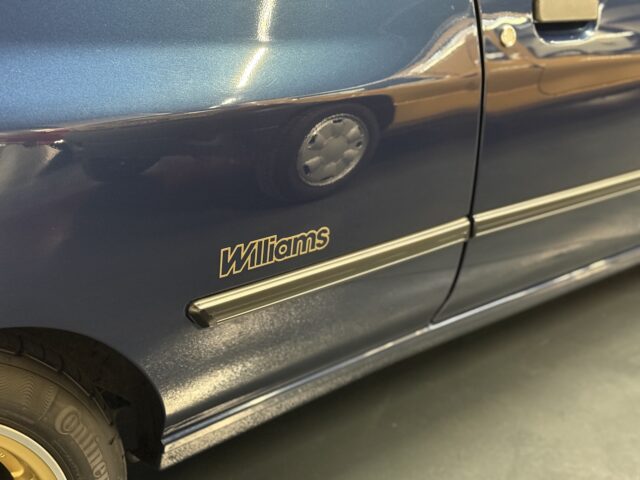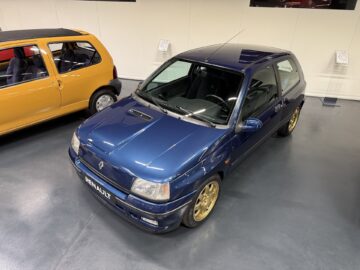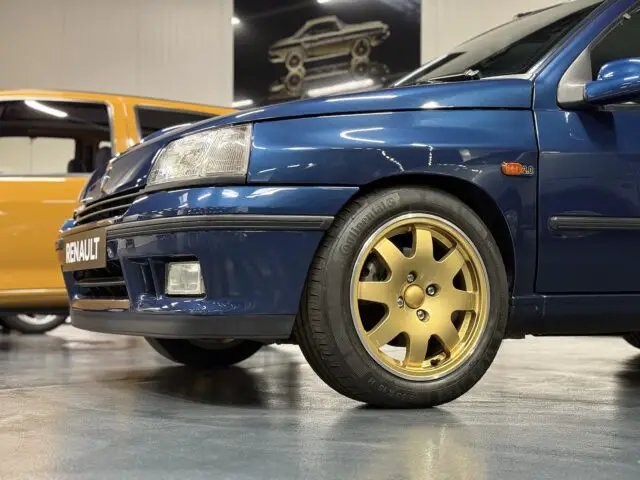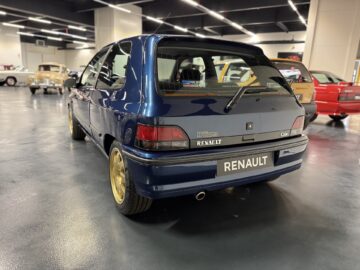
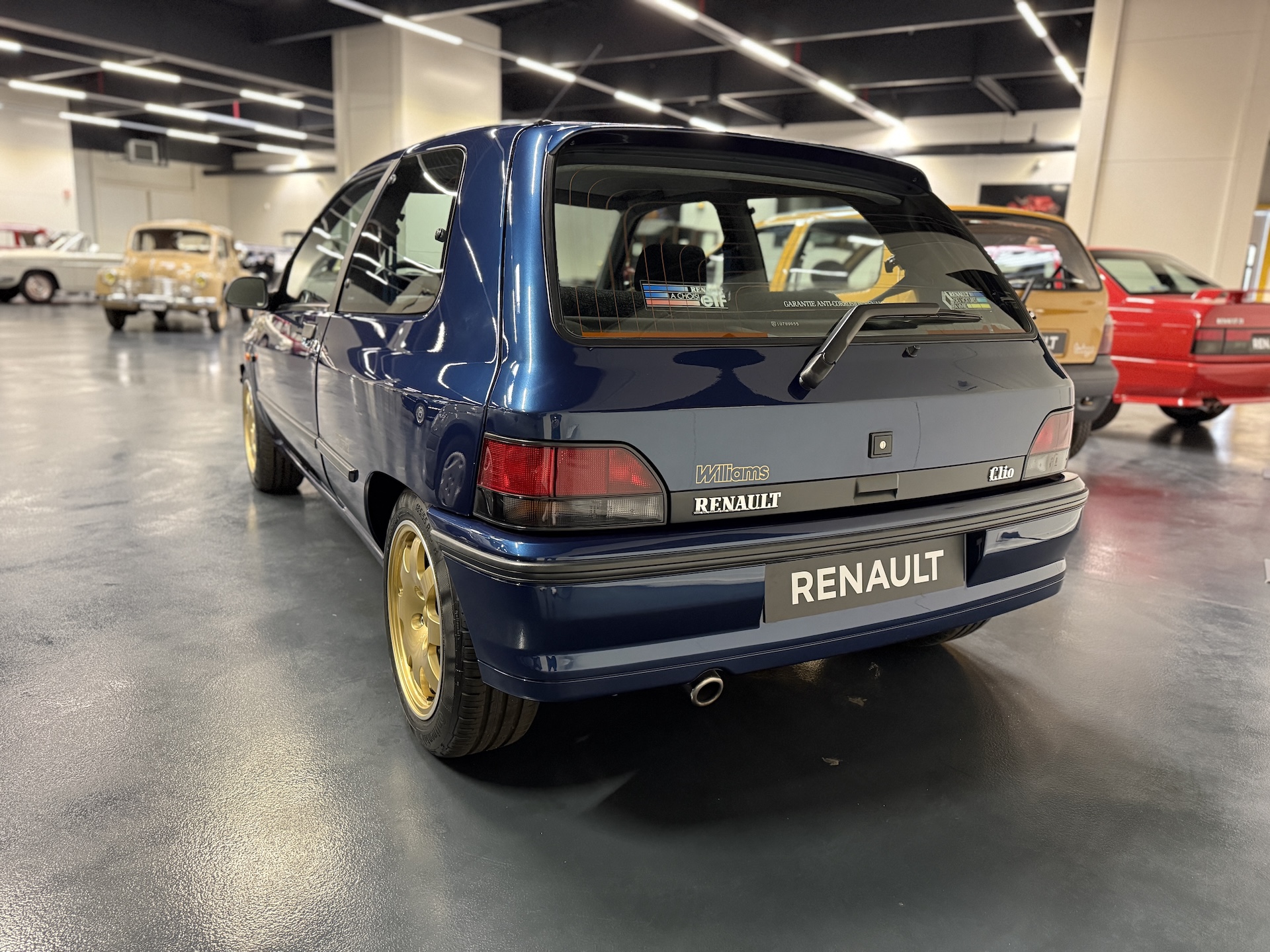
This is the very first Renault Clio Williams!
The name Williams
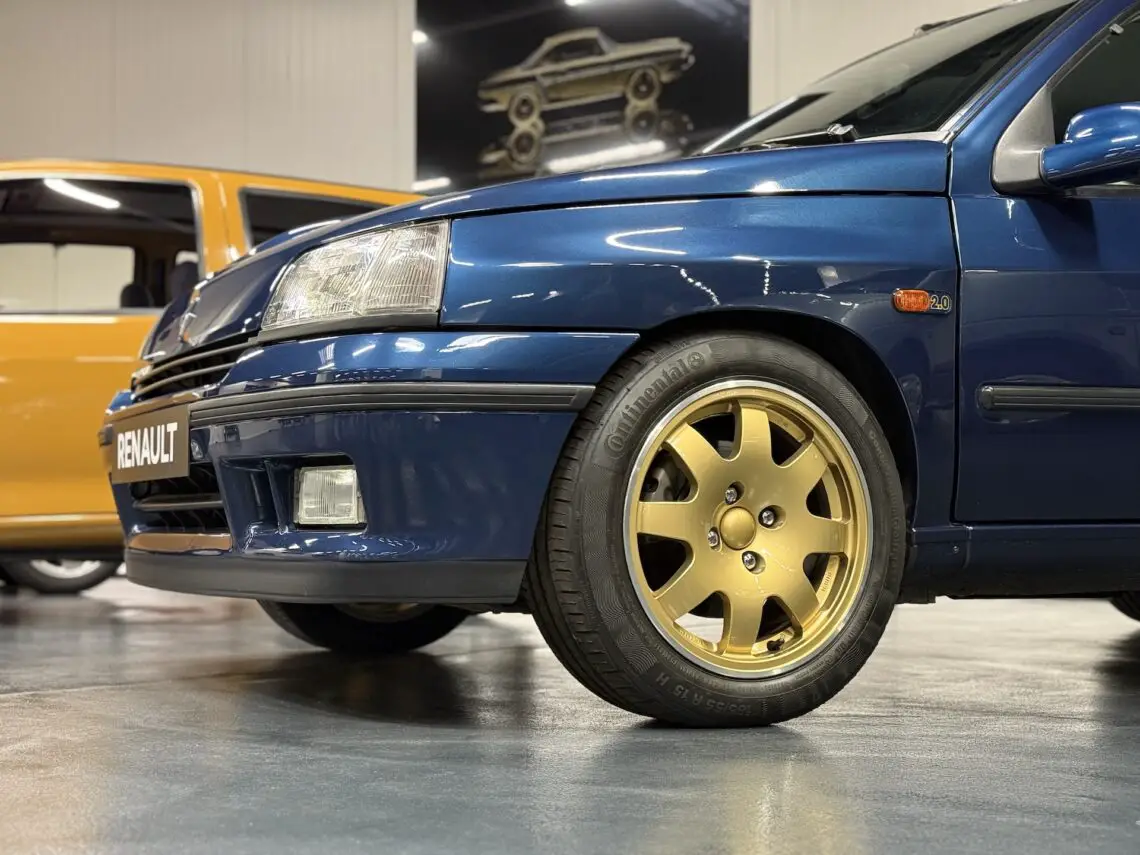
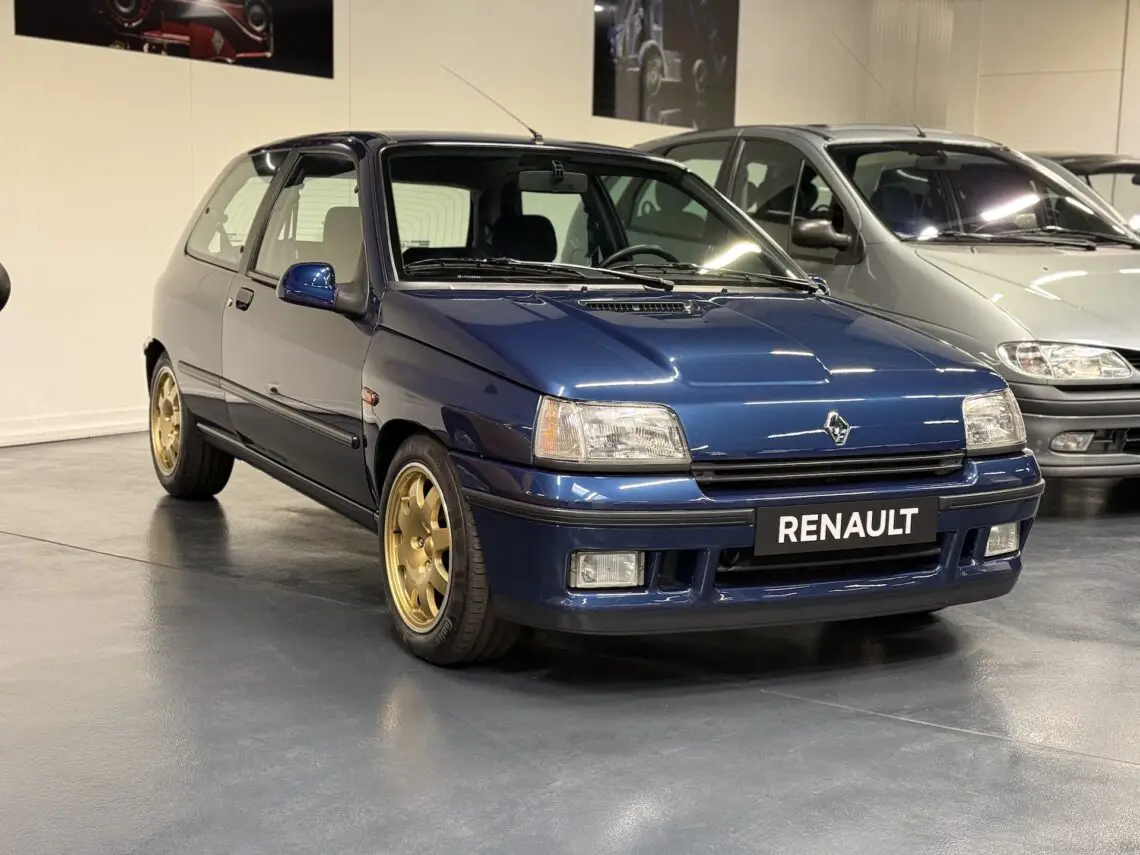
In March 1991, barely a year after the Clio’s launch, Renault presented its sports version, the 168, as the successor to the Renault 5 GT Turbo. An even more muscular version was added in 1993: it was named Williams, symbolizing the Williams-Renault team’s Formula One World Championship victory the previous year. The required print run of 2,500 copies for approval was soon exceeded because this small project was so efficient and popular. This particular example concerns number 0001. The car belonged to Frank Williams, known from Formula 1.
Numbered
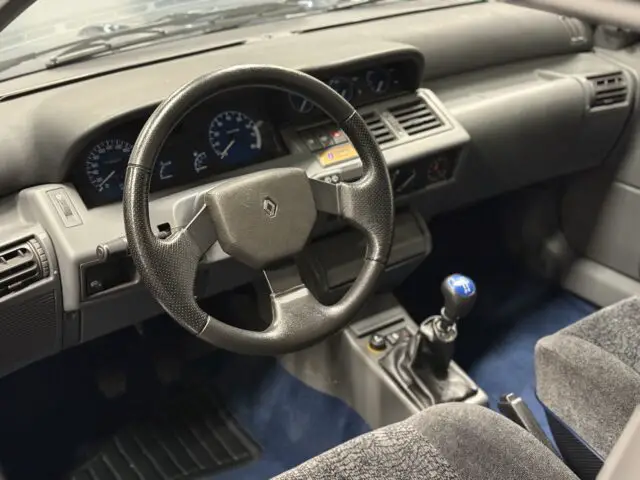
Thanks to its 150-hp engine and stiffer suspension, it dominated today’s small sports cars. The results were incalculable: in 1993, Renault became champion among French rally manufacturers in the Group A and Nouloft versions. A distinctive detail: the first 3,800 copies of this car are numbered on a small plate on the dashboard: a collector’s item, then, and worth a lot of money today.
More power
In 1993, an even more powerful version of the car was released with the “Williams” logo in honor of the Williams-Renault team’s victory in the previous year’s Formula One World Championship. The new hot hatch proved so popular that the minimum production requirement of 2,500 for competition homologation purposes was quickly exceeded.
The history of the Renault Clio Williams
The Renault Clio Williams is one of the most legendary hot hatches ever made. A car that was not only a tribute to the Williams-Renault Formula One team, but also a milestone in the history of compact sports cars.
Sport Blue
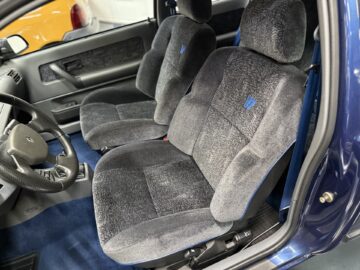
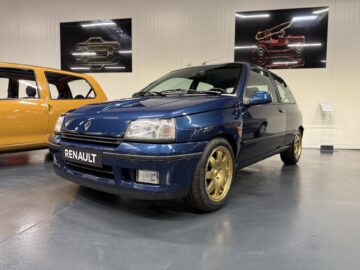
The Clio Williams was instantly recognizable by its deep blue paint, officially called “Sport Blue,” with contrasting gold wheels – a nod to Williams’ Formula One cars at the time. The wider wheel arches, deeper front bumper and subtle rear spoiler gave it a more muscular appearance without going over the top. Williams badges adorned the sides, and inside you got deep-cut sport seats with unique blue upholstery and a numbered plate on the dashboard, giving each Clio Williams an exclusive touch.
Under the hood: a masterpiece of Renault Sport
The core of the Clio Williams was the 2.0-liter four-cylinder, based on the engine from the Renault 19 16V, but enlarged from 1.8 to 2.0 liters (F7R engine). This produced 110 kW (150 hp) of power and 175 Nm of torque, which was impressive at the time for a hatchback weighing only 990 kg. Thanks to the modified intake, camshafts and cylinder head, it was an engine with character: fierce at the top end and with a delightful mechanical soundtrack.
Power was transmitted to the front wheels via a five-speed manual transmission, with short transmissions that provided a lively driving experience. Renault Sport fitted a modified suspension with wider tracking, stiffer springs and improved damping. The result? A car that steered razor-sharp, with a playfulness and balance that still stands as a benchmark today.
Pure experience
What made the Clio Williams truly special was the feeling it gave. No excessive electronic interventions, no artificial driving modes, but a direct and raw driving experience. The steering was communicative, the suspension gave you maximum control, and the small, light body made it lightning fast around corners. It was a car that challenged and rewarded you, required steering skills but also put grin after grin on your face.
From a limited edition to an icon
Renault would originally build only 3,800 for homologation reasons, but demand was so great that production rose to 12,100 units of the Clio Williams 1. Two more versions followed: the Williams 2 and Williams 3, with minimal differences such as different upholstery and subtle changes in trim.
A lasting legacy
Today, the Renault Clio Williams is a sought-after classic. Not only for its performance and exclusivity, but also for the purity rarely found in modern hot hatches. It was at the cradle of Renault’s sporting success and remains a car that thrills car enthusiasts. A true legend.