Citroën Saxo VTS celebrates 30 years: too bad they don’t make this anymore….
From AX to Saxo
If you want to understand the Saxo VTS, you have to go back to the Citroën AX. That model appeared in 1986 and set the tone in the segment of light, sporty hatchbacks. Versions such as the AX Sport and AX GTi were known for their direct steering and favorable power-to-weight ratio. In 1996, the Saxo took over as the entry-level model within the range. Soon the Saxo VTR appeared with a 1.6-liter engine and 66 kW (90 hp). Not much later followed the Saxo VTS, which can be seen as the successor to the AX GTi. This version received a 1.6-liter 16-valve engine with 88 kW (120 hp), which clearly distinguished it.
Donato Coco
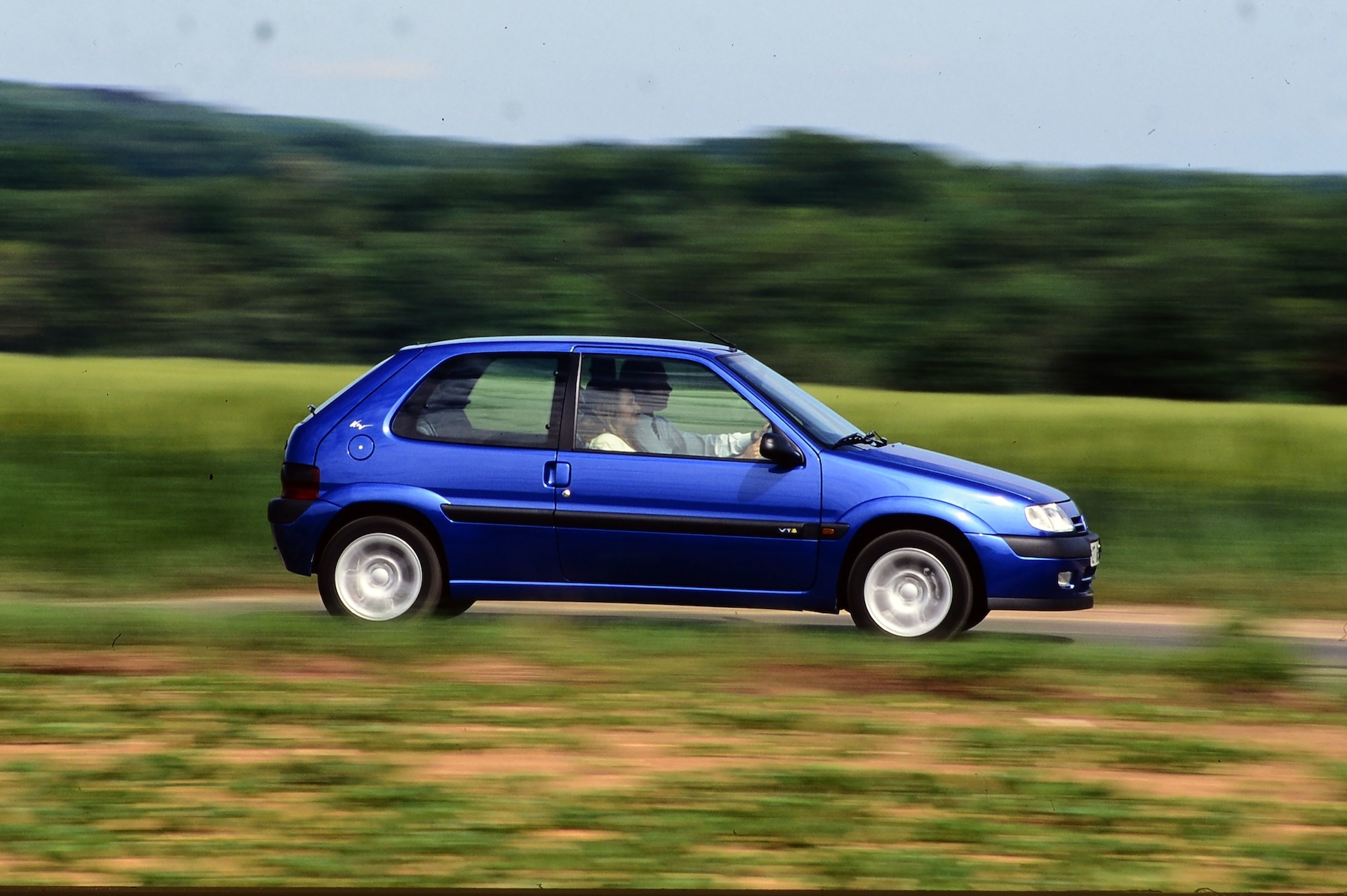
The Saxo’s design came from Donato Coco, while Gilles Vidal was responsible for the sporty VTS variant. He gave the car subtle modifications, such as wider wheel arches and modified bumpers, which made it just a bit more muscular without looking overdone.
Lightweight with serious performance
At first glance, the Saxo VTS looks quite subdued. Details such as a 16V logo, a chrome exhaust and specific rims betray its sporty character, but remain modest. Under the hood, however, lies an engine that delivers 88 kW (120 hp) and likes to rev. With a weight of only 935 kilograms and a five-speed manual transmission with short ratios, it delivers strong performance. The sprint to 100 km/h takes less than nine seconds and the top speed is around 205 km/h.
Yet the power is mainly in the suspension. The front steering is sharp and direct, while the rear behaves playfully, especially on twisty roads. This makes the car surprisingly effective, even against larger and more powerful models. Ventilated front disc brakes provide sufficient braking power.
16-valve engine
Over the years, the Saxo VTS continued to evolve. In 1997, the range was expanded and the 16-valve engine was renamed “16V” again. At the same time, the VTS designation was also used for less powerful variants. Thus, versions with 55 kW (75 hp), 66 kW (90 hp) and 74 kW (100 hp) appeared, with which Citroën wanted to appeal to a wider audience that fell mainly for looks and chassis, without necessarily seeking maximum performance.
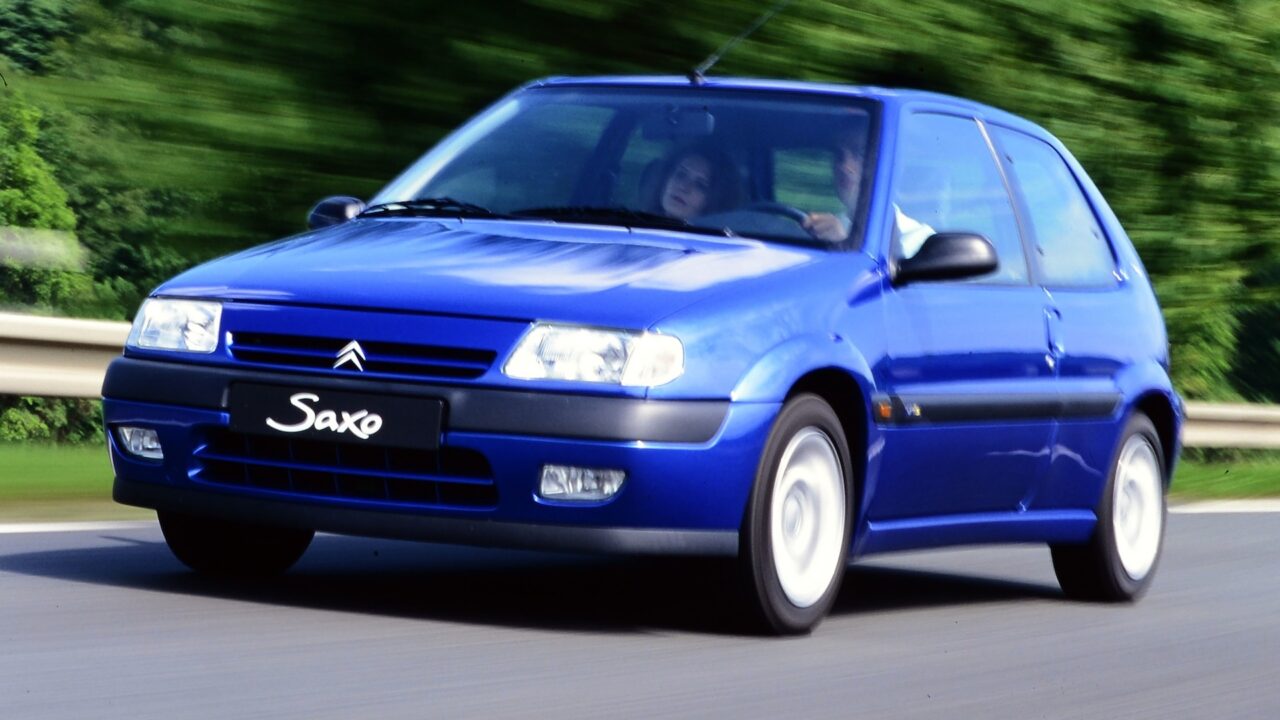
A facelift followed in 1999. The front got a more modern look with new headlights and a modified grille. The recognizable base remained, but the model looked fresher. Production continued until 2003, after which the Citroën C2 took over, also with a sporty VTS version.
A fixture in motorsports
Shortly after its introduction, the Saxo VTS showed what it could do in motorsports. It was used in rally, rallycross, track racing and even on ice. Citroën Sport built an entire platform around the model, with competitions such as the Saxo Cup and Saxo Challenge. Remarkably, the standard engine was often used, which says a lot about the car’s basics. The model proved to be an ideal training ground for young talent. Several drivers began their careers with the Saxo VTS, including Yoann Bonato and Marc Amourette. A highlight followed in 2001, when Sébastien Loeb and Daniel Elena took the title in the Junior WRC with a Saxo Super 1600. This definitively established the model’s reputation.
Still loved
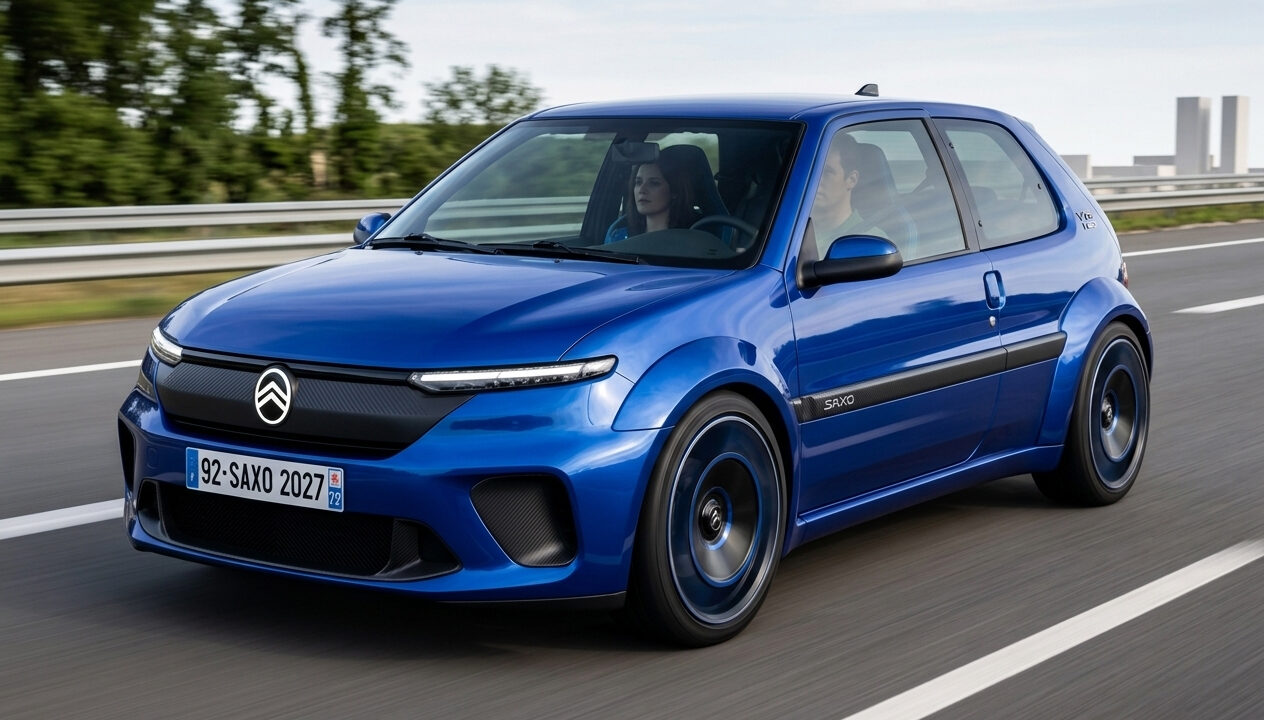
Even today, the Saxo VTS is still a sought-after collector’s item. Good examples are scarce and are actively sought by enthusiasts. At the same time, the model still turns up regularly in rallies. So the recipe still tastes like more. Perhaps it is time for a remake of the original? We make a first move…