Spotted: a Mercedes-Benz 600 Pullman
The Mercedes-Benz S-Class has been Das Haus’ top model for decades. Today, the Mercedes-Maybach S-Class adds to that. But did you know that Mercedes-Benz had another model above the S-Class in the 1960s and 1970s? That was the Mercedes-Benz 600.
The spotted specimen
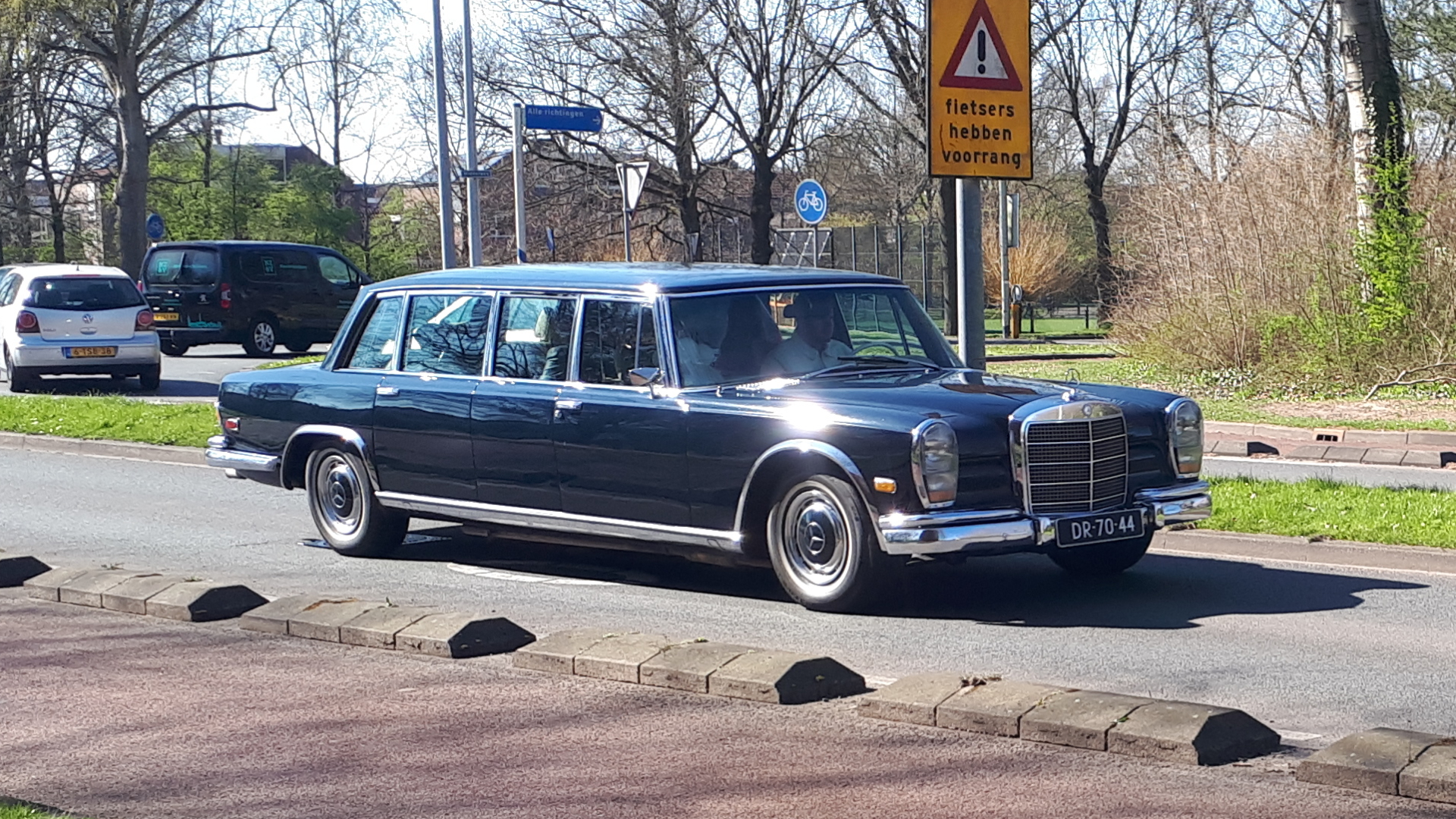
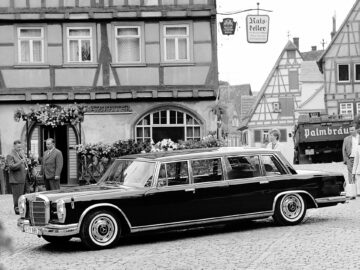
In Hoorn we saw this Mercedes-Benz 600 Pullman. So that’s not just any 600, but even the even rarer extended version. To be precise, it is a 1971 example, which has been in the Netherlands since 1998. A very exclusive spot, as there are only 29 examples on Dutch license plates. How many of these are an extended Pullman is unclear, because the RDW is ambiguous in its registration. For example, according to the license plate register, there is only one ‘600 Pullman’ on the license plate, while the one we spotted is registered as a ‘600’. So there are at least two Pullmans in the Netherlands.
The Mercedes-Benz 600
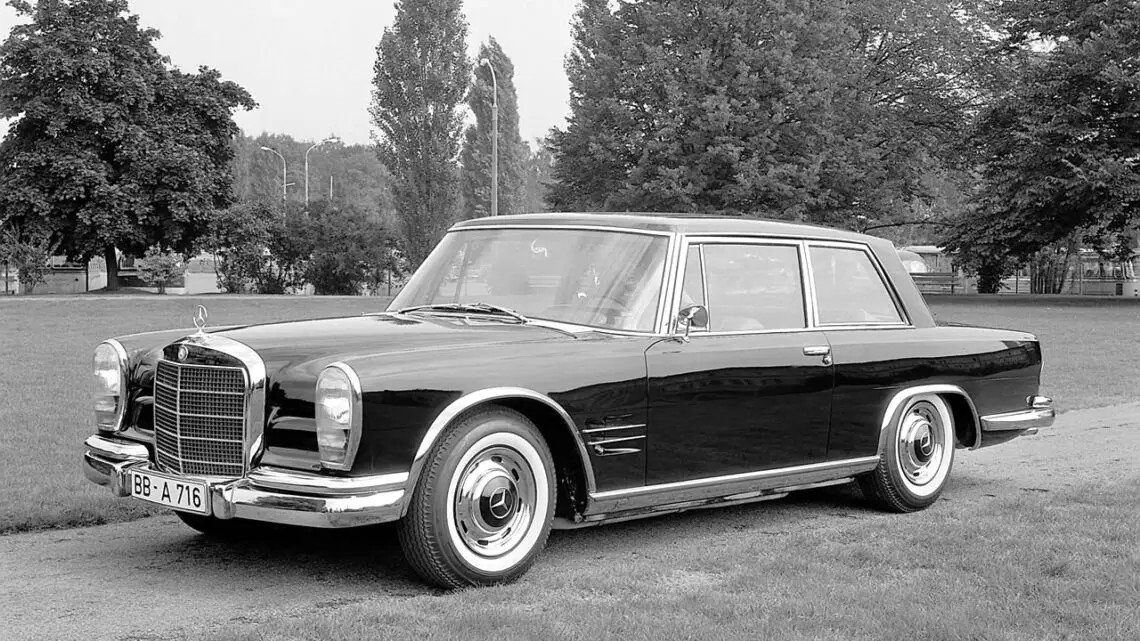
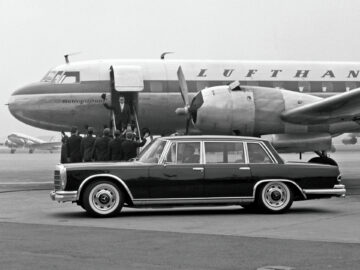
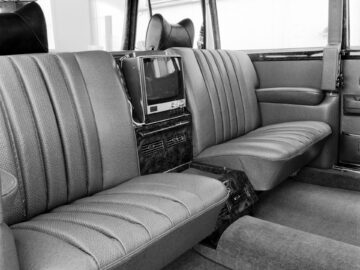
The Mercedes-Benz 600, internal designation W100, was presented in 1963 as the successor to the W189 “Adenauer. It was a car in the absolute top class, on the level of Rolls-Royce. At the time of its introduction, the 600 was even the most expensive car in the world. The 600 was available in two basic versions: the ‘short’ version and the extended Pullman. ‘Short’ is relative here, as the standard version already measures 5.6 meters in length. The Pullman comes to 6.3 meters. Along with a width of nearly two meters, the Mercedes-Benz 600 was a gigantic car for its time. Together with the ultimate luxury on board, this earned it the nickname “Grosser Mercedes.
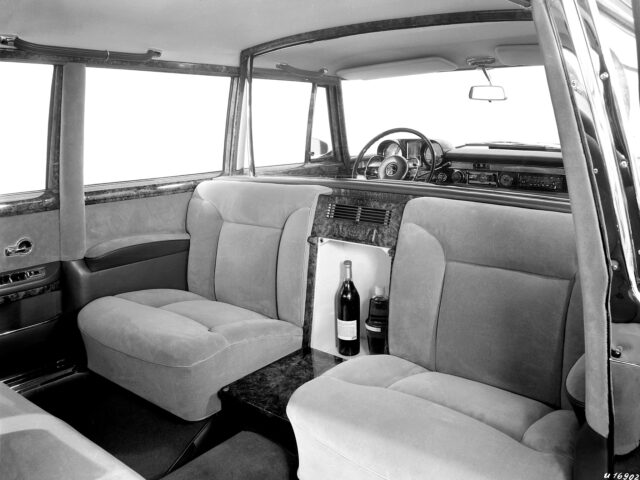
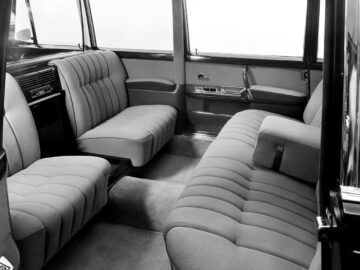
The idea was that the short version was mainly driven by the owner himself and the Pullman by a driver. That is why the latter usually has a partition behind the front seats. Based on both the short and long versions, Landaulets were also built, with mostly opening roofs. All body styles can also be divided into four- and six-door variants, although the latter are extra rare.
Innovative hydraulics
Several systems debuted in the Mercedes-Benz 600 that did not become common until much later. Especially innovative for the time were the many hydraulic systems. Among other things, the seat adjustment, window controls, air conditioning and tailgate were hydraulically controlled. This worked faster and quieter than the vacuum and electric systems common at the time.
Fun fact: the suspension system did not work entirely hydraulically, as Citroën had a patent on that at the time. Instead, Mercedes-Benz’s top model therefore had self-leveling air suspension, actually a distant precursor of today’s Magic Body Control. All that innovative technology does make it an expensive car to maintain, both now and when it was new. One consolation is that the maintenance costs will not soon exceed the daily value, because at auctions beautiful examples easily fetch over three million.
Powertrain Mercedes-Benz 600
Because of its size and all the luxuries on board, the Mercedes-Benz 600 weighed quite a bit. For example, the example we spotted has a registration weight of 2,740 kg. Mercedes-Benz did not have suitable engines at the time, so a new 6.3-liter V8 was developed, with a hefty 184 kW (250 hp) output for the time. The engine was mated to a four-speed automatic transmission, with drive to the rear wheels.
Production numbers Mercedes-Benz 600
Production really took off in 1964 and continued through 1981. During that time, 2,677 examples were produced, including 428 extended Pullmans. Of these, 124 have a six-door body. With 59 examples, a Landaulet is even more rare, especially as a six-door (nine examples). Even rarer are two two-door Coupés with shortened wheelbase and one four-door Landaulet with also shortened wheelbase.