Spotted: a Honda NSX!
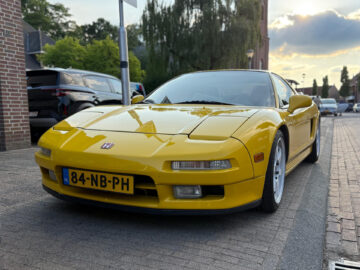
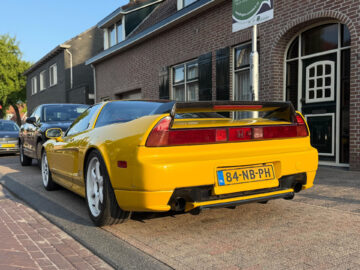
The spotted specimen
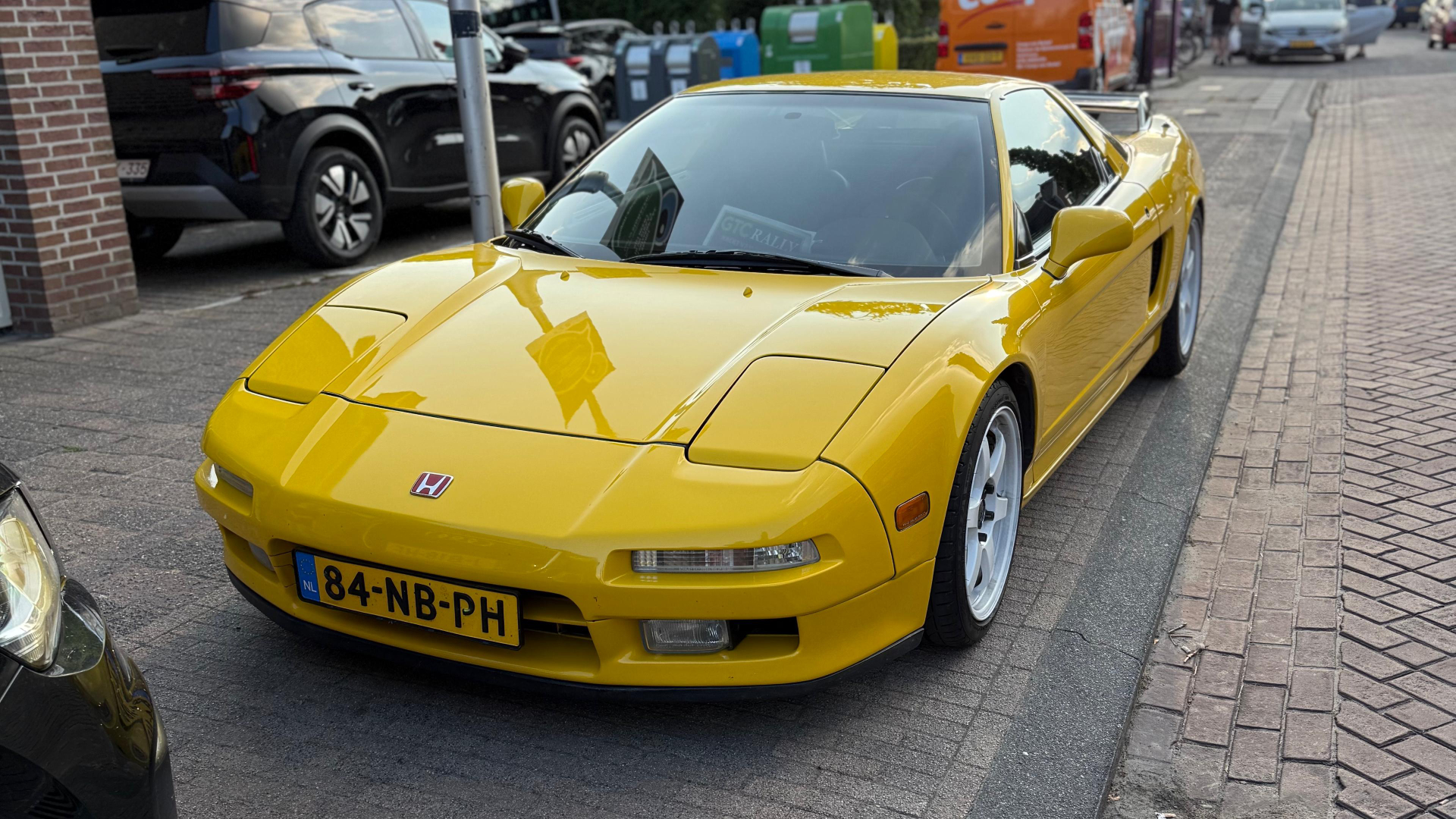
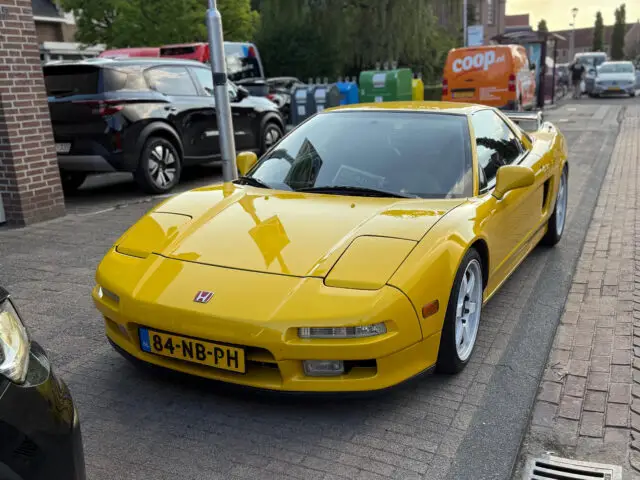
In the Brabant town of Achtmaal, we saw this 1991 Honda NSX, which has been in the Netherlands since 2003. Furthermore, a license plate check at the RDW does not really know anything special about this particular car. In the more general RDW data, however, we see that there are more examples on Dutch license plates than we expected.
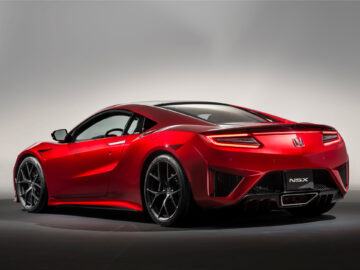
There are currently 49 Honda NSXs on Dutch license plates, and almost all of them are copies of this first model. The only exception are three examples of the second generation NSX. Remarkably, not a single NSX from the facelift version of the first generation is registered in the Netherlands. You would expect that, given the relatively large number of pre-facelift copies. Moreover, that facelift model was still officially delivered in the Netherlands, just like the original version.
History of the Honda NSX
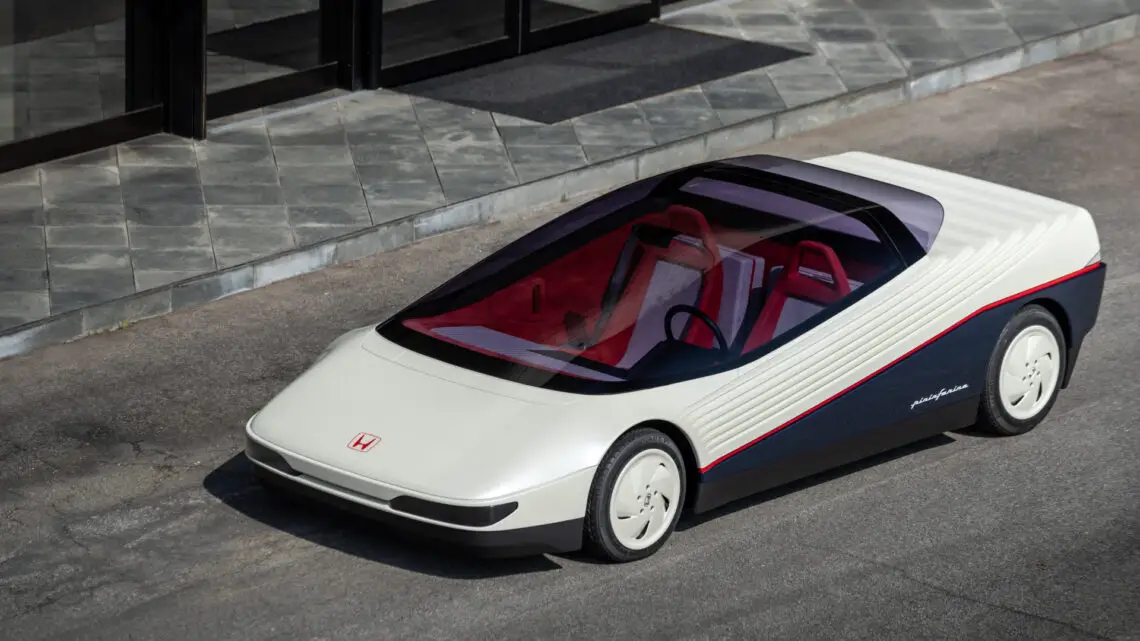
The history of the Honda NSX goes back to about 1984. Honda had done some experimentation with mid-engine prototypes. That did not lead directly to a production model, but it tasted like more. It was decided to develop a real sports car that would at least match the supercars from Italy and Germany. As a (purely visual) foretaste, the brand presented the HP-X concept car in 1984. Those letters stood for “Honda Pininfarina eXperimental,” making it immediately clear who designed the car.
The HP-X soon evolved into the NS-X project, where the letters stood for “New Sportscar eXperimental. In development, Honda used its wealth of motorsports knowledge, and big names such as Satoru Nakajima and Ayrton Senna also helped.
Production version Honda NSX
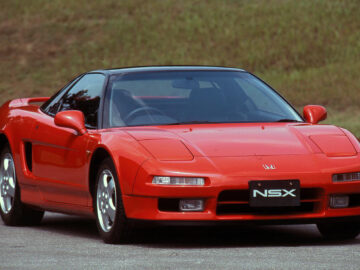
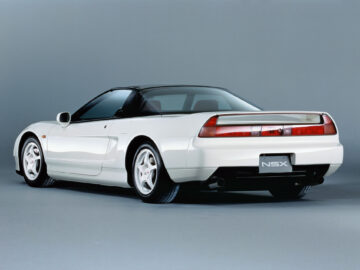
By 1989, the production version was ready, renamed NSX, with no dash. In the North American market, the NSX was placed under the sports-luxury sub-brand Acura. Production began in 1990. In terms of appearance, the NSX was quite different from the HP-X concept car, with much attention paid to aerodynamics. In several ways, the F-16 jet fighter was an inspiration, but this is best reflected in the exterior all-black cockpit, with optimal all-round visibility.
The Honda NSX was the first car in mass production with an all-aluminum body. A lot of aluminum was also used for the chassis components, which all in all saved over 200 kg. In technical terms, the NSX was a kind of race car for the street, with a semi-monocoque body, a high-revving engine and a suspension similar to that of race cars.
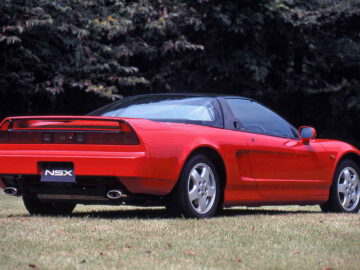
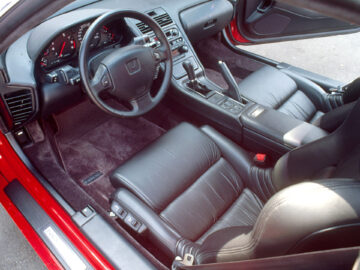
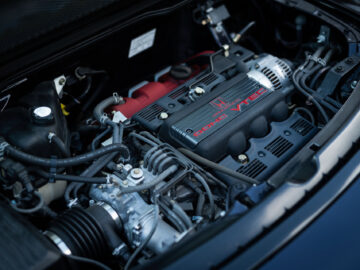
Surely with VTEC
The engine, located between the seats and the rear axle, was a 3.0-liter V6 rated at 201 kW (274 hp) and equipped with Honda’s famous variable valve timing (VTEC) system. The VTEC system was developed as an entirely separate project during the same period as the NSX. Only at the last moment was it decided to apply the new system to the sporty flagship.
That did pose a problem: the engine bay was sized exactly for the engine without the VTEC system. Fortunately, the solution turned out to be quite simple: the engine was mounted about five degrees backwards. The transmission was a five-speed manual transmission and the drive went to the rear wheels. The 100 km/h was reached in 5.9 seconds and the top speed was 273 km/h.
Honda NSX-R
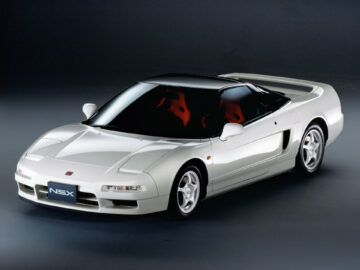
In 1992, the offering was expanded for the Japanese market only with the NSX-R, limited to 483 units, an extra sporty version that was some 120 kg lighter thanks to the stripping of almost all on-board luxuries. Some minor underbody changes were also made, most notably to the suspension. The engine remained unchanged, but together with slightly modified gearbox ratios, it took only 5.2 seconds to reach 100 km/h. The top speed was slightly lower though, at 270 km/h, due to the modified transmission.
More variants
In 1994, a four-speed automatic became optional, which also had a manual mode via flippers on the steering wheel. Bigger news followed in 1995, with the introduction of the NSX-T, with a
targa roof. There were also some minor modifications, which were also made to the NSX with fixed roof.
Major updates for Honda NSX
In 1997, the NSX underwent a major update. The main news was the modified engine. Its capacity had been increased to 3.2 liters, which together with some other modifications provided a higher output of 216 kW (294 hp). By the way, this engine was only for the manual NSX, the automatic version retained the “old” 3.0-liter V6. The manual transmission itself was also modified, while several weight savings largely offset the weight of the updated transmission. 100 km/h was henceforth reached in 5.5 seconds, with a top speed of 274 km/h. Also new (for Japan) was the NSX Type S, an extra sporty version with some more weight savings. The NSX-R was succeeded, again only in Japan, by the similar NSX Type S-Zero.
Facelift for the NSX
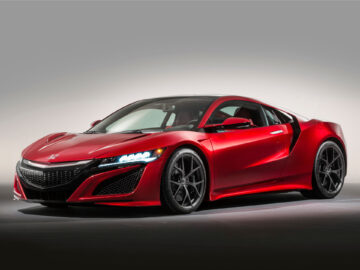
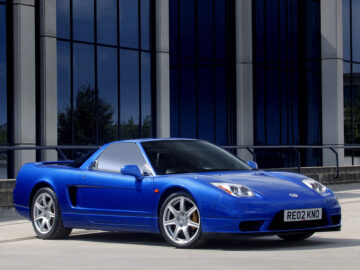
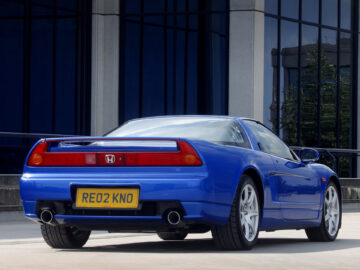
In 2002, the NSX underwent a facelift in which the front end was almost entirely redesigned. The folding headlights gave way to a modern design that perhaps fit the rest of the car better than the original front end. At the rear, the changes were subtle, but along with new sills, the car did seem to be lower to the ground.
Technical changes were mainly limited to minor adjustments to the suspension, but the improved aerodynamics did provide fractionally better acceleration and – most importantly – a higher top speed, which now stood at 282 mph. Otherwise, the Type S remained, while the S-Zero gave way to the return of the NSX-R.
End of production and follow-up
Despite its age, the Honda NSX could still keep up with or even beat its modern competitors just fine. Yet by 2005, the fun was over and production ceased. In the end, a total of just over 18,000 examples of the first generation NSX were produced. A second-generation NSX did arrive, but for that we had to be patient until 2016.