
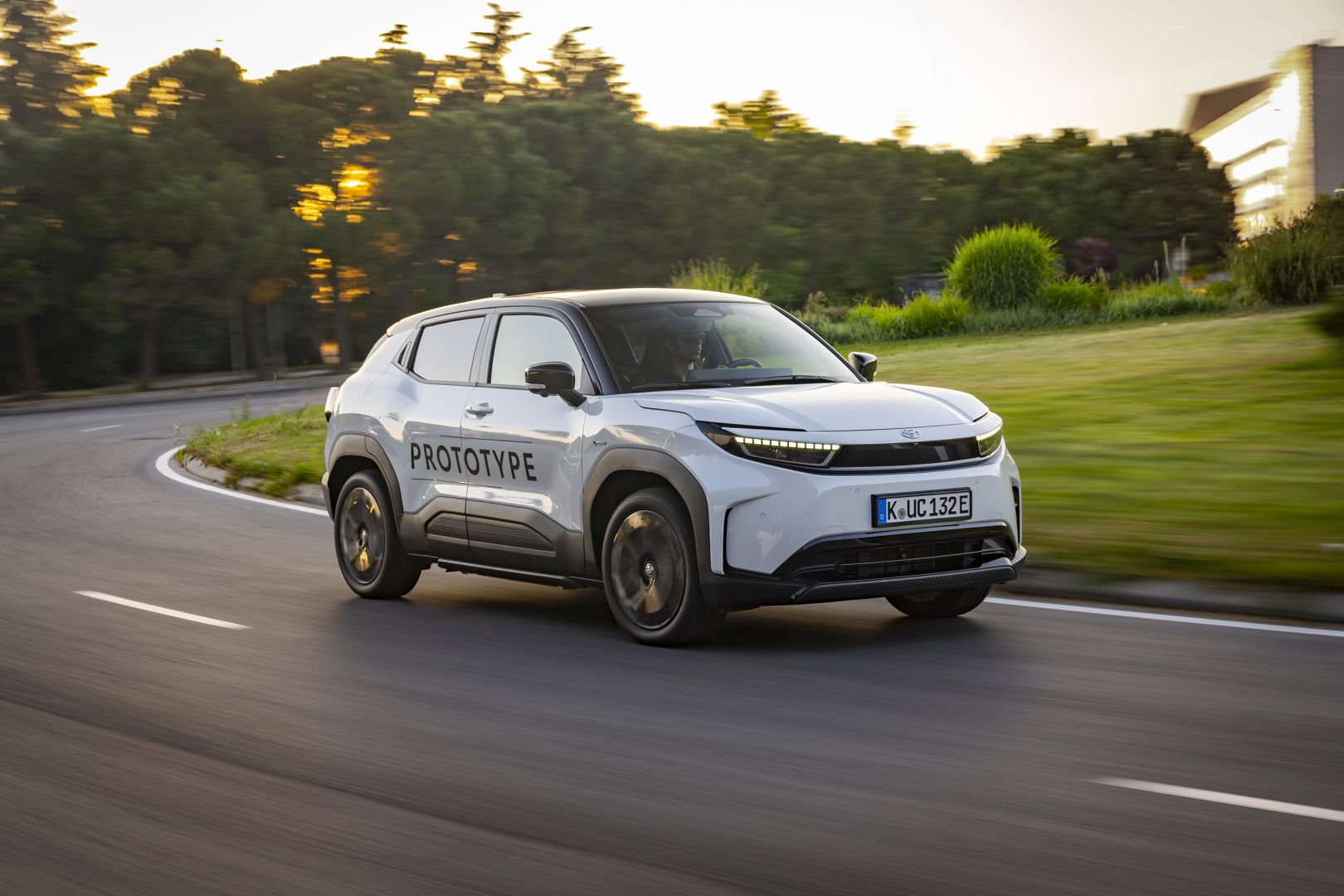
Review – Toyota Urban Cruiser (2026) – compact EV with character
Compact SUV with big ambitions
The Urban Cruiser is an important newcomer for Toyota. It is a compact SUV, with a length of 4.28 meters. This makes it slightly smaller than the Kia EV3 and Skoda Elroq, and also takes aim at competitors such as the Kia Niro EV, Peugeot E-2008, Opel Mokka Electric and BYD Atto 2. In the crowded B-segment, it’s pushing it – so Toyota is not coming in for bacon and beans.
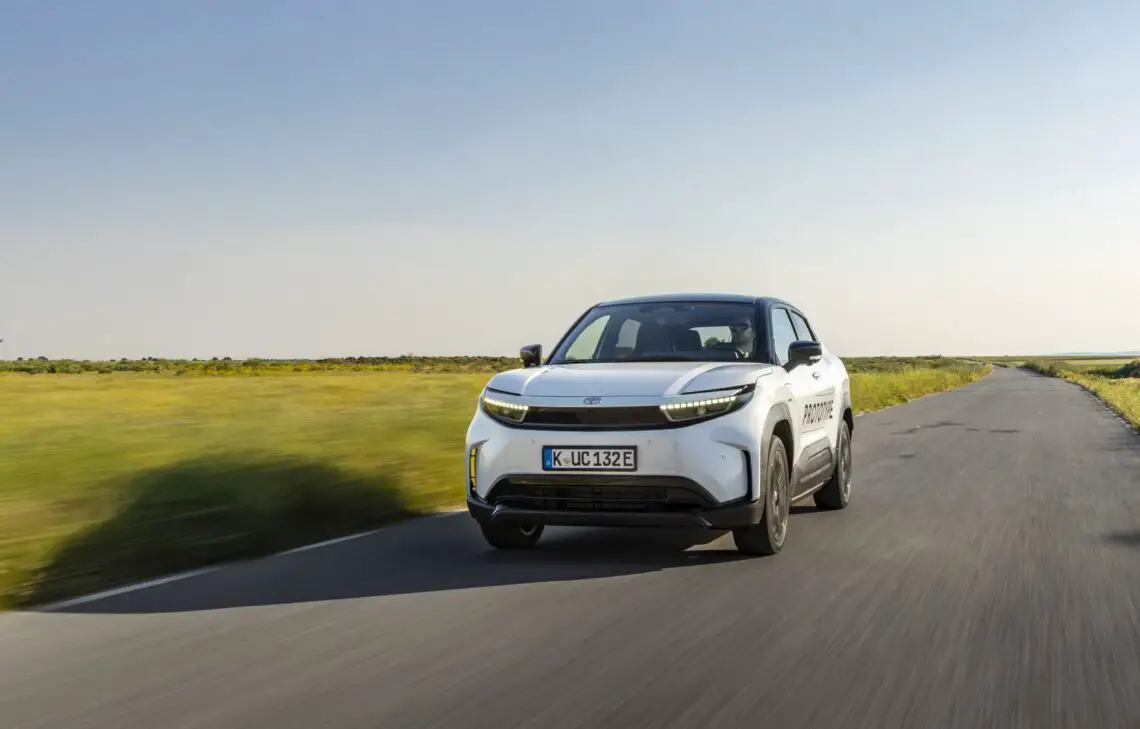
Pre-series: no production model yet
The version we are driving is not yet a production specimen. “Our” Urban Cruiser therefore visibly bears the inscription “prototype” on its flanks. Some details – especially in the interior – are not yet final, but the car is otherwise representative of what customers can expect in 2026. Delivery will start in the first quarter of that year.
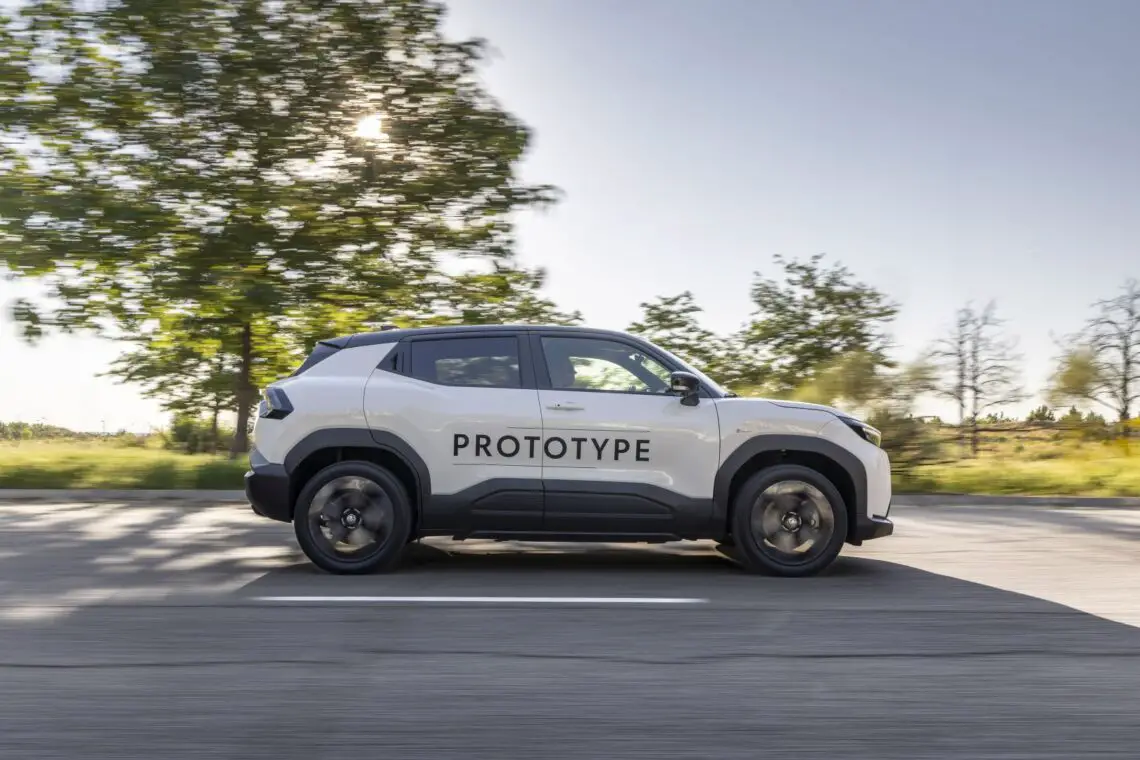
Urban Tech
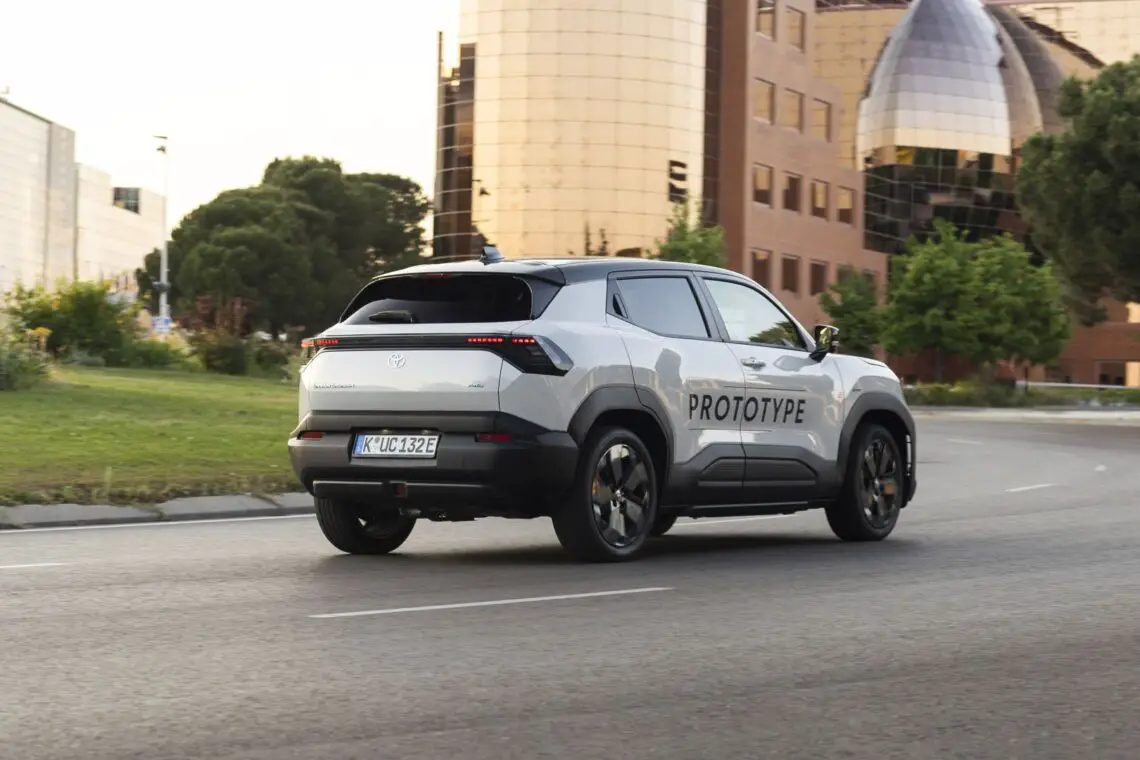
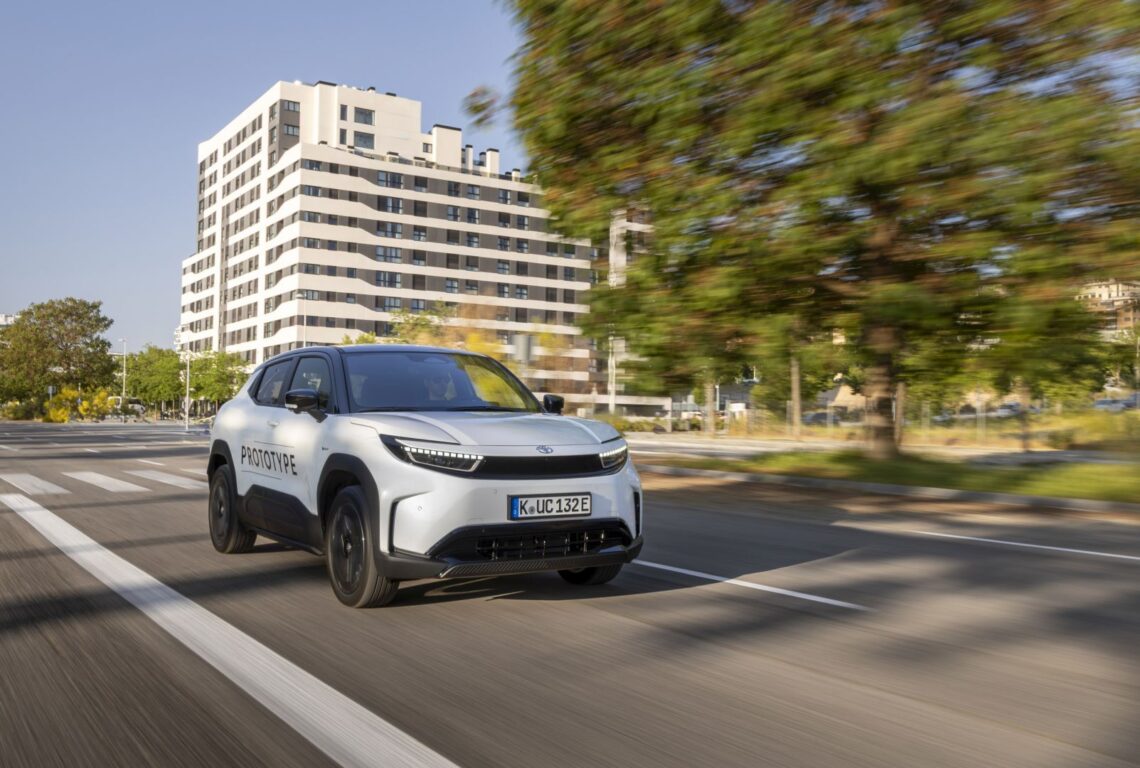
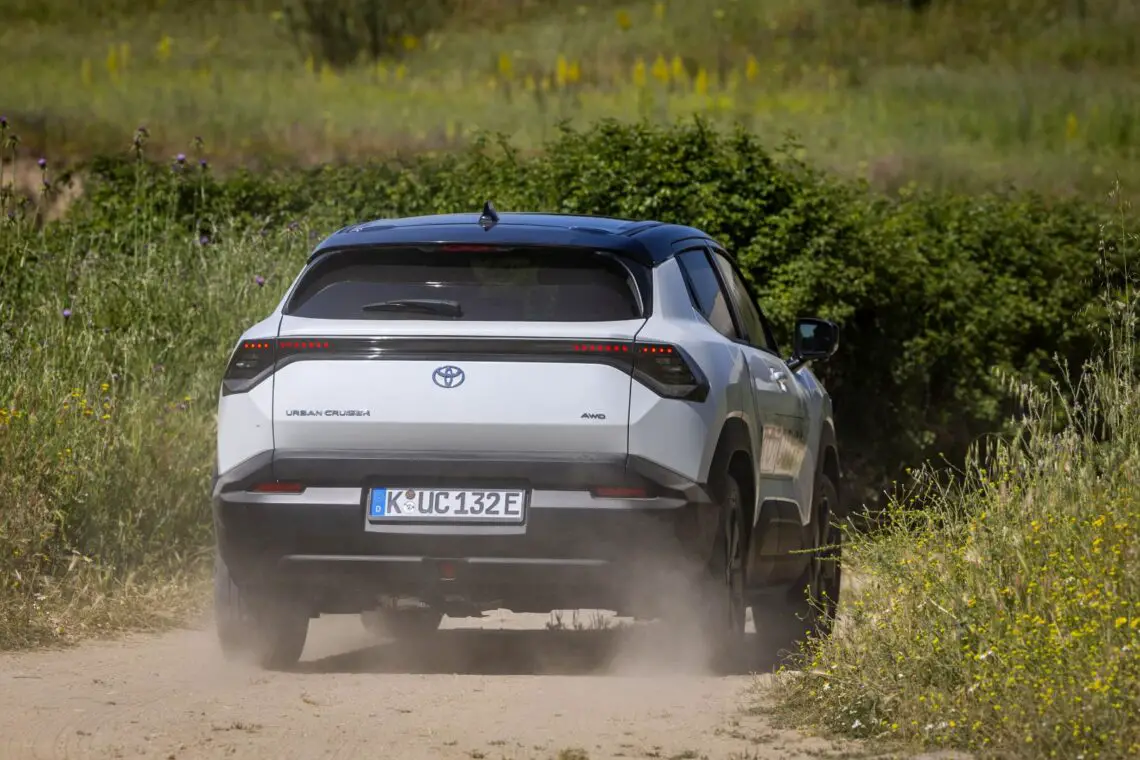
Toyota describes the design as “Urban Tech. That sounds abstract, but covers the ground quite well. The Urban Cruiser looks tough, with broad shoulders, a muscular rear end and the now familiar “hammerhead” nose with narrow LED lights, just like the bZ4X and new RAV4. Black bumpers and wheel arches give it an extra robust look.
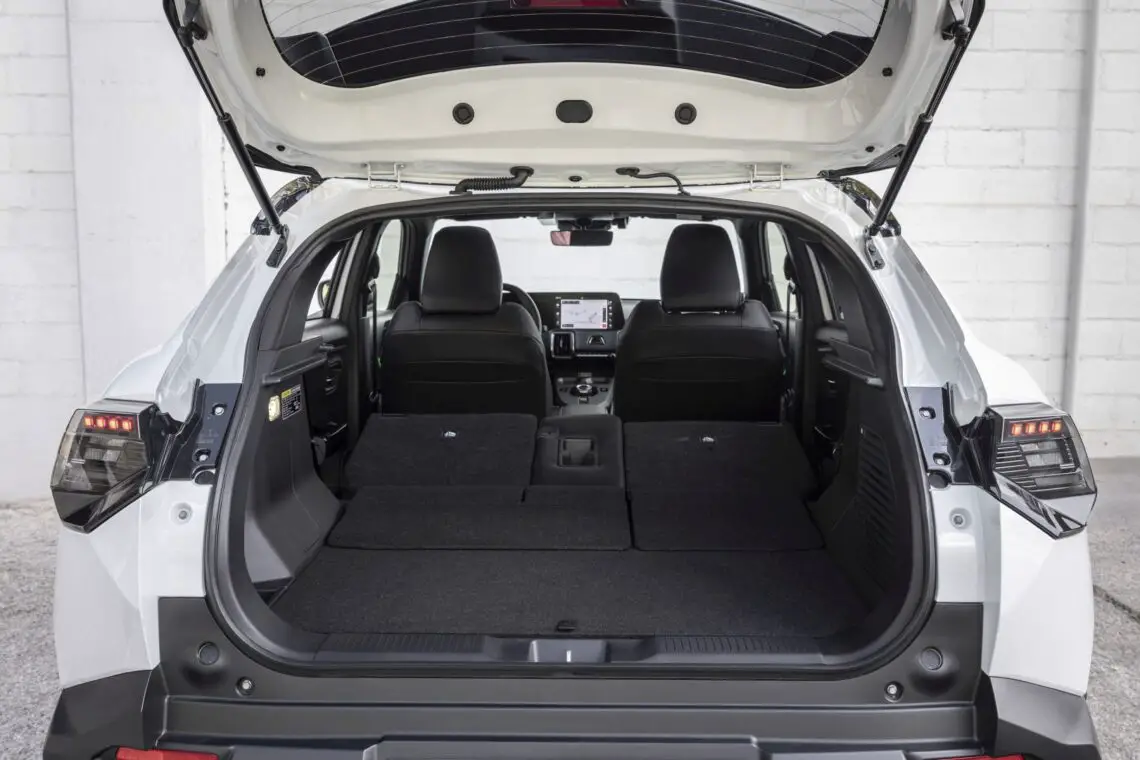
Luggage space Urban Cruiser
With a wheelbase of 2.70 meters, the space is fine. You immediately notice that Toyota has prioritized seating comfort, especially in the rear. Even with longer legs, you don’t have to fold up. Handy detail: the rear seat can be slid in parts. That is quite rare in this segment. So you choose between more leg or luggage space. The backrest can be folded down in three parts. The luggage space is not very generous at 306 liters. The Yaris Cross does better with 390 liters.
Stylish
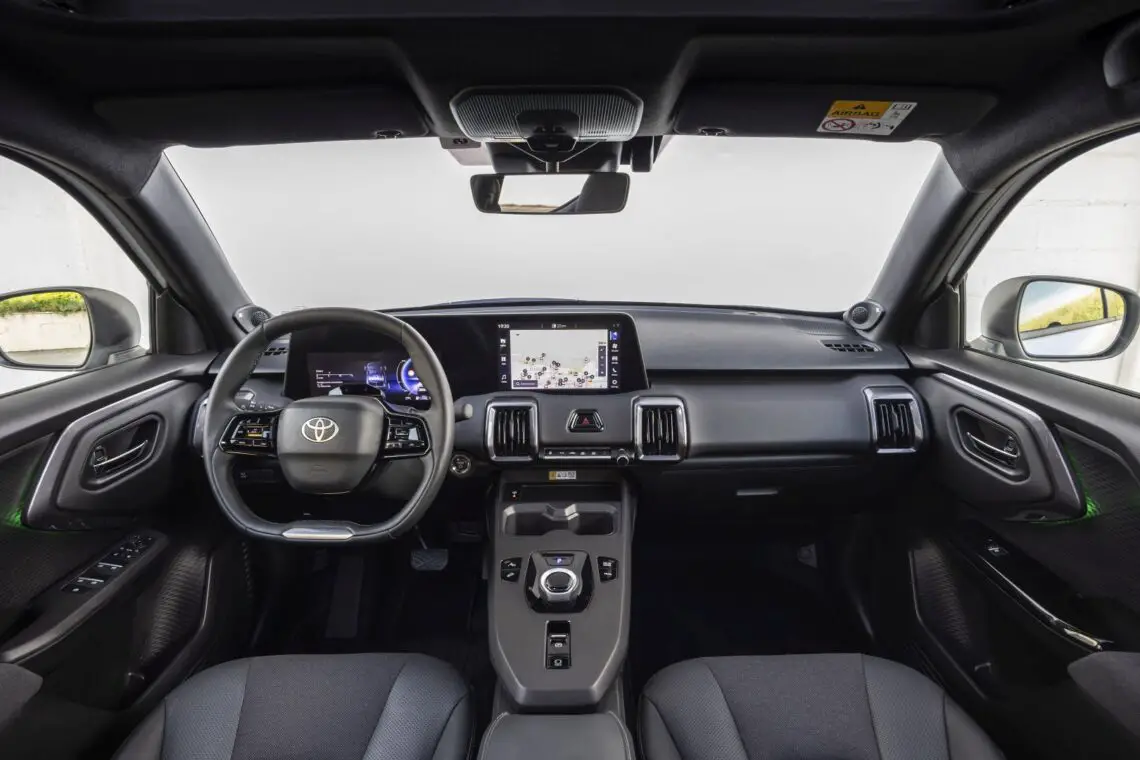
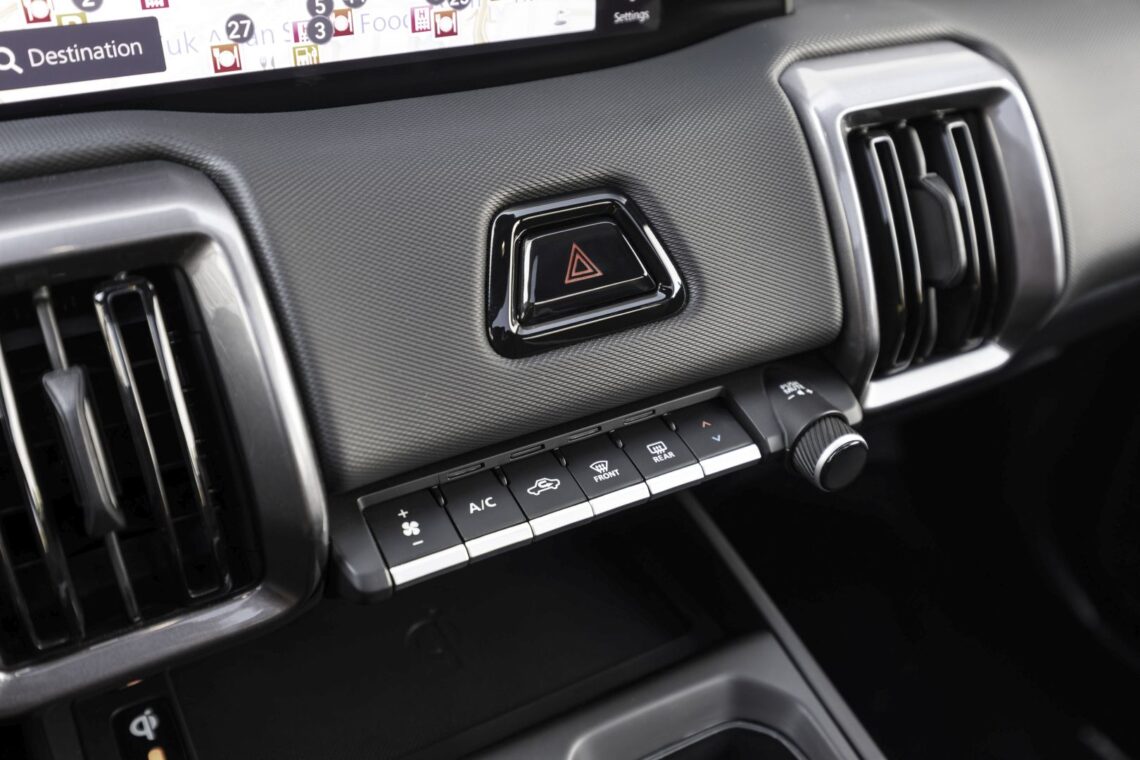
The dashboard looks calm and even a touch classic – in the positive sense of the word. The materials feel solid and the finish looks neat. You get a 10.25-inch digital instrument panel and a 10.1-inch multimedia screen, nicely integrated as one unit. The system works smoothly and wirelessly supports Apple CarPlay and Android Auto. Charging is done via multiple USB ports or a wireless charger.
Drive Lines
At launch, you can choose from three powertrain variants:
- FWD with 49 kWh: 106 kW (144 hp), 193 Nm, 344 km WLTP, 0-100 in 9.6 sec.
- FWD with 61 kWh: 128 kW (174 hp), 193 Nm, 426 km WLTP, 0-100 in 8.7 sec.
- AWD with 61 kWh: 135 kW (184 hp), 307 Nm, 395 km WLTP, 0-100 in 7.4 sec.
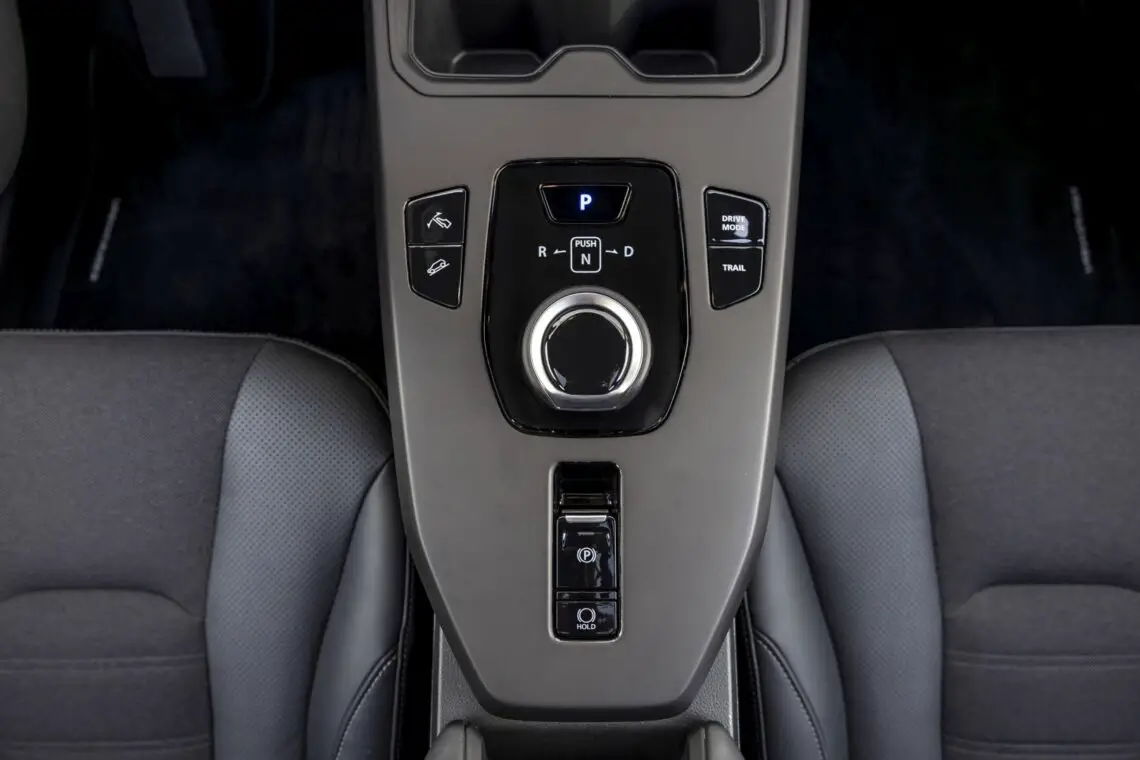
We drove the most powerful variant, with all-wheel drive. The sprint to 100 km/h in 7.4 seconds does not make it the fastest in its class, but it is smooth enough. The AWD comes in handy especially in slippery weather or off-road situations. Those who do not need the extra grip are better off choosing the FWD variant: it gets farther and is almost as powerful. There are several driving modes: Eco, Normal and Sport. With the AWD version, Snow and Trail are added. Regenerative braking can be set in three modes, via flippers behind the wheel or via the menu.
Driving characteristics
The Urban Cruiser drives surprisingly mature. It lies firmly on the road, steers pleasantly and has just sporty enough suspension. In curves it stays nicely flat, without swaying. Do slow down your speed at speed bumps, because the suspension is slightly less forgiving there. The seats are good and you sit nice and high. Visibility to the front is excellent, but visibility to the rear is slightly reduced by the small rear window. However, the interior is remarkably quiet, even at 120 km/h. Wind and tire noise remain nicely in the background.
Off road
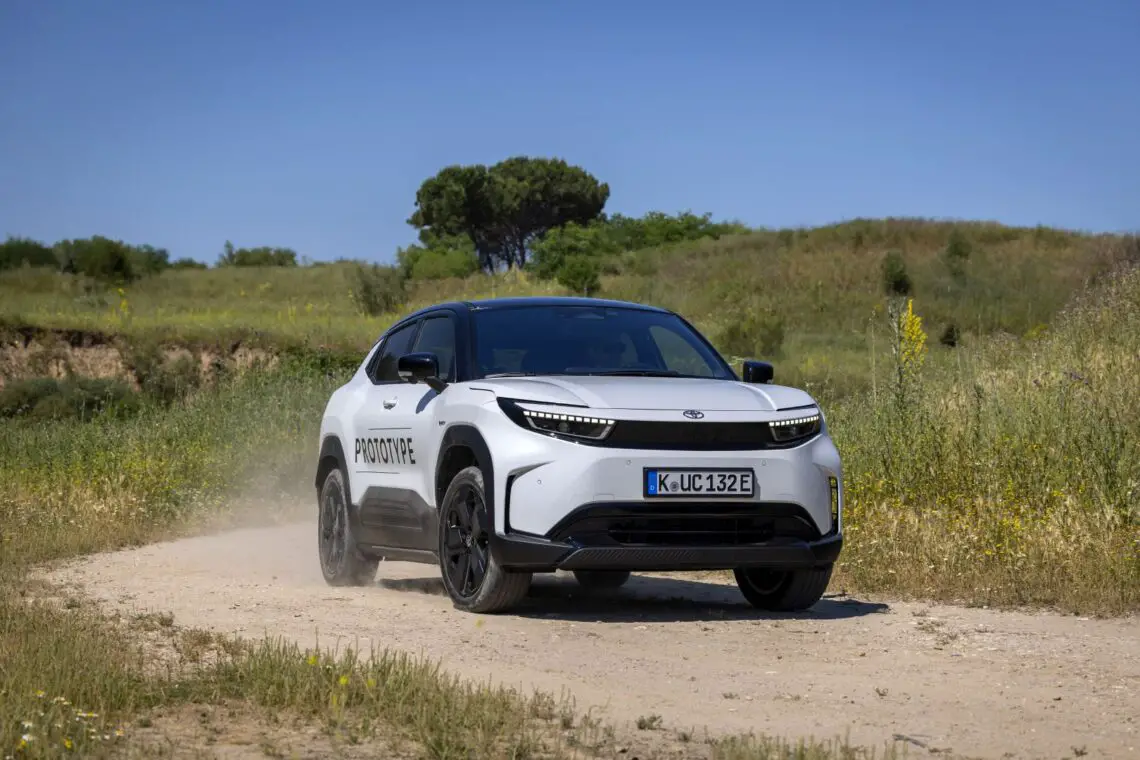
On a dusty hill path just outside Madrid, we were able to test the AWD system. Not directly relevant for daily use in the Netherlands, but the system proves its worth on loose ground. The grip distribution works quickly and effectively. The system prevents skidding and keeps the car stable on slopes and pebbles.
Charging and range
Depending on the version, you get a 49 or 61 kWh battery. With the largest battery, the WLTP range is 426 kilometers. During our test drive, at 34 degrees and with the air conditioning on freezer mode for hours, we ended up with a consumption of about 18 kWh/100 km. Neat score, considering the outside temperature.
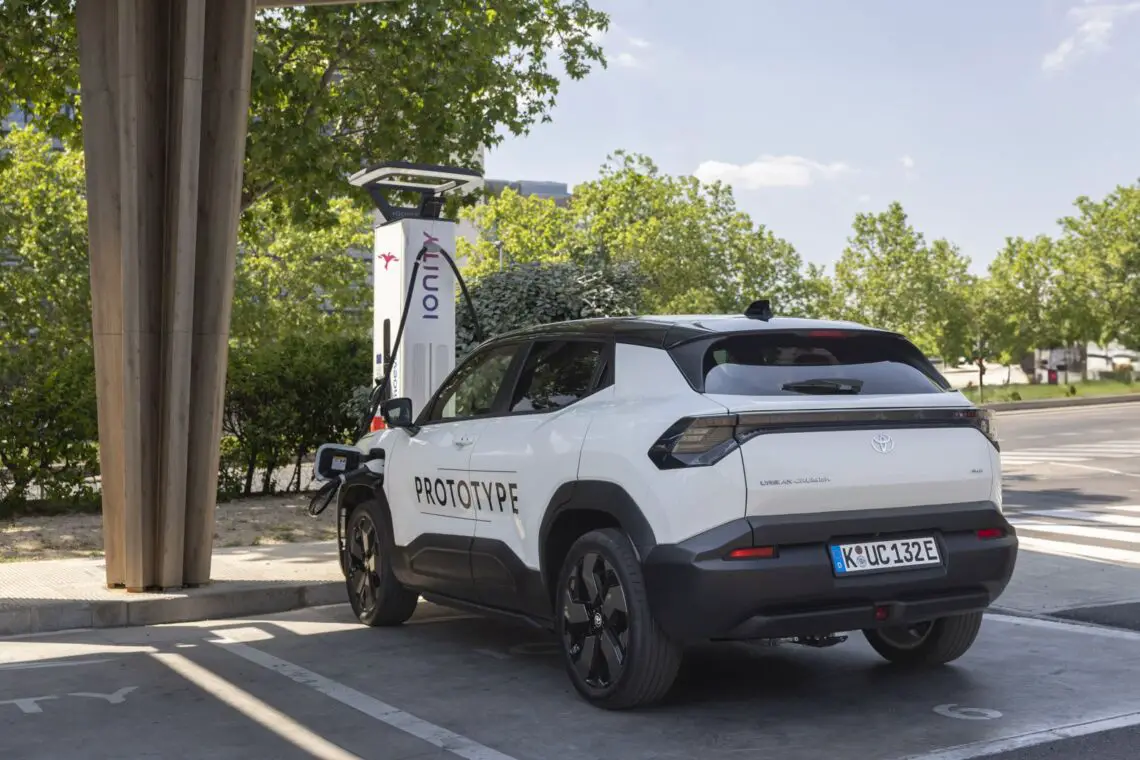
Fast charging is possible with 80 kW (small battery) or 125 kW (large battery). Not groundbreaking, but fine for the segment. Via AC charging, you can charge with 11 kW. Handy: you can preheat the battery for better charging speeds in winter, and via the MyToyota app, schedule and track the charging process remotely.
Conclusion
The Toyota Urban Cruiser is not a revolutionary, but it is a convincing B-segment EV. It combines tough looks with a spacious and flexible interior, mature handling and solid technology. For those looking to switch from a Yaris Cross to electric driving, this is a logical step.
Quite unique is Toyota’s 10-year or 200,000-kilometer warranty on all models, including the Urban Cruiser. For an electric Toyota, the warranty period is even more extensive: up to 300,000 km for degradation to 70% of the original net capacity. Battery condition is tested by Toyota through a Health Check during periodic maintenance.
The starting price is 32,995 euros – slightly above the gasoline-powered Yaris Cross (31,295 euros). The AWD version with large battery we drove costs a minimum of 39,795 euros. In the video below, we tell you more:
Also see: Toyota Urban Cruiser (2025): everything explained from A to Z – WALKAROUND – AutoRAI TV