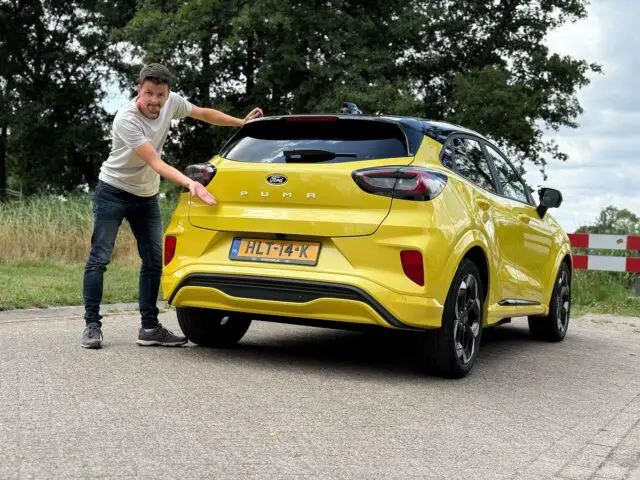

Review – Ford Puma Gen-E (2025), has gigantic luggage space!
Ford Puma Gen-E: also a tearjerker?
The Ford Puma is known as a fine ripper. It is definitely in the top five most fun to drive B-segment crossovers. Fine handling and direct steering make the regular Ford Puma an attractive driver’s car without a doubt. Is that also the case with the electric Ford Puma Gen-E? Yes, perhaps even more so. This is due to the extra low center of gravity of the car. This is because the battery has been placed nice and low in the bottom section, which makes the car sit extra well on the road. The steering is absolutely Puma-level. Nice and meaty, in other words, with plenty of feedback. Ford manages to mask the higher vehicle weight due to the presence of the battery pack nicely with a set of good dampers.
Weight Ford Puma Gen-E
Speaking of that weight, such a Puma Gen-E has a driveable weight of 1,563 kilograms. That works out to an unladen weight of 1,463 kilograms. By comparison, a Ford Puma 1.0 EcoBoost Mild-Hybrid has a driveable weight of. 1,280 kilograms (unladen: 1,180 kilograms). That amounts to a weight difference of 183 kilograms. That’s not so bad, because usually we are talking about 200 to 300 kilograms difference in weight anyway. How did Ford manage that? Simple: applying a rather small battery pack.
43.6 kWh battery
The Ford Puma Gen-E uses a rather modest 43.6 kWh battery. A conscious choice, because that way the purchase price remains low. Ford has put a lot of time and effort into making the powertrain and car itself as efficient as possible. That is, an aerodynamic design and smart software that makes the most efficient use of the available energy. On paper, this Puma Gen-E notes a combined energy consumption of 13.1 kWh/100 kilometers. Good for a WLTP range of 376 kilometers. As you may know, WLTP is still a laboratory value. The rule is to subtract 30 percent. That leaves a fat 260 kilometers. Still, in practice this car is more economical than expected, as was revealed during an extensive test session where measurements were taken over a distance of more than 120 kilometers.
Cheap electric driving + GIGABOX! This is the Ford Puma Gen-E (2025) – REVIEW – AutoRAI TV
Energy consumption measurement
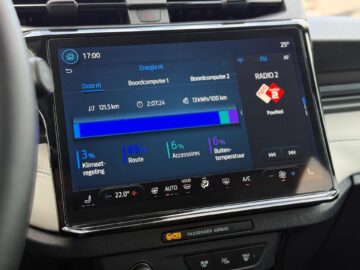
For completeness, during departure the battery was fully charged and the trip computer indicated a range of about 315 km. It is also important to mention that the outside temperature was about 25 degrees Celsius and the air conditioning was set to 22 degrees. This car is on special Eco tires. Ford also supplies sportier tires with a larger rim size. Only then is it not possible to achieve the factory specification of 13.1 kWh per 100 km. We drove in Normal driving mode, not Eco where power is throttled. Finally, during this economy drive we did not drive faster than 106 km/h. Here we did not use adaptive cruise control, but simply the speed limiter to maintain as constant a speed as possible.
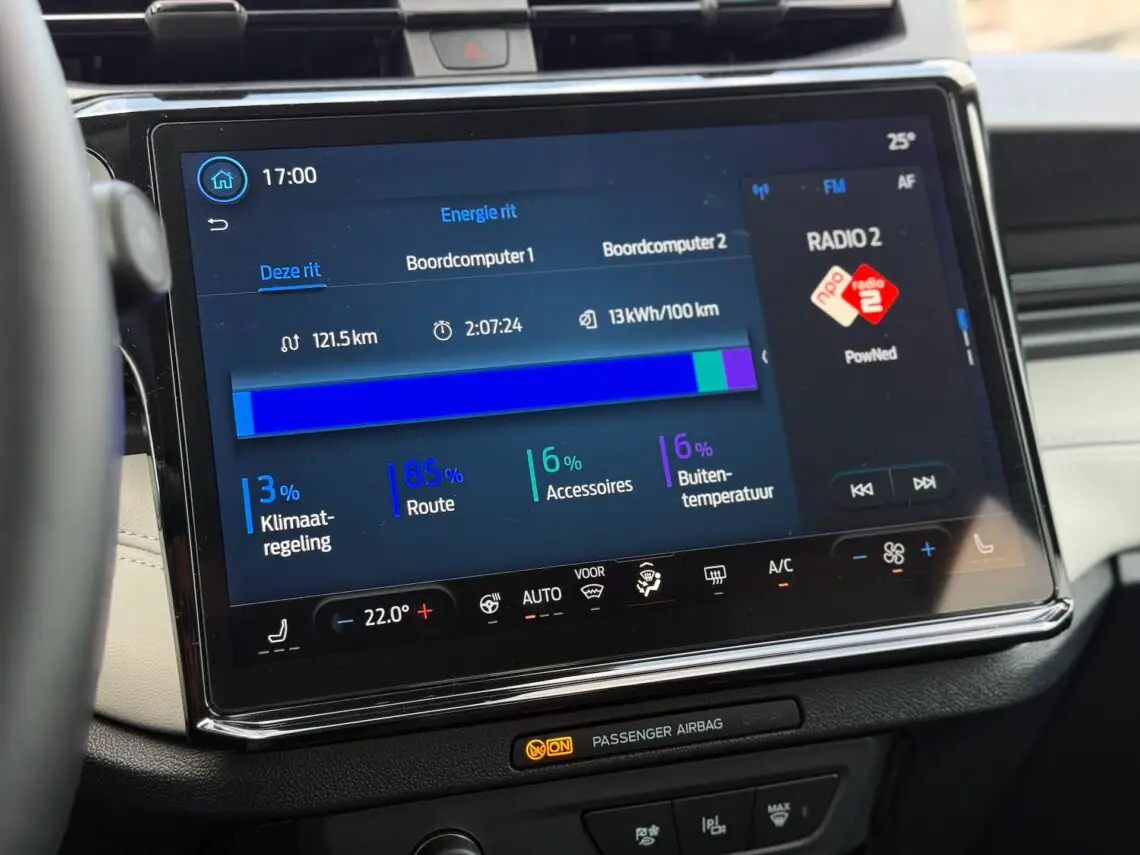
Energy Meter
Adaptive cruise control in all ways takes the natural flow out of driving by braking and accelerating frequently, and that is unfavorable for energy consumption. The result of this test? Afterwards, the on-board computer indicated an average of 13 kWh per 100 kilometers and a remaining range of 200 kilometers. How much that energy consumption is after the decimal point? Unfortunately, the Energy Meter in the car could not tell us that, because the system only indicates whole numbers. According to the system, consumption varied between 14 and 13 kWh per 100 kilometers. Taking 14 kWh as an average, in theory you should be able to travel more than 300 kilometers on a full charge of electricity. Given the relatively small battery of just 43 kWh, this is a major achievement. In practice, 250 kilometers should be achievable without too much effort. In an urban driving environment, Ford even quotes a driving range of 523 kilometers.
To upload
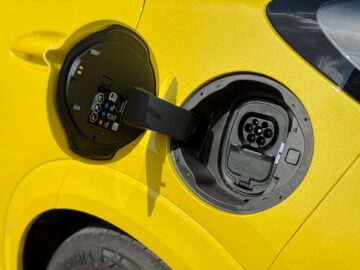
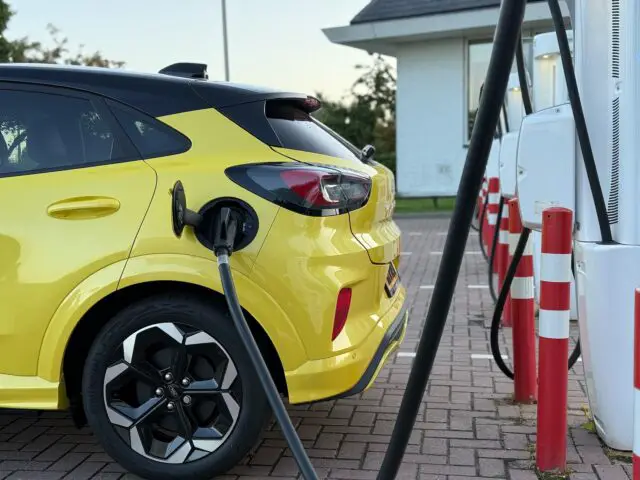
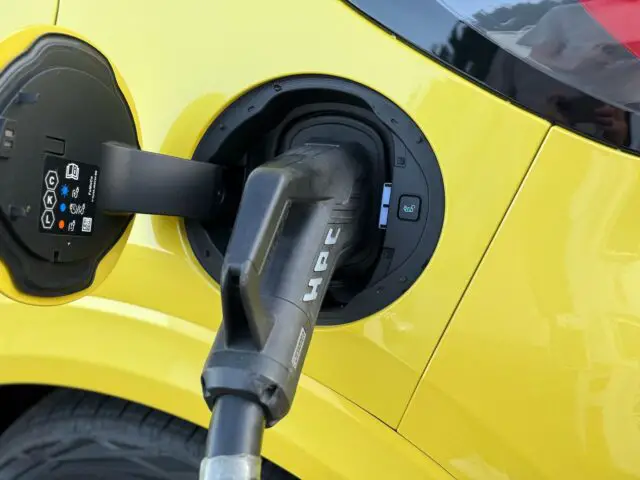
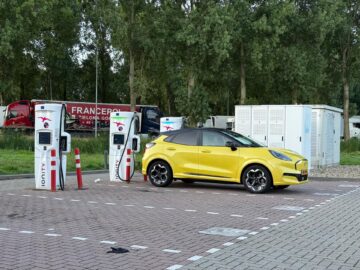
Fast charging is nice and smooth in this regard. With up to 100 kW of DC charging power, the battery can be charged from 10 to 80 percent in 23 minutes. During our fast charging session, the meter indicated 95 kW as the peak rate. With a fast charger, up to 124 km of driving range can be recharged in 10 minutes. As standard, the Puma Gen-E is equipped with an 11 kW AC 3-phase on-board charger, which allows the car to be fully charged via a public charging station or a private charge point at home in about 6 hours.
No lack of power and torque
By the way, the electric motor of the Puma Gen-E delivers a maximum power of 124 kW (168 hp) with an impressive torque of 290 Nm. The 0-100 time takes 8 seconds and the top speed comes out to 160 km/h. There is a choice of driving modes, such as Eco, Normal and Sport. In Eco mode, the power of the powertrain is sharply throttled and, above a speed of 100 km/h, there is also additional resistance in the accelerator pedal. Driving in Normal or Sport is preferable as far as we are concerned. In any case, there is no shortage of power and especially torque.
Points of Attention Ford Puma Gen-E
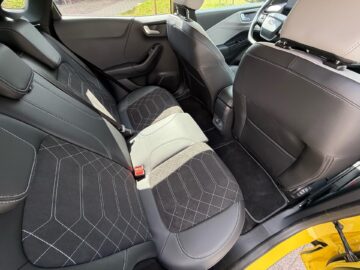
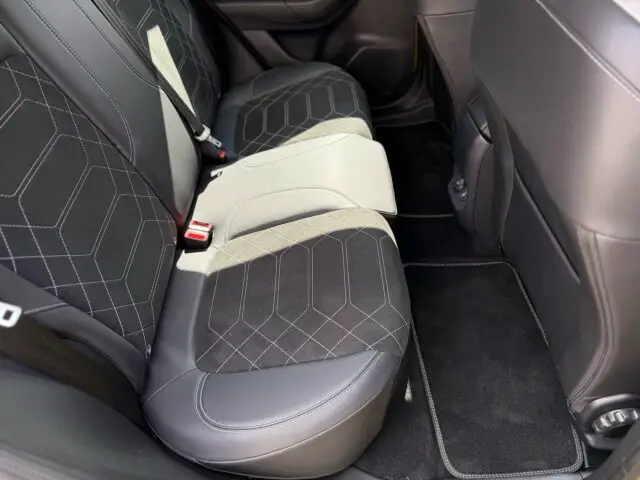
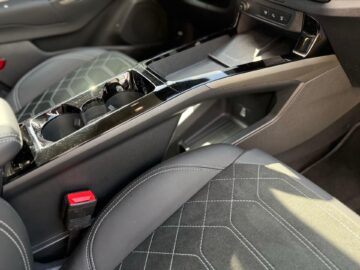
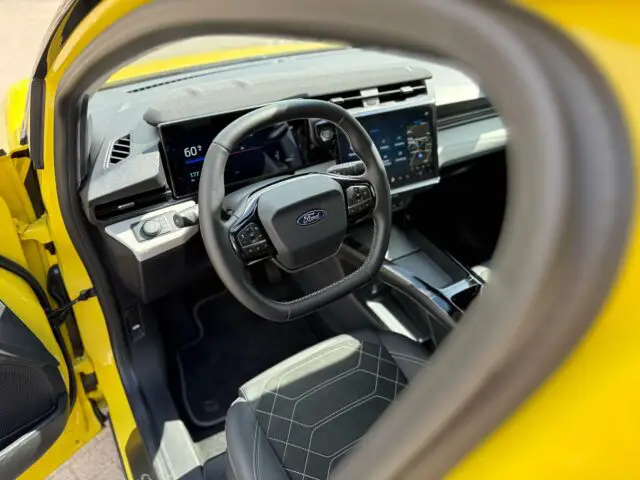
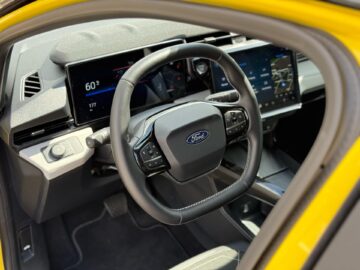
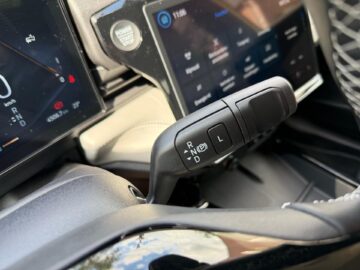
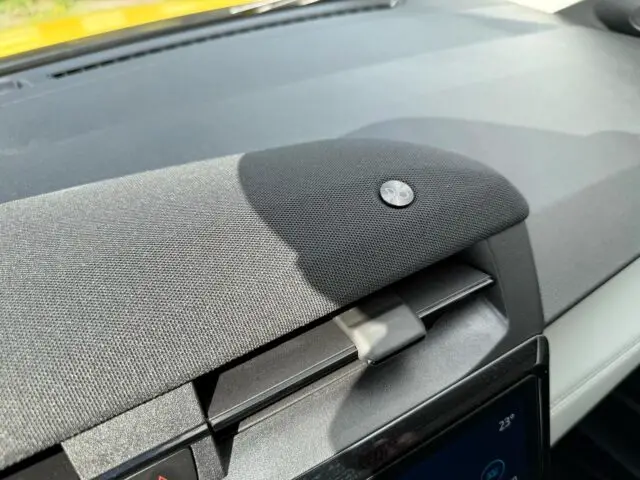
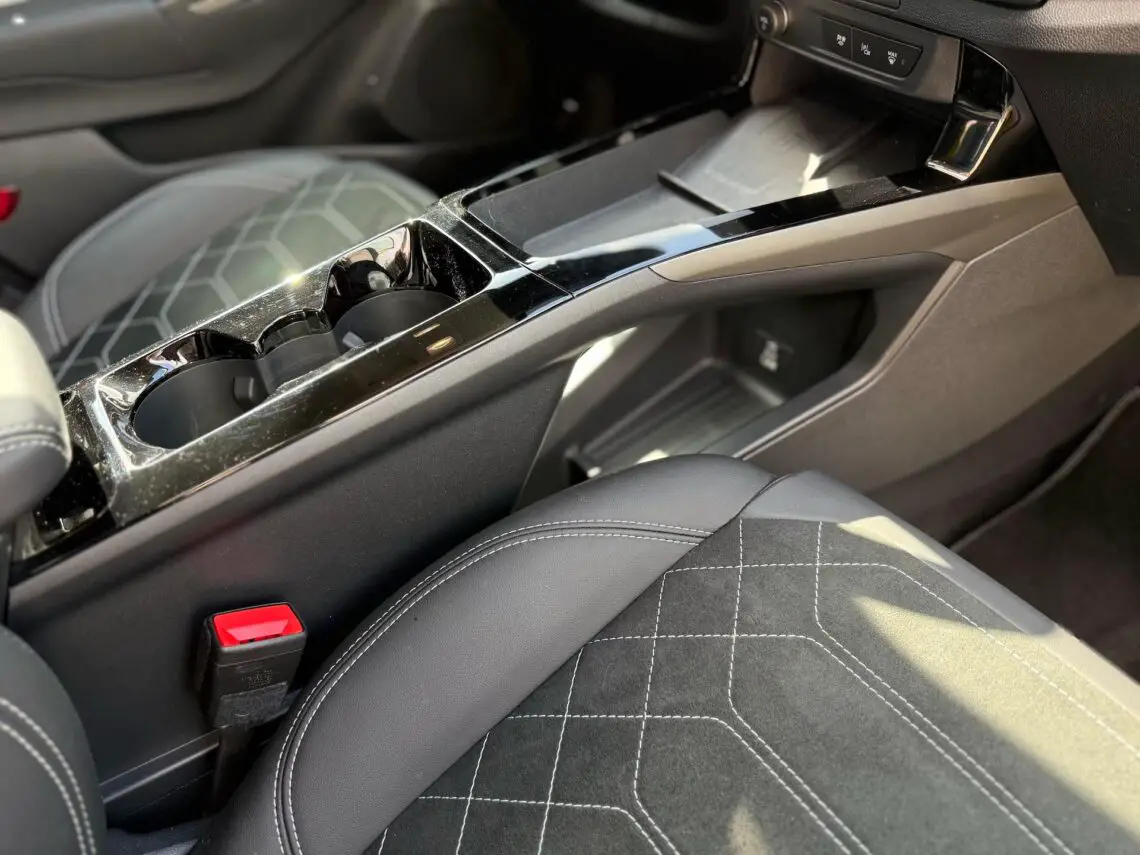
Fine driving characteristics, then, as well as favorable energy consumption. That starts well for this electric Ford Puma Gen-E. There are points of concern, of course. The back seat is quite cramped and those who check the optional panoramic roof lose about five inches of headroom in the car. This particular car does not have that and here the headroom is already quite limited. Furthermore, Ford uses a lot of high-gloss black plastic. Ford, don’t. It gets dirty quickly, is prone to greasy fingers and dust and scratches in no time. More importantly, it causes annoying reflections in the interior, especially when the sun shines. Furthermore, the substantial displays in the interior have a high-gloss finish. This does not help readability either, especially when the light enters the interior at an unfavorable angle. Anyway, things we can live with, don’t get us wrong, but there is room for improvement.
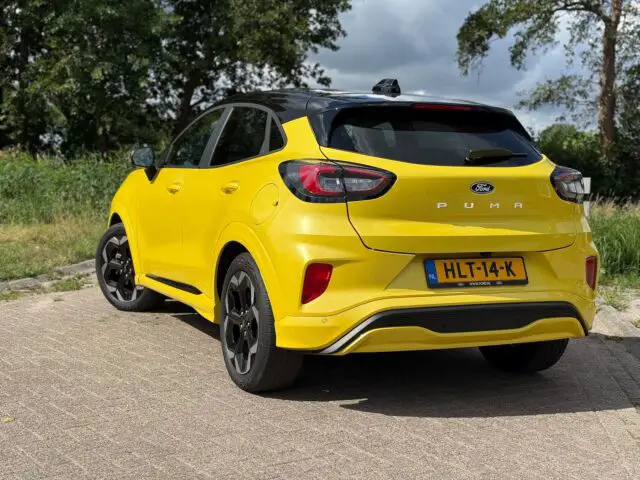
Electric Yellow
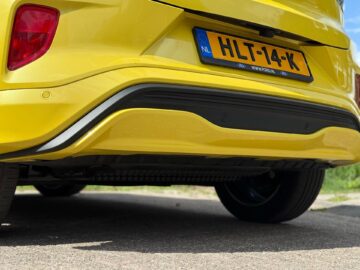
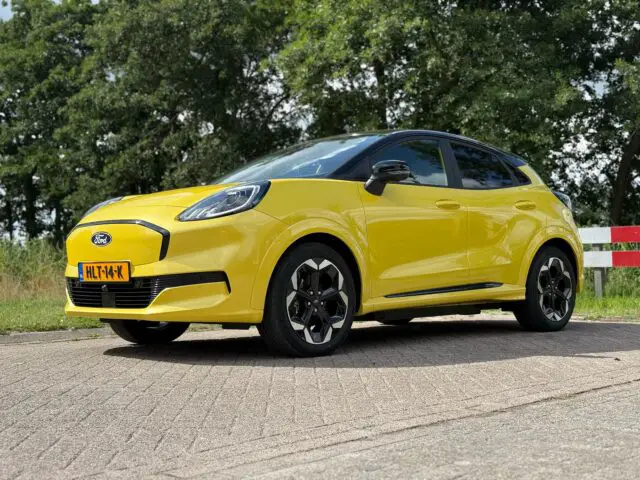
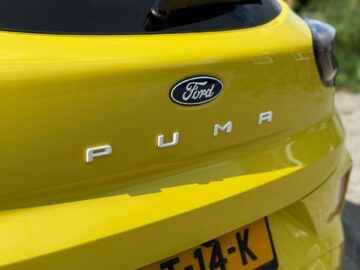
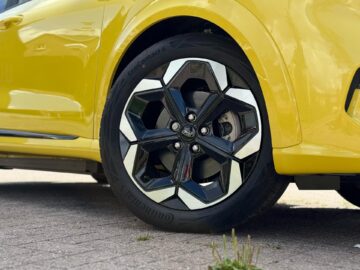
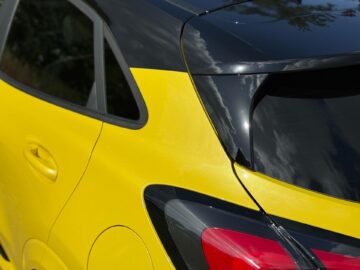
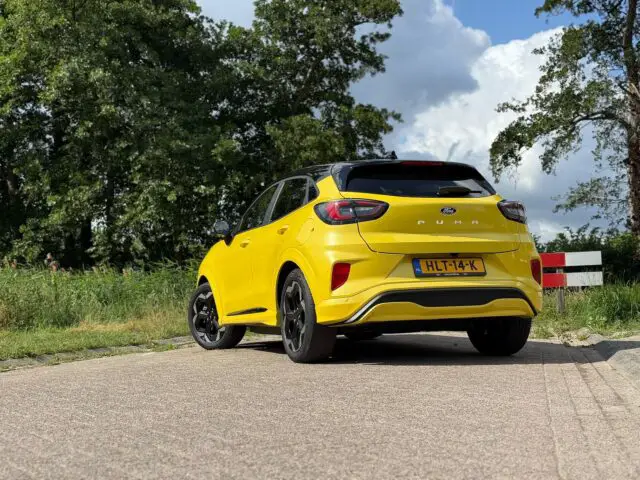
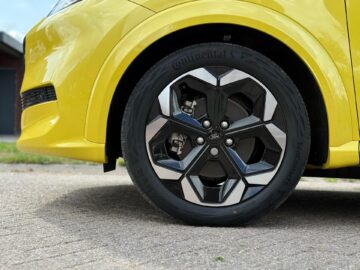
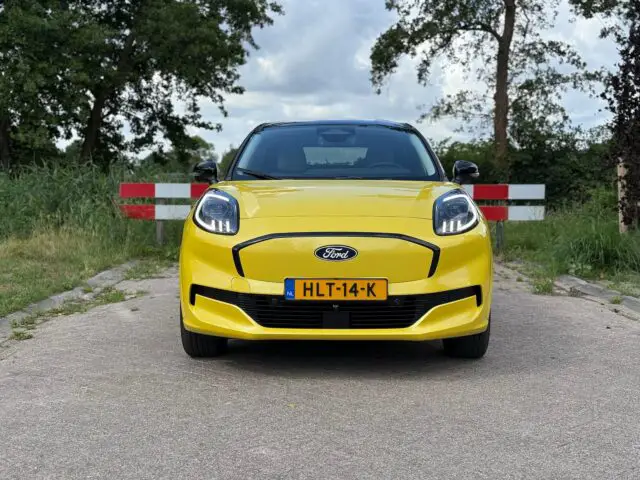
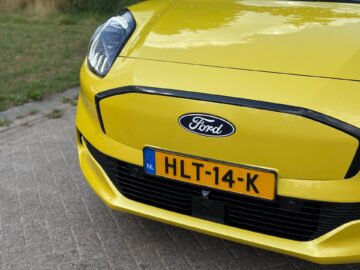
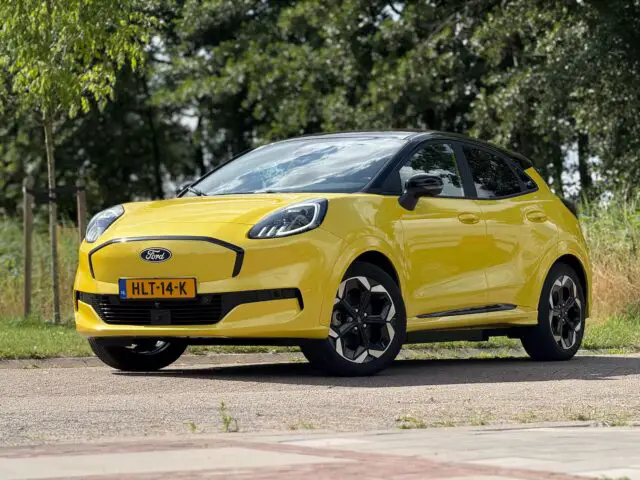
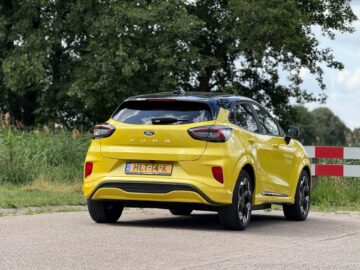
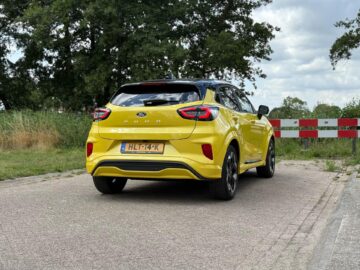
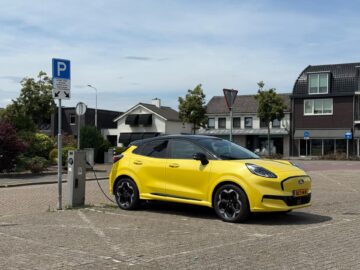
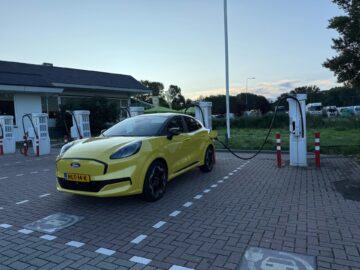
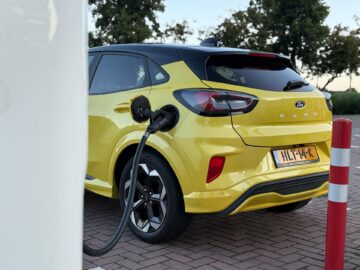
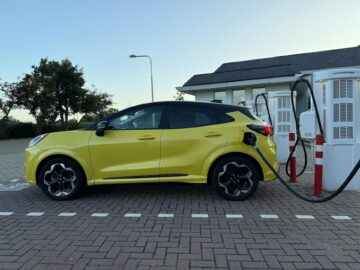
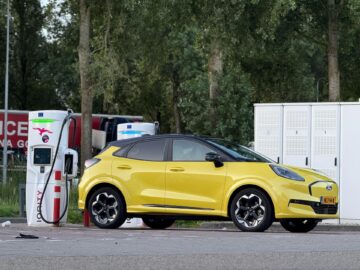
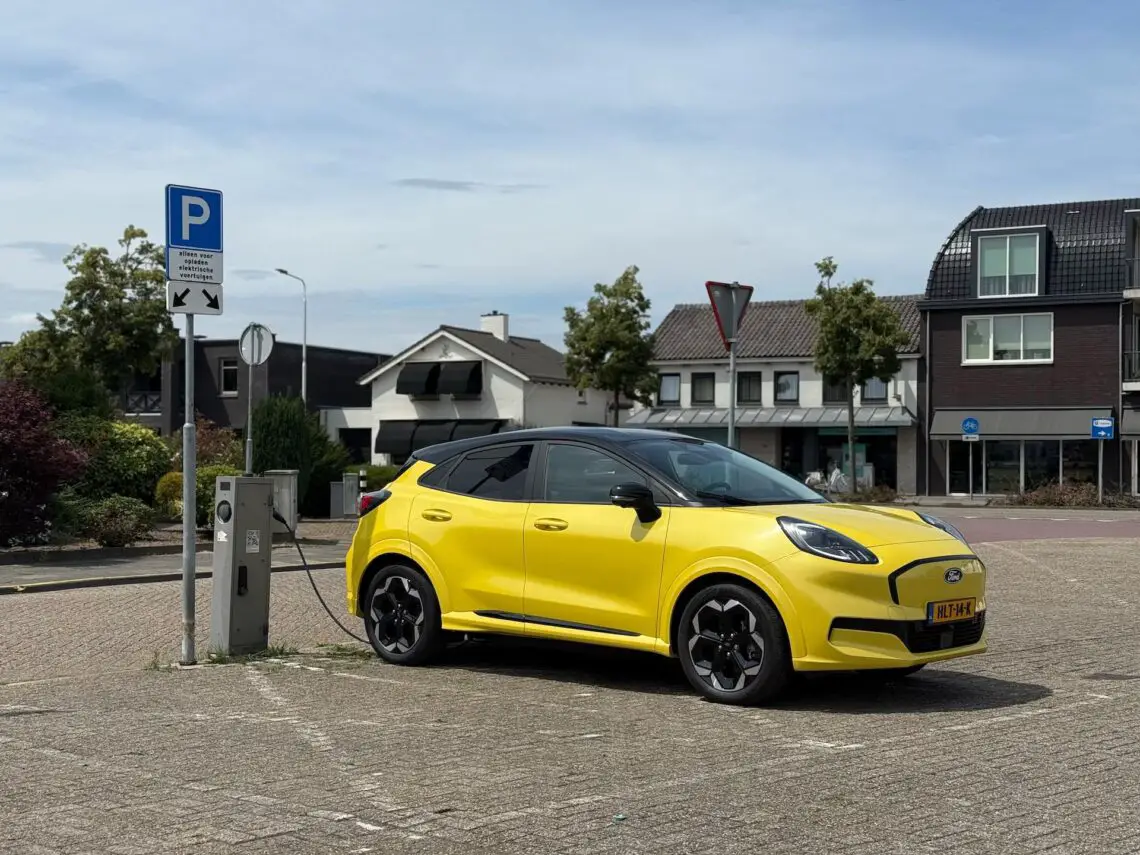
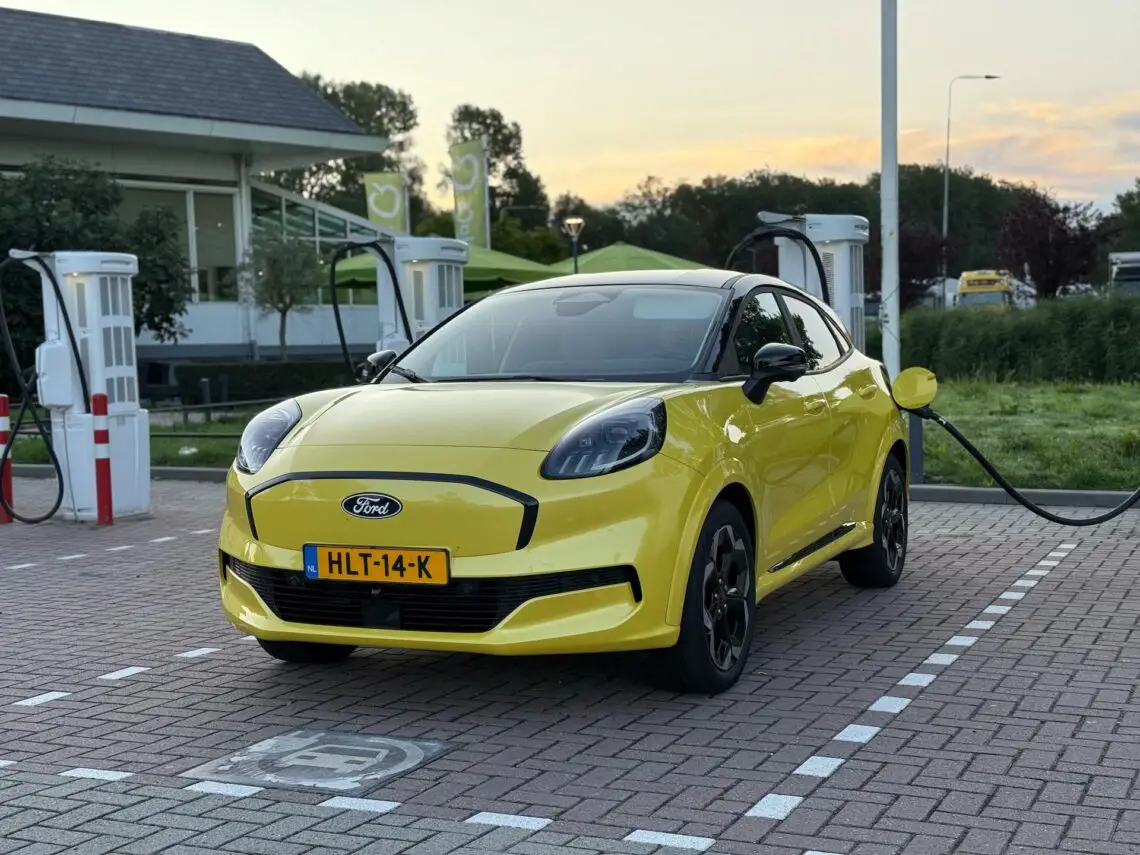
The design of this electric crossover follows the style of the latest version of the Ford Puma. An eye-catching “shield” replaces the traditional grille. Looks pretty nice, especially in this color Electric Yellow. You can also order the car in Frozen White, Solar Silver, Digital Aqua Blue, Agate Black and Fantastic Red. The sporty rear spoiler and specific alloy wheels complete the Puma Gen-E’s equipment. Dynamic Matrix LED headlights are standard on the more expensive Puma Gen-E Premium, which costs about 33,000 euros. The Premium also has a power tailgate. For completeness, the base version of the Puma Gen-E costs 29,995 euros (including 3,000 euros benefit). That one is also already pretty well packed.
Equipment base version Ford Puma Gen-E
We like to list the basic equipment:
Interior & Comfort
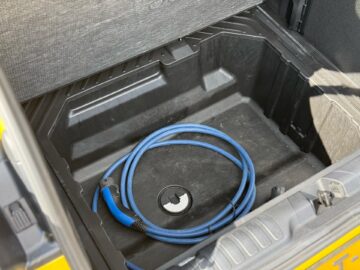
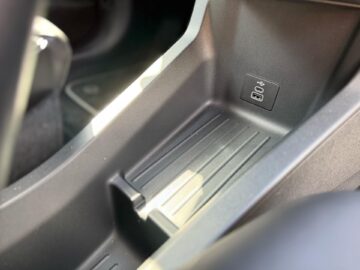
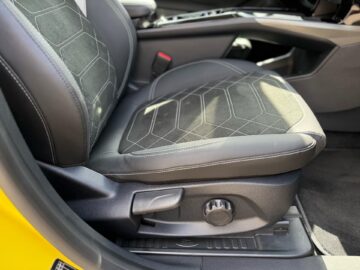
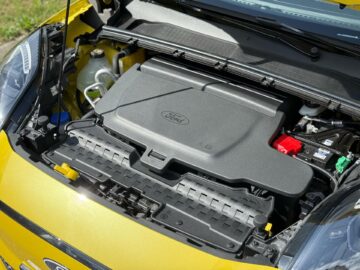
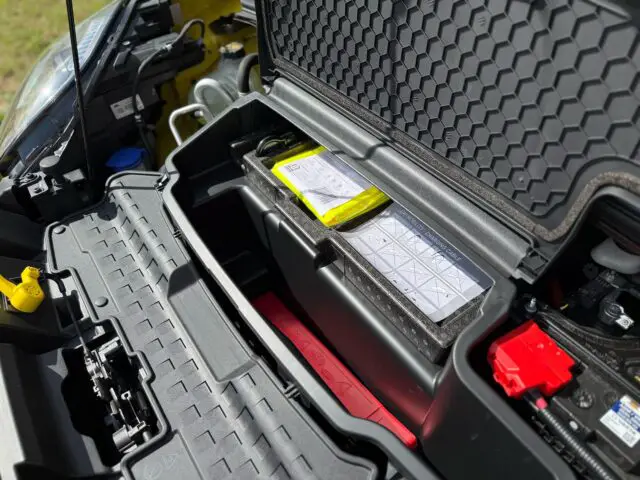
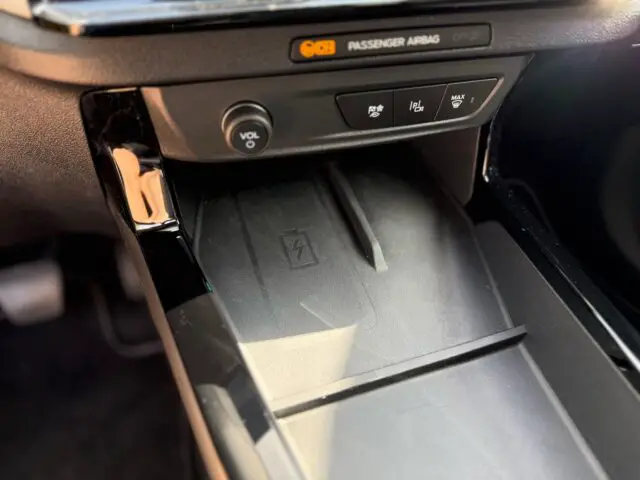
Four-way manually adjustable driver’s seat including lumbar support adjustment – Four-way manually adjustable passenger seat – Front and side airbags for driver and front passengers, Side Air Curtain airbags – Sliding front armrest – Automatic air conditioning – Wireless cell phone charging – Electric front and rear windows incl. one-touch up/down function – FordPower start button – Soundproof windshield – GigaBox – 145 liters of additional storage space with drain plug under cargo floor – Frunk – 43 liters of storage space in front for example charging cable – LED Ambient Lighting (dimmable in 7 colors) on instrument panel – Front floor mats – Front bumper equipped with grille with new Ford oval
Exterior
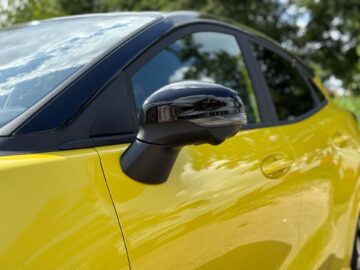
17-inch alloy wheels (215/55 tires) – Exterior mirrors in body color and electrically heated – Full LED headlights with automatic high beam and rain sensor – LED tail lights – Privacy glass
Safety & Technology
Reversing camera – Automatic dimming interior mirror – Tire repair kit – Cruise Control with speed limiter – Drive Mode Selector – EcoCoach: helps the driver drive as efficiently as possible – Electronic parking brake – Charging cable – One Pedal Drive – Rear parking sensors – Pre-collision Assist with Post Impact Braking, Lane Keeping Aid and Lane Departure Warning – Front disc brakes – Traffic sign recognition – Wrong Way Alert
Multimedia
12-inch SYNC 4 multimedia system with wireless Apple CarPlay and Android Auto – 12.8-inch customizable Digital Cockpit – FordPass Connect and Over-the-Air updates (via 5G modem) – Navigation system with Ford Connected Navigation
More Equipment Premium
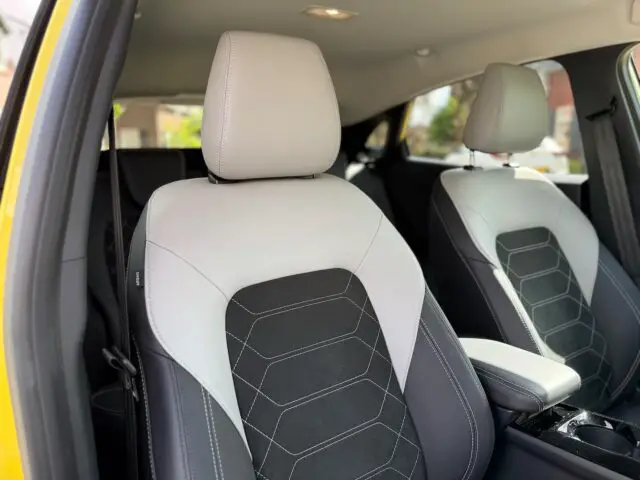
Four-way manually adjustable passenger seat including lumbar support adjustment – Interior trim: partial Sensico in Ebony with gray stitching – Electric tailgate – 18-inch alloy wheels (215/50 tires) with locking bolts – Exterior mirrors electrically heated and folding with logo projection – Keyless Entry Multimedia – Bang & Olufsen Premium audio system with ten speakers and subwoofer – Matrix LED headlights with anti-glare function
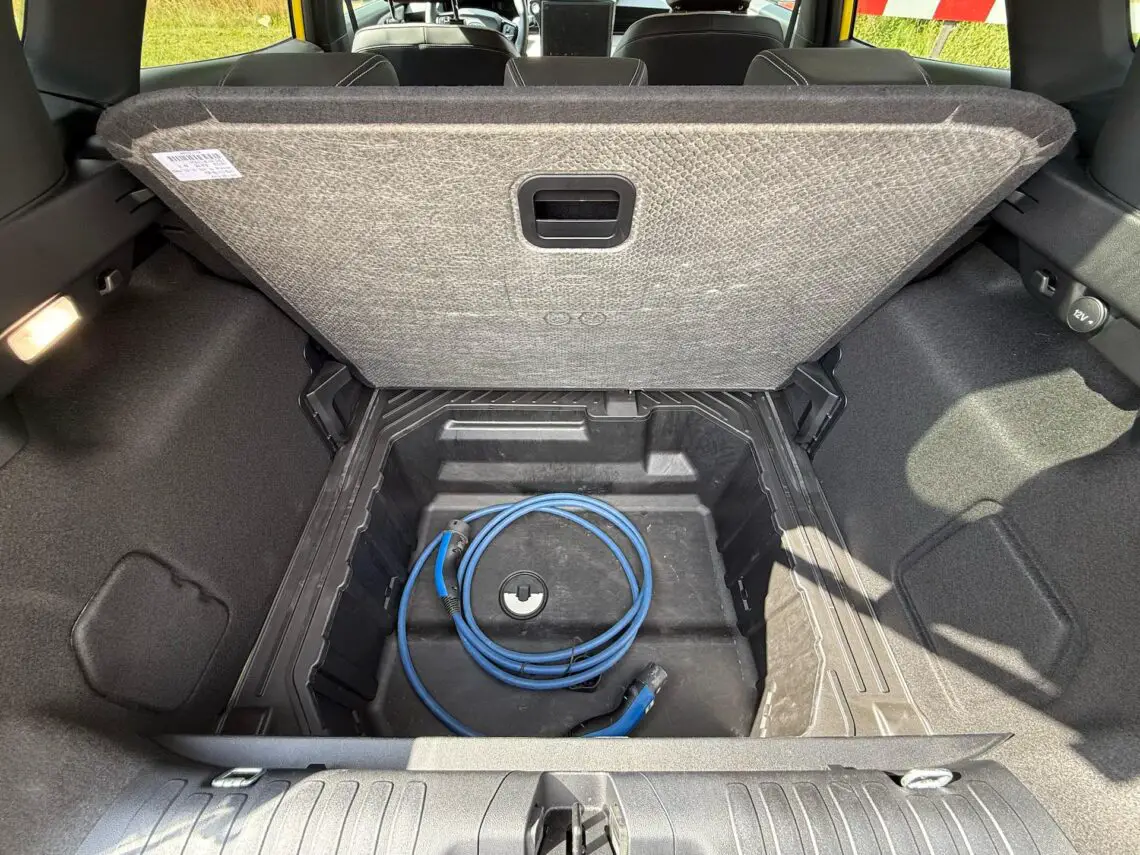
Ford Puma Gen-E has a Gigabox
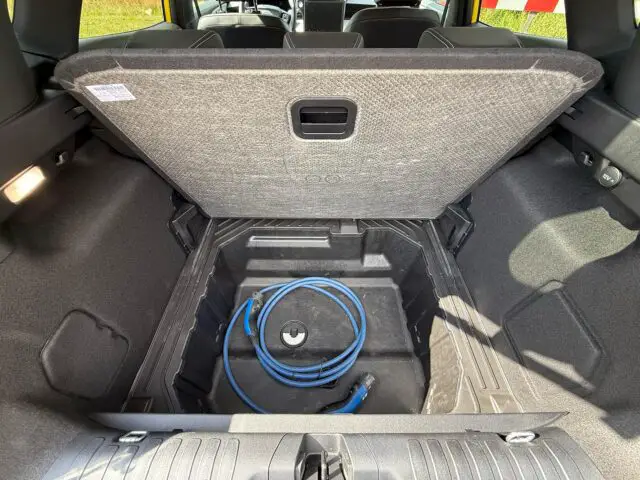
One feature of the Ford Puma Gen-E we haven’t mentioned yet: the Gigabox. The Ford Puma with gasoline engine has a so-called Megabox on board. That is a huge bin under the cargo floor where you can also store some stuff. This bin also has a water drain. So you can rinse it out if dirty stuff is placed in it. Because the fuel tank is missing from the electric Puma Gen-E, this cargo box is even bigger. Hence the name Gigabox instead of Megabox.
The Gigabox under the floor of the luggage compartment of the Ford Puma Gen-E has a capacity of 145 liters and a load capacity of 100 kilograms. The Puma Gen-E also has a frunk. That frunk has a capacity of 43 liters. You could theoretically store your charging cable in it, should you want to. With the storage space in the back, the added Gigabox and frunk, there is up to 617 liters of space. That makes this electric Puma as spacious as a considerably larger Mustang Mach-E in terms of luggage space. The Gigabox is a huge USP of this car. No other car in the B-SUV segment offers similar storage space.
Conclusion review Ford Puma Gen-E
Quite frankly: we are quite impressed with the qualities of the Puma Gen-E. Especially the driving characteristics and energy-efficient powertrain make us enthusiastic. Whether a Puma is spacious enough for you is something you have to experience for yourself during a test drive. With smaller children, the Puma can easily pass as a family car, especially if there are two of you. Especially then you can take full advantage of the features of this Gen-E, such as the Gigabox. Larger families are better off opting for an Explorer or something similar.