Review Firefly (2025): is this EV a Chinese shot at European glory?
That the B-segment is booming is not surprising. The market for electric cars is booming. Many European manufacturers have now electrified their hatchbacks, creating ample choice for consumers. They have also noticed this at Nio. However, a city car the brand did not yet have. Therefore, as two birds with one stone, Nio introduced a new city car in the form of a new brand – Firefly.
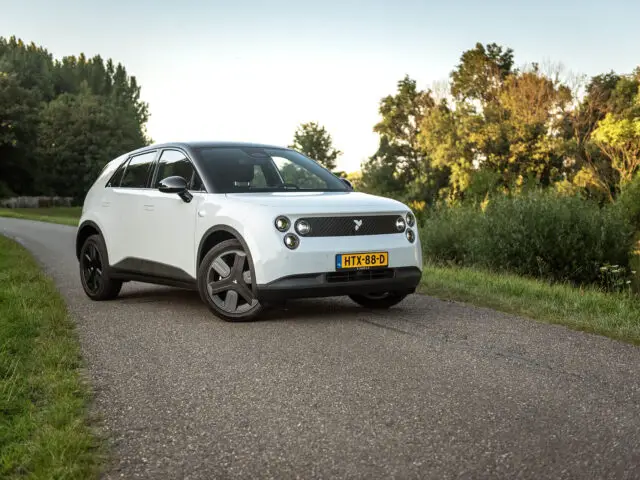
At Nio’s design studio in Munich, the Firefly’s designers have looked specifically at the needs of the European customer. So yes, can you still speak of a real Chinese?
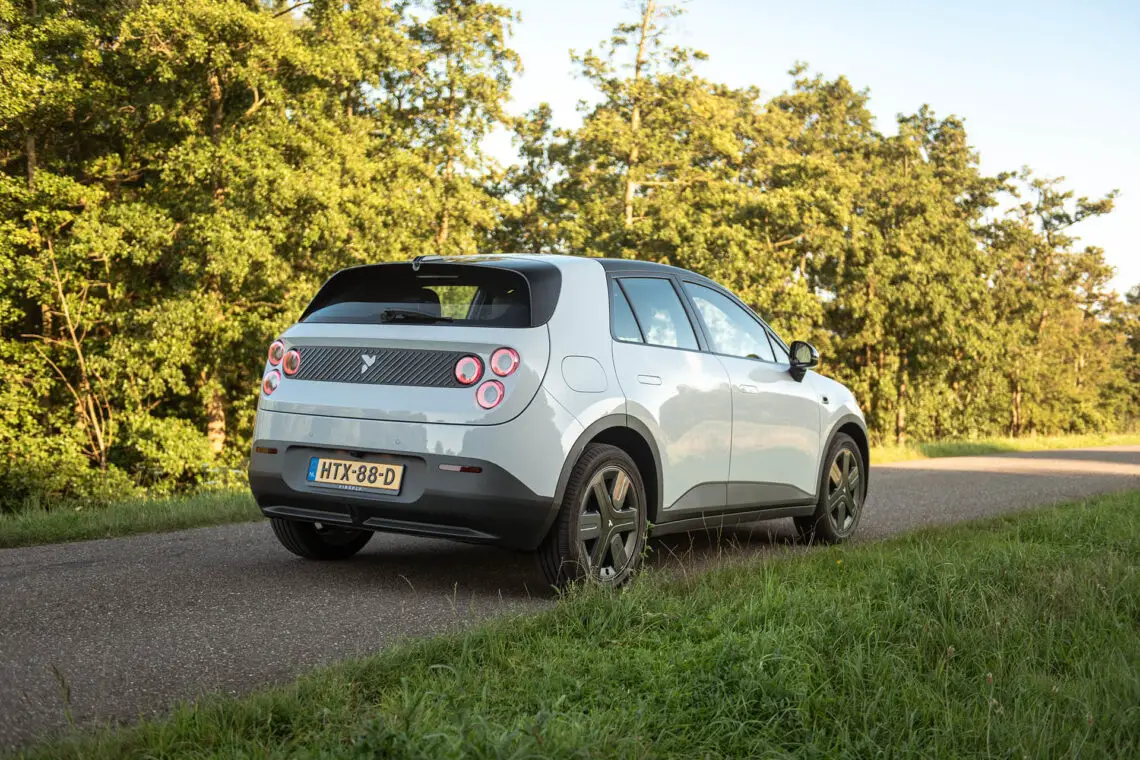
Compact, but roomier than the rest
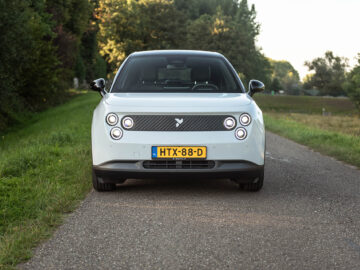
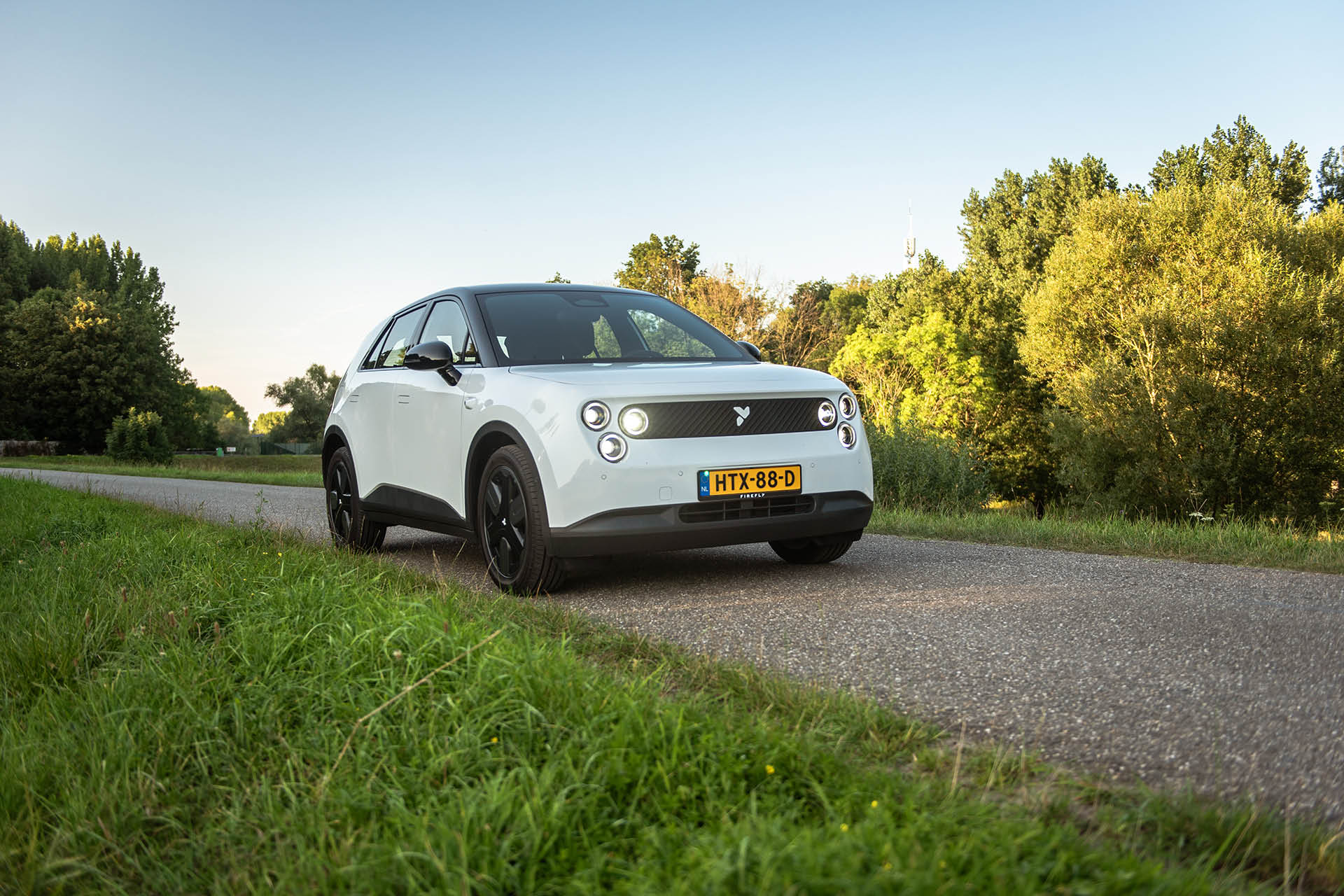
So at Firefly, they took a good look at the existing B-segment models in Europe. That has resulted in a car that does things just a little differently than usual. One of those things concerns the dimensions. On the one hand, the car is recognizable as a compact city car; on the other, it offers more space than many of its competitors.
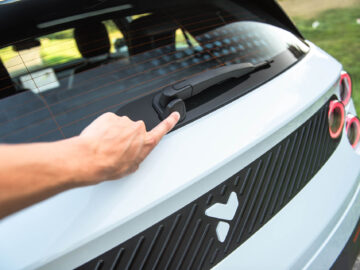
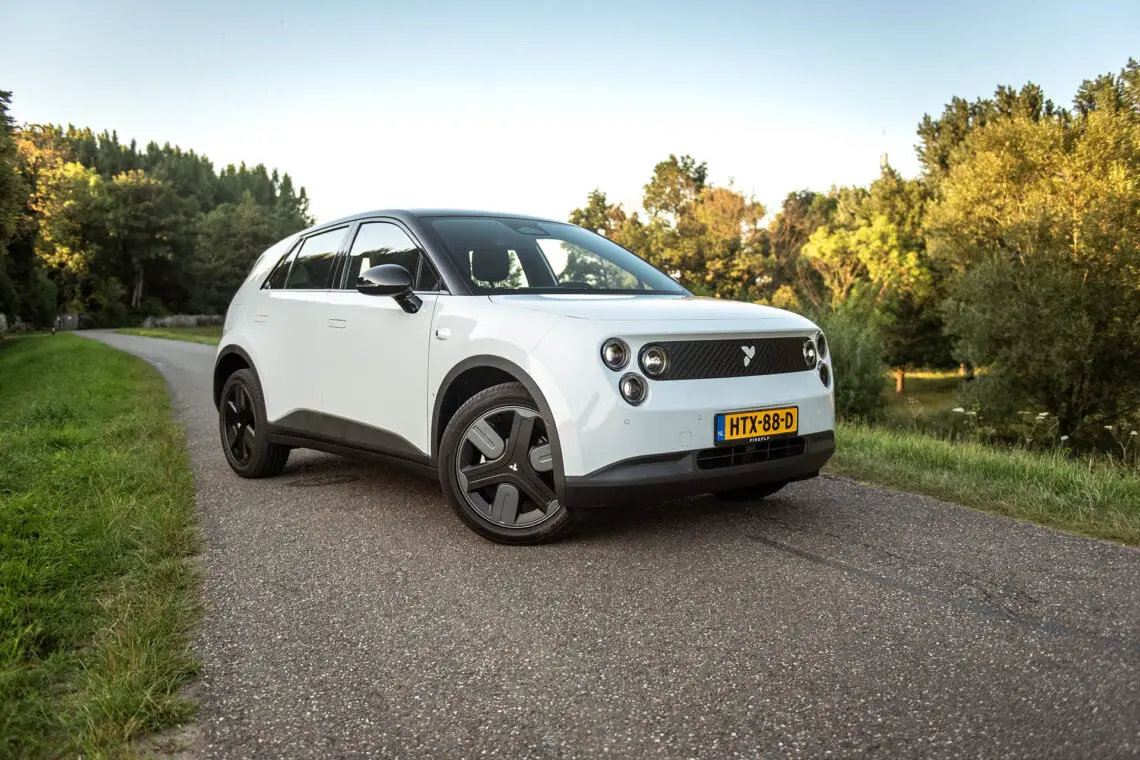
This firefly is 4 meters long, 1.89 meters wide and 1.56 meters high. Pretty wide in the hips, in other words, but maneuverable enough for the city. The turning circle is 9.4 meters to be exact. Experience shows that you can easily make street turns with this. The Firefly watches you through cameras on the sides and rear of the car, so you don’t hit anything unintentionally.
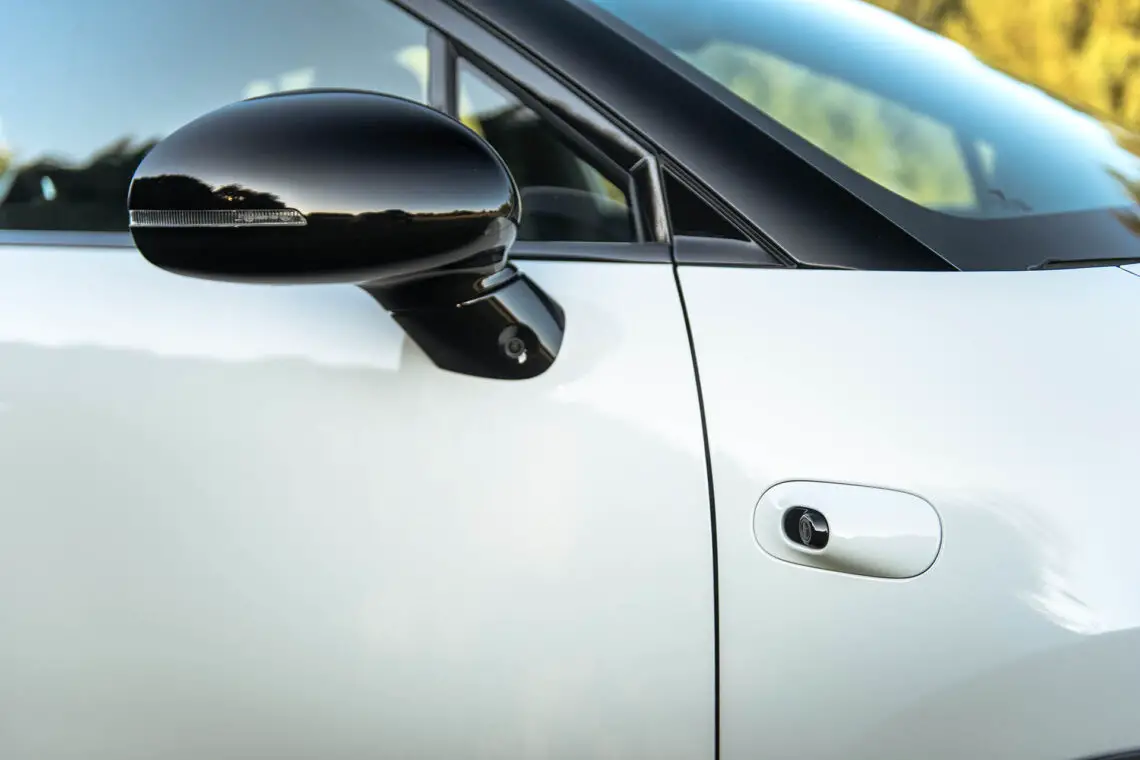
More (storage) space, more better in the Firefly
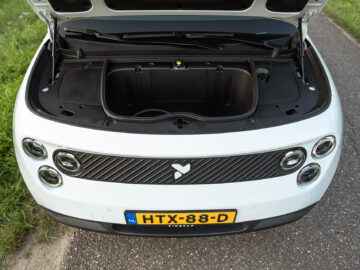
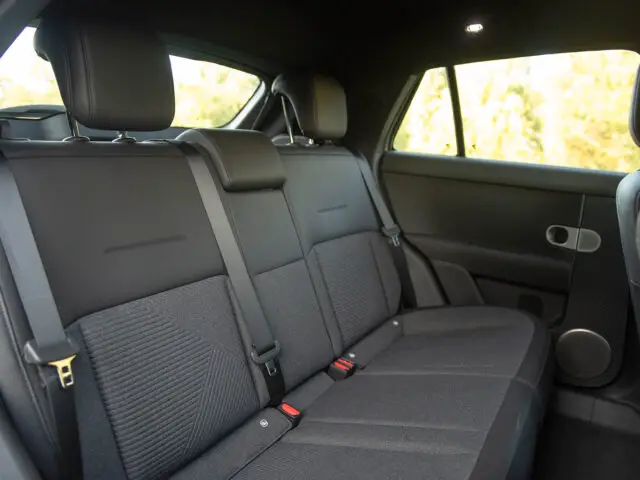
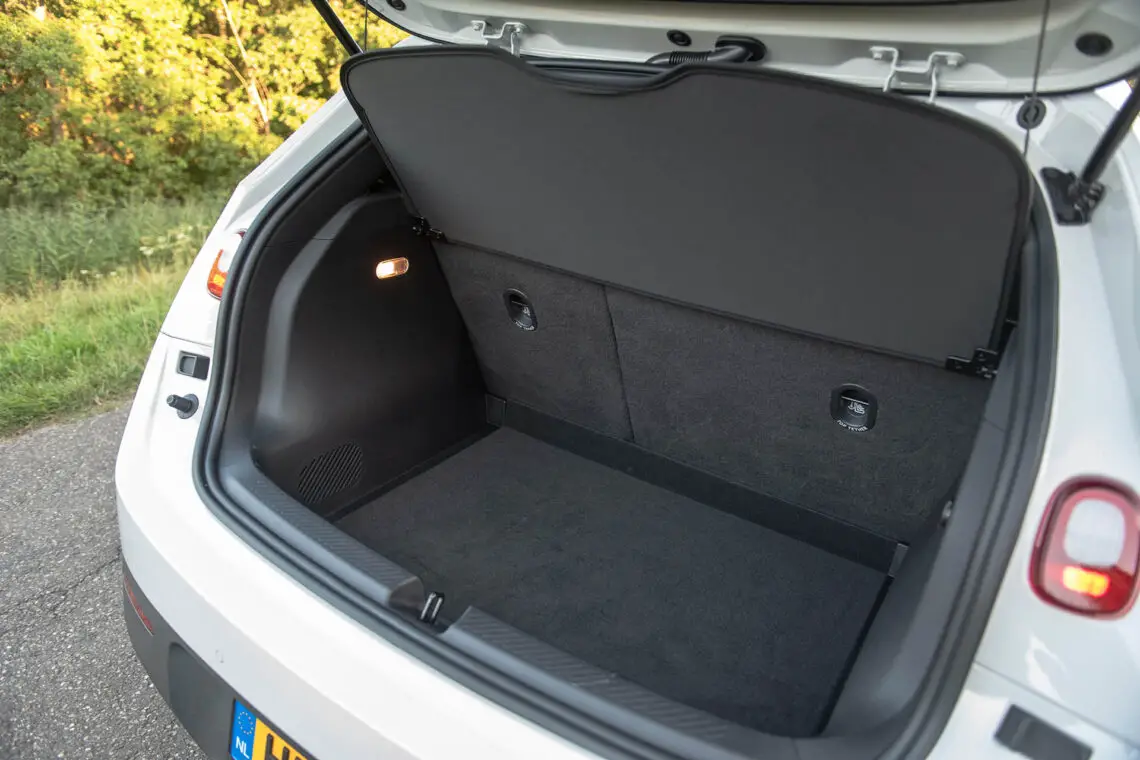
Nice those dimensions, but what does it mean concretely? Well, the Firefly has wheelbase of 2.62 meters. The Renault 5, on the other hand, spearheading the Firefly’s development, has a wheelbase of 2.54 meters. That’s “only” 8 inches difference, but you notice that the car feels roomier than the Frenchman. You enjoy extra room in the front, with a 92-liter (!) frunk, space in the front row of seats, but even in the back seat you can still hold out reasonably well as adults, with a reasonably pleasant entry due to the slightly higher roof. The trunk offers another 404 liters of luggage space. But, that’s not all.
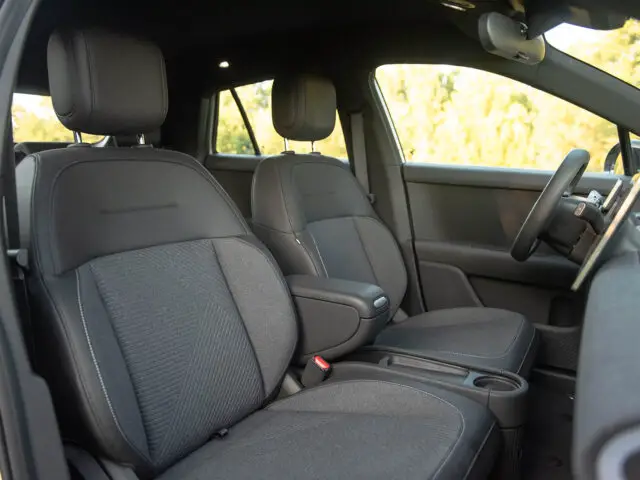
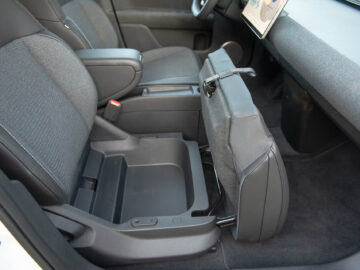
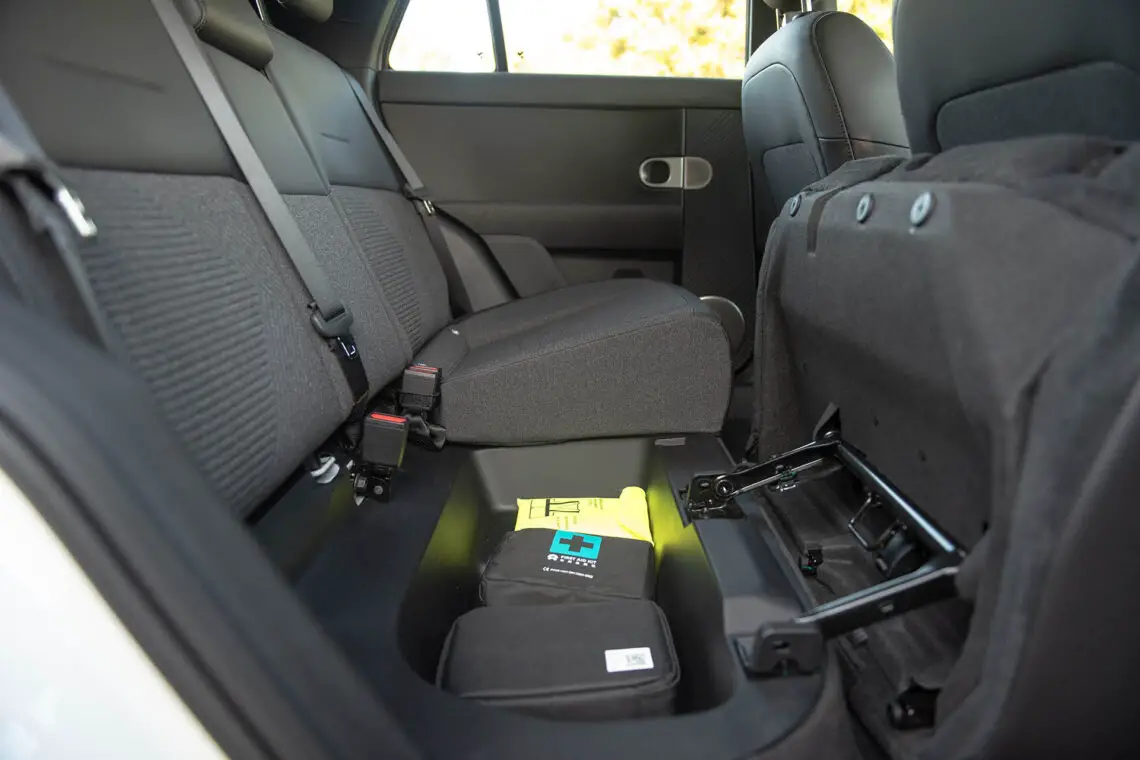
The Firefly’s interior is so cleverly laid out that even under the seats and in the center tunnel, plenty of space is offered. The powertrain and components are placed under the floor as much as possible, which also provides storage spaces under the rear seat and passenger seat.See, that’s handy! These are the places you need when you want to put something out of sight, for example, or give items a place that you don’t need right away.
No matter how you park the Firefly
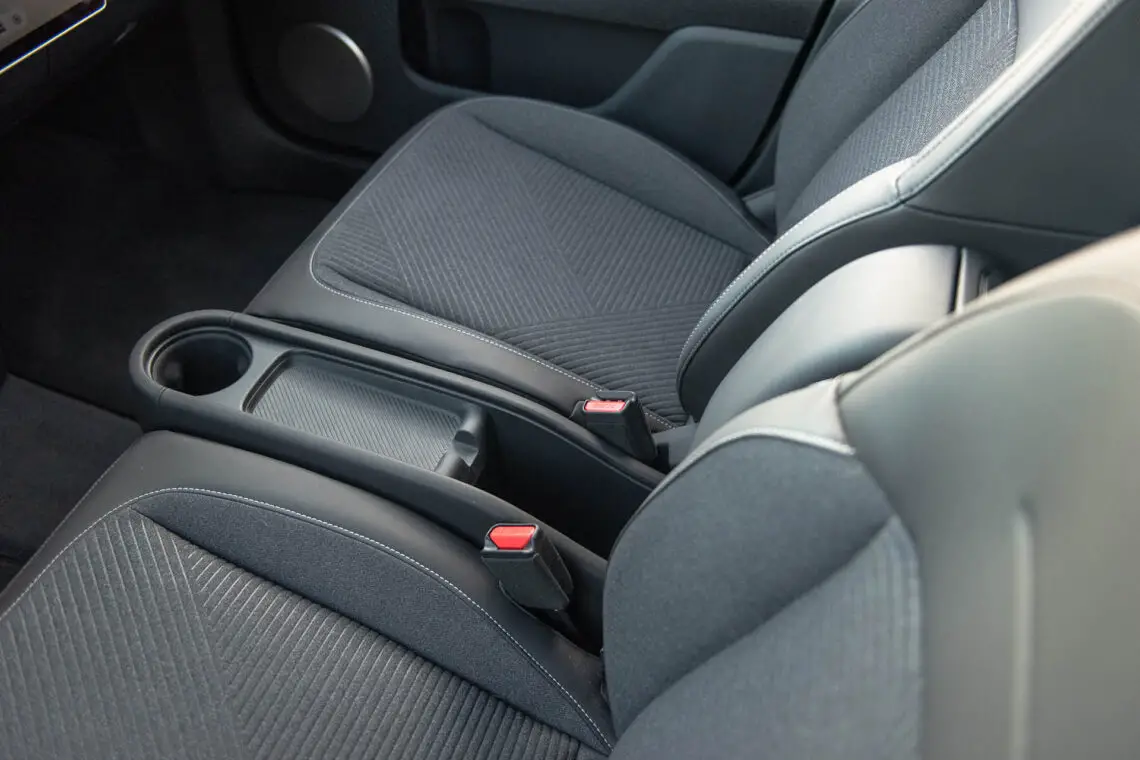
In the front, there is a center tunnel between the front seats that is not connected to the dashboard. This is not a defect, but a blessing. Suppose you park the Firefly in the last available compartment, but it turns out to be tight. So tight, in fact, that you decide to park close to one side, so that you can still get out on the other side. If you fold up the armrest, you can slide right to the other side of the car to get out. Incidentally, this center tunnel still offers the necessary space to put items away, a removable wastebasket and one cup holder. We would have liked to see these in duplicate, but then again, there is also space in the doors. In the back, by the way, passengers do miss air vents and USB ports.
A kind of little Tesla?
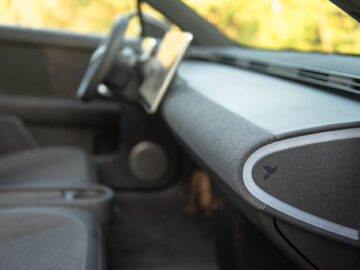
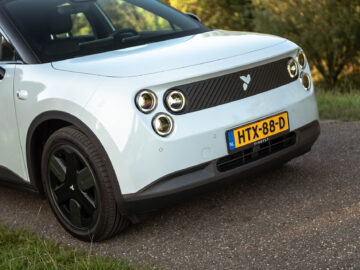
Furthermore, it is also spacious inside because of the way the dashboard is designed. Where some manufacturers still choose to present various functionalities physically, others decide to bring everything together in a multifunctional screen. The latter is the case in the Firefly, in which the interior reminds us a bit that of a Tesla.
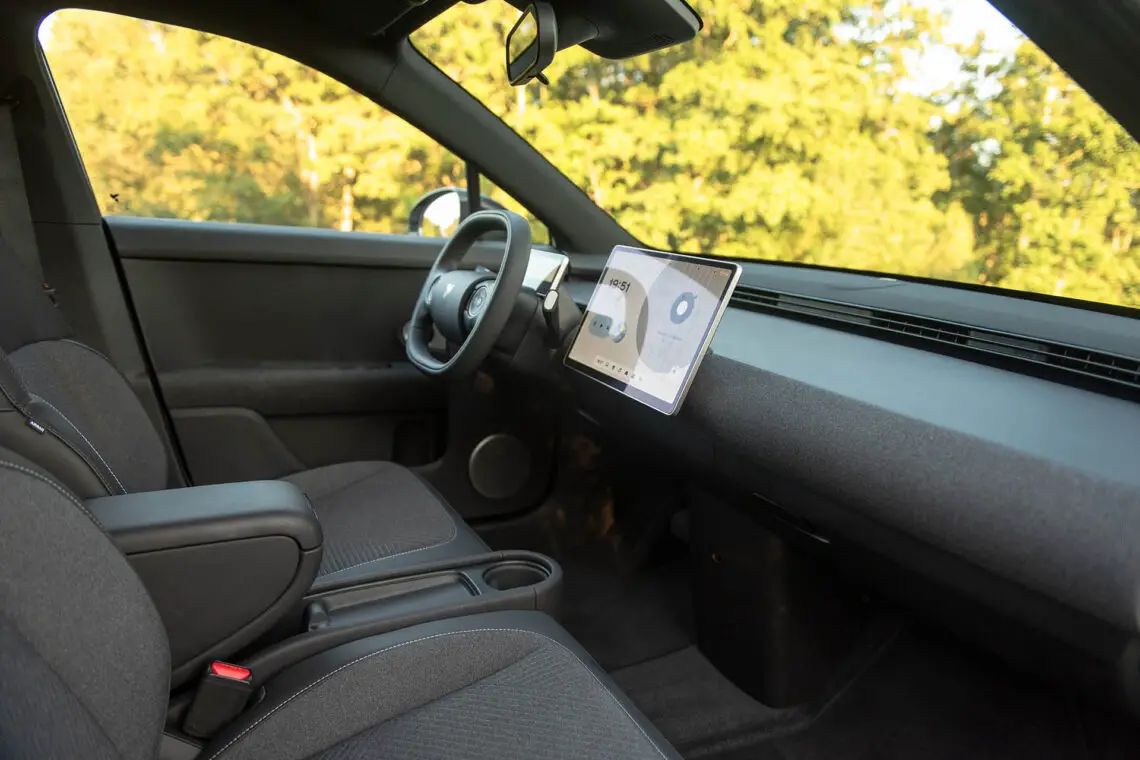
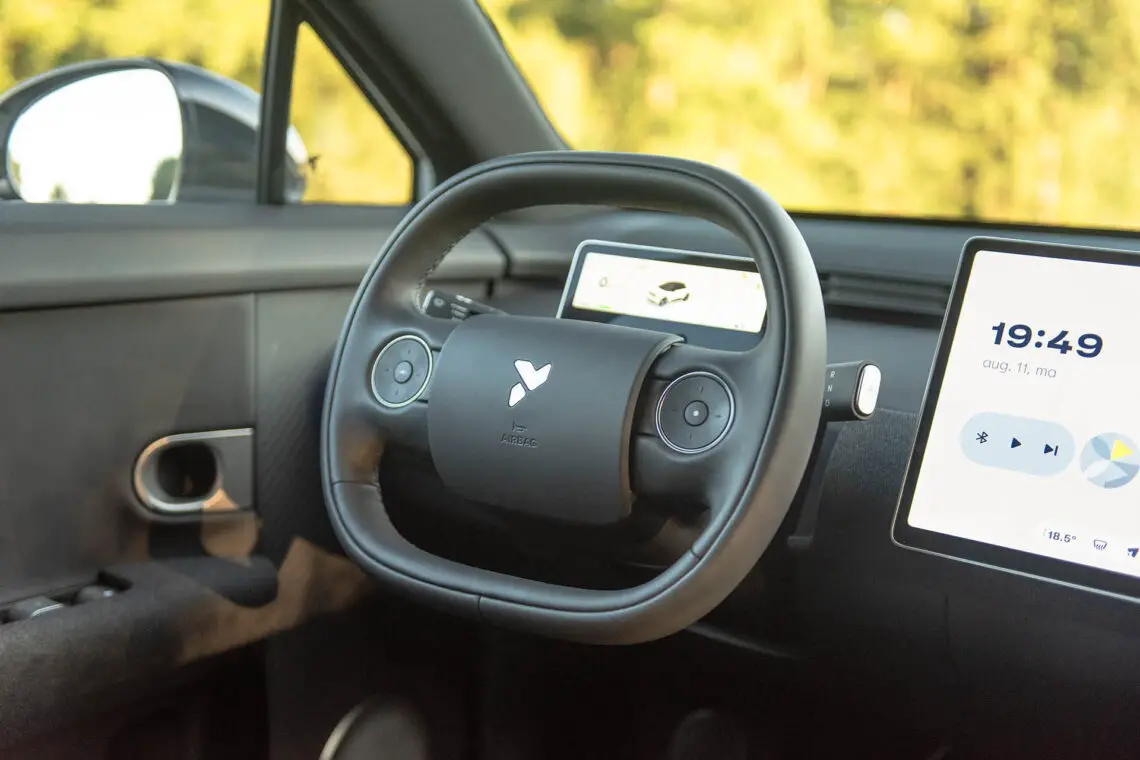
As a driver, you look out on a tidy dashboard, a compact and flattened steering wheel with simplistic buttons on and behind the wheel.
Technology and quality as benchmarks of the Firefly
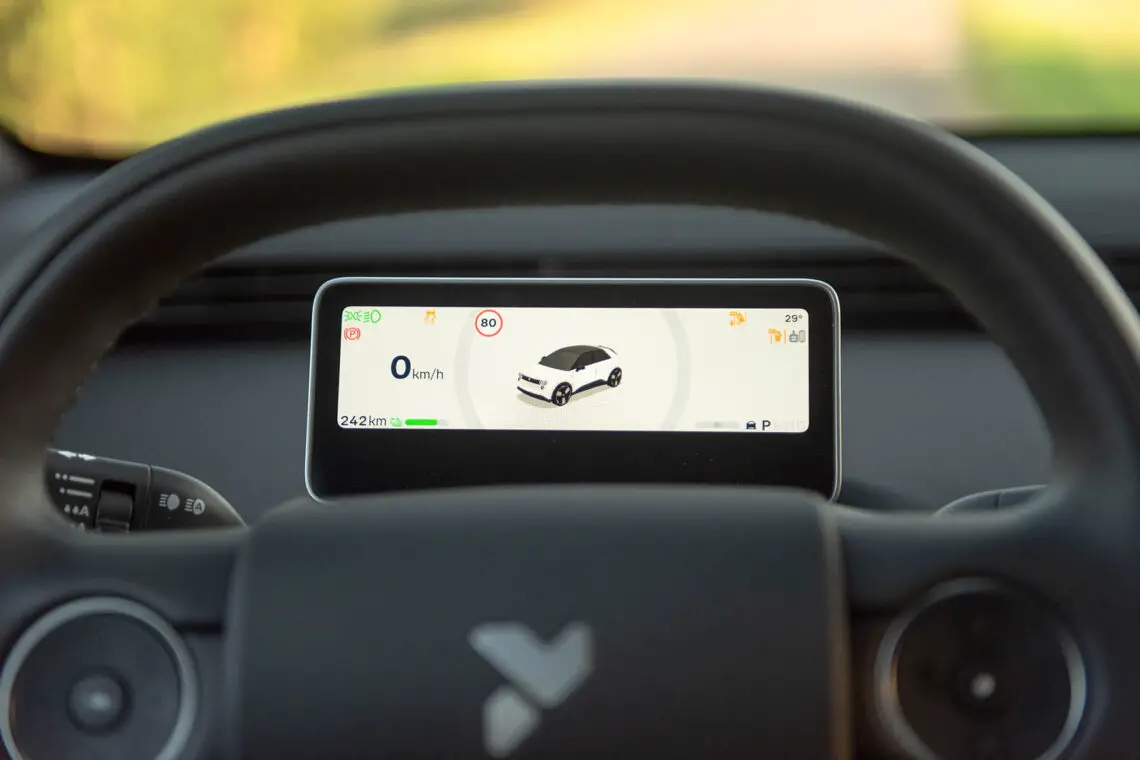
In the middle shines a large central touchscreen that lets you control just about everything. From driving assistance systems to navigation, from themes to camera images. The system is responsive, intuitive, and along with the design of the menus, the screen feels like an extension of your smartphone. You can also ask “Lumo” to perform tasks, using voice controls. Behind the steering wheel is another small display for key driver information.
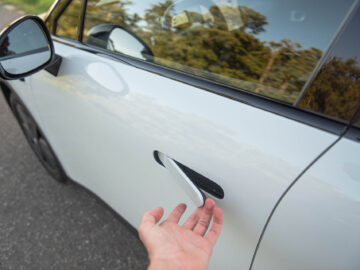
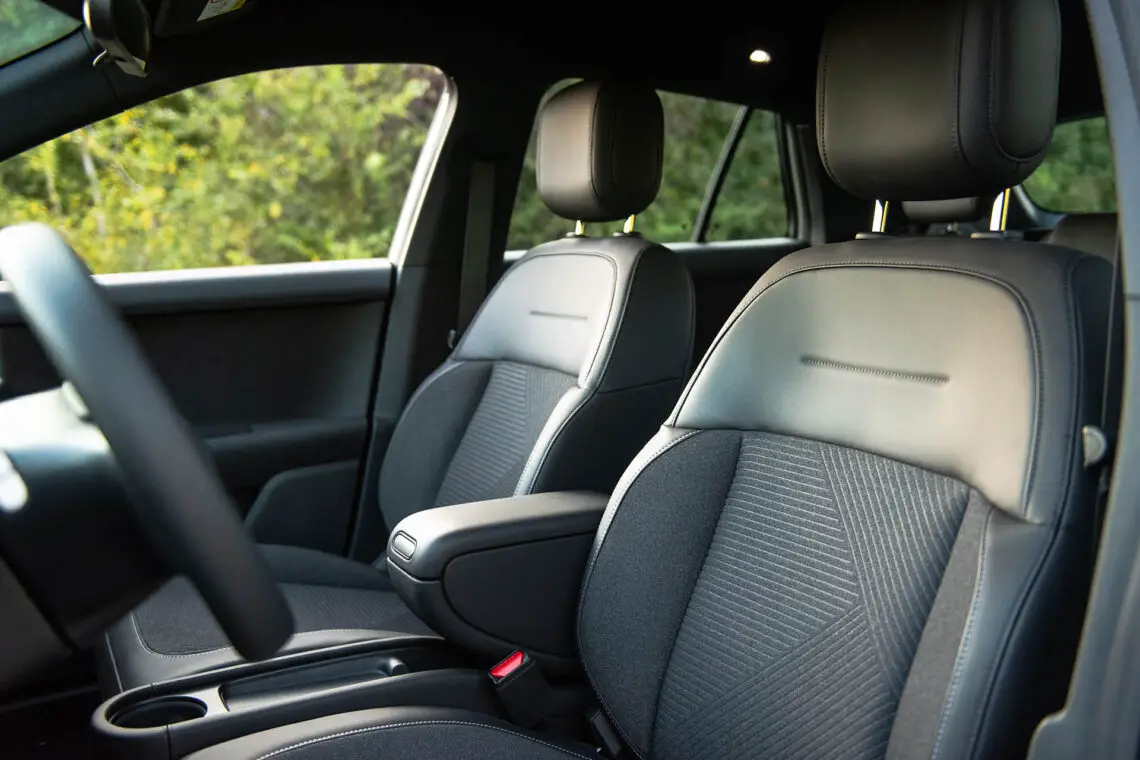
That intuitive operation of the screen says a lot about the quality of the Firefly. Not only does the software work really refined and fast, but the rest of the cabin feels remarkably solid. That feeling is already cultivated when you slam the door. A solid latch sounds. The materials also feel pleasantly soft, and the finish is better than you might expect from a car in this price range. Soft materials are used on all direct contact surfaces. And of course, entirely in keeping with the Firefly character, vegan leather is used, combined with fabric.
Can you drift with the Firefly!
Over to driving this car. We’ll get right to the point, this car has rear-wheel drive! So yes, in theory it can be driven. But we’ll leave this outrageous behavior for now. The electric motor has 142 hp (105 kW) of power and 200 Nm of torque, good for a sprint to 100 km/h in 8.1 seconds. That is more than smooth enough in practice.
In use, the Firefly feels mature. Its compact size makes it easy to steer through sharp turns. The 50% to 50% weight ratio contributes to good dynamics. Not that this Firefly is really sporty, but it positively surprises. The multi-link rear axle contributes to comfort. It remains pleasantly stable in corners, despite its slightly higher body. An additional advantage for you as a driver is that you have a good overview of the traffic situation, helped by the high seat and large windows.
Man and machine go (almost) hand in hand
The amount of technology in the Firefly is almost unprecedented for a B-segment car of just under 30,000 euros. With the push of a button, you turn on the “Pilot,” which uses adaptive cruise control and a lane keeping assistant to make driving very relaxed. The miles really fly under you as you drive from one city to another.
The only thing that could be improved is the Pilot’s tuning. Changing lanes sometimes results in a little struggle with the steering wheel. You have to steer it over the lines with a little force. It would be nice if the lane keeping assistant would give you free rein in this as soon as the turn signal is turned on. A matter of fine-tuning the software, which will most likely take place over-the-air in the near future. Moreover, you can also choose to use adaptive cruise control only. The systems work properly despite this observation.
Surprisingly ample driving range in the Firefly
Even on longer distances, the Firefly manages to put down favorable consumption figures. On paper, the 41.2 kWh battery pack should be good for 330 kilometers of driving range. Now, such a WLTP value is always very optimistic, but on some highway trips the Firefly manages a neat 13 kWh / 100 km. Quick math, that’s 39 kWh for 300 kilometers of driving range. That leaves you with a little power left over even. If you know how to control your right foot, the Firefly knows how to control consumption.
Regenerative braking is also among the options. Presumably, the Firefly therefore registers even better figures in the city. In terms of charging technology, the Firefly also keeps up with the competition. You can charge with 11 kW AC and fast charging (DC) is possible up to 100 kW, excellent figures in this segment. The car does not have a heat pump, but the battery pack seems to be well insulated.
Comparison between Firefly and the competition
And then the big question: how does the Firefly compare to all those European smalls? Priced at 29,900 euros, the First Edition comes richly equipped as standard and comes with a 41.2 kWh battery. If you opt for the Comfort Edition, you will pay 32,500 euros and get luxury extras, such as a panoramic roof, electrically adjustable seats and a power tailgate.
The B-segment starts roughly at 25,000 euros, with the base versions of the Citroën ë-C3 and the Renault 5. Cars that don’t measure up to the Firefly, given the limited amount of options. Judging by the offerings around 30,000 euros, you can see that the Firefly is in the middle of the playing field and is actually a benchmark in this, given its complete package.
Price table compact EVs 2025
| Model/version | Battery | Power | Price |
| Citroen ë-C3 YOU | 44 kWh | 83 kW (113 hp) | 24,700 euros |
| Renault 5 FIVE | 40 kWh | 70 kW (95 hp) | 24,990 euros |
| Citroen ë-C3 PLUS | 44 kWh | 83 kW (113 hp) | 26,900 euros |
| Citroën ë-C3 BUSINESS | 44 kWh | 83 kW (113 hp) | 27,150 euros |
| Renault 5 Evolution (40 kWh) | 40 kWh | 90 kW (120 hp) | 27,990 euros |
| Citroën ë-C3 Aircross YOU CR | 44 kWh | 83 kW (113 hp) | 27,800 euros |
| Citroën ë-C3 MAX | 44 kWh | 83 kW (113 hp) | 29,200 euros |
| Renault 5 Techno (40 kWh) | 40 kWh | 90 kW (120 hp) | 29,990 euros |
| Citroën ë-C3 Aircross YOU ER | 54 kWh | 83 kW (113 hp) | 29,800 euros |
| Citroën ë-C3 Aircross PLUS CR | 44 kWh | 83 kW (113 hp) | 29,900 euros |
| Firefly First Edition | 41.2 kWh | 104 kW (142 hp) | 29,900 euros |
| Renault 5 Evolution (52 kWh) | 52 kWh | 110 kW (150 hp) | 30,990 euros |
| Mini Cooper E | 40.7 kWh | 135 kW (184 hp) | 31,490 euros |
| Renault 5 Iconic Cinq (40 kWh) | 40 kWh | 90 kW (120 hp) | 31,490 euros |
| Nissan Micra Advance (40 kWh) | 40 kWh | 88 kW (120 hp) | 31,590 euros |
| Citroën ë-C3 Aircross PLUS ER | 54 kWh | 83 kW (113 hp) | 31,900 euros |
| Citroën ë-C3 Aircross MAX CR | 44 kWh | 83 kW (113 hp) | 32,000 euros |
| Firefly Comfort | 41.2 kWh | 104 kW (142 hp) | 32,500 euros |
| Peugeot e-208 Style | 50 kWh | 100 kW (136 hp) | 32,700 euros |
| Renault 5 Techno (52 kWh) | 52 kWh | 110 kW (150 hp) | 32,990 euros |
| Lancia Ypsilon Electric | 54 kWh | 115 kW (156 hp) | 33,700 euros |
| Citroën ë-C3 Aircross MAX ER | 54 kWh | 83 kW (113 hp) | 34,000 euros |
| Renault 5 Iconic Cinq (52 kWh) | 52 kWh | 110 kW (150 hp) | 34,490 euros |
| Opel Corsa Electric | 50 kWh | 100 kW (136 hp) | 34,499 euros |
| Nissan Micra Advance (52 kWh) | 52 kWh | 110 kW (150 hp) | 34,590 euros |
| Mini Cooper SE | 54.2 kWh | 160 kW (218 hp) | 34,990 euros |
| Opel Corsa Electric LR | 51 kWh | 115 kW (156 hp) | 35,499 euros |
| Renault 5 Roland-Garros (52 kWh) | 52 kWh | 110 kW (150 hp) | 35,990 euros |
| Nissan Micra Evolve (52 kWh) | 52 kWh | 110 kW (150 hp) | 36,490 euros |
| Lancia Ypsilon LX Electric | 54 kWh | 115 kW (156 hp) | 36,700 euros |
| Peugeot e-208 GT Avantage | 51 kWh | 115 kW (156 hp) | 36,950 euros |
What do you think is important?
In Comfort, you improve in terms of options, but the battery capacity remains the same. That makes you think, because other m Brands offer a larger battery pack precisely for this amount. Take the Renault 5, for example, with a 40 kWh or 52 kWh battery pack. This will take you roughly from 300 to 400 kilometers of electric driving range. Other competitors, such as the Nissan Micra, Peugeot e-208, Opel Corsa Electric and Lancia Ypsilon, offer similar capabilities.
The question then becomes, what matters to you? The tech and comfort of the Firefly or the greater range of the other models? A note here is that the most dressed-up versions of the competition including a larger battery pack, are more expensive than the Firefly. So, the Firefly’s position in the playing field is not that crazy yet. Only the battery choice is (still) limited.
Conclusion driving experience with the Firefly
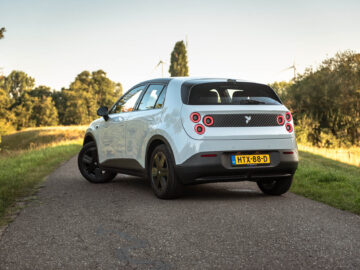
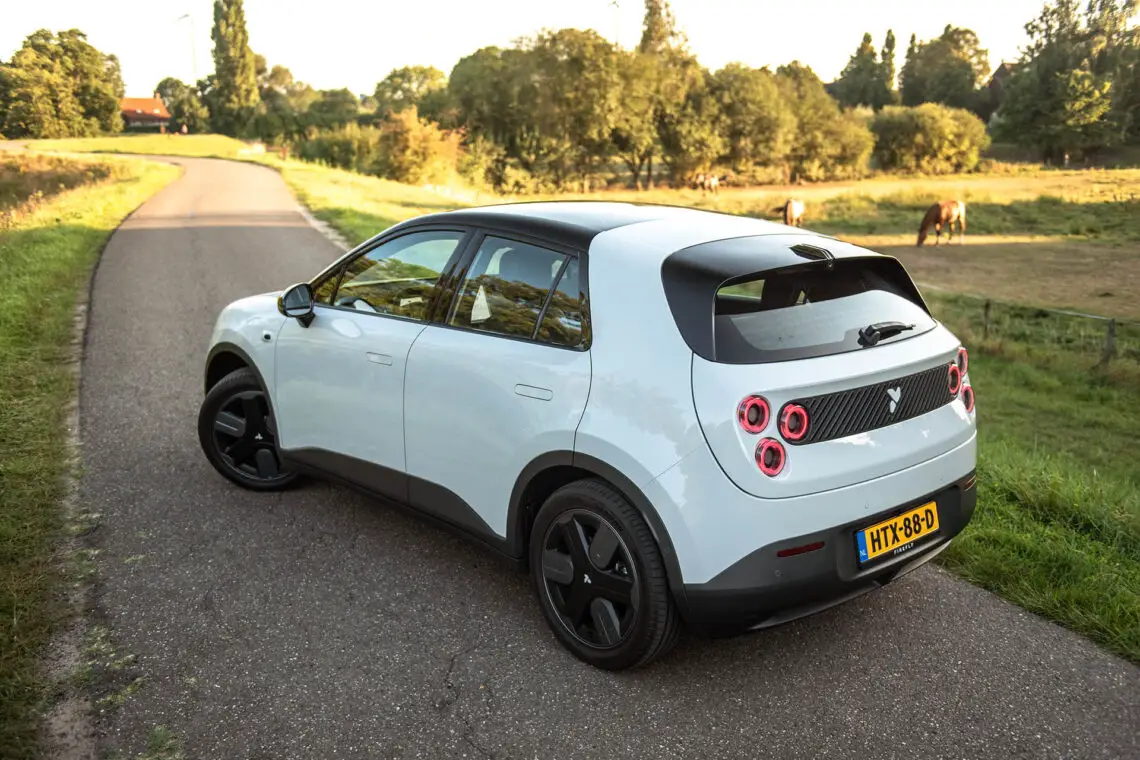
For those who value technology and luxury, the Firefly is an irresistible deal. Instead, for those who value range above all else, European competitors may be a better choice. With its spacious interior and smart layout, this compact car is surprisingly accommodating. Add to this the fact that much technology is standard, even in the base trim, and the little car has a fresh design with its own identity within the B-segment. This is highlighted by the rear-wheel drive, so it drives more fun and smoothly than you expect. So, with its tight pricing, the Firefly has a lot in it to shake up the B-segment considerably.
We think it is a Chinese shot in the European rose.