Review – Dacia Duster Extreme (2025)
Is this really a Dacia?
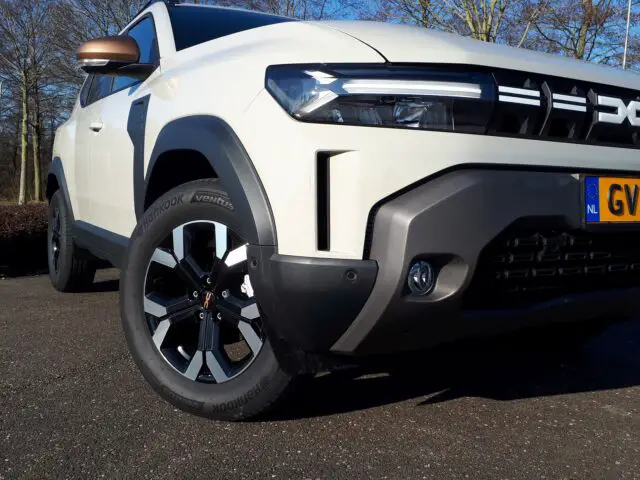
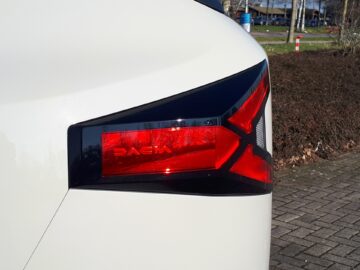
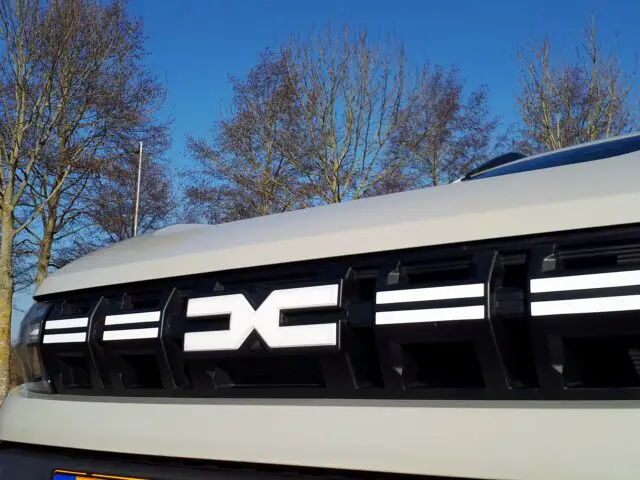
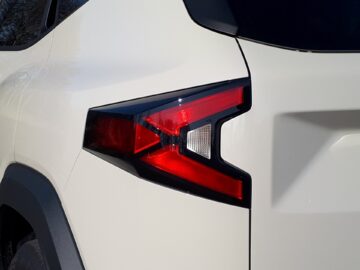
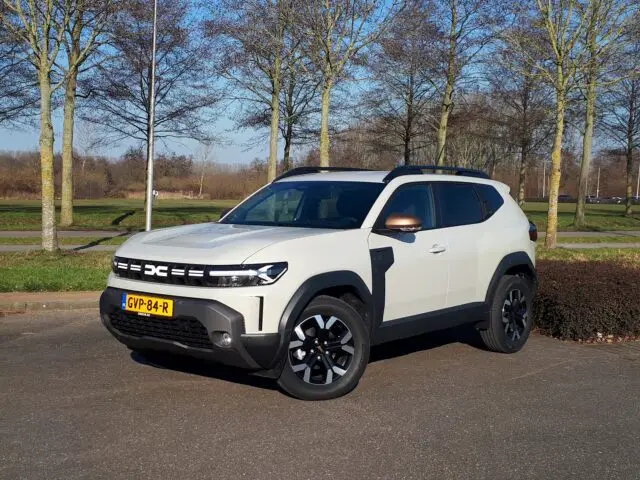
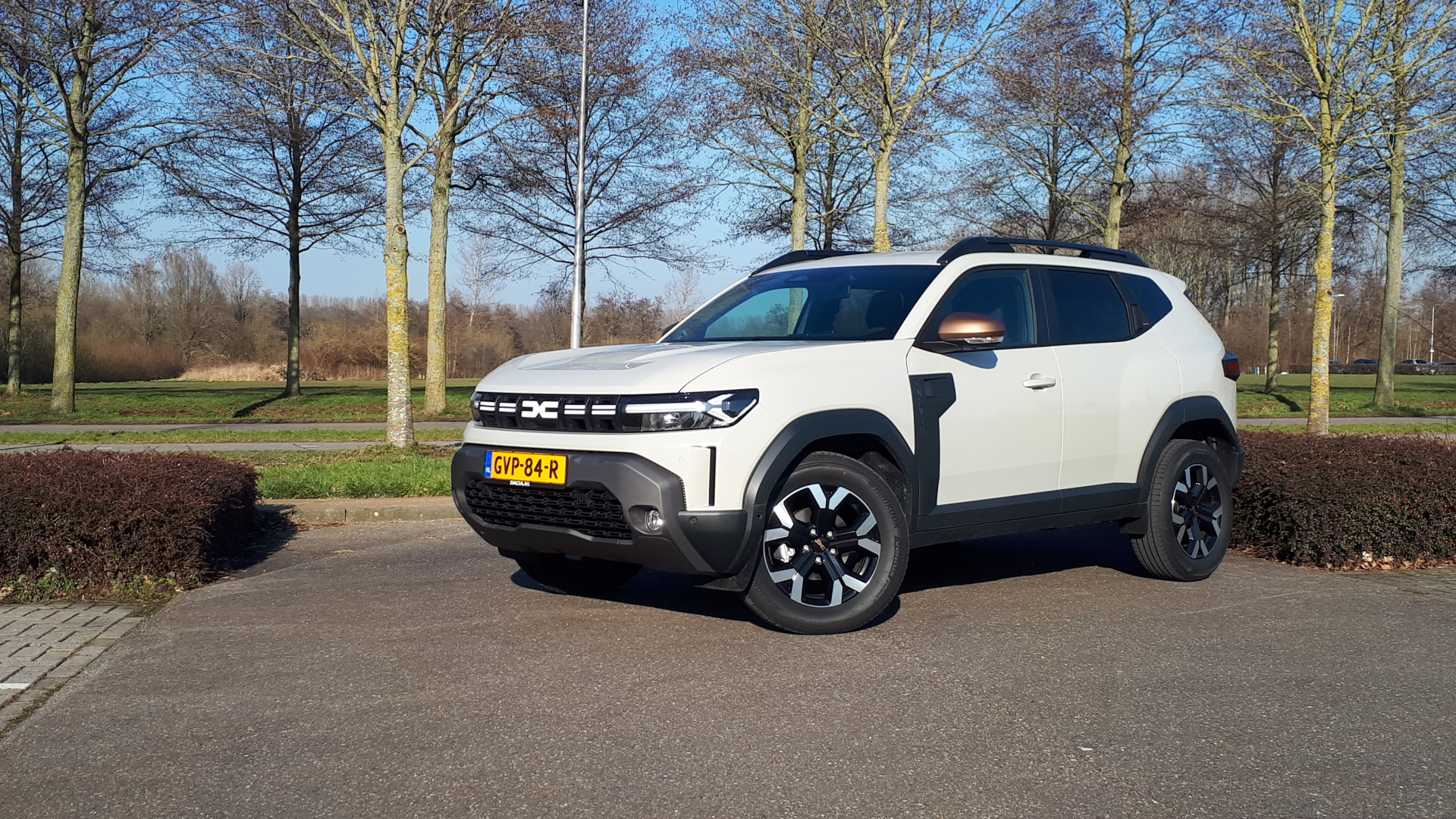
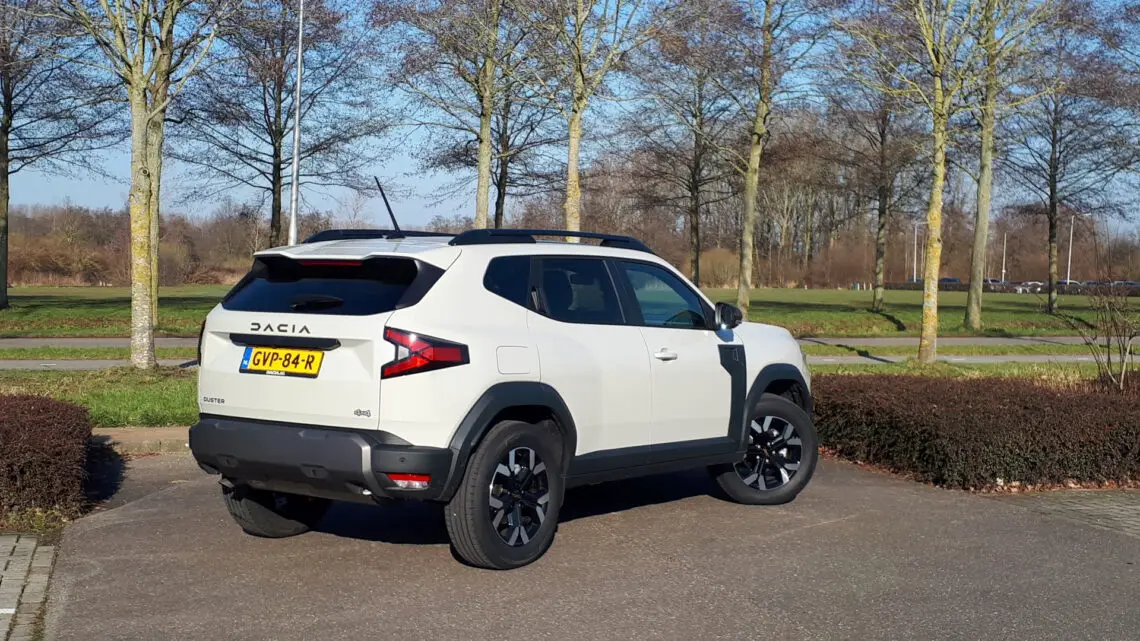
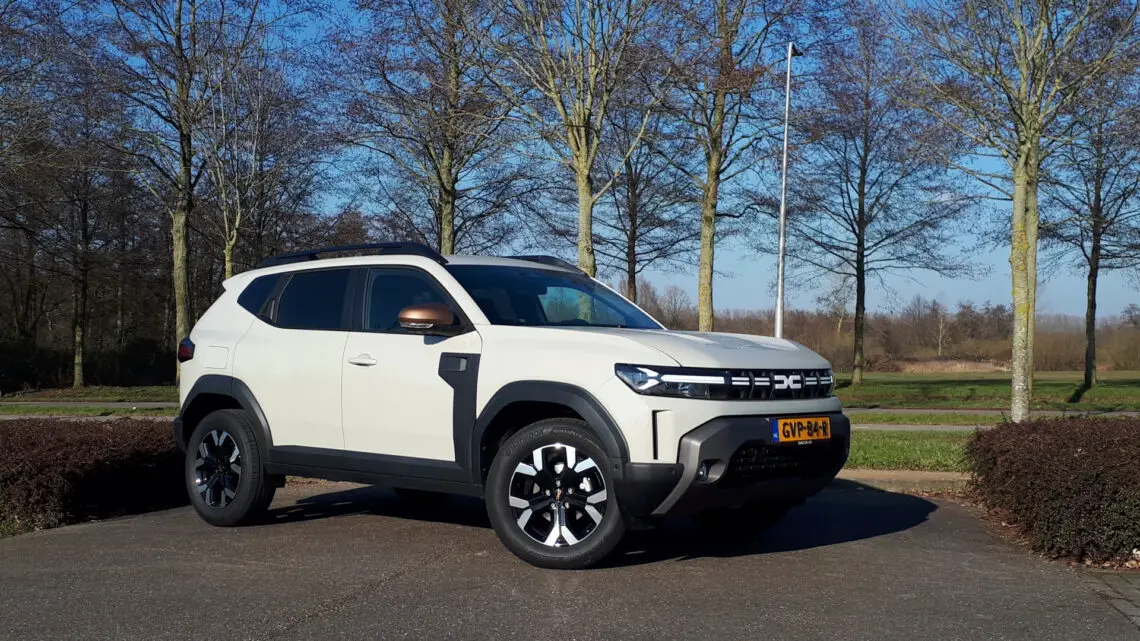
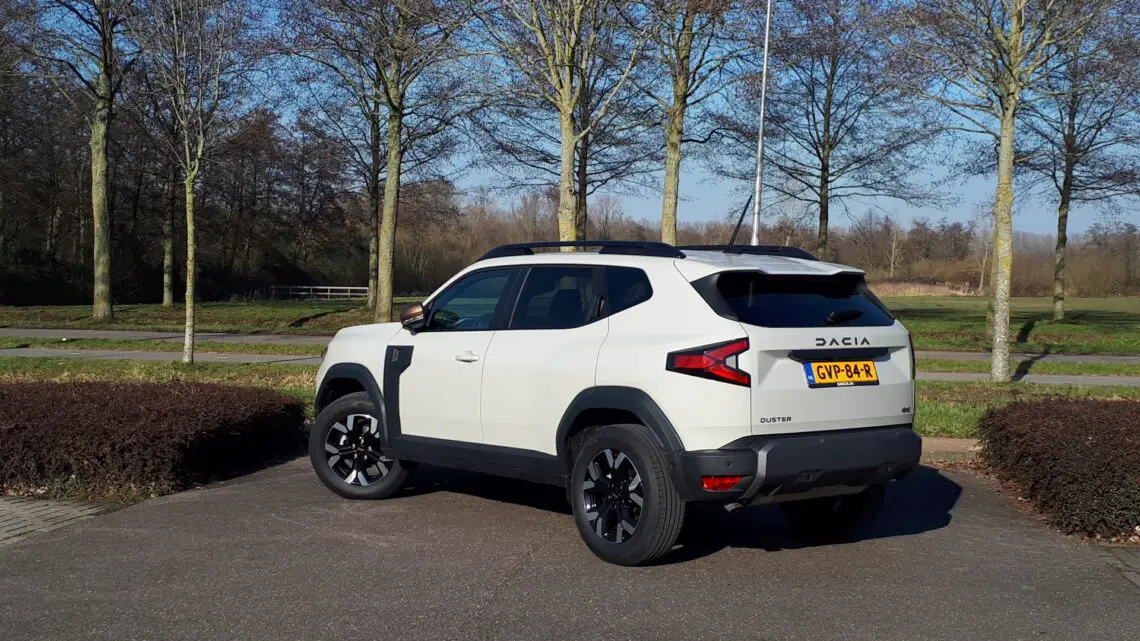
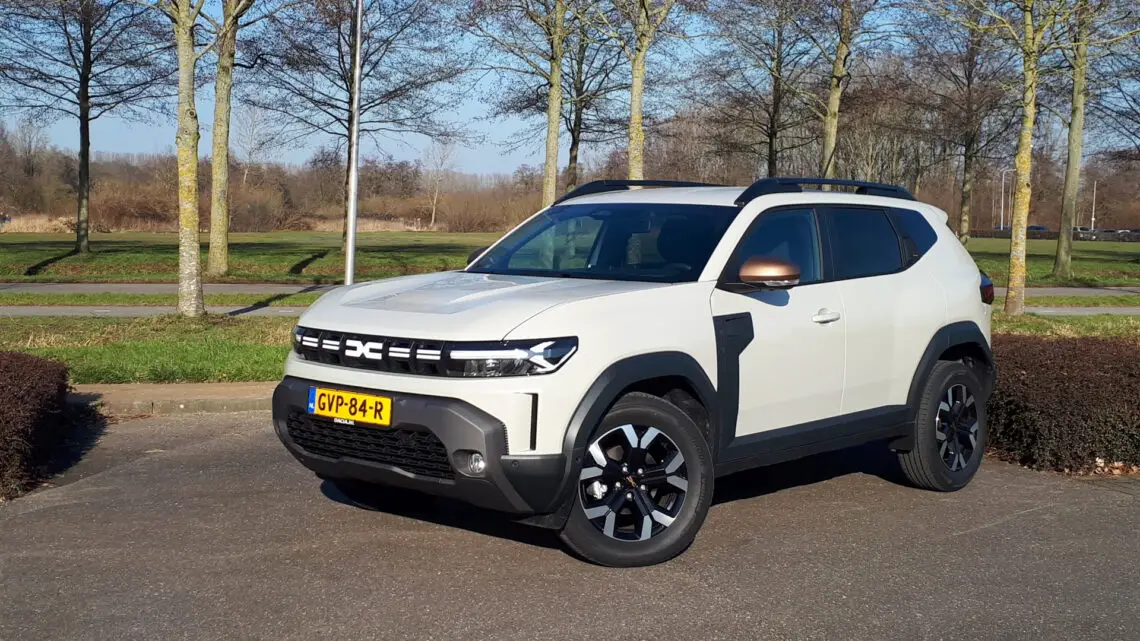
A question we heard more than once during the test week. Not only does Dacia (since 2021) have a new logo, but the rest of the car’s design has been completely redesigned. Dacia has a new brand face, to speak in technical terms. An established feature, for example, is that headlights and grille form a beam, so to speak, across the front end. All in all, the car has a higher-quality appearance than before.
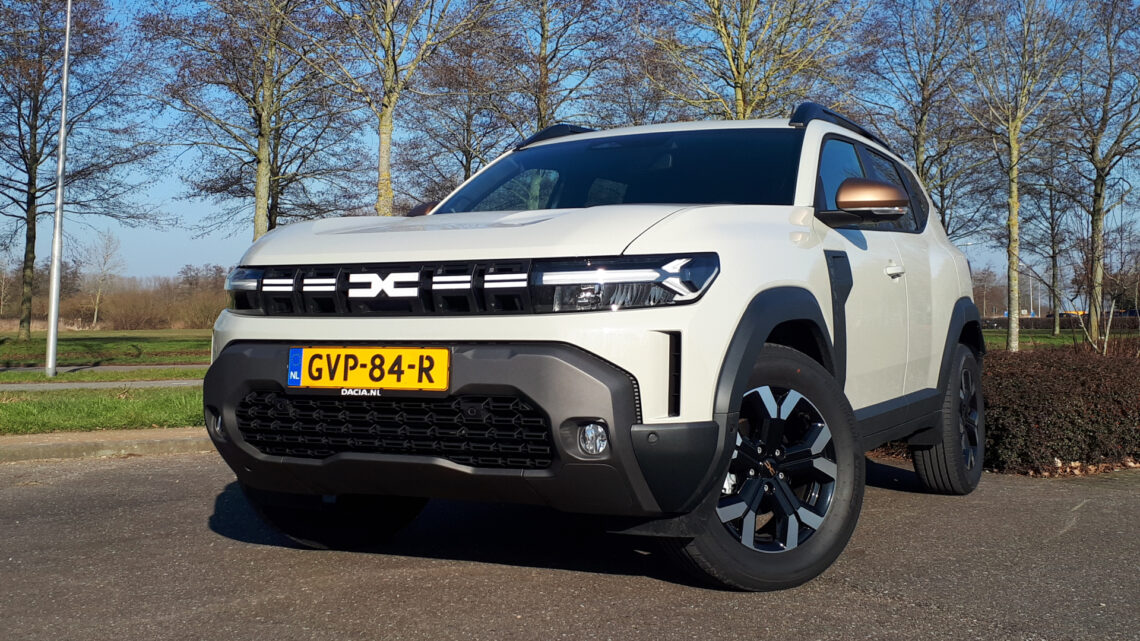
That Dacia Duster sure has gotten big hasn’t it?
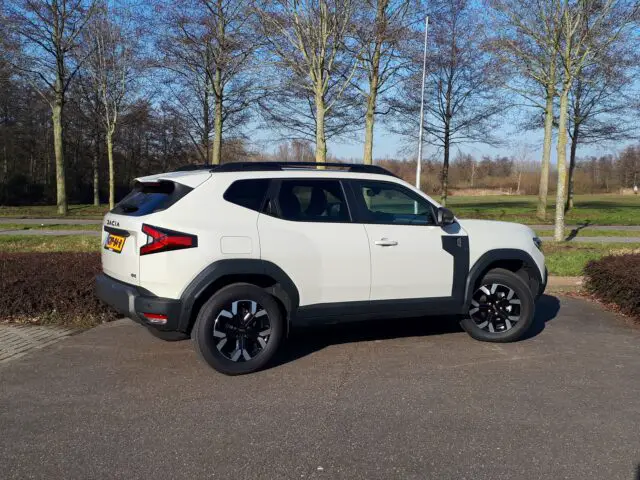
Well, that’s not so bad. Because of its higher nose and more square design, the new Dacia Duster looks a lot bigger than previous models. However, if you look at its dimensions, it is only a few millimeters longer than the previous generation. In fact, it only differs by about three centimeters from the first 2010 model. In width and height, the three model generations do not differ much either.
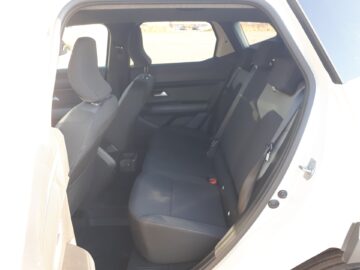
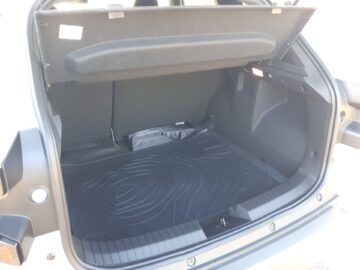
What is noticeable, however, is that the luggage space of the new Duster is somewhat smaller, with an official capacity of 453 liters compared to more than 470 liters on the earlier models. Nevertheless, that still leaves a generous “cargo space. It is also roomy in the back seat. If we sit ‘behind ourselves’ with our 1.80 m, we still have plenty of room in the back. Both for head and legs and in width.
How is the interior of the Dacia Duster these days?
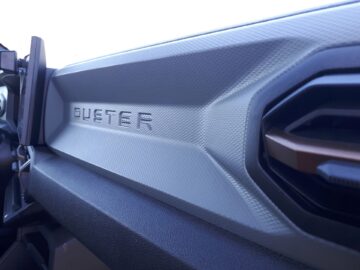
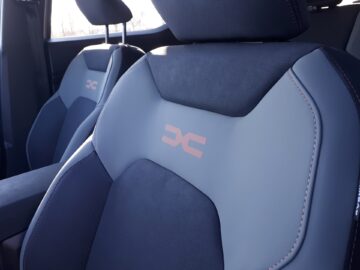
The hard plastics are still there, if that’s what you mean. Still, the surfaces have such a texture and finish that it does not appear cheap at all. Moreover, those hard materials are easy to clean and all the interior parts that you normally touch regularly just feel nice. The seats are comfortable and offer good support.
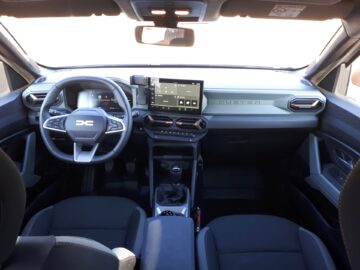
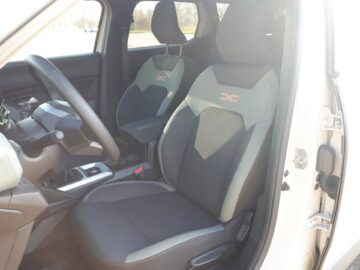
What about the Dacia Duster’s equipment?
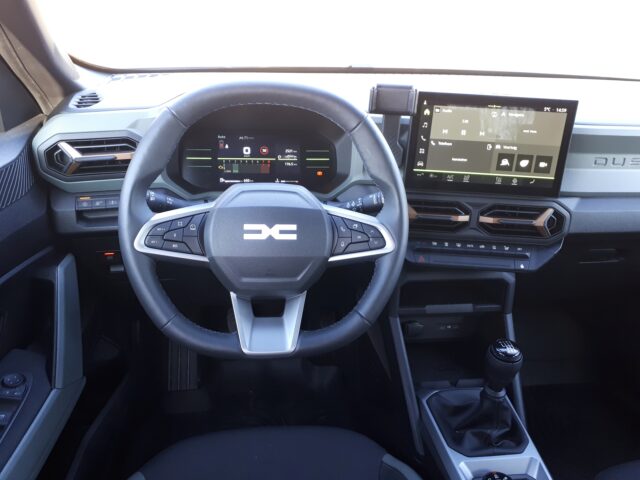
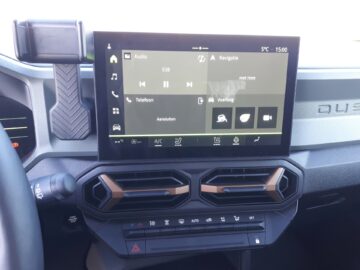
The Dacia Duster is available in four trim levels: Essential, Expression, Extreme and Journey. As the name suggests, the Essential provides the essentials, but truly bare-bones cars no longer exist. Thus, this base model is simply equipped with things like air conditioning and cruise control. It does lack an infotainment system, though, and we don’t see that very often in 2025. Nice are the standard 16-inch steel rims, for a robust off-road look.
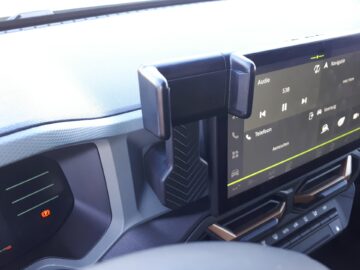
However, via Bluetooth and USB, you can use your phone as an infotainment system just fine. Just have all the functions you want without having to pay for a built-in system as well. A rearview camera isn’t available with the Essential either, though it does have the usual assistance systems like lane keeping assist and an emergency braking system. With the higher equipment levels, you can make the Duster as complete as you want. From an infotainment system with built-in navigation and automatic air conditioning to a digital instrument cluster, keyless entry and an Arkamis 3D Sound System.
What engines are available for the Dacia Duster?
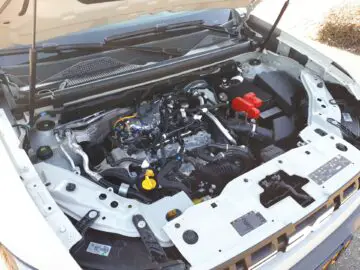
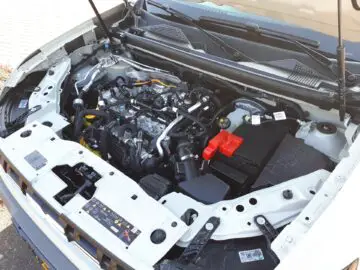
There are three engines to choose from: the TCe 100 Eco-G, the TCe 130 mild hybrid, and the Hybrid 140. The TCe 100 Eco-G is a 74 kW (100 hp) strong 1.0-liter three-cylinder gasoline engine that can also run on LPG from the factory. This is virtually unique for Dacia these days. Slightly more powerful is the TCe 130, a 1.2-liter three-cylinder gasoline engine with 96 kW (130 hp) and optional all-wheel drive. Both engines are always combined with a six-speed manual transmission. Finally, the Hybrid 140 has a 1.6-liter four-cylinder gasoline engine with 104 kW (141 hp) and a six-speed automatic transmission. Further technical data can be found on this page.
What is the fuel consumption of the Dacia Duster?
It depends, of course, on the engine variant. The TCe 100 entry-level engine has an official consumption of 6.5 l/100 km (1 on 17) on gasoline and 8.0 l/100 km (1 on 12.5) on LPG. Thanks to mild hybrid technology, the more powerful TCe 130 is more economical: 5.5 l/100 km (1 on 18.2) or 6.0 l/100 km (1 on 16.7) with all-wheel drive. As expected, the Hybrid 140 is not only the most powerful, but also the most economical: 5.0 l/100 km (1 on 20.0).
Those are the official WLTP values. What about in practice? We drove the TCe 130 4×4 for a week and ended up averaging 6.1 l/100 km (1 on 17) in practice. In other words: nicely the factory specification. We did drive mainly commuting on motorways and N roads. If you go into the mountains with a lot of luggage, then of course you arrive at a less favorable value.
How does the Dacia Duster drive?
What is particularly noticeable during the first few meters is that the steering wheel and pedals are very light. You get used to that quite quickly. The first gears are very short, so in city traffic you have to change gears quite a lot. However, you can skip gears once you get the hang of it. The first gear is also mainly meant as a crawling gear for off-road driving. Driving off in second gear is perfectly possible. Fourth and higher gears are quite long, allowing for easy shifting.
What also stands out is the comfortable suspension, which smooths out uneven road surfaces nicely. A fine distinction in a market where many cars have sporty-tinged suspension. At the same time, the damping remains firm enough to keep the car from leaning too much when cornering. Seat comfort is also good, including seat support.
Is the new Duster still suitable for off-road use?
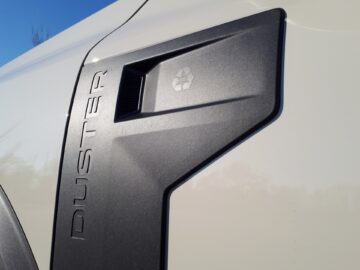
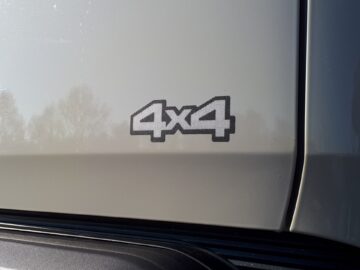
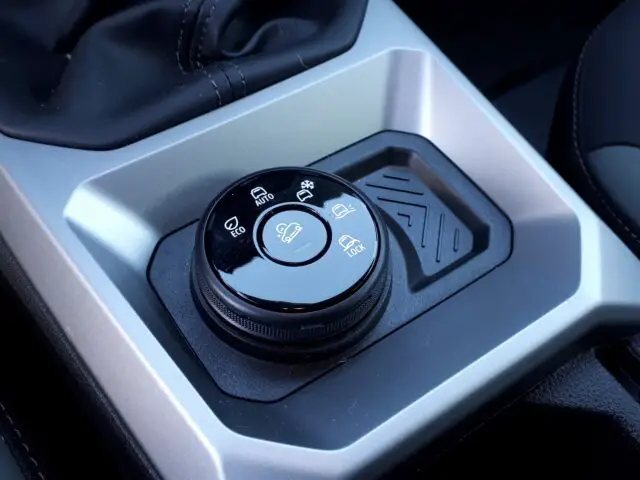
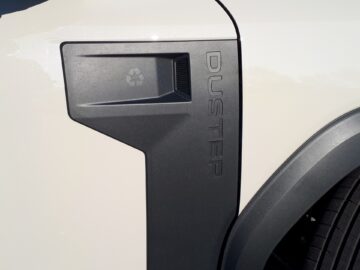
Yes indeed, although it depends a bit on which version you buy. As mentioned, the TCe 130 is the only engine variant with all-wheel drive, and even then it is optional. Also optional is the 4×4 Terrain Control transmission, with different driving modes for various surfaces. The Duster also has large approach and roll-off angles. The gray plastic body parts are made of the new material Starkle. This slightly speckled material – partly from recycled plastic – is not painted or otherwise processed, so scratches and other (smaller) damages are hardly noticeable.
What does a new Dacia Duster cost?
The Dacia Duster currently has a starting price of exactly 27,000 euros, for the TCe 100 as Essential. For the more powerful TCe 130 you sit at 29,700 euros and the Hybrid 140 comes from 32,000 euros, but both are immediately an Expression. Within the same equipment level, the prices of the TCe 100 and 130 do not differ much, but the Hybrid will always be more expensive. If you want all-wheel drive, you are immediately at 36,800 euros. Not only does it have a slightly higher fuel consumption and therefore higher emissions(and thus bpm), the 4×4 is always the richly equipped Extreme version. Our test car that you see in the pictures is such a 4×4 Extreme. Together with some more options, the total price is almost 39,000 euros.
Those are hefty sums, especially when you consider that the original Duster was available in 2010 starting at around 16,000 euros. But then again, compared to 2010, all new cars are expensive, for various reasons. If you put the prices and equipment of the Dacia Duster next to its direct competitors, it is still quite a competitive offering. In that respect, Dacia’s much-for-little approach has not changed much.
So what are the main competitors?
At first glance, the Dacia Duster is one of many SUV models in the (relatively) compact segment. The Dacia Duster does occupy a distinctive position within that market. There is a strong focus on practical features and, as one of the very few, it even still stands its ground off the asphalt. In addition, the Duster offers relatively a lot of car for its money: models with similar dimensions are often a lot more expensive, while cars in the same price range are often smaller and less spacious.
Models in the same price range as the Dacia Duster are compact SUVs such as the Renault Captur, Peugeot 2008, Skoda Kamiq, Hyundai Bayon and Kia Stonic. But then again, most of these are smaller. Those looking for more space quickly end up with models like the Suzuki S-Cross, Hyundai Kona or Nissan Qashqai, but these again tend to be more expensive. Perhaps the biggest competitor comes from home: the Dacia Jogger, which is also very practical and competitively priced.
Is the Dacia Duster still recommended?
In short, the Duster has an interesting and distinctive market position. Yes, there are comparable cars with nicer interior finishes, more luxurious equipment or finer handling, but they also cost more. If you are looking for a not too big, practical SUV, you almost can’t ignore the Duster. At the same time, it is no longer the absolute budget stunner it once was. Still, the Duster remains a no-nonsense SUV that remains true to its core values despite all. That it is still so popular is therefore no coincidence.