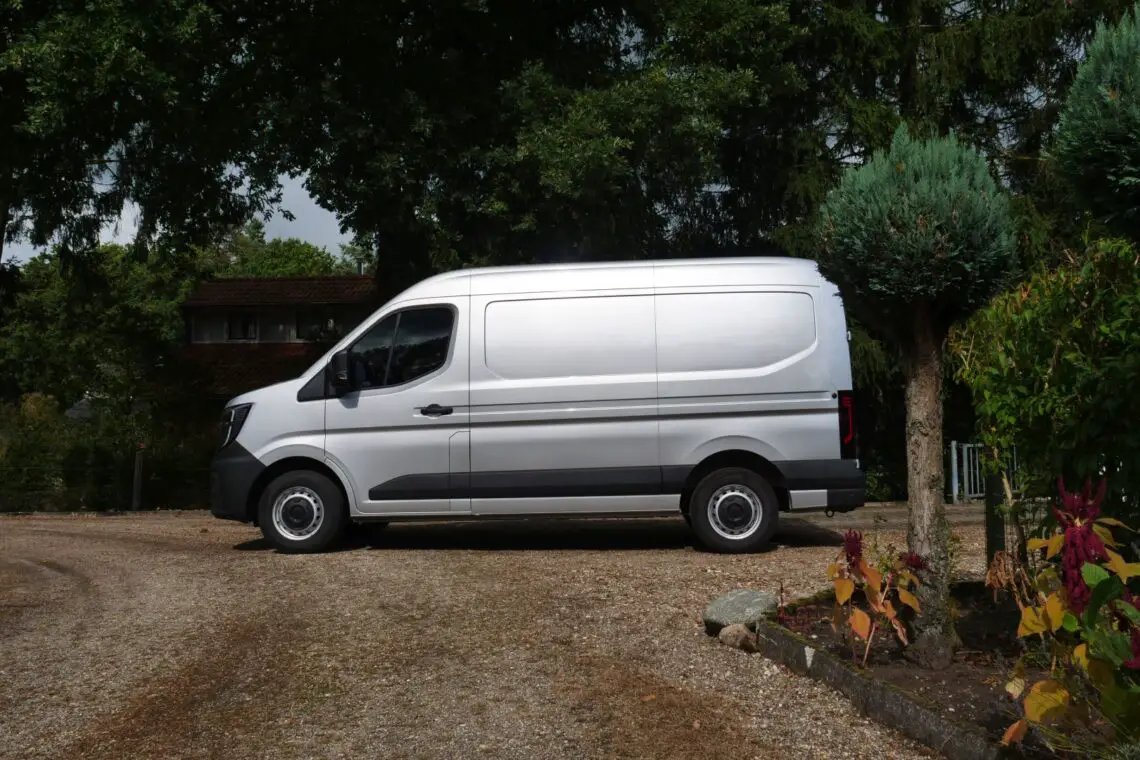
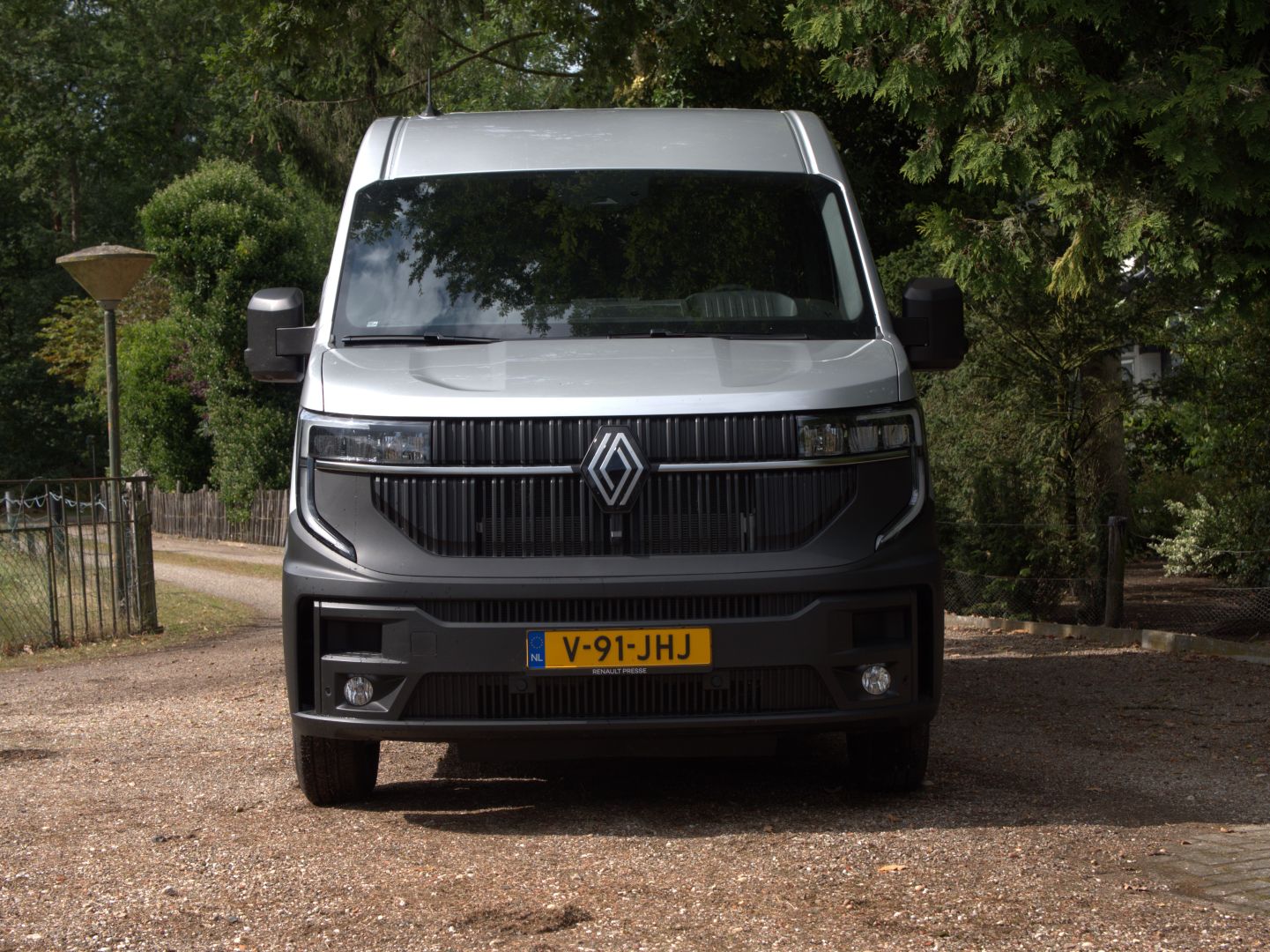
Renault Master E-Tech Electric (2025) Review
Van of the Year
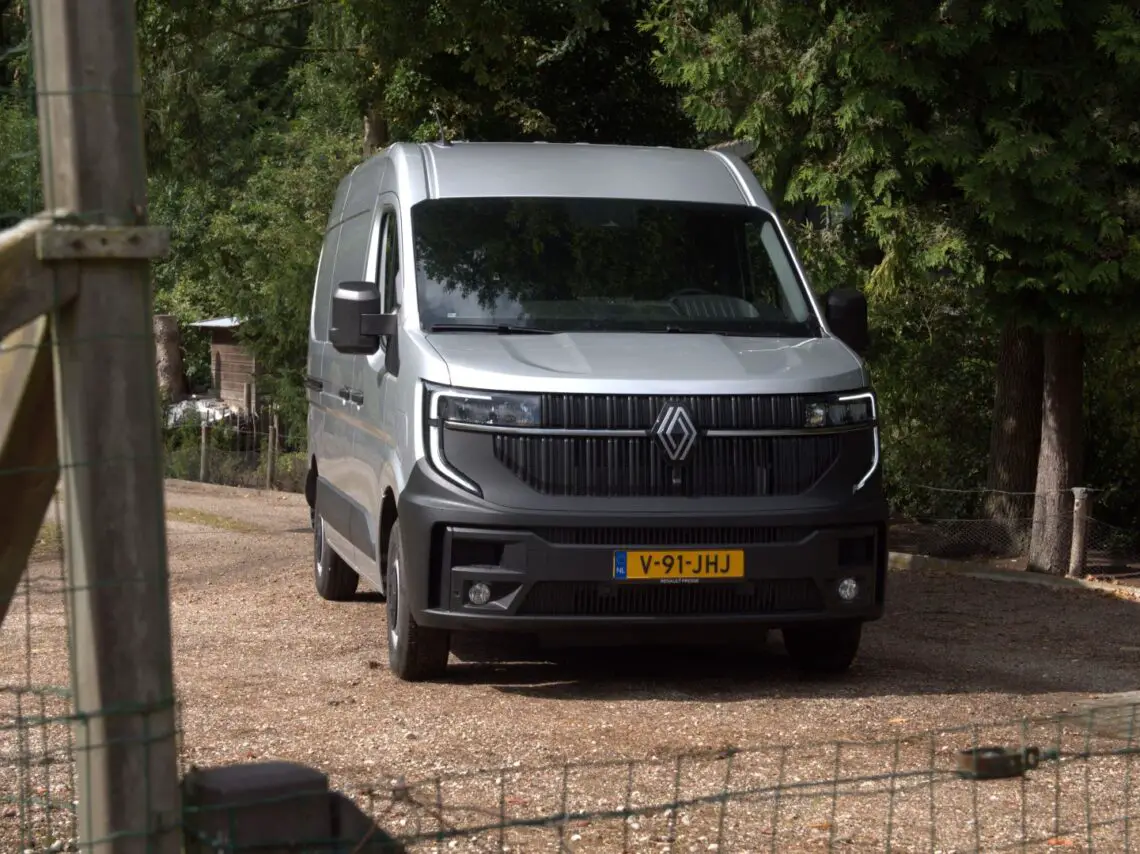
Many consumers still find electric cars exciting. After all, you can’t fill them up in five minutes. Entrepreneurs also share these concerns, because a company car should always be available and preferably be able to run day and night. With that in mind, Renault offers the new, fourth-generation Master with different powertrains: diesel, electricity and even hydrogen.
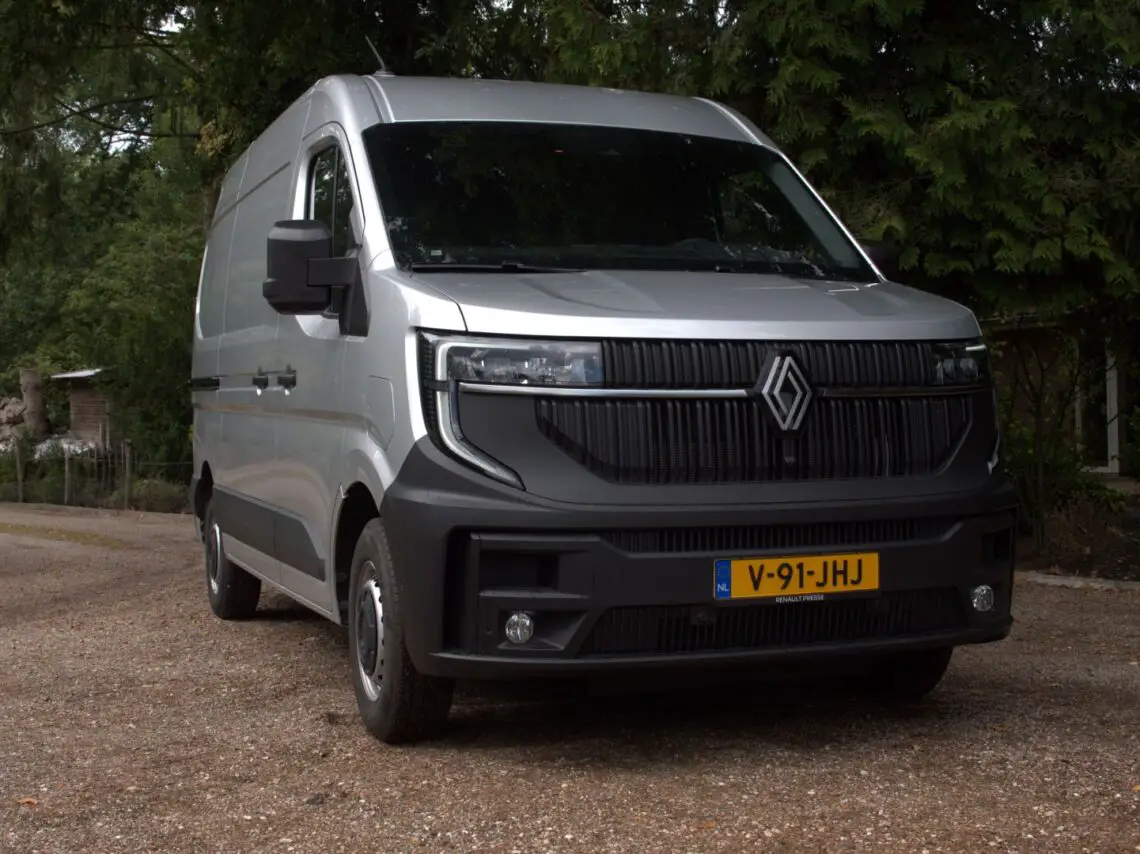
With the diesel version you can drive to southern Spain in one stroke, but the electric version also has a long run. It is available with two battery variants. The 40 kWh version gets up to about 180 kilometers (WLTP) and is especially suitable for city driving. There is also the 87 kWh long range, good for a theoretical range of over 410 kilometers.
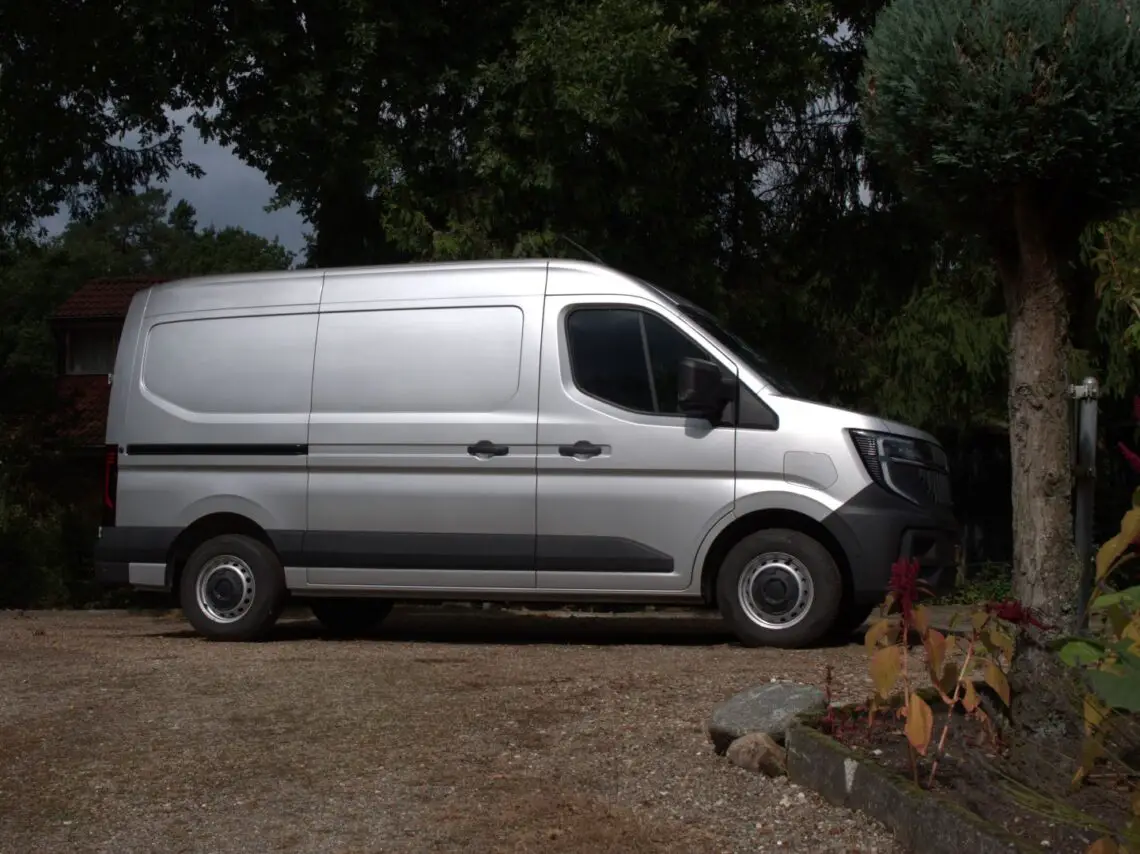
Practical Experience
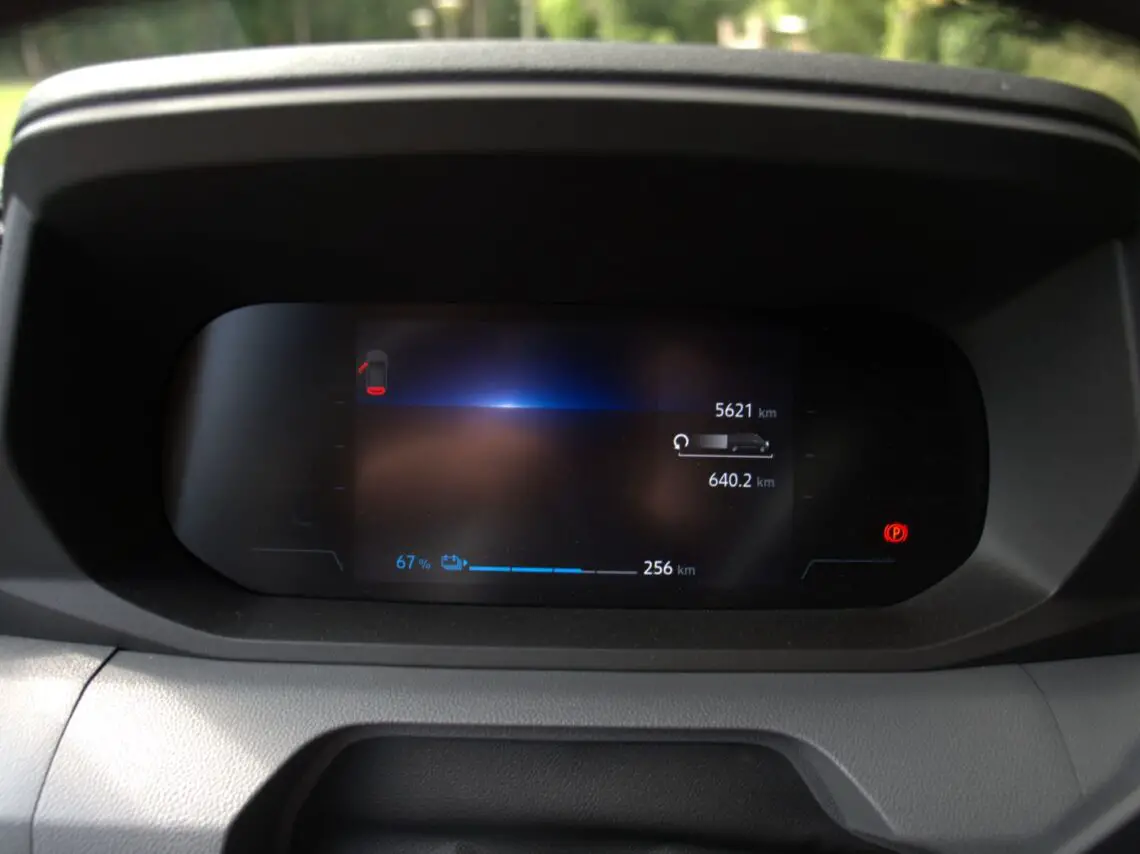
We drove the 87 kWh version for a week and put it through its paces. Long highway trips, from the east to the west of the Netherlands and back – without charging – yielded a practical range of about 350 kilometers. A neat score. Our test took place in the summer, with pleasant weather conditions. When the temperature drops well below zero, the range probably drops to about 250 to 300 kilometers. That, too, is more than enough for a working day for many companies.
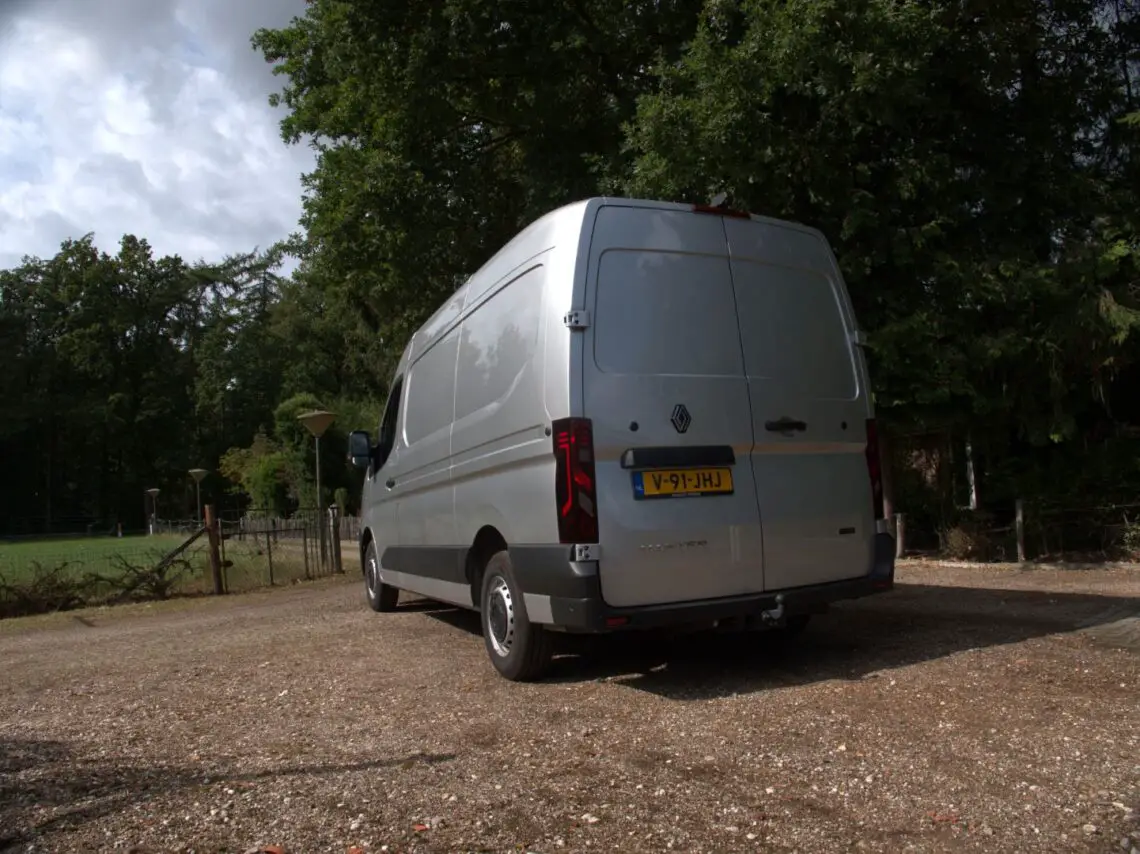
load
Fast charging can be done up to 130 kW DC. That adds about 250 kilometers of additional driving range in half an hour. In addition, the Master supports 22 kW AC charging, twice as fast as most electric vehicles. A full charge then takes about four hours.
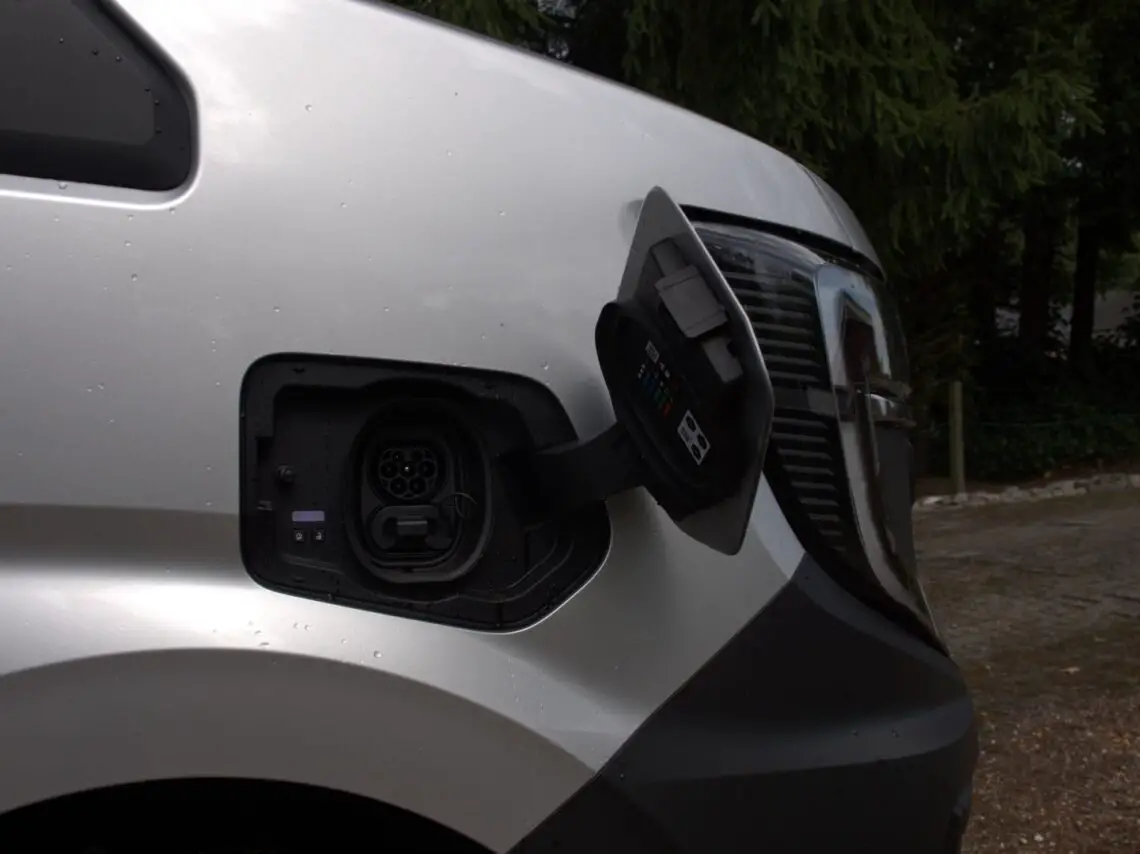
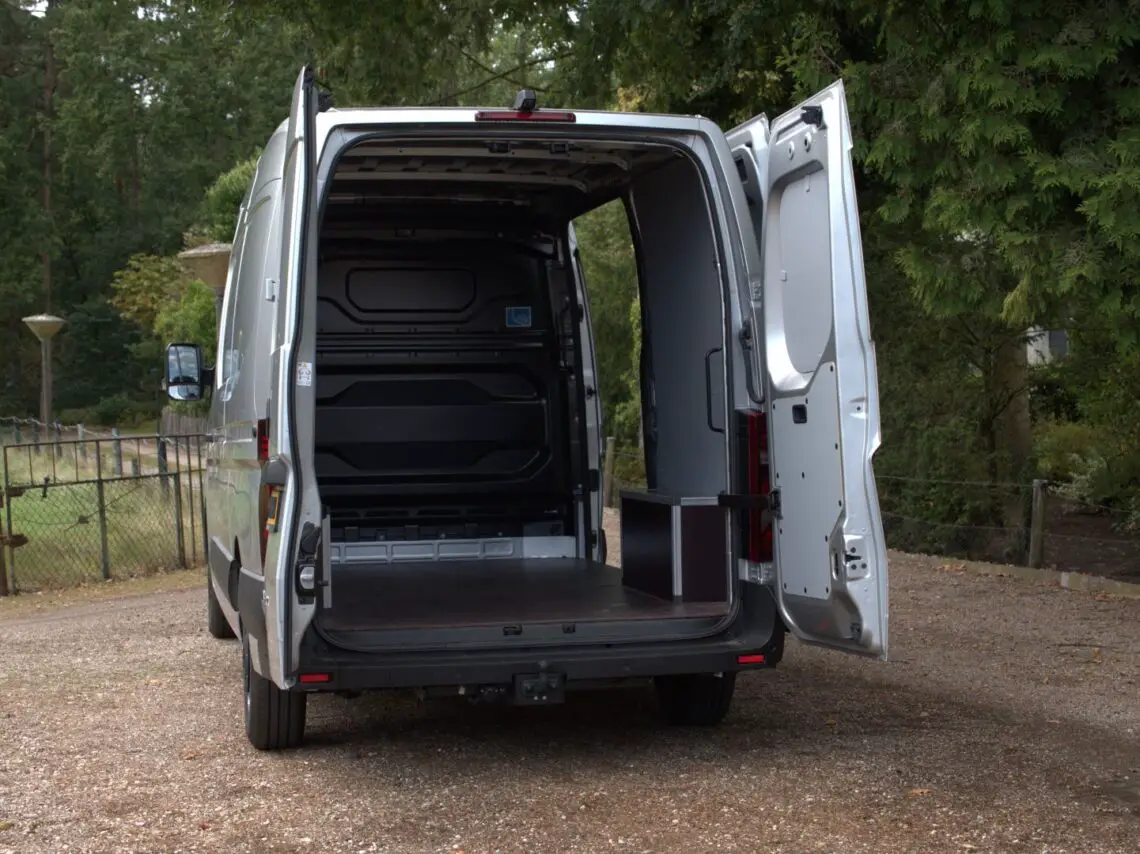
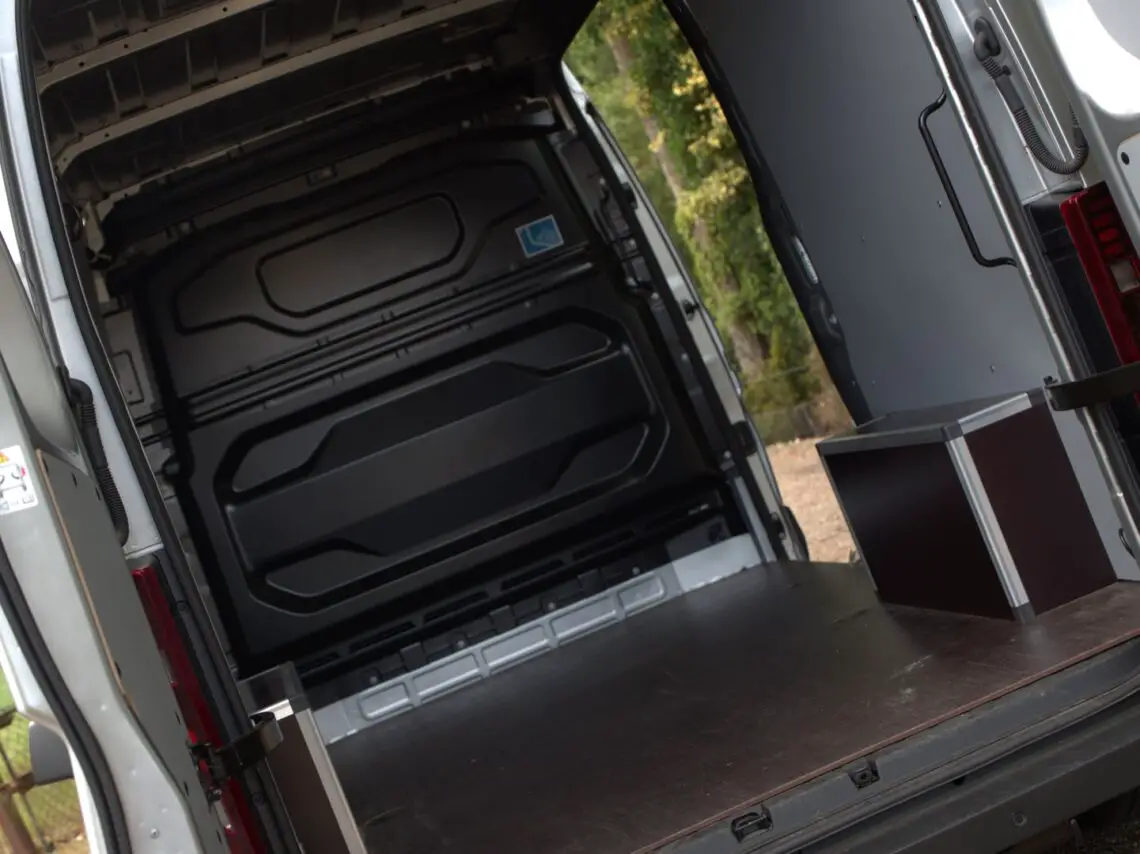
cargo space and capacity
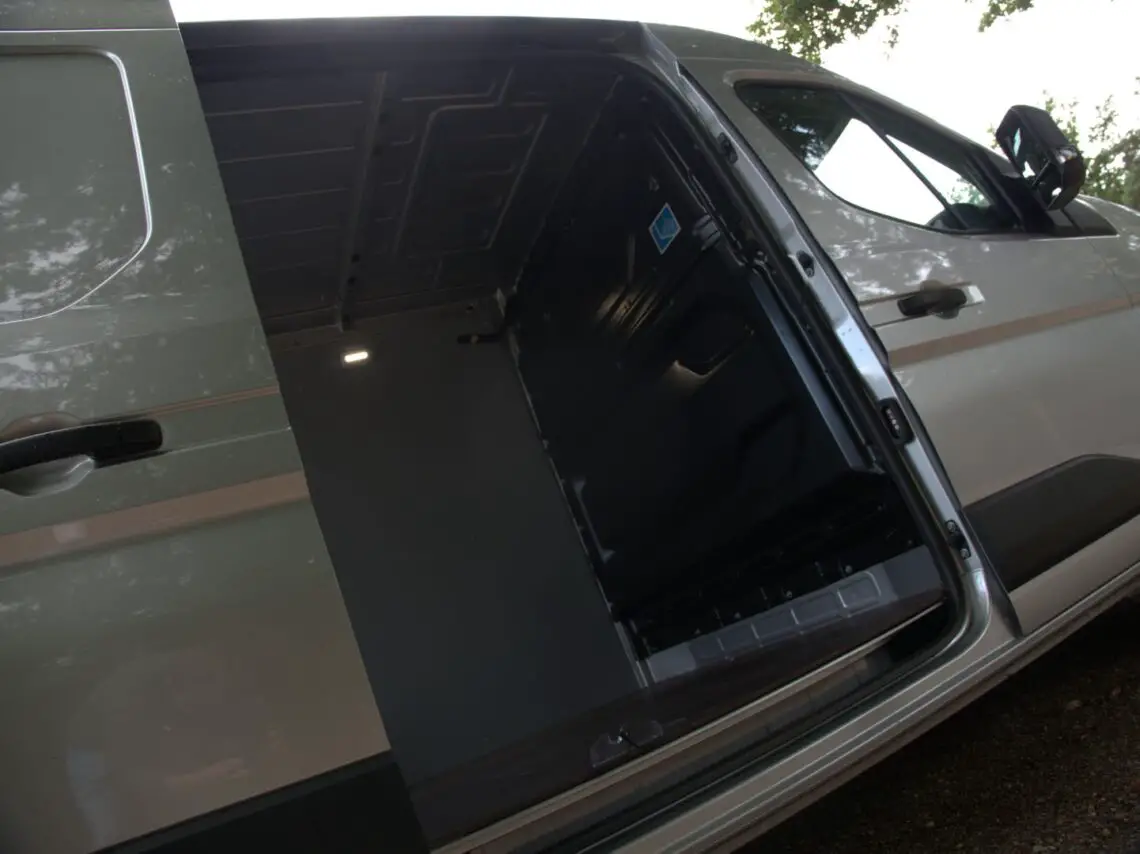
The Renault Master is available in several length and height variants. We drove the L2/H2 version, good for:
- 10.8 m³ loading volume
- 1.88 meters headroom
- 3.23 meters cargo floor length
- 1,625 kg load capacity
- 2,500 kg towing weight
With a maximum permissible total weight of 4 tons, this is among the heavier duty electric vans. In this respect, therefore, the Master E-Tech is hardly inferior to a diesel variant.
Energy Management
The Master features systems that reduce energy consumption. These include regenerative braking, a heat pump for efficient climate control and a thermal battery management system. Renault claims that together these measures can reduce consumption by over 20%. And we have to admit: during our week of testing, we didn’t have a moment of range anxiety.
Interior and operation
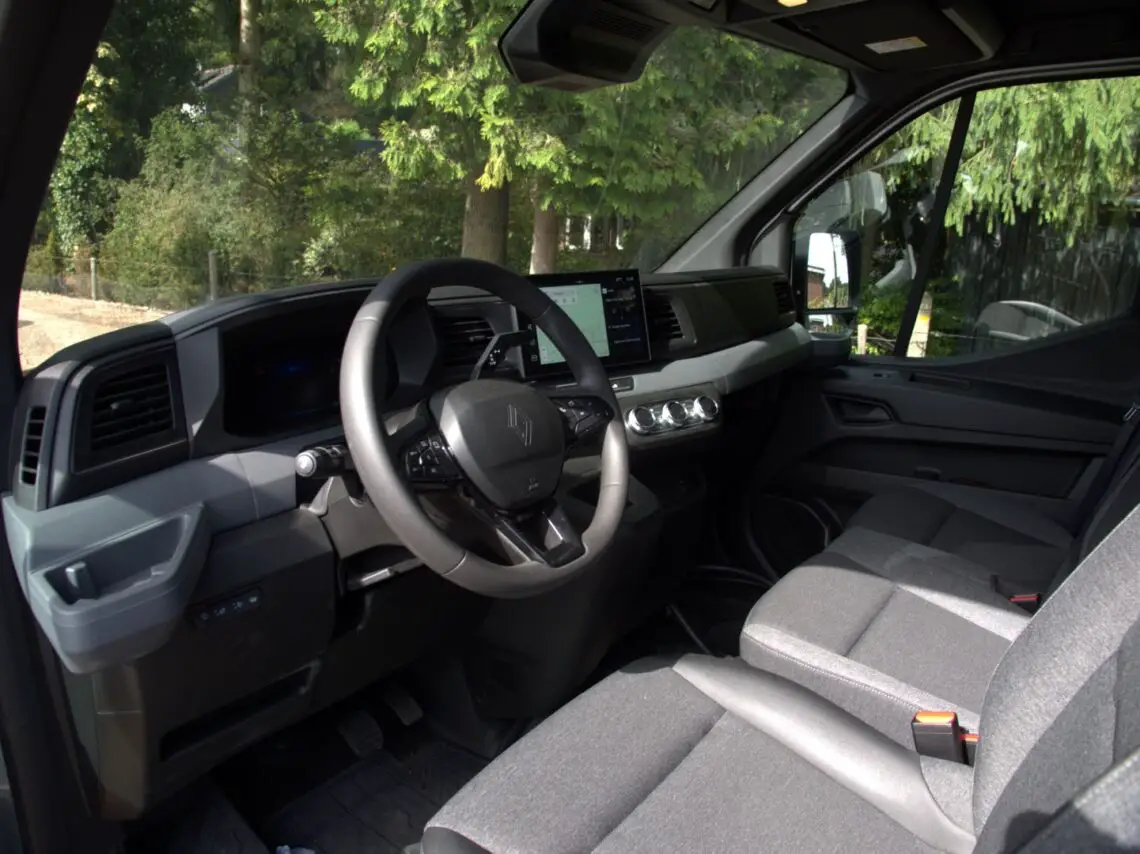
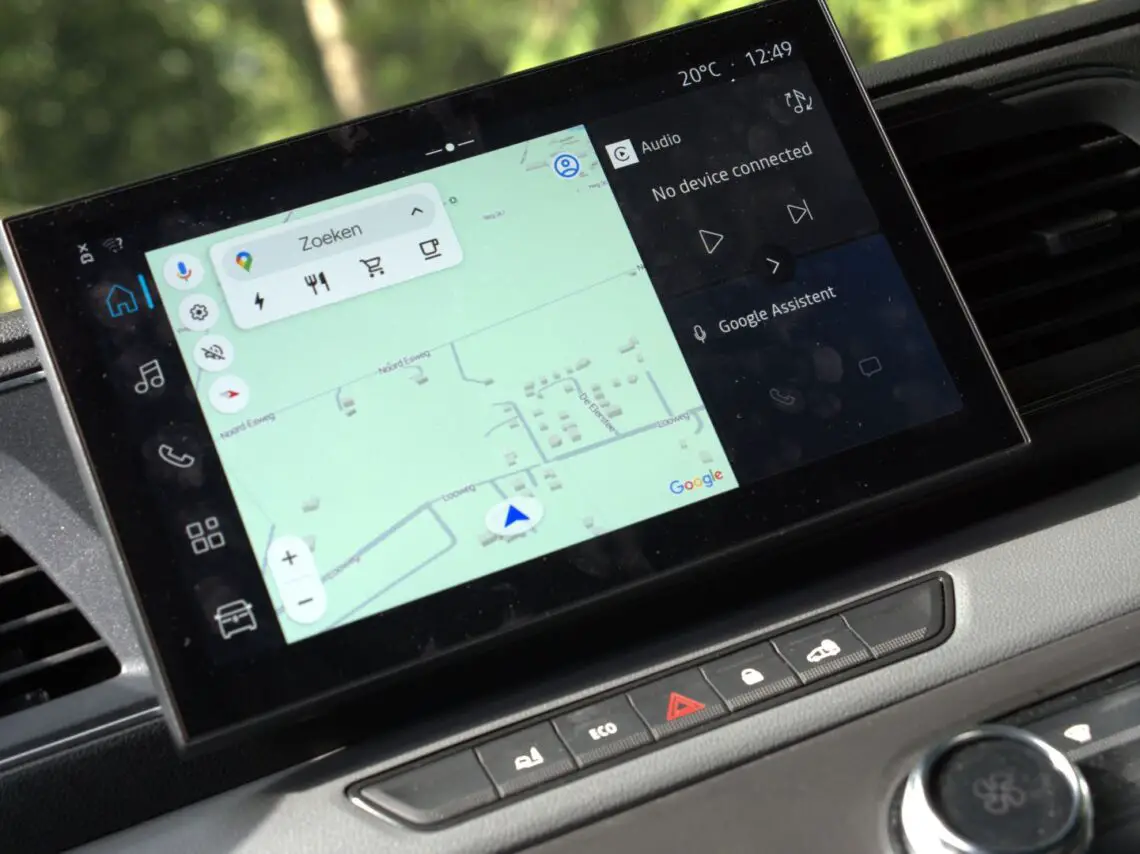
The interior is spacious, with plenty of practical storage options: compartments in the dashboard, drawers, space under the passenger seat and a fold-down seatback that doubles as a work surface. The standard 10-inch touchscreen feels like a smartphone and supports Android Auto and Apple CarPlay. Optional Google Maps and Google Assistant are integrated. Ideal because Google Maps is simply the most detailed navigation system available.
Through the My Renault app, you can remotely view the charging status or query the location of the bus. This is especially convenient for fleet managers, as they can monitor the entire fleet in real-time from the office and easily see which bus needs charging or maintenance.
Driving experience
The hefty battery pack in the bottom gives the Master a stable ride and tight handling. The electric motor delivers instant torque, allowing you to accelerate smoothly even when loaded. This makes driving noticeably more pleasant than in a diesel variant. The steering feels light and thanks to the smaller turning circle, the bus is remarkably maneuverable in city traffic. Up to twenty driving assistance systems are available, including automatic emergency braking assistance and a speed assistant.
Conclusion
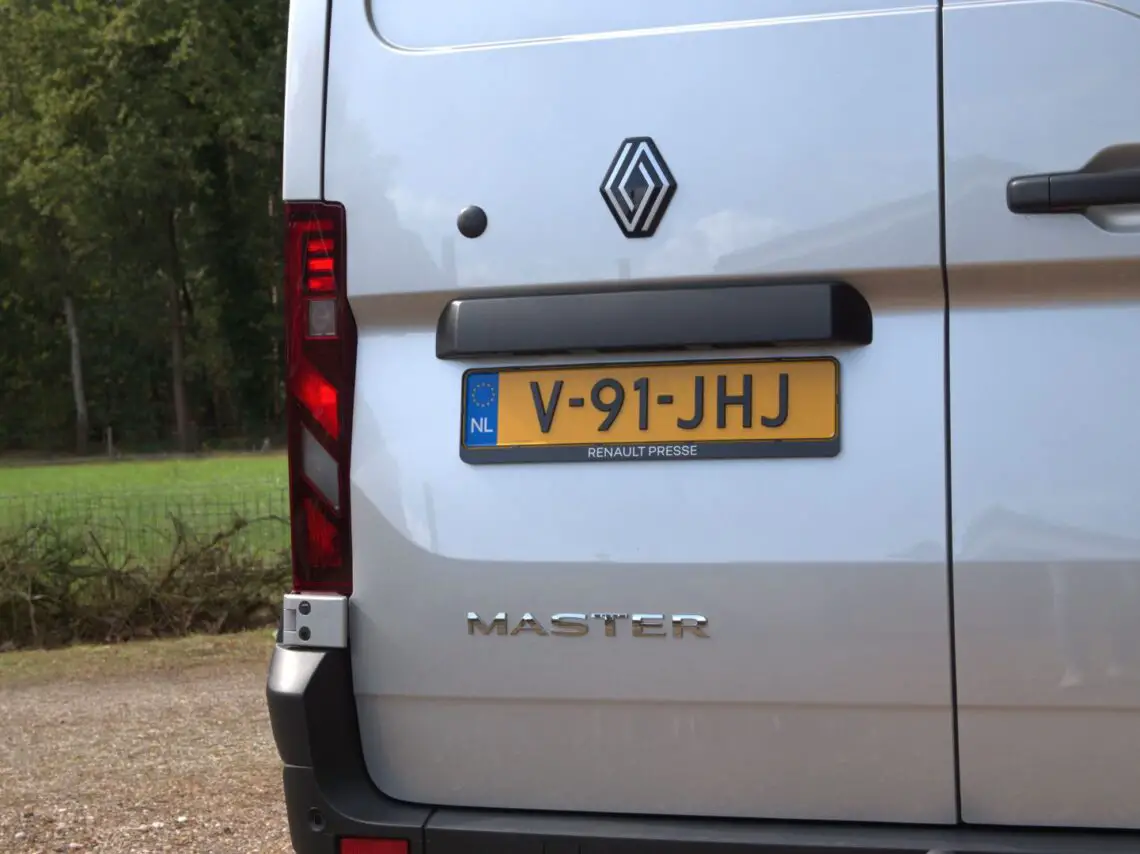
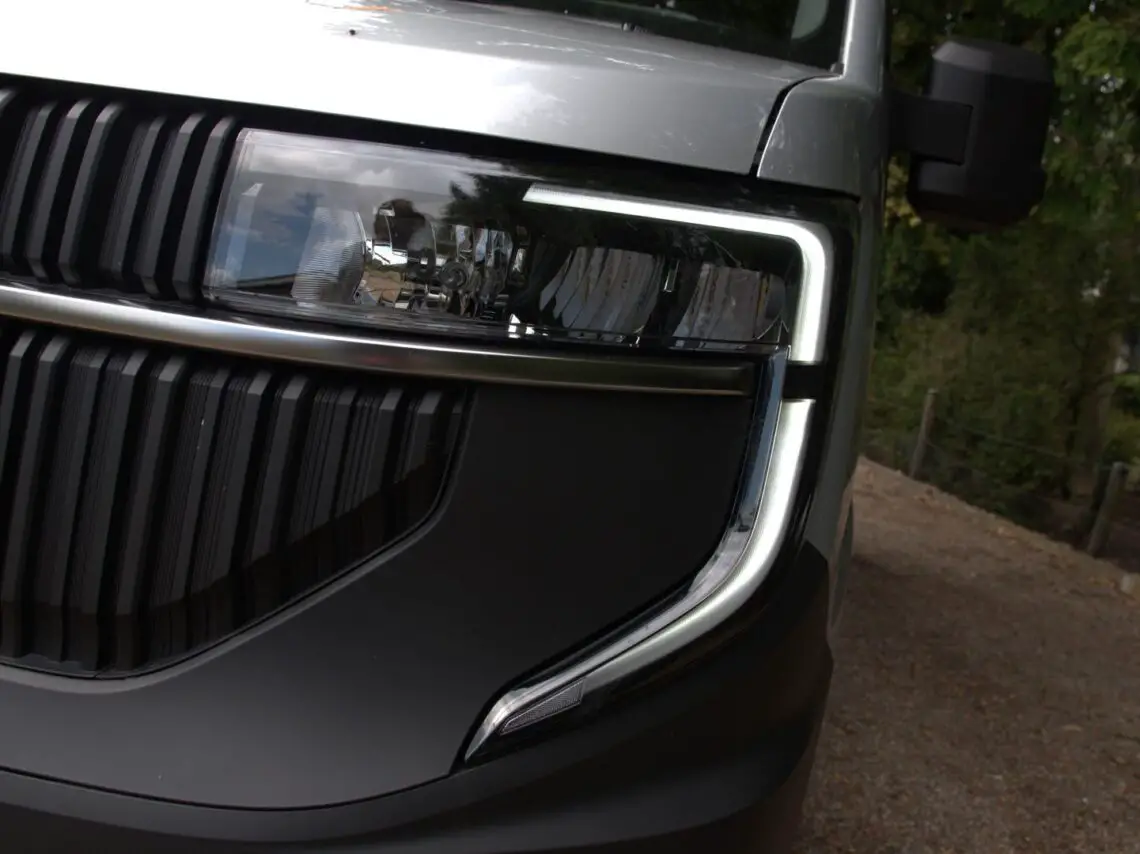
The Renault Master E-Tech Electric combines a practical driving range with a high payload. The interior is functional, the technology is up-to-date and the driving experience is comfortable. The driving range is ample within the Netherlands, even if you have to cover long distances. Companies that can load the bus on their own property also save significantly on costs. Our conclusion? The Master E-Tech Electric was rightly named Company Vehicle of the Year 2025.