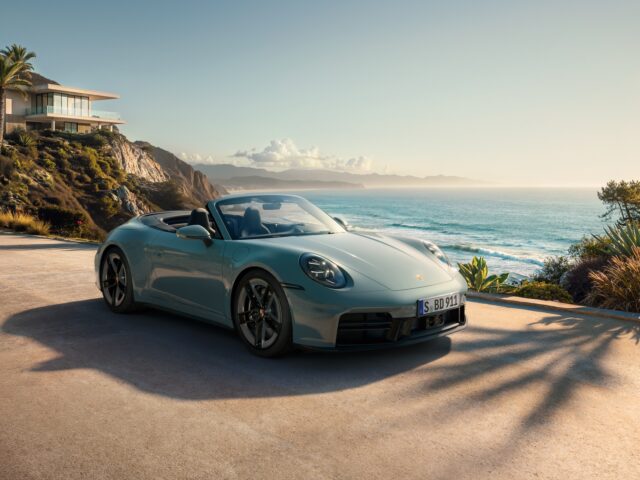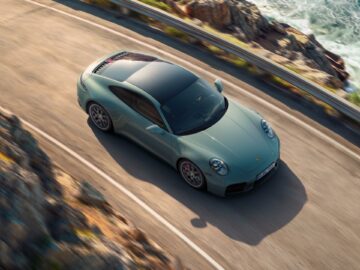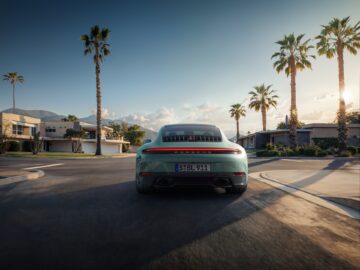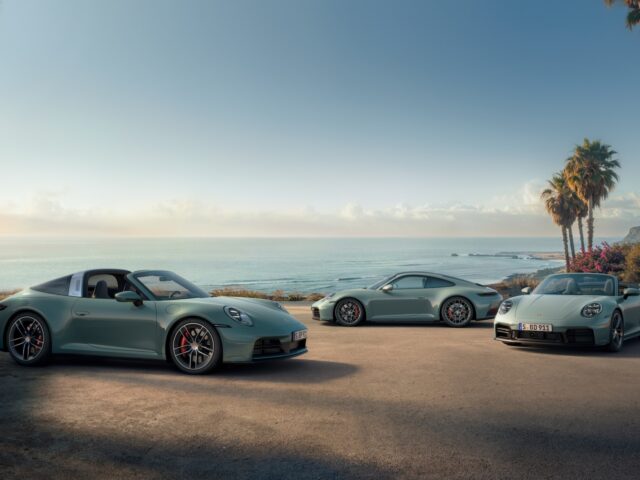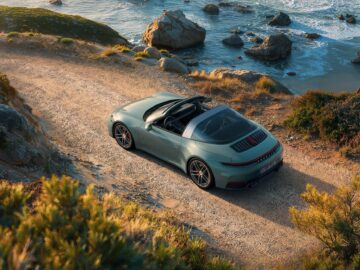
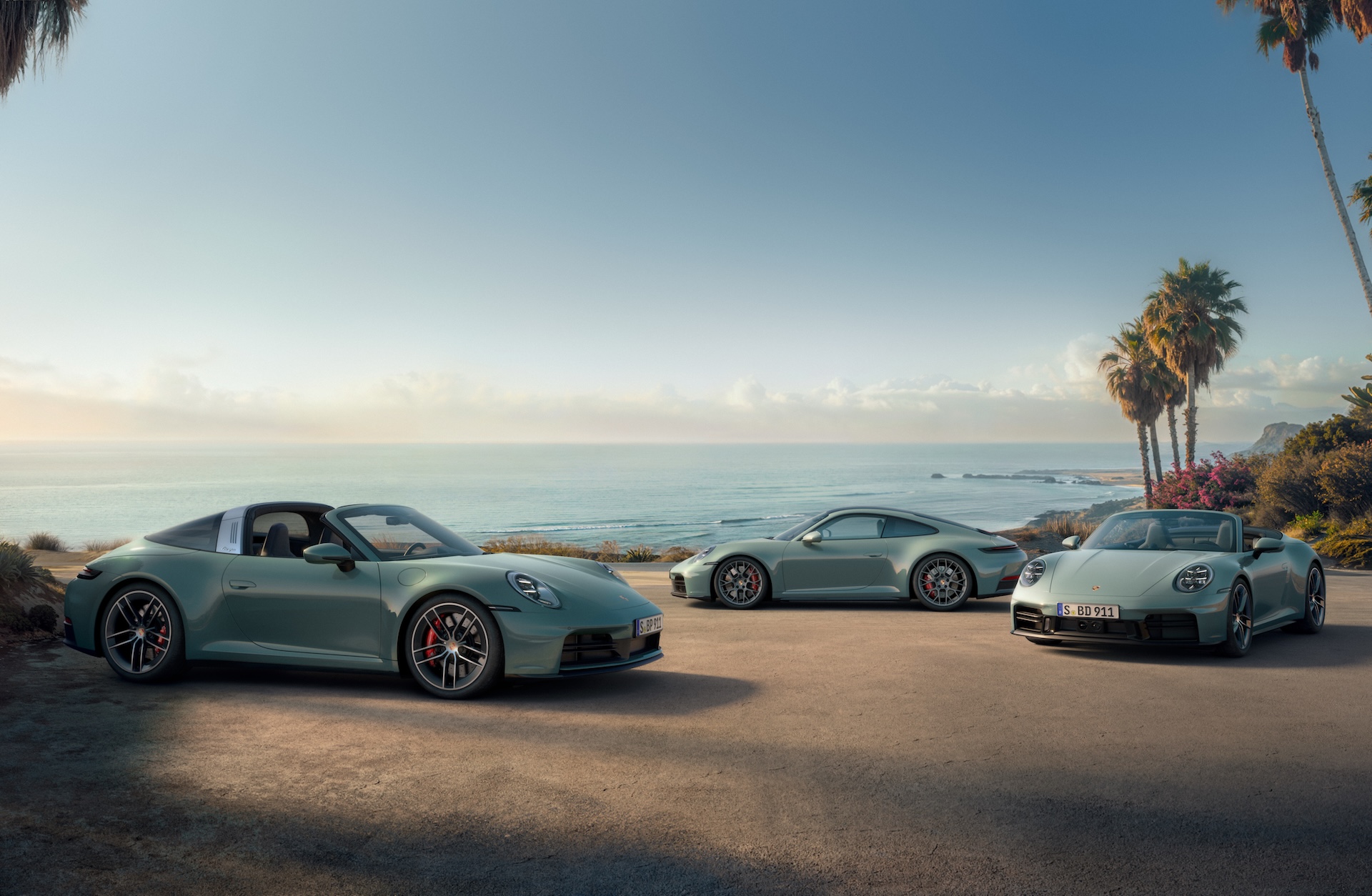
New Porsche 911 Carrera 4S comes in lots of flavors
Popularity of all-wheel drive among Porsche 911 buyers
Nearly half of customers who buy a Porsche 911 S consciously choose all-wheel drive. This is because all-wheel drive ensures optimal grip in rain or on slippery roads. Especially in areas with variable weather, a Porsche 911 with all-wheel drive gives more confidence behind the wheel. The driving feel remains sporty, with the character of a rear-wheel-drive car. The Porsche Traction Management (PTM) can send extra torque to the front wheels when needed for more grip. The clutch in the front differential is water-cooled and operates electromechanically. Porsche has also improved the transmission ratio. The Porsche 911 Targa has always come standard with all-wheel drive since 2006.
Technology: engine and performance of the Porsche 911 Carrera 4S
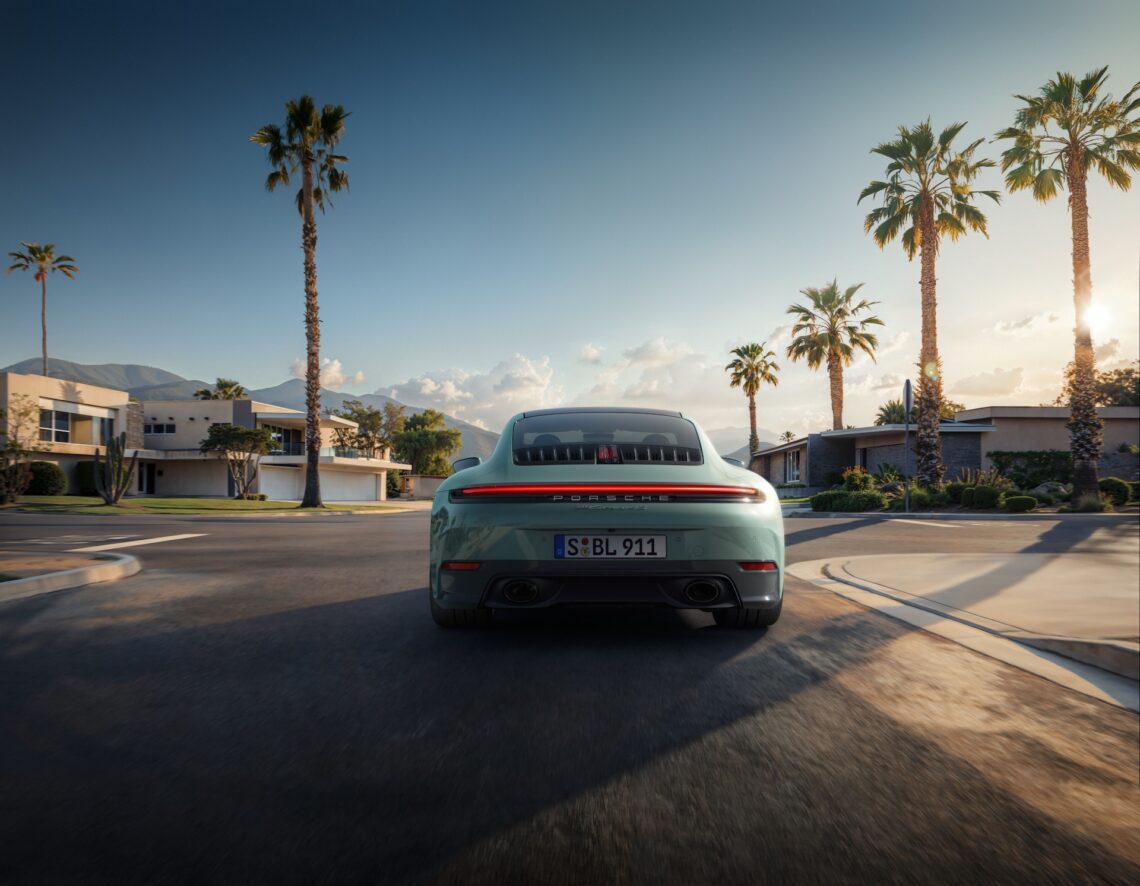
The new all-wheel-drive Porsche 911 Carrera 4S and 911 Targa 4S use the improved drive system from the Carrera S. The 3.0-liter twin-turbocharged six-cylinder boxer engine delivers 353 kW (480 hp), which is 22 kW (30 hp) more than the previous model. The higher performance is due in part to an improved intercooler system inspired by the Porsche 911 Turbo. Power goes to all wheels via the eight-speed Porsche Doppelkupplung (PDK). The Porsche 911 Carrera 4S Coupe with the Sport Chrono package accelerates to 100 km/h in 3.3 seconds and reaches a top speed of 308 km/h.
Origin and evolution of the Porsche 911 Targa
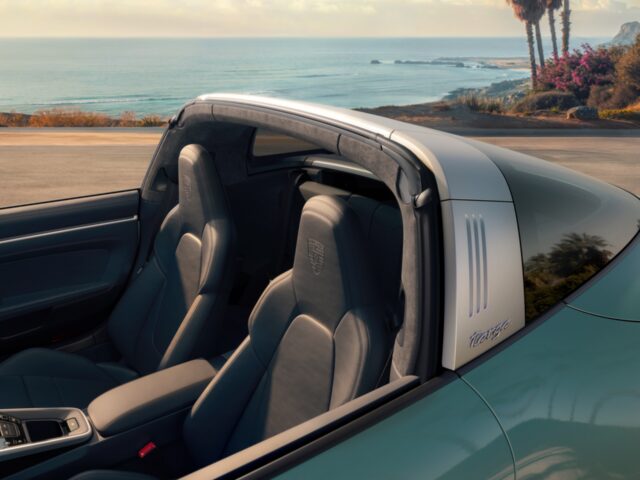
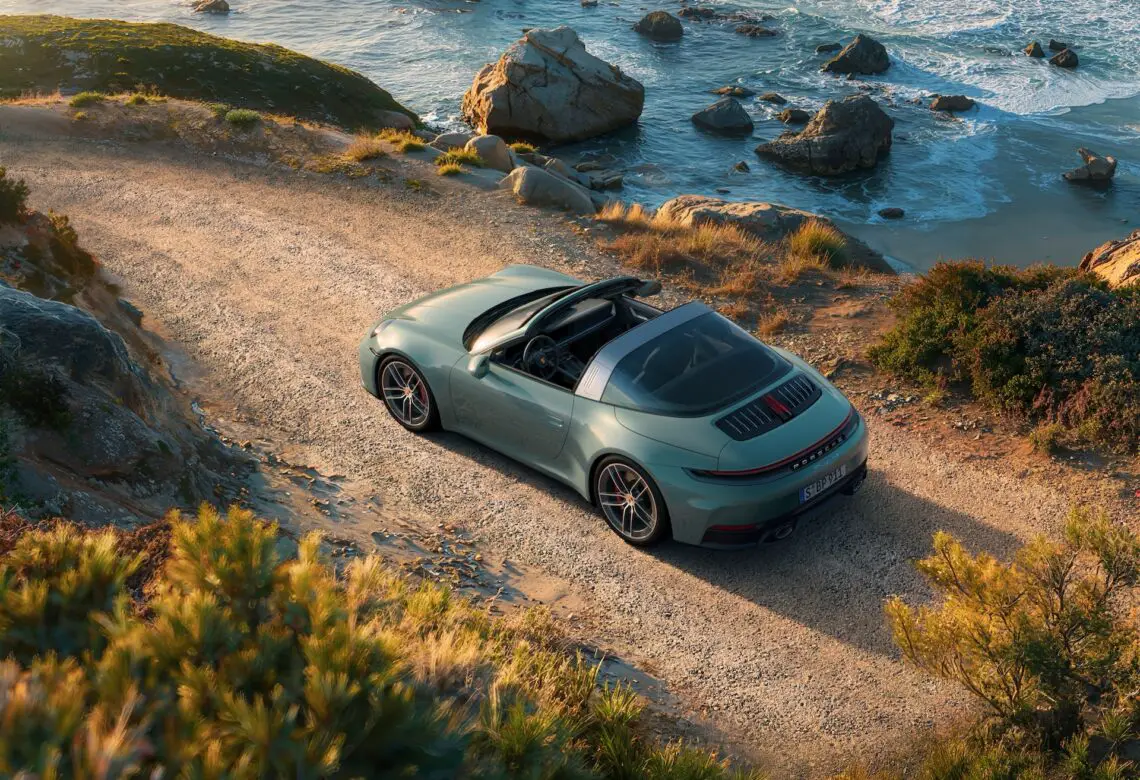
For sixty years, the Porsche 911 Targa has combined the open feeling of a convertible with the comfort and safety of a coupe. In the 1960s, there were concerns in the United States about the safety of convertibles, upon which Porsche presented the Targa as a “safety convertible” in 1965. The wide roll bar was an innovation that came from motorsports. The Targa had a removable roof and a rear window made of folding plastic, later replaced by glass. This allowed for safe open driving. The name Targa refers to the famous Targa Florio race in Sicily.
The Porsche 911 Targa as a timeless icon
Over the past sixty years, the Porsche 911 Targa has become an iconic model, which has been constantly improved technically and in terms of design. Starting with the 1993 Porsche 911 Targa 993, the roof no longer needed to be removed by hand. Since 2014, the roof has worked fully automatically: within 19 seconds, the car changes from closed coupe to open convertible. In the process, the glass rear window folds back and the roof folds up. The wide roll bar and continuous rear window remain recognizable features from the original 1965 design. The roof is available in four colors: black, blue, red and brown.
Expanded standard equipment and personalization options
The standard equipment of the Porsche 911 Carrera 4S has been greatly expanded. These include standard 20/21-inch Carrera S rims with a new design, Porsche Torque Vectoring Plus (PTV+) and a sports exhaust system for the distinctive Porsche sound. The braking system comes from the Porsche 911 GTS, with red calipers and large brake discs (408 mm front and 380 mm rear). The Porsche 911 Targa 4S has standard rear axle steering. The convertible and Targa have rear seats, while the coupe is a two-seater as standard, but can optionally be supplied with rear seats at no extra charge.
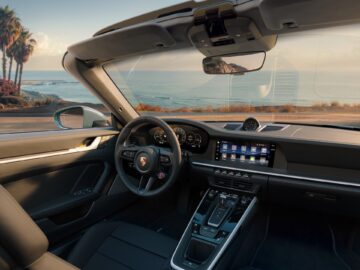
The interior comes standard with leather upholstery. Matrix LED headlights and wireless charging for smartphones are also among them. Power folding mirrors with entry lighting, the Light Design Package, automatic dimming mirrors with rain sensor and lane assist are included as standard. Porsche also offers many options for personalization, including colors, materials, audio systems, assistance systems and roofs.
The new Porsche 911 Carrera 4S and Porsche 911 Targa 4S are expected to be available at the eight Dutch Porsche Centers after the summer.