
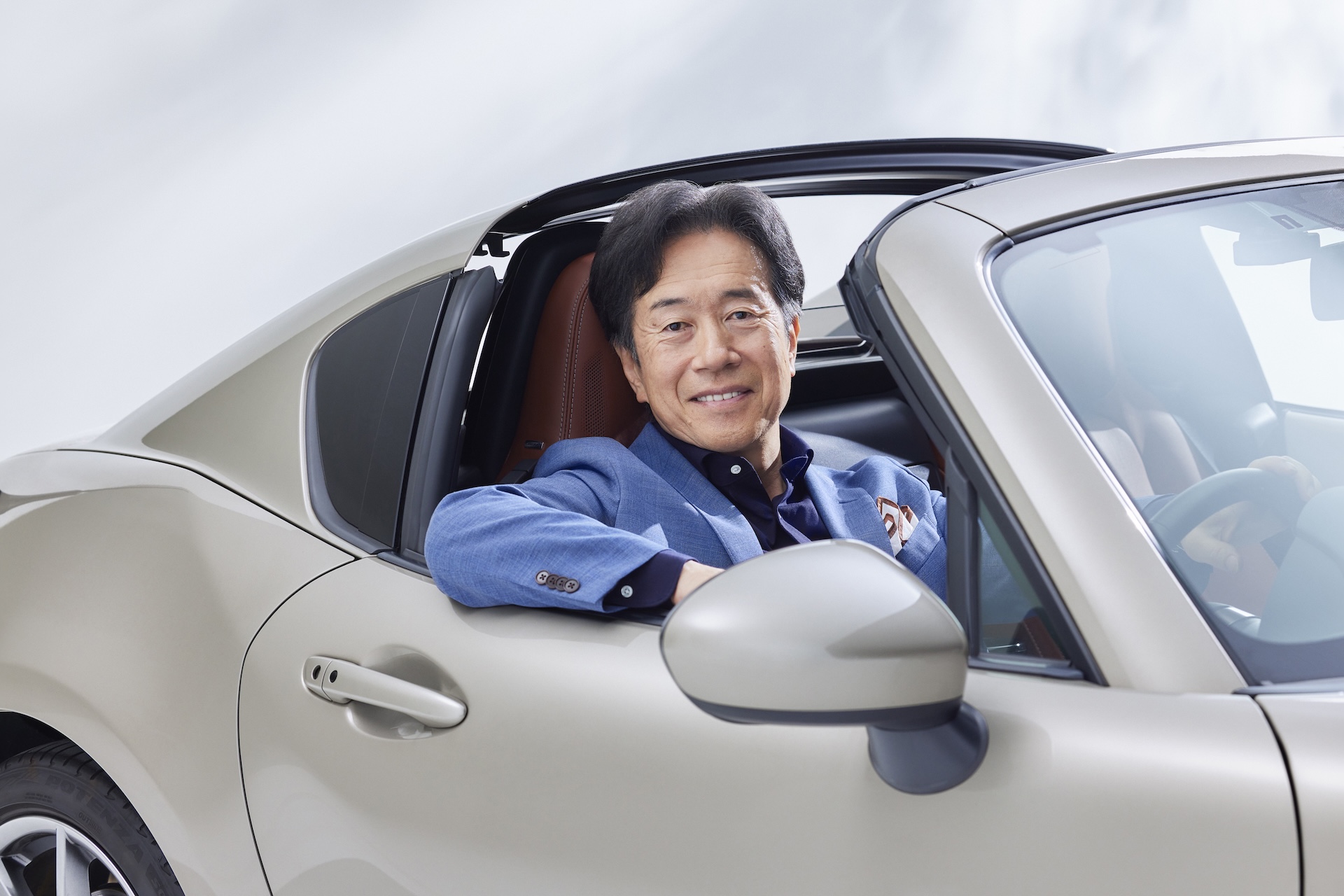
‘Mazda Mobile Carbon Capture’ technology explained by Mazda CEO
Carbon neutral fuel
The idea is quite remarkable. As the car is driven more, it helps reduce CO2 in the atmosphere by combining carbon-neutral fuel derived from microalgae with Mazda’s proprietary CO2 capture technology called “Mazda Mobile Carbon Capture. But how exactly does that work? Masahiro Moro, President and CEO of Mazda Motor Corporation explains.
Mazda Mobile Carbon Capture captures CO2 while you drive! – AutoRAI TV
CO2 capture from vehicles
Moro: “We believe this is achievable with two technologies: first, CO2-neutral refining from microalgae and second, CO2 capture from vehicles. Let’s start with CO2-neutral fuel. Microalgae absorb CO2 as they grow and store oils in their cells. These oils can then be extracted and refined into CO2-neutral fuel. In our research on microalgae, we were able to produce more than a liter of fuel from an 11,000-liter cultivation tank in about two weeks. After the fuel is extracted, the microalgae remain, rich in nutrients such as proteins, which can be reused in food products or organic fertilizers.”
At least 350 times higher
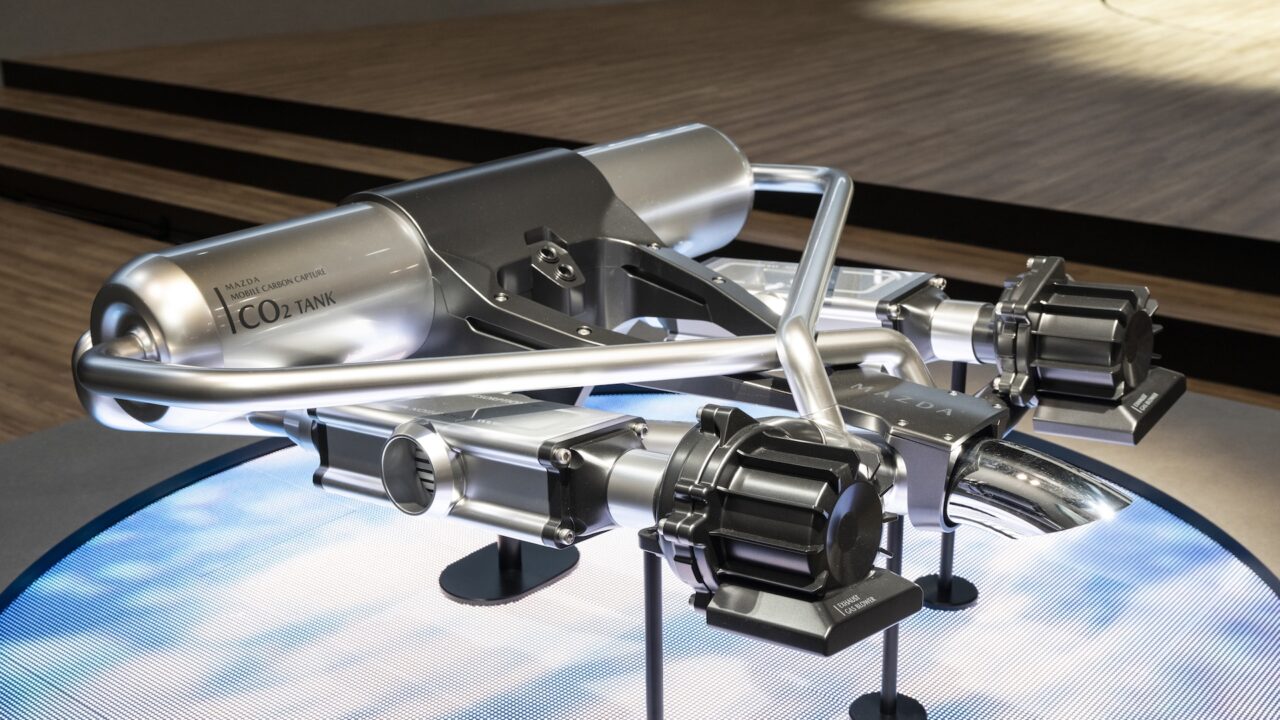
Mazda’s CEO continued: “Now let’s talk about CO2 capture. Exhaust from internal combustion engines contains CO2 in concentrations as much as 350 times higher than in the atmosphere. To address this, we at Mazda have developed a new technology called ‘Mazda Mobile Carbon Capture,’ which efficiently captures CO2 directly from exhaust gases. The captured CO2 can then be recycled to boost crop growth or produce high-value carbon materials.”
Demonstration already given
Masahiro Moro made it clear during the presentation in Japan that Mazda will conduct a demonstration of this technology in December 2025 by participating in a super-endurance race with a car that has “Mazda Mobile Carbon Capture” on board. Moro said, “This technology, along with carbon-neutral fuel, is just the beginning of our vision: a future where mobility plays an essential role in a recycling-oriented society – a future where we contribute to a more sustainable world while continuing to offer our customers the joy of driving.”
By the way, the car that participated in the super-endurance race is a Mazda 3 race car. The car name participated in the seventh round of the 2025 Super Taikyu racing series at the Fuji International Speedway in Oyama, Japan. During the four-hour race, Mazda’s new carbon capture device demonstrated for the first time its ability to adsorb CO₂ in exhaust gases under challenging motorsports conditions.
The power of zeolite
The Mazda 3-racer with “Mazda Mobile Carbon Capture Technology” uses a porous zeolite structure to absorb CO2 from exhaust gases and store it in a tank. Zeolite is a natural or synthetic mineral with an open, porous crystal structure. That structure works somewhat like a sponge: zeolite can absorb, retain and release substances. The captured CO₂ can be used to produce carbon materials or to enrich the air in greenhouses with CO₂ to stimulate crop growth. To further reduce CO₂ emissions, the car was fueled with HVO 100 carbon-neutral diesel fuel.

Continue testing into 2026
Mazda will continue to test the technology in the Super Taikyu racing series in 2026, aiming to further improve the CO2 recovery rate. As the brand continues to develop all types of electric vehicles, including mild hybrids, full hybrids, plug-in hybrids and battery-electric vehicles, the company continues to further reduce CO2 emissions from its internal combustion engine vehicles by improving engine efficiency, supporting the development and introduction of carbon-neutral fuels and capturing CO2 from exhaust emissions.
Mazda aims to be globally carbon neutral by 2050 and meet the interim EU targets for 2030 and 2035 with its Multi-Solution Approach. The Japanese automaker believes that a multitude of technical solutions are the most effective way to reduce CO2 emissions from its vehicles.