
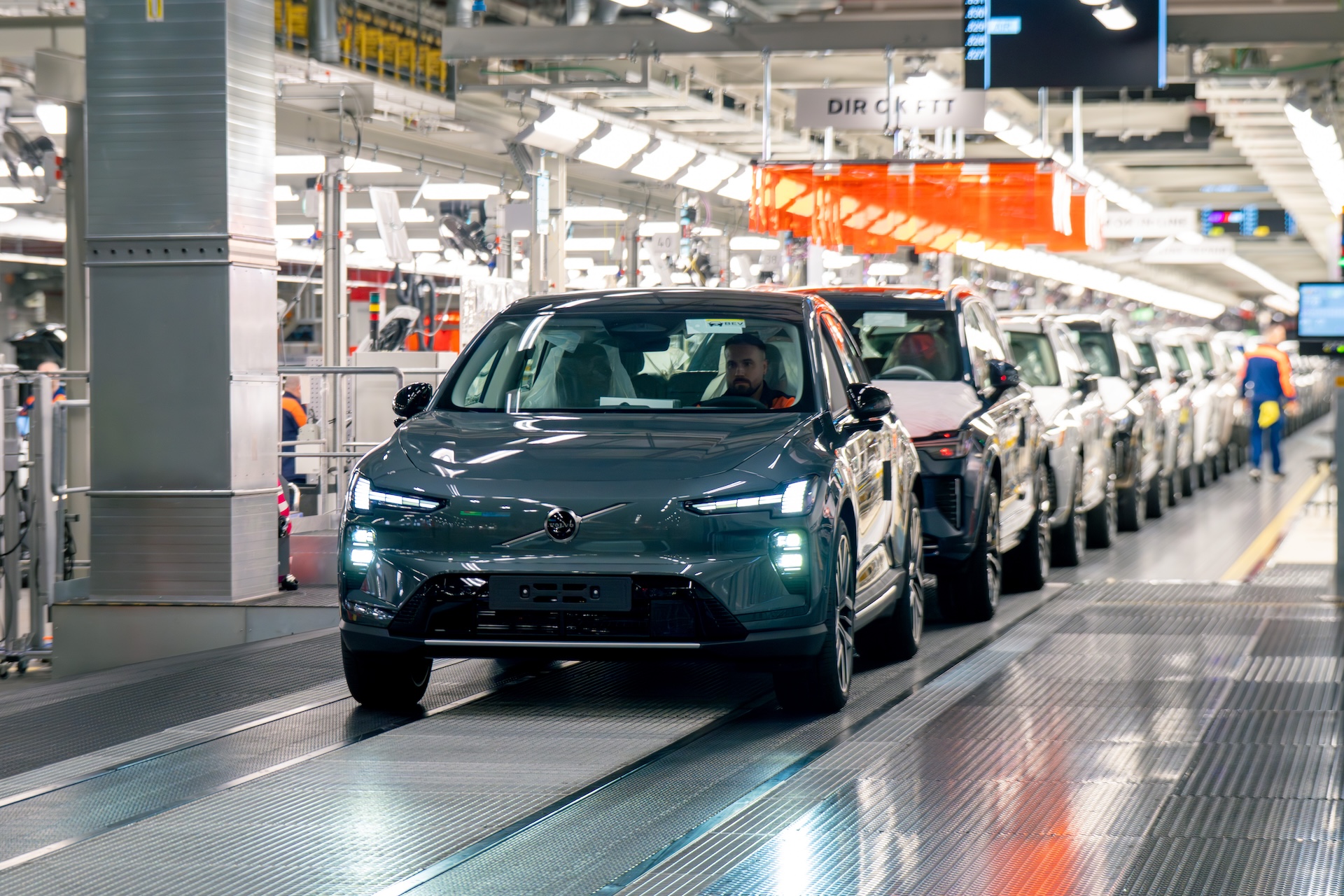
Look inside the factory: this is how the Volvo EX60 is built
Modernization of the production line
To make the arrival of the Volvo EX60 possible, the Torslanda plant underwent a major transformation. Volvo invested about SEK 10 billion (€928 million) in new technologies and facilities. Volvo can now use:
Megacasting: a technique in which large aluminum body parts are cast as one unit. This reduces weight and improves the rigidity of the car.
Battery assembly: a new on-site facility where battery packs are assembled before being placed in the vehicles.
Renewed paint shop and final assembly: The existing lines have been fully adapted to the specific requirements of electric drive lines.
Economic impact for the region
The production of the EX60 is not only a technical process, but also an economic factor for western Sweden. Volvo expects the EX60 to become one of the country’s largest export products by value. Because of the strong order book in Europe – even before the American and Asian markets have opened – production figures for 2026 have already been revised upward.
Håkan Samuelsson, CEO of Volvo Cars, said, “We are now focused on steadily scaling up production of the high-performance EX60 to ensure that this groundbreaking car becomes a profitable growth engine in the coming years.”
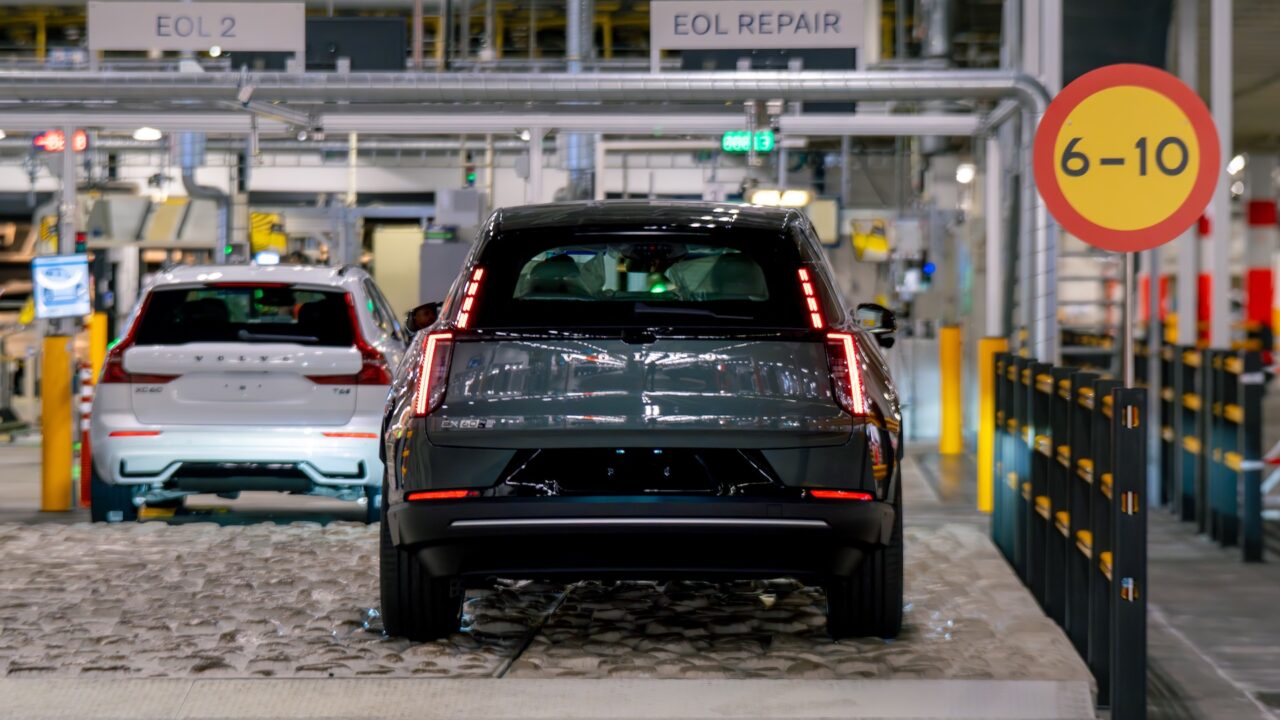
Increase production volumes
The decision to increase production volumes for 2026 followed strong initial customer demand for the car in key markets such as Sweden and Germany, as well as orders from individuals that significantly exceeded internal forecasts in almost all major European markets.
After this strong order inflow in Europe – and with order books for the U.S. and Asian markets opening later this spring – Volvo Cars has decided to build more EX60s by 2026. The goal is to keep the Torslanda plant open one week longer this summer.
Different versions Volvo EX60
The EX60 offers a solid range of up to 810 km and charges from 10 to 80% in 16 minutes. There will be several versions, namely the P6, P10 AWD and the P12 AWD.
| P6 Electric | P10 AWD Electric | P12 AWD Electric | |
| Starting price | €63.995 | €66.995 | €72.995 |
| Drive type | RWD | AWD | AWD |
| System voltage | 800 V | 800 V | 800 V |
| Power | 275 kW / 374 hp | 375 kW / 510 hp | 500 kW / 680 hp |
| Max. torque | 480 Nm | 710 Nm | 790 Nm |
| 0-100 km/h | 5,9 s | 4,6 s | 3,9 s |
| Top speed | 180 km/h | 180 km/h | 180 km/h |
| Battery energy (nom.) | 83 kWh | 95 kWh | 117 kWh |
| Driving range (WLTP). | Up to 611 km | Up to 660 km | Up to 810 km |
| Range (City) | Up to 780 km | Up to 819 km | Up to 980 km |
| Consumption (WLTP). | 14.9 kWh/100 km | 16.2 kWh/100 km | 16.1 kWh/100 km |
| DC charging (10-80%) | 16 min (350kW) | 16 min (400kW) | 19 min (400kW) |
| AC charging (0-100%) | 8 hours | 9 hours | 12 hours |
| Kerb weight | 2,189 kg | 2,350 kg | 2,405 kg |
| Max. permissible | 2,650 kg | 2,810 kg | 2,860 kg |
| Max. towing weight | 2,000 kg | 2,400 kg | 2,400 kg |
| Roof load | 100 kg | 100 kg | 100 kg |
| Length / Wheelbase | 4,803 / 2,970 mm | 4,803 / 2,970 mm | 4,803 / 2,970 mm |
| Width (incl. sp.) | 2,067 mm | 2,067 mm | 2,067 mm |
| Luggage space | 523 L (+ 58 L in front) | 523 L (+ 58 L in front) | 523 L (+ 58 L in front) |