
Finnish startup Donut Lab proves: solid-state battery loses barely 2.3% charge in 10 days
What was tested?
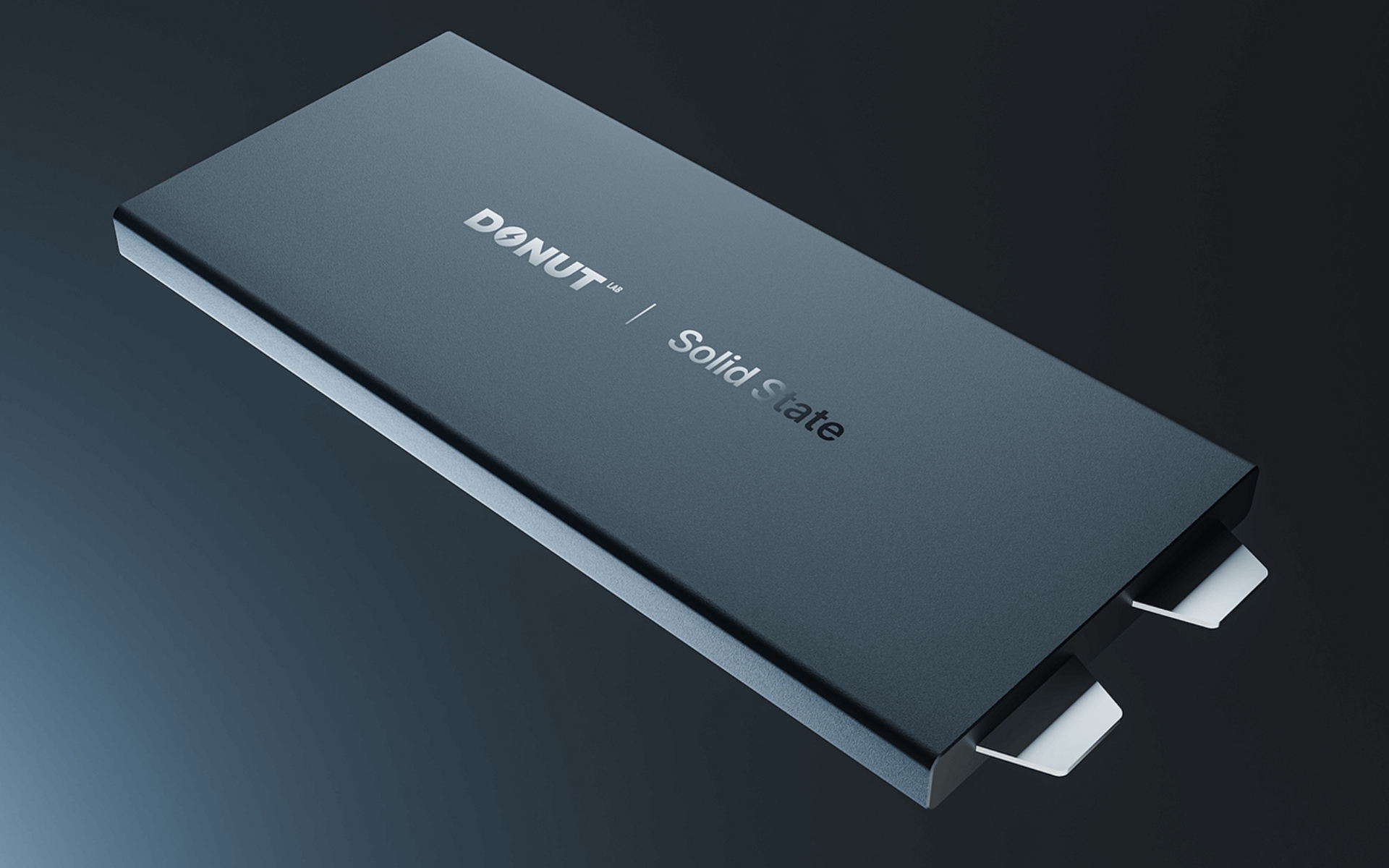
Donut Lab, a startup from Finland, had a cell of its solid-state battery tested by the renowned Finnish Technical Research Centre (VTT). In a so-called self-discharge test, the battery cell was charged to about 50 percent and then left alone for 240 hours – 10 full days. During that period, the voltage was measured every 10 seconds, at temperatures between 22 and 28 degrees Celsius.
The result: after 10 days of downtime, the cell had lost only 2.3 percent of its charge. In the first hour, the voltage dropped by 103 millivolts, which Donut Lab says is largely explained by so-called voltage relaxation – a normal physical process that occurs after a battery is charged. Then, in the remaining 239 hours, the cell lost only an additional 12 millivolts.
Why is this important?
Solid-state batteries are considered the holy grail for electric cars. Instead of a liquid electrolyte – the conductive liquid in a conventional lithium-ion battery – they use a solid state. In theory, that offers big advantages: faster charging, more energy density, less fire hazard and longer life. The problem? Virtually no one has yet succeeded in producing them on a large scale.
Strong skepticism
Donut Lab claims to be ahead of the major automakers and battery makers. But that claim met with considerable skepticism. Critics suggested that the Finnish company had not built a real battery at all, but a supercapacitor – a component that can store and release energy quickly, but also lose that charge much faster. The new test should disprove that: a supercapacitor would lose significantly more charge in ten days.
How does it compare to regular EV batteries?
Fair is fair: the result is solid, but not groundbreaking. Common lithium-ion batteries typically lose about 5 percent charge in the first 24 hours, after which the self-discharge decreases to 1 to 2 percent per month. So the Donut Lab cell performs similarly in that regard. So the real importance of this test is not in record numbers, but in proving that the technology actually functions as a battery and not as a supercapacitor.
What does this mean for the Dutch EV driver?
If solid-state batteries actually become production-ready, that could have huge implications for the Dutch market. Think of electric cars that fill up in minutes – Donut Lab previously claimed a charging time of just seven minutes – with greater range and longer life. For a country where electric driving is growing rapidly and charging infrastructure is crucial, that would be a gamechanger.
Still, caution is called for. Donut Lab is a small start-up and the step from laboratory cell to mass production is notoriously difficult. Major players such as Toyota are aiming for 2027-2028 for their first solid-state models, and even they face constant delays due to disintegration of the solid electrolyte that could cause possible cracks.