
Facelift year counts more heavily than model year when ordering parts
Two cars can share the same model name and model year and yet require completely different parts. The cause is almost always a facelift – the interim update that most manufacturers implement midway through a model’s life cycle. Those who do not know their vehicle’s facelift limit run the risk of ordering a part that looks like the right one but simply does not fit.
What changes with a facelift?
A facelift is rarely just about a new bumper design. Manufacturers renew at a facelift usually multiple systems at the same time: headlights and tail lights get a new design with other plug types and led modules, front and rear bumpers get modified attachment points and other sensor configurations for parking aid and adaptive cruise control, wiring harnesses for lighting, cameras and parking sensors be again layered, and ECU variants be updated with software versions those specifically are for the facelifted version.
That has direct impact on component substitutability. A headlight from a pre-facelift model fits not necessarily in a post-facelift model, also although the outer dimensions are identical. Plug profiles, mounting clips and the CAN bus communication between lamp and body-control unit have been modified. What therefrom outside looks as same part, requires At the component level, a different part number group.
How more recent the vehicle, how bigger the opportunity that a facelift also electronic adjustments bring those not are visible on the outside. Modern driver assistance systems, adaptive headlights and integrated camera systems make the facelift frontier more technically radical than it was 20 years ago.
Same model name, three different cars
VW Golf Mk7 and Mk7.5
Golf hot Golf, regardless of or the involves a 2014 or a 2018 model. But the Golf Mk7 (2012-2017) and the Golf Mk7.5 (2017-2021) its what concerns the front section, the tail lights and a number wiring harnesses two substantially different cars. Front bumper carriers, grill frames and LED daytime running light units are not interchangeable across the facelift line. Who orders based on ‘Golf 7’ without Mk7 or Mk7.5 to specify, takes a significant risk.
The facelift frontier for The Golf Mk7.5 lies at production date July 2017 – not with model year 2017. A car that was in January 2017 was enrolled, is usually a Mk7; a car from September 2017 can very well be a Mk7.5. The model year alone doesn’t tell.
BMW E90 3-series LCI
BMW cites Are facelift updates LCI (Life Cycle Impulse). For the E90 3-series sedan appeared the LCI in the summer from 2008 – but for the E91 station wagon and the E92 coupe a little later, in 2009. The headlights its not interchangeable over the LCI limit: pre-LCI used halogen projectors with a specifically plug design, the LCI version Bi-Xenon projectors with a different. Tail lights, mirror housings and certain Interior trim parts are also not interchangeable.
Many used E90 parts be online simply offered as “E90,” with no mention of LCI status. Who its production date not knows, runs the risk a headlight at buy those geometric in the opening fits, but nor the correct plug has nor supports the appropriate ECU communication profile.
Audi A4 B8 and B8.5
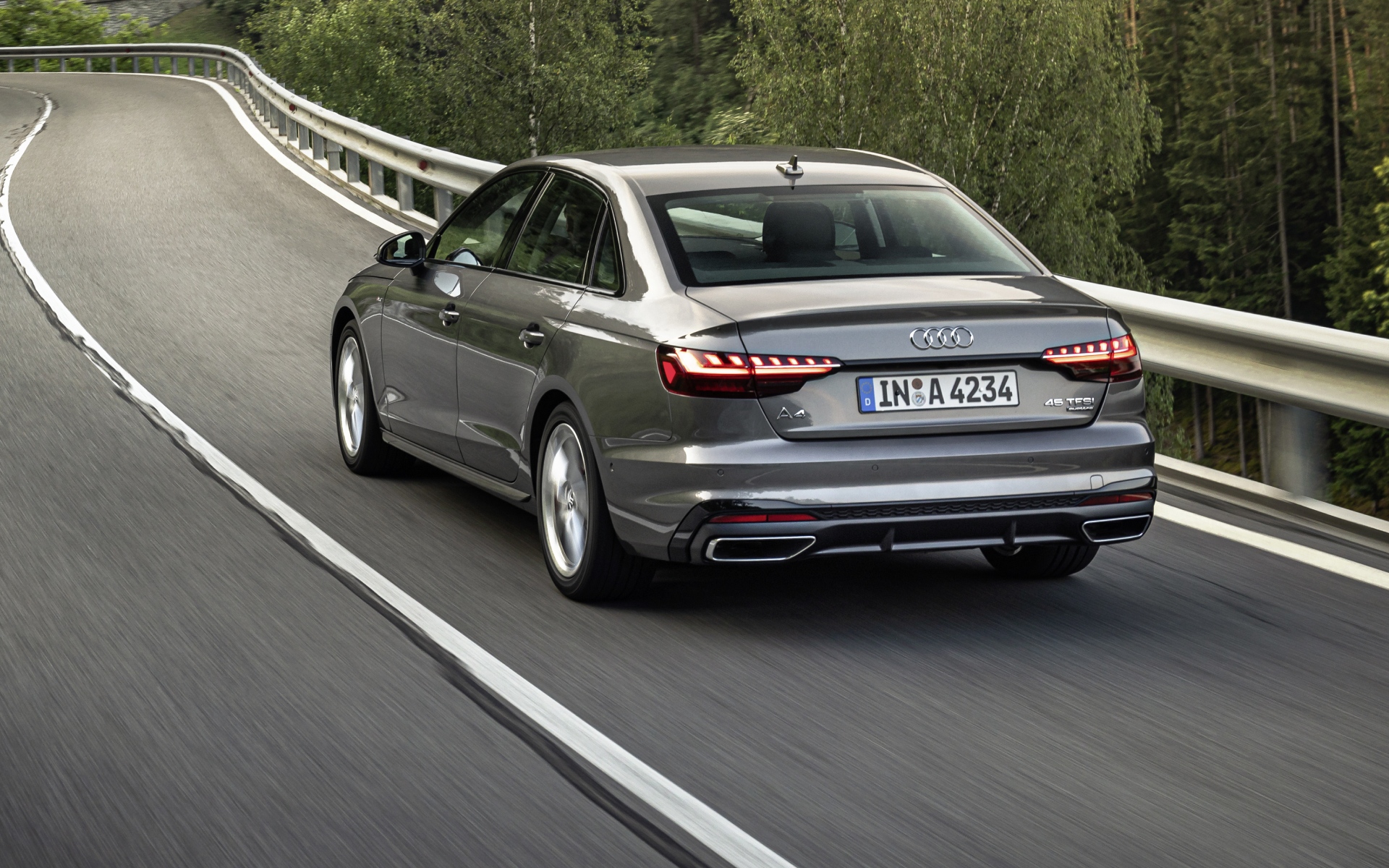
The Audi A4 B8 (2007-2012) and the facelifted B8.5 (2012-2016) share the basic bodywork, but front and rear have been substantially modified. Headlights its not mutual interchangeable, and bumper inserts have different mounting points. On used platforms, many parts are offered simply as “Audi A4” – with no B8 or B8.5 designation. The price may be right, the part number may look reasonable, and yet the part does not fit.
Production date is more accurate than model year
Model Year is a sales concept, not a technical one. A car listed as a “model year 2017′ is sold, the factory in December 2016 or in October 2017 have abandoned – and the facelift transition finds always location at a specific production date or chassis number limit, not on a calendar year.
The most reliable method is the read of the production date from the nameplate in the door post of the B-pillar. Bee almost all European cars state here the production date listed as the month and year. With that date search your then the facelift frontier on for the specific model and the body style – and use your who as delineation instead of the model year.
For BMW models is the chassis number interval in addition useful, because the LCI transition not always accurate at a production date limit falls, but on a specific serial number block. Manufacturer’s VIN decoders or independent VIN check sites confirm the model version and production week in less than a minute.
Thereby is the good at know that codes as “B8” and “B8.5 at Audi, or “Mk7” and “Mk7.5 at Volkswagen, are not official manufacturer designations. They are market conventions. The manufacturer communicates internally through production date ranges and chassis number blocks. Who parts seeks on the basis of those market conventions without production date at know, works with an incomplete reference.
Second-hand parts: where facelift confusion strikes the most
The facelift issue is felt most acutely in the used car market. Those who buy used auto parts searches through Autoparts24 or a other specialized scrap parts dealer, makes sense to the OEM number from the original part as primary search parameter at use – and not the model name or model year.
New parts be usually via VIN-controlled catalog systems delivered, in which the facelift limit is automatically incorporated. Bee used parts – derived from junkyards, online marketplaces or specialized traders – is the catalog description determined by the seller. Those mentions long not always or a part from a pre- or post-facelift origin, late are The production date of the donor vehicle.
The practical advice: question at doubt always the OEM number on from the offered part, and compare that with the number of the part you want to replace. Coming them match, then fits the part – regardless of how the seller describes the model.
The OEM number as a foolproof search method
The OEM (Original Equipment Manufacturer) number is the manufacturer number of exactly the part that is in your vehicle. It is unambiguously tied to a specific component – not to a model name, model year or body variant.
The method of operation is simple: read the OEM number off of the existing part – printed at the part yourself or available via the parts catalog from the manufacturer with VIN consultation – and search for that exact number. A headlight for the Golf Mk7 and a for the Mk7.5 have two different OEM numbers, also al fit them seemingly in the same orifice. The number gives away the generation; the model name does not.
If in doubt about the correct OEM number, the manufacturer’s official parts catalog is the most reliable starting point. BMW (ETK), Mercedes-Benz (EPC) and the Volkswagen Group (ETKA) offer online VIN-enabled catalogs to those the exact part number for the specific vehicle show, including facelift version and production date range.