
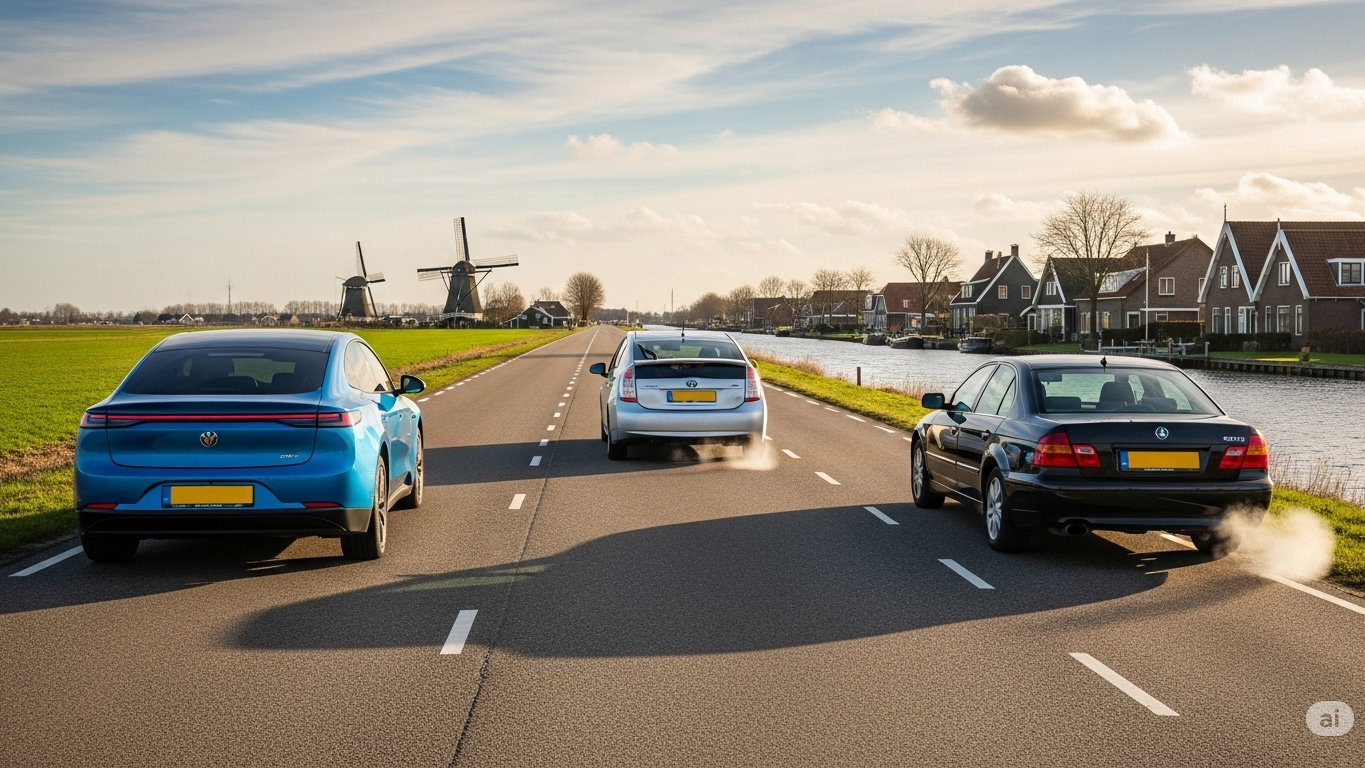
Are electric cars more environmentally friendly than hybrids?
Electric cars
The name says it all: an electric car is powered entirely electrically by one (or more) electric motor(s). So there is no gasoline or diesel engine on board. The electricity required is stored in a lithium-ion battery, which is usually integrated into the bottom of the car. Users can charge their car’s battery via a charging station or power outlet. While driving, EVs do not emit CO₂ or nitrogen oxides. The power output of EVs varies greatly, but the electric motors always deliver their maximum tractive power, so the acceleration of electric cars is always excellent.
Hybrid cars?
Hybrid cars combine a fuel engine with one or more electric motors. Cars with these powertrains use less fuel on average than comparable conventional cars, but of course emit CO₂ when the fuel engine is running. There are roughly three types of hybrid powertrains.
- Mild hybrid (MHEV) – the electric motor only supports the fuel engine, but cannot drive the car electrically on its own;
- Full hybrid (HEV) – can drive short distances fully electric. The battery is charged while driving, as there is no charging socket on board;
- Plug-in hybrid (PHEV) – has a larger battery, which you can recharge via wall socket or charging station. The purely electric range averages up to about 80 kilometers.
Production: a matter of raw materials
The environmental impact of an (electric) car begins even before that car is built in the factory. The mining of lithium, cobalt and nickel – needed for the batteries – has a significant environmental impact, both in terms of energy consumption and damage from mining. The battery of an EV is significantly larger than that of a hybrid. So the production of an electric car, mainly because of the battery, causes much more carbon emissions than that of a hybrid.
Hybrids are equipped with a smaller battery, requiring fewer scarce resources per hybrid car. This makes production less environmentally damaging in that respect. But hybrid cars, in addition to the electric drive, of course also have a fuel engine, so the number of parts that must be produced is greater and the production of the car more complex. That also producesCO2 emissions. But at the production level, hybrids generally score better in terms of carbon footprint.
Usage: who drives the cleanest?
In daily use, the difference is evident. An EV does not emit CO₂ while driving. But the electricity used to power the electric motor to drive the car must be generated. Traditional power plants also emitCO2 when generating electricity. When generating green power, this is not the case. So the cleaner the electricity mix, the better the environmental profile of EVs. In the Netherlands, the share of renewable, green energy is increasing every year, making EVs ever greener.
In theory, a plug-in hybrid can drive virtually emission-free if the driver consistently charges with green electricity and makes mostly short trips – then it drives almost as cleanly as a fully electric car. In practice, however, a large proportion of PHEVs drive primarily “on gasoline,” which limits the environmental benefit. Mild and full hybrids always consume fuel while driving, although their consumption is lower than comparable gasoline models.
So while driving, EVs are the most environmentally friendly, provided they run on green electricity.
Longevity: durability over the years
The longer a car lasts, the better the impact of production is “spread out” and the lower in principle the need for a new car. Electric motors are mechanically quite simple and less subject to wear and tear than fuel engines. Batteries of modern EVs, meanwhile, last longer than originally expected. After eight to 10 years, many batteries still have about 70 to 80 percent capacity, and this score is getting better. Moreover, replacement of battery cells is increasingly possible, which extends their life.
The longevity of hybrid powertrains is usually good because the electric motor relieves the fuel engine. But a hybrid car has more complex technology, which can lead to more maintenance over time.
Conclusion: EVs potentially have a longer technical life, especially if the battery remains in good condition and overhaul is possible to postpone replacement.
Disassembly, demolition and reuse
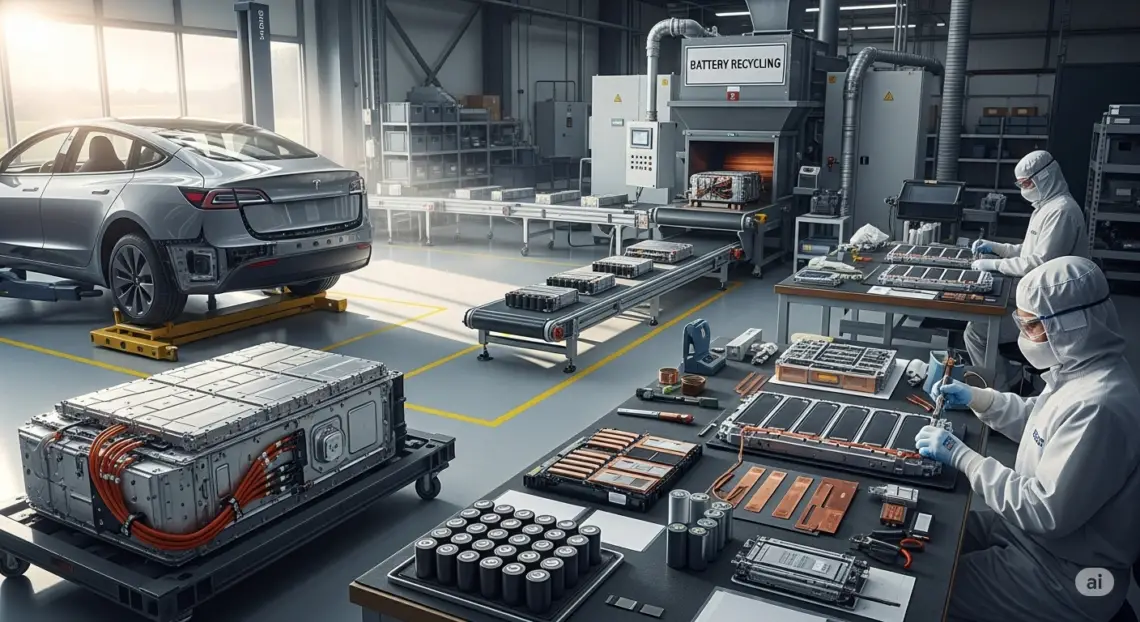
At the end of life, cars should be processed responsibly – dismantled and as many components reused as possible. While the recycling of lithium-ion batteries from EVs is still in its infancy, great strides are being made. Materials such as cobalt and nickel are easily recoverable, reducing the need for mining. EV batteries are also increasingly getting a second life through reuse as stationary energy storage, for example.
The smaller batteries of hybrid cars are easier and cheaper to recycle. The fuel engine – like the rest of the cars in both categories – can be largely processed through existing processes. However, dismantling two propulsion systems in a hybrid is more labor intensive.
Conclusion: hybrids are now even easier to recycle than EVs, but recycling systems for EV batteries are developing rapidly.
‘Mirror, mirror on the wall, who is the cleanest?’
If we add up everything – production, use, lifetime and end-of-life – a nuanced picture emerges. At the production level, hybrids are less environmentally damaging, but during use and end-of-life EVs win out, especially if green electricity is used. Hybrids still offer the most recycling benefits, but that difference is narrowing. Therefore, you could argue that electric cars are slightly more environmentally friendly, especially if they last a long time and the energy supply is sustainable.
Relative to conventional cars
Both EVs and hybrids are clearly more environmentally friendly than conventional cars over their entire lifetimes. The latter emit more CO₂ and nitrogen oxides while driving, without the possibility of local emission-free driving. Assuming a long service life, the higher environmental impact of producing an EV or hybrid does outweigh this.
Conclusion
Whether an electric car is more environmentally friendly than a hybrid now depends on what you emphasize: production, use or sustainability. But in the long run, and with an ever-greening power supply and improved battery recycling, EVs are taking an increasing lead.