An exclusive look into the secret archives of the Alfa Romeo Museum
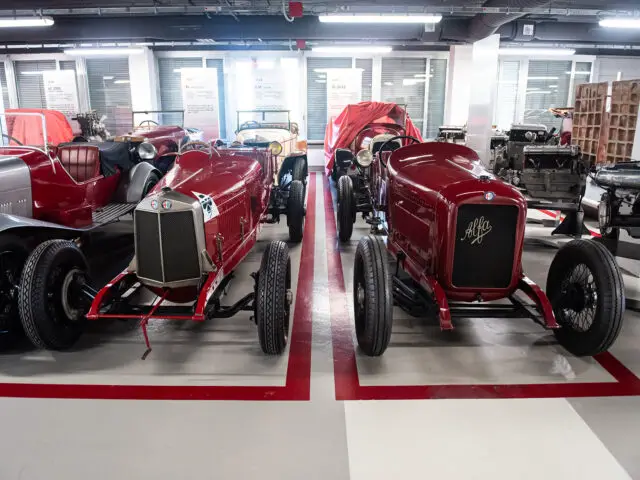
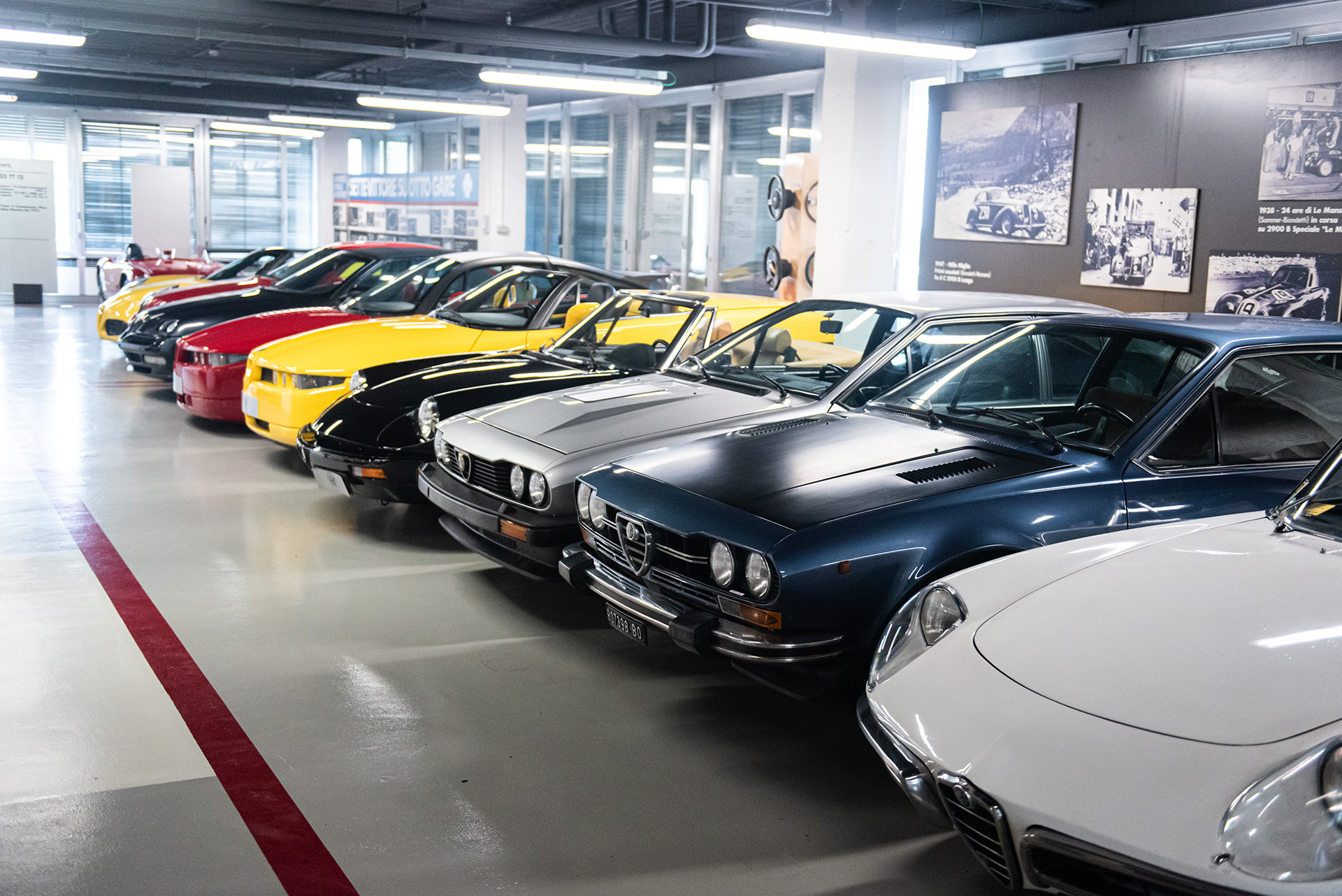
And that’s a nice contrast to the Alfa Romeo Museum. Here we find no slick lighting or explanatory signs, but you do feast your eyes. Not only because of the cars we had never seen before, but also because of the objects around them. Wind tunnel models. Wings of F1 cars. Wankel and propeller engines. Chairs. Wheels.
At the same time, this space also houses cars that did make history. Think of cars that were used for record attempts and or technical demonstrations. It is a fascinating interplay between dream and reality. The cars below form a fraction of all the stories hidden in this cellar.
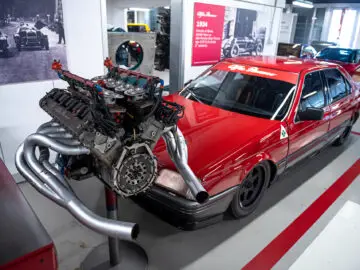
Alfa Romeo 164 Pro Car: Formula 1 engine in a sedan
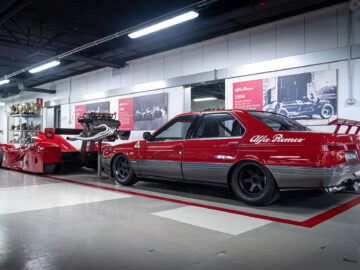
One of the most spectacular finds in the basement is the Alfa Romeo 164 Pro Car. What appears to be a pumped-up luxury sedan turns out to be a true wolf in sheep’s clothing. Under the bodywork hides a 3.5-liter V10 good for 620 horsepower at 13,300 rpm (!), mated to a six-speed sequential transmission, and all together resulted in a top speed of 340 mph. The car weighed just 750 kilograms.
The idea came from the brief FISA Pro Car series, in which street models were equipped with F1 technology. Alfa was the only manufacturer to actually build a driving prototype. The 164 Pro Car was developed with Brabham and featured an all-aluminum monocoque. But the idea died a quiet death when the series itself was scrapped. What remains is one of the wildest Alfa Romeo’s ever built.
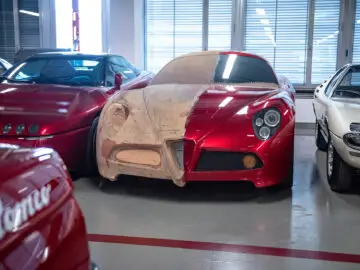
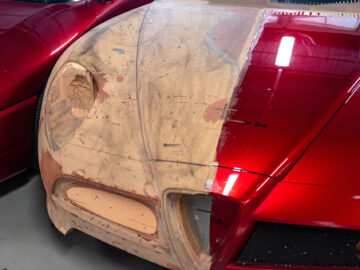
Half in clay: the 8C prototype
We stumble upon a half-finished prototype of the Alfa Romeo 8C Competizione, built partly in clay, partly as a finished car. A “vlaflip” like this represents the step in the design process even before the actual prototype. The designers form the car by hand, after which the prototype is completely finished with paint and coloring. This is why we see differences from the prototype in the museum, apart from the usual differences between prototypes and production versions of models.
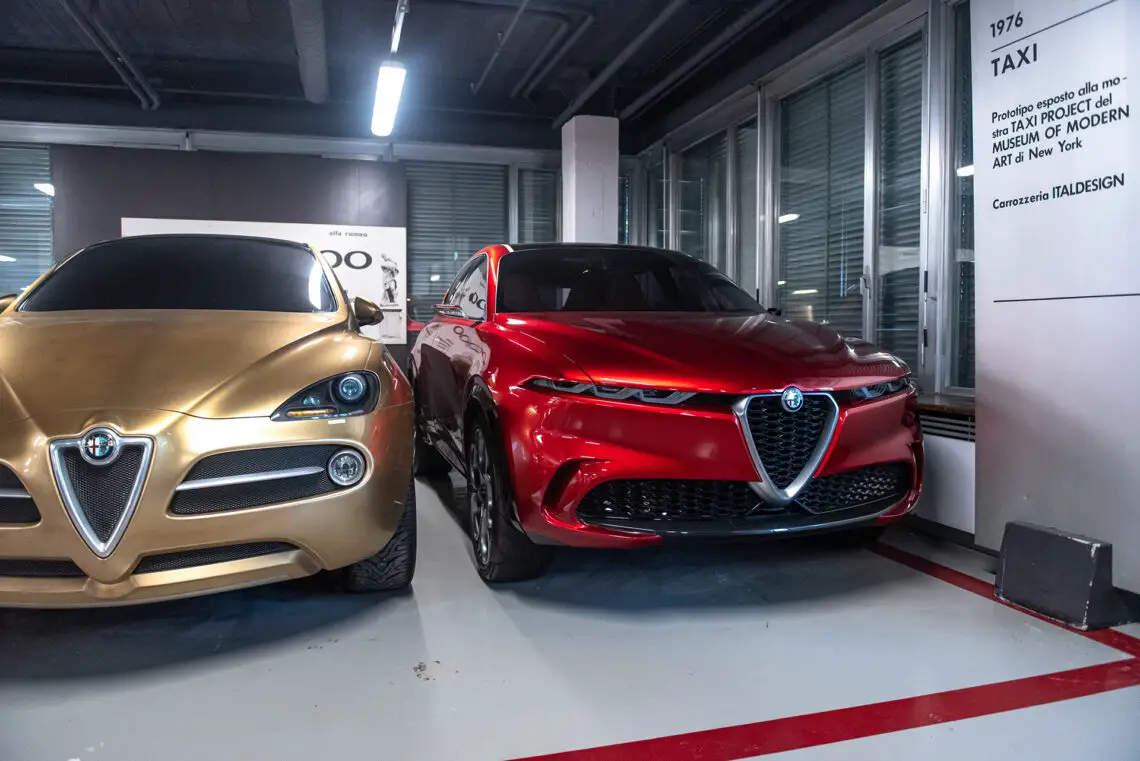
Alfa Romeo Kamal: SUV prototype ahead of the Cayenne?
In a corner of the basement, two SUVs stand side by side. On the right is the study model of the Tonale. To its left is an SUV we have never seen before. Judging by the design, this seems to be a study model of an early SUV prototype in the early ’00s, the Kamal. It was presented at the Geneva Motor Show in 2003, around the same time as the first Porsche Cayenne.
Had Alfa Romeo put this car into production, the brand might have entered the lucrative SUV segment years earlier. The Kamal combined all-wheel drive with sporty lines and distinct Alfa styling. The name comes from the Arabic for “perfection” and “lotus.” Yet it remained a prototype. Only years later would Alfa really take the SUV path with the Stelvio.
Alfa Romeo Z33 Free Time – Alfa with three rows of seats
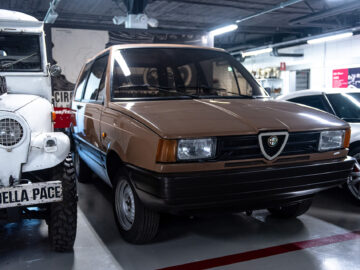
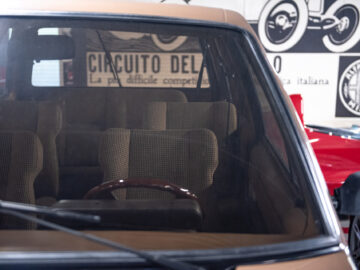
We also spot a prototype of an MPV-like Alfa Romeo with three rows of seats. A rarity within the brand. As such, it is a prototype that raised strong eyebrows, the Z33 Free Time. It was built in the 1980s, with compact proportions and a thoughtful interior. This was Alfa’s interpretation of practical mobility for the whole family with a following. The concept reminds us of another Italian that offers plenty of space, the Fiat Multipla. The Z33 Free Time has sliding doors, a high roofline and an interior focused on comfort. Yet the project was never commercially developed.
Alfa Romeo Giulia Riviera – dolce vita on four wheels
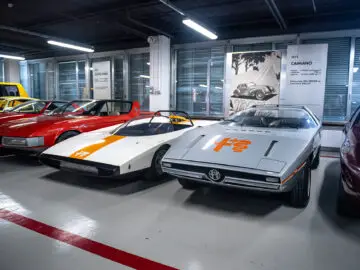
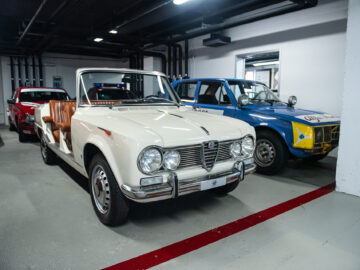
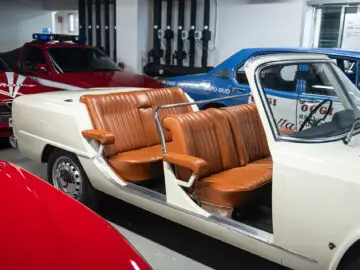
One of the most striking creations is the Giulia 1600 Spider Veloce “Riviera,” an open version of the Giulia Berlina with luxury seating, without doors. It is reminiscent of the Fiat 600 Jolly, but in Alfa form. An elegant white body, chic seats and ready to cruise along the Amalfi Coast. La dolce vita!
The car exudes Mediterranean zest for life. It was a concept, possibly intended for ceremonial or tourist purposes, but was never developed further. Today it is a delightfully goofy and stylish oddity.
8C Spider prototype and Giulia GTA
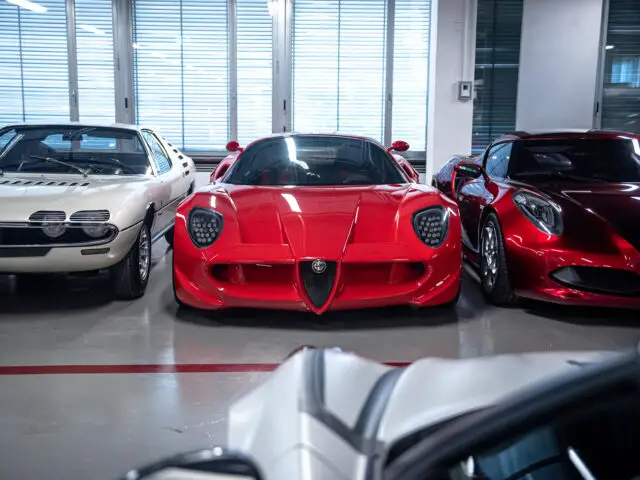
In one corner stands a white Alfa Romeo 8C Spider, apparently an early prototype, amid other greats. In the background is a Giulia GTA parked – together they form a duo you could easily spend hours walking around to discover details.
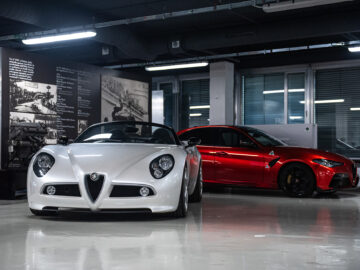
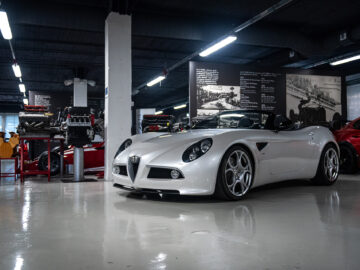
The Hidden Arna
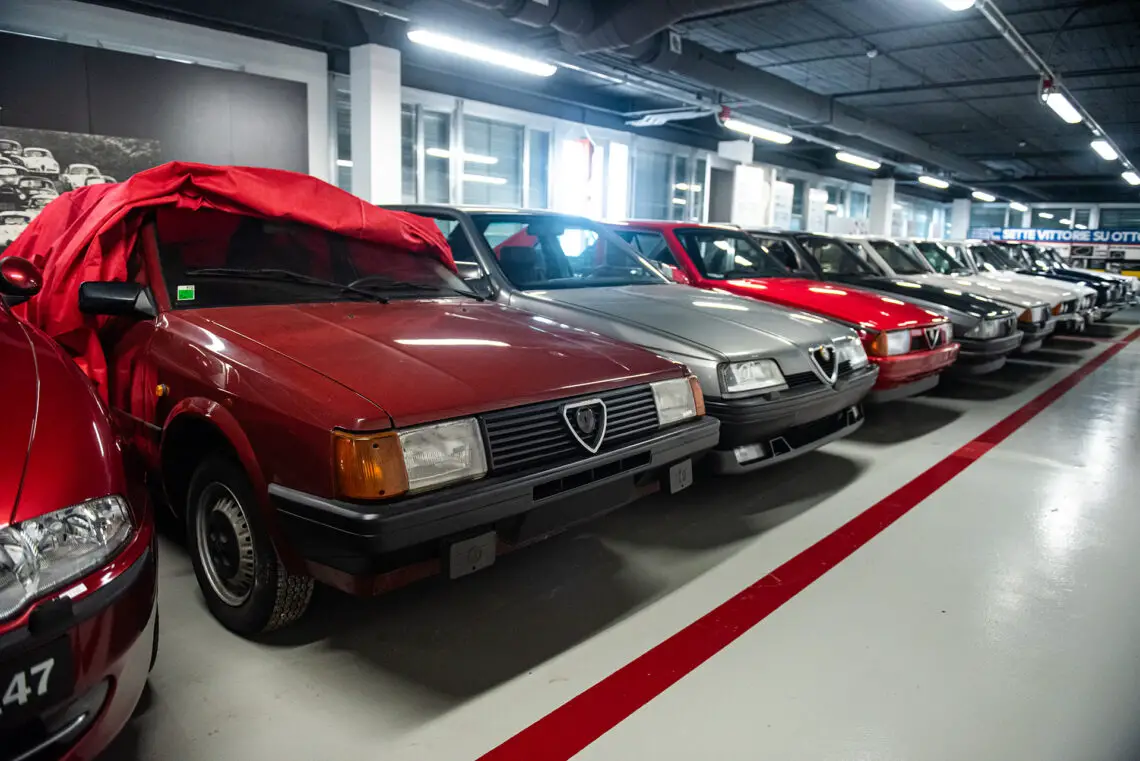
The basement is full of models that see little daylight. There is one model that is under canvas, and thus gets very little daylight. Not without reason, for it is the Alfa Romeo Arna, a 1980s collaboration with Nissan. The Arna combined Japanese engineering with Italian flair – a golden formula on paper, but a failure in practice.
The design was bland, the build quality underwhelming, and the whole thing felt especially cheap. That this Arna is literally covered here says enough about the Italians’ opinion of this car. We are asked to walk on again….
Raging pasta – Alfa’s kitchen set from 1945
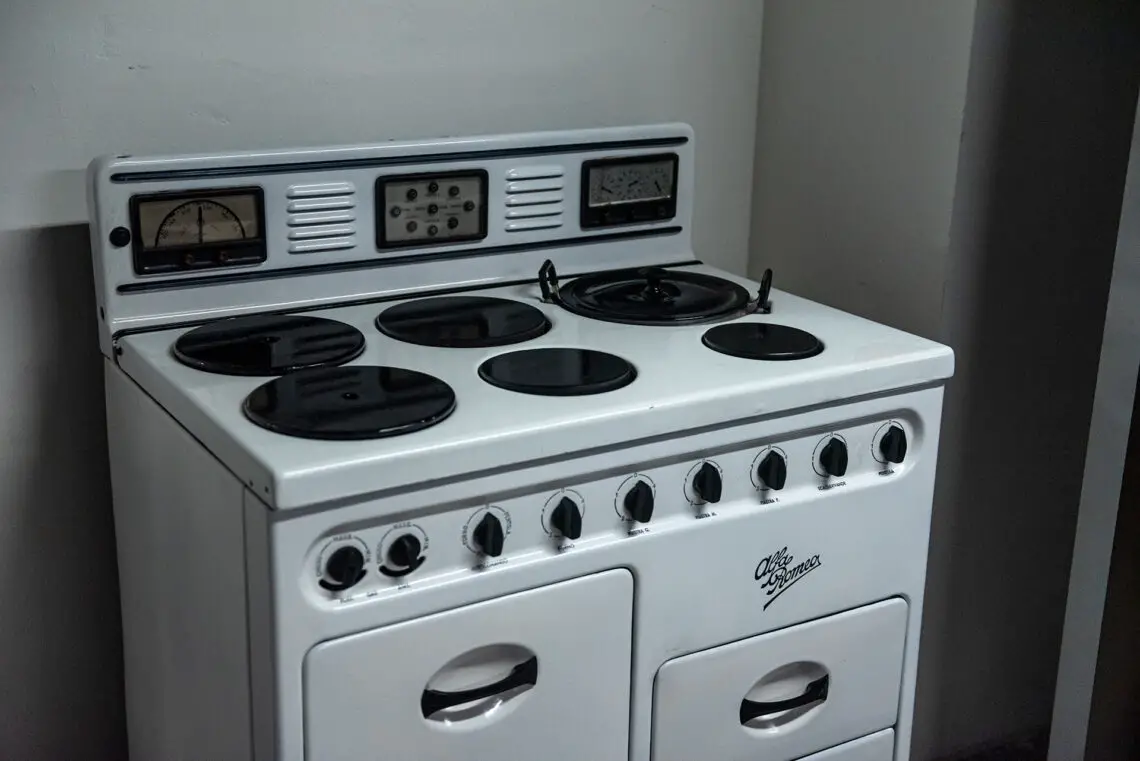
And then suddenly: a full-fledged kitchen unit with Alfa Romeo logo. Not just any art project, but a real oven from Alfa Romeo, produced between 1944 and 1946. In these difficult postwar years, the brand was looking for ways to survive and keep factories running. No better way to cook your pasta al dente than with technology from Alfa Romeo, right?
Wankel engine and engineering experiments
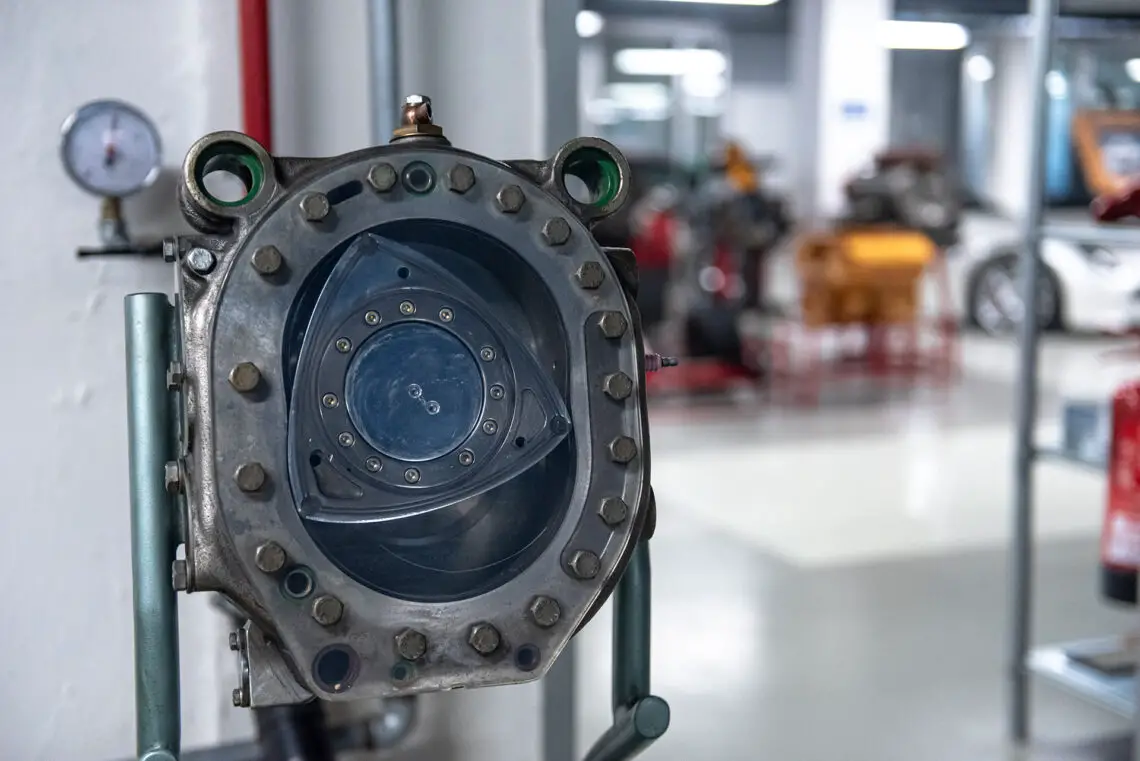
A striking technical object is a wankel engine, the rotary alternative to the classic piston engine. Although Alfa Romeo never built a production car with this technology, this example shows that serious experimentation with this technology did take place. Like NSU and Mazda, Alfa investigated whether this compact, low-vibration engine would be suitable for the future. That future never came, but the experiment is tangibly present here.
‘Alfas that are not Alfas’
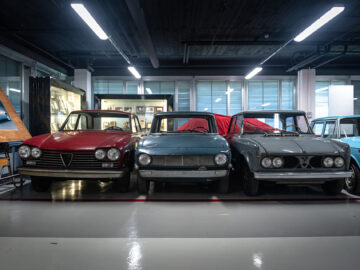
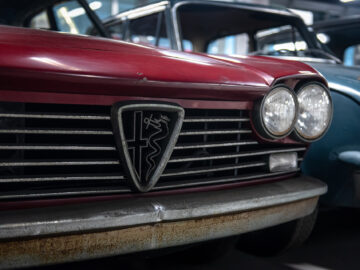
In the basement there are also several cars that may or may not be official Alfas, or may make it seem as if they are not Alfa Romeos. See here the first forms of camouflage, so that development and testing could take place in the deepest secrecy. And of course, sometimes one looks at the neighbors. Good copy is better than bad thinking.
Shelves full of treasures
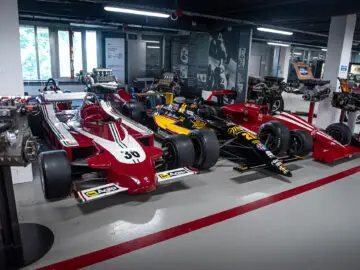
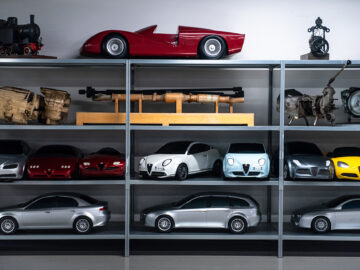
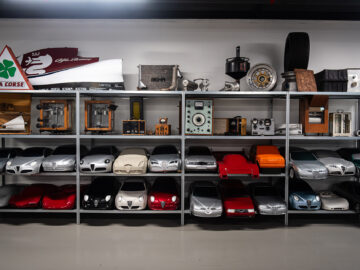
Along the walls are shelves full of models, scale cars, panels and test parts. Some scale models show body versions that never made it to the production stage. We also see parts of Formula One cars, volume models of engines, technical parts, old measuring equipment and more.
In conclusion
What makes this basement so special is that here you can see not only the developments of the models, but also the technical quests and creative sidetracks the brand has made over the years. A visit to the Museo Alfa Romeo is already a treat, but this basement makes it a dream for any car enthusiast.
Do you really want to know everything about the models in the basement and their history? Since spending the night in this basement is not an option, we recommend a “Catalogue raisonné Alfa Romeo. A collection of tomes containing everything about all Alfa Romeo models. Prego!