
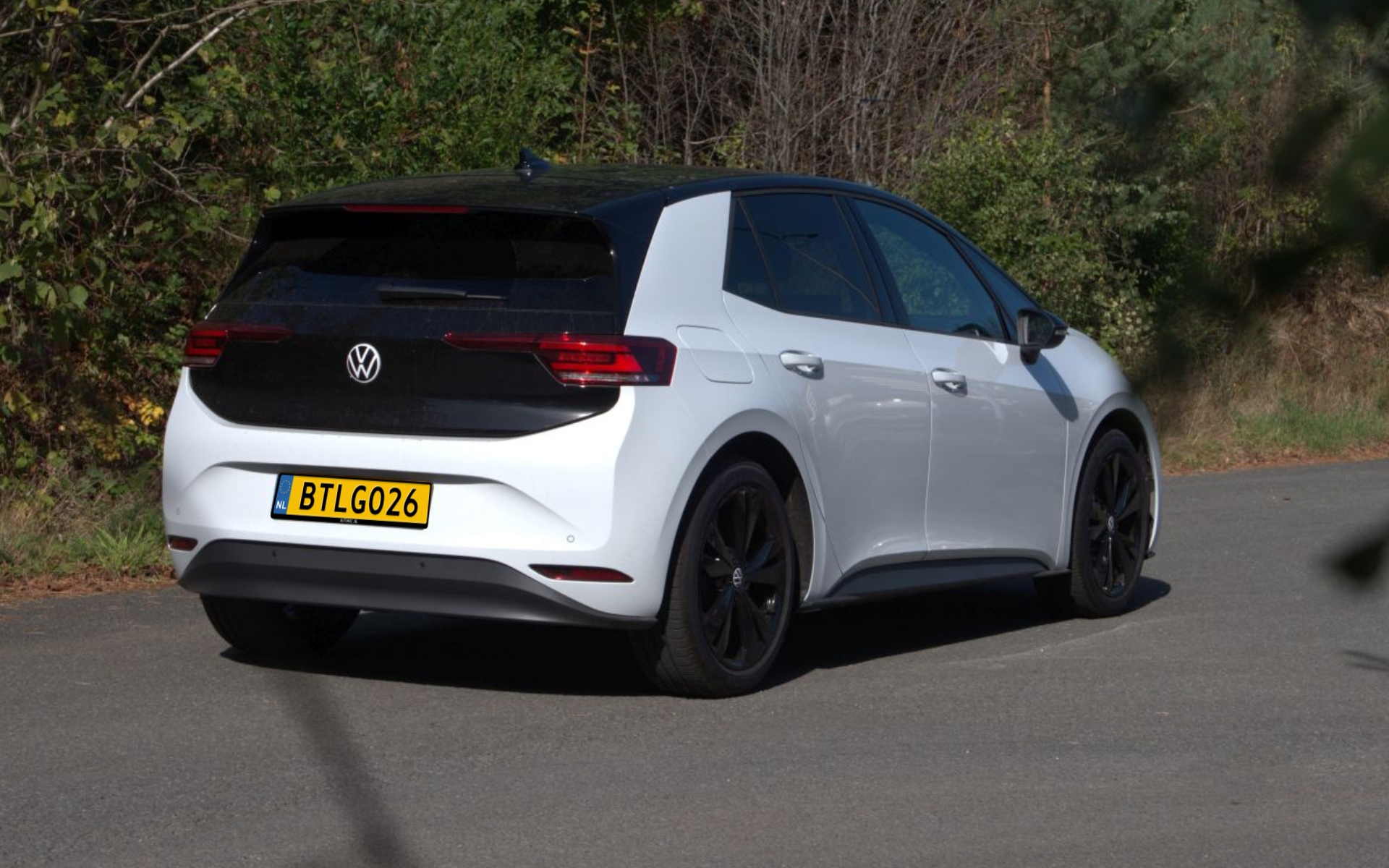
Additional tax rate 2026: lower additional tax rate for electric car will remain in place
The future of additional taxes
The direction remains the same: eventually everyone will go to 22 percent additional tax rate. But leading up to that, the Lower House now opts for a softer landing, with electric models still receiving a discount in both transition years. There is still a catch: this proposal has been passed by the House of Representatives, but the Senate still has to vote on it on December 16, 2025. Once the Senate gives its approval, you will only know how additional taxable income in 2026 will finally work out. Once the regulations are published in December, employers, leasing companies and business drivers can start calculating and anticipating the new percentages.
Additional tax rate 2026: 18 percent on the first 30,000 euros
In 2026, the standard rate (22 percent) for EVs will be reduced by four percentage points. As a result, you effectively charge 18 percent on the first 30,000 euros of list value. The maximum discount rises to 1,200 euros. Above that 30,000 euros, 22 percent simply applies again. Especially compact and mid-range EVs benefit from this intervention.
Additional tax rate 2027: 20 percent on the first 30,000 euros
In 2027, the benefit will be further phased out. An effective rate of 20 percent on the first 30,000 euros will then apply, good for a maximum benefit of 600 euros. The rest of the system remains the same as in 2026.
Addition 2028: all to 22 percent
From Jan. 1, 2028, all rebates will disappear, these plans now show. Electric cars will then fall entirely under the regular 22 percent addition rate.
Addition applies for five years
Those who register an electric car in 2026 or 2027 will benefit for a longer period of time. This is because the applicable additional tax rate will again be fixed for 60 months. So for business drivers who may switch leased cars in the short term, the moment of ordering becomes strategically important again.
The official story
Let’s also take a look at the original texts from the House of Representatives, found on the “VOTES (on all amendments submitted to the 2026 Tax Plan Package and on motions filed)” page , section 36812-102. That government docment states the following:
“This amendment at a stroke prevents electric cars (EVs) from being de facto taxed more heavily in 2026 in the additional taxable income than gasoline cars. Indeed, smaller EVs in particular still have a higher purchase price than their fossil counterpart. The current addition rate for EVs is 17% for the first €30,000 in list value and 22% above that. In the 2026 Tax Plan, this threatens to become 22% across the board all at once. The petitioners propose to do this more gradually: 18% in 2026 for the first €30,000, 20% in 2027 and 22% only from 2028 onwards. If an EV is purchased in 2026, the proposed addition of 18% will apply for 60 months; in short, it will be the same as it is today. This amendment thus also fills in the much-needed flanking policy that is currently missing from the Cabinet’s proposed pseudo addition tax.
Coverage is found in a gradual scaling back of the youngtimer scheme. The petitioners propose to raise the minimum age for youngtimers by one year from 15 to 16 years as of 2026 and by another nine years to 25 years as of 2027. This gradual retrenchment will give owners of youngtimers room over the next year to anticipate this if they wish. Both measures – the lower additional taxable benefit for EVs and the relaxation of the youngtimer scheme – contribute to the desired greening of the vehicle fleet in the Netherlands.”
Youngtimer scheme to be sharply tightened
The renewed EV rebate has to be paid from somewhere. That will be done through a hefty intervention in the youngtimer scheme. Starting in 2026, the age limit rises from 15 to 16 years. A second jump will follow in 2027: the limit goes to 25 years. Only cars of 25 years or older will then remain entitled to the favorable 35-percent rate. Younger youngtimers – popular for years as a business option with a low additional tax rate – will then fall back to 22 percent all at once. This particularly affects drivers of older premium sedans, larger station wagons and beloved classics-to-be. Important detail: the additional tax rate may never exceed the actual costs a company incurs for a car, so the amount cannot be unlimited.
What does this mean for the market?
For importers and manufacturers, the new EV scheme brings fresh air. Especially models in the A, B and C segment (roughly between 20,000 and 40,000 euros list value) remain attractive for business drivers. That category forms an important foundation for Dutch EV sales. For youngtimers, the effect is exactly the opposite. Many models lose their tax advantage and will therefore become less popular, especially in the middle and premium segment. The tax incentive clearly shifts toward cleaner and newer cars.