
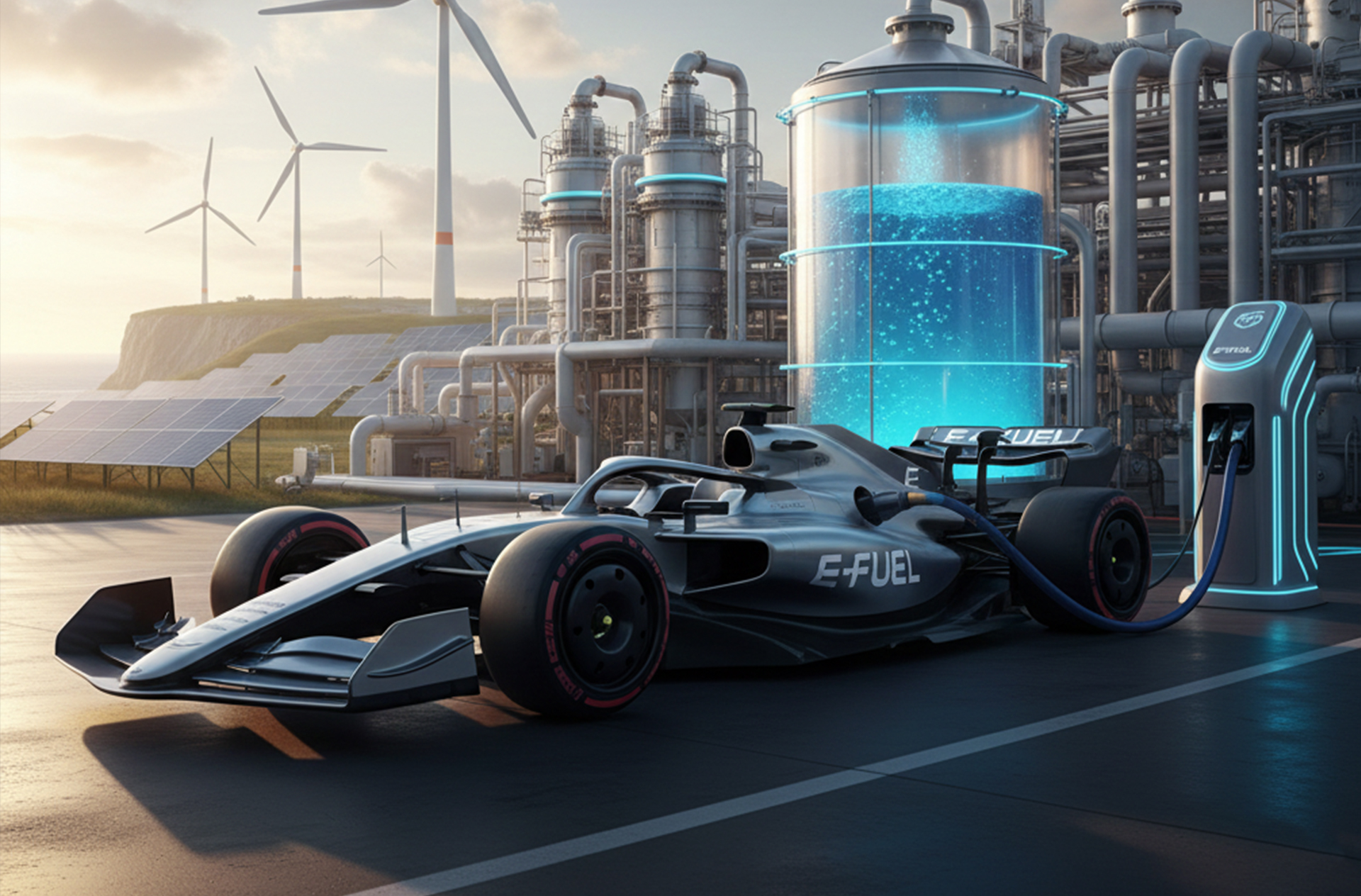
This is how synthetic fuel is made
Fully sustainable form of fuel
Fuel plays a crucial role alongside hybrid engines in Formula One cars. Engine noise is part of the spectacle. The F1 circus is switching to a completely sustainable form of fuel in 2026. But how is this synthetic fuel actually made?
The e-fuels for Formula One in 2026 will be made from 100% sustainable, CO2-neutral sources, such as carbon capture from the air, biomass, algae and municipal waste, mixed with hydrogen from renewable energy (RFNBO), resulting in a synthetic fuel that emits no additional CO2. The manufacturing process involves capturing CO2, creating hydrogen and combining these “building blocks” to produce an advanced synthetic fuel, which is then used in the hybrid engines.
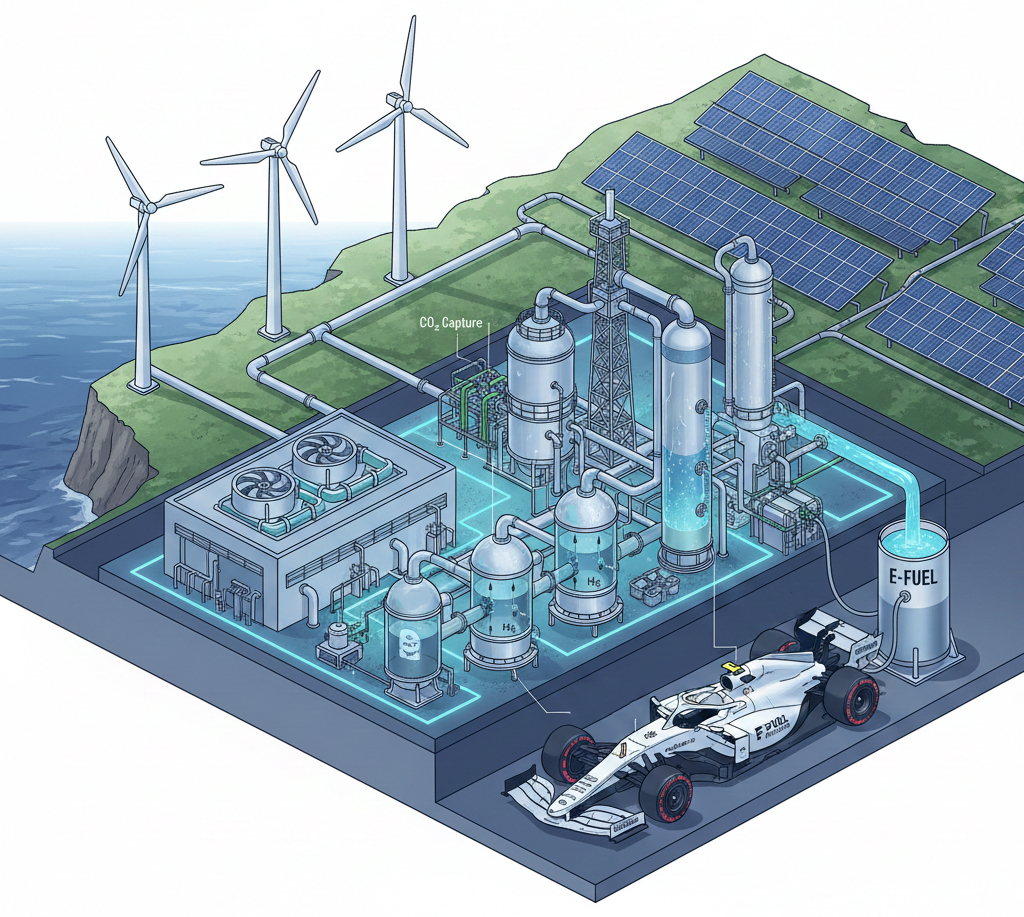
How the 100% renewable fuel is made:
- Carbon Capture (Carbon Capture): CO2 is taken from the atmosphere or industrial processes.
- Hydrogen production: green hydrogen is produced by electrolysis of water using renewable energy (such as wind or solar power).
- Synthesis: the captured CO2 and green hydrogen are combined to make synthetic hydrocarbons (e-fuels).
- Additives: these synthetic components (minimum 99%) are blended with other sustainable ingredients, such as non-food biomass and algae.
The role of this fuel in the 2026 F1 rules:
CO2 neutrality: the fuel is designed to be 100% carbon neutral, meaning that the emissions from combustion are equal to the CO2 absorbed during production.
Hybrid power source: the new engines have a larger electric component, reducing gasoline requirements and making more efficient use of renewable fuel.
Replacing fossil fuels: fossil fuels are disappearing completely from sport and these new synthetic fuels are taking their place.
By 2030 CO2 neutral
This fuel is crucial to Formula One’s goal of achieving net zero CO2 emissions by 2030, with a focus on continuing the fuel engine in a sustainable context.
Technical deep dive with Honda
That there is a lot involved in the production of so-called e-fuels, Honda previously proved in a technical background article. For example, Honda began purchasing green hydrogen (produced without CO2 emissions) from the Fukushima Renewable Energy Research Center of the National Institute of Advanced Industrial Science and Technology (AIST) back in 2021. The hydrogen was then reacted with carbon from wood biomass to produce CO2-neutral methanol.
This methanol was in turn reacted with biochemicals, based on wood and other non-food raw materials, and other chemicals to produce the components. By 2021, 58.5% of these high-performance components were carbon-neutral, and Honda indicated back then that it was technically possible to achieve 100% carbon neutrality. So that has now been achieved. The e-fuels for 2026 are completely carbon-neutral, according to the Formula One organization.

The figure above shows a simulation of a combustion reaction for isooctane (C8H18), as an example. By calculating reactions with different substances, the simulation shows when ignition occurs and what happens to cylinder pressure at temperatures and pressures characteristic of fuel engines.
Honda in 2026
Formula One cars must use 100% carbon-neutral fuel from 2026. Honda will also return as a power source supplier in Formula One from 2026 and is working through Honda Racing Corporation (HRC) to develop fuel to match the new power sources that will be delivered from 2026. Compared to traditional gasoline, CO2-neutral fuels are difficult to evaporate. Therefore, it is important for fuel development to focus on easy evaporation. On the other hand, there is also a need to develop technologies that facilitate the combustion of fuels that are difficult to evaporate.
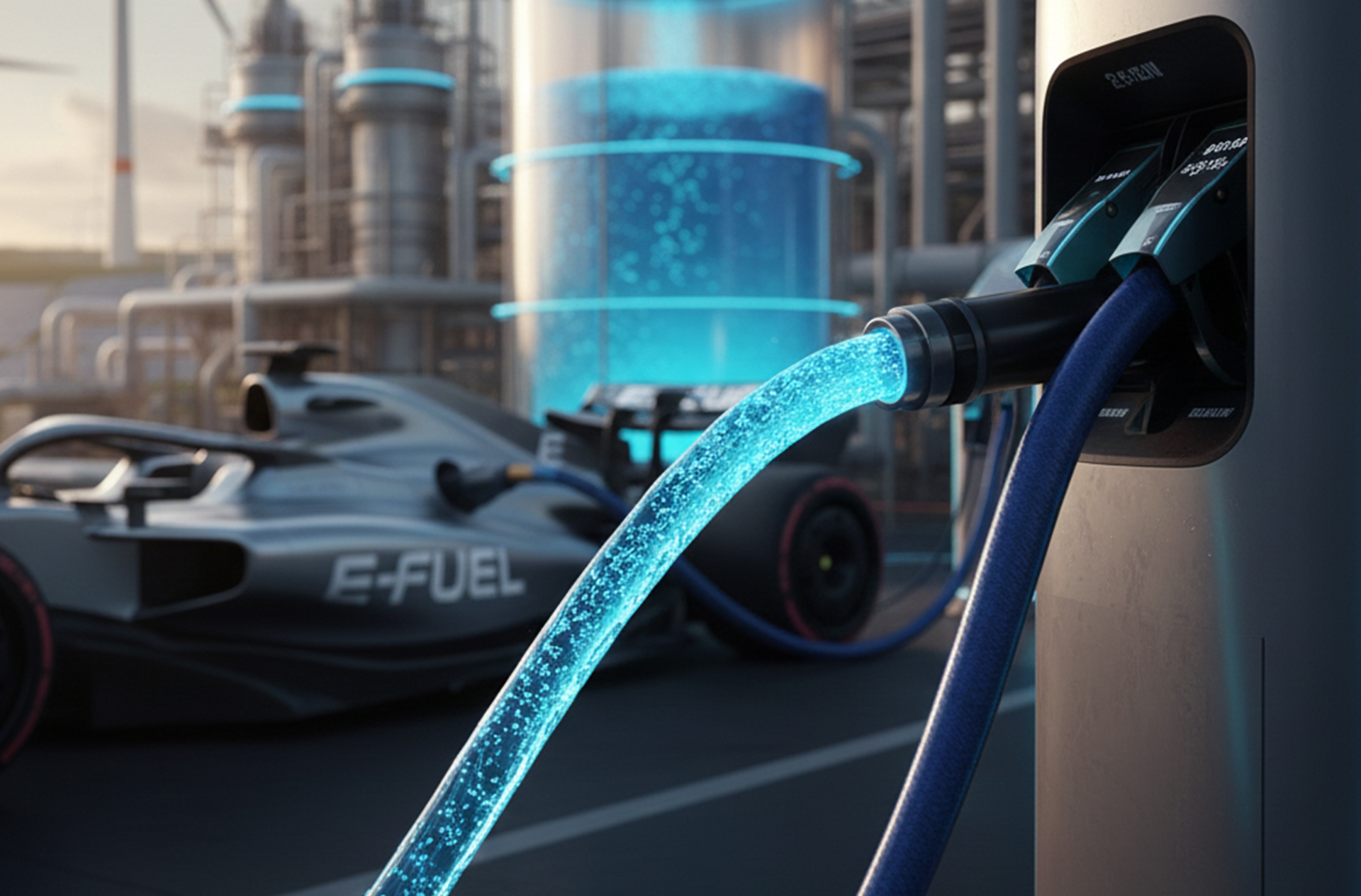
Further development and rollout of e-fuels
Internal development of powertrains and CO2-neutral fuel is one of Honda’s strengths. The technologies the company is refining by developing CO2-neutral fuel for Formula One can be transferred to other racing classes in Japan, where CO2 neutrality is being promoted. Application in production cars is also in sight in the future. CO2-neutral fuels produced from green hydrogen undergo a distillation process similar to the purification of gasoline before being converted into various types of fuel.
Gasoline substitutes
The light components after distillation can be used as gasoline substitutes, while the heavy components can be used as jet fuel. This makes it possible to use them in testing electric vertical takeoff and landing (eVTOL) aircraft, which use hybrid gas turbine technology, and for sustainable jet fuel (SAF). For this reason, Honda is developing carbon-neutral fuel simultaneously with the powertrains for Formula One, hoping to make an important contribution to society.