
This is how safe electric cars are
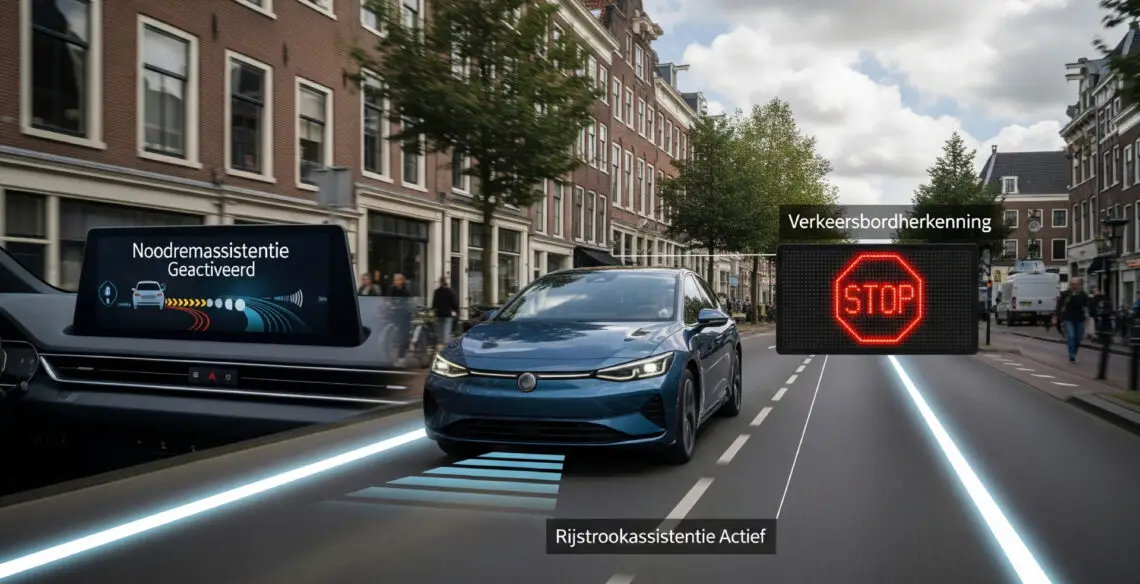
The safety of an electric car (also often referred to as an “EV”) – like that of conventional cars – is made up of several layers. First, there is the driver, who must behave responsibly in traffic. Then there are active assistance and safety systems, such as brake assist, adaptive cruise control and lane assist, which help the driver avoid accidents. Then you have passive safety: the protection of occupants during an accident, such as crumple zones, airbags and the strong structure of the car. As an extra for EVs, you have electrical safety, which requires the high-voltage system to continue working safely during normal operation as well as shut down in the event of a crash, for example.
Road safety: often a step ahead
Fully electric cars are often new models and equipped as standard with advanced driver assistance systems, or ADAS (Advanced Driver Assistance Systems). In doing so, EVs also meet the latest, highest safety standards. Many models are equipped as standard with emergency braking assistance, traffic sign recognition and lane departure warnings – all just to support the driver. But the driver, of course, remains responsible for safety.
The low center of gravity of EVs, due to the heavy battery pack in the floor, is also a plus for safety. It improves handling and reduces the risk of tipping over during sudden maneuvers – even in taller MPVs and SUVs. Furthermore, the readily available power from the electric motor ensures predictable handling – and the ability to escape a dangerous situation.
Crash safety: strong construction and protection of battery
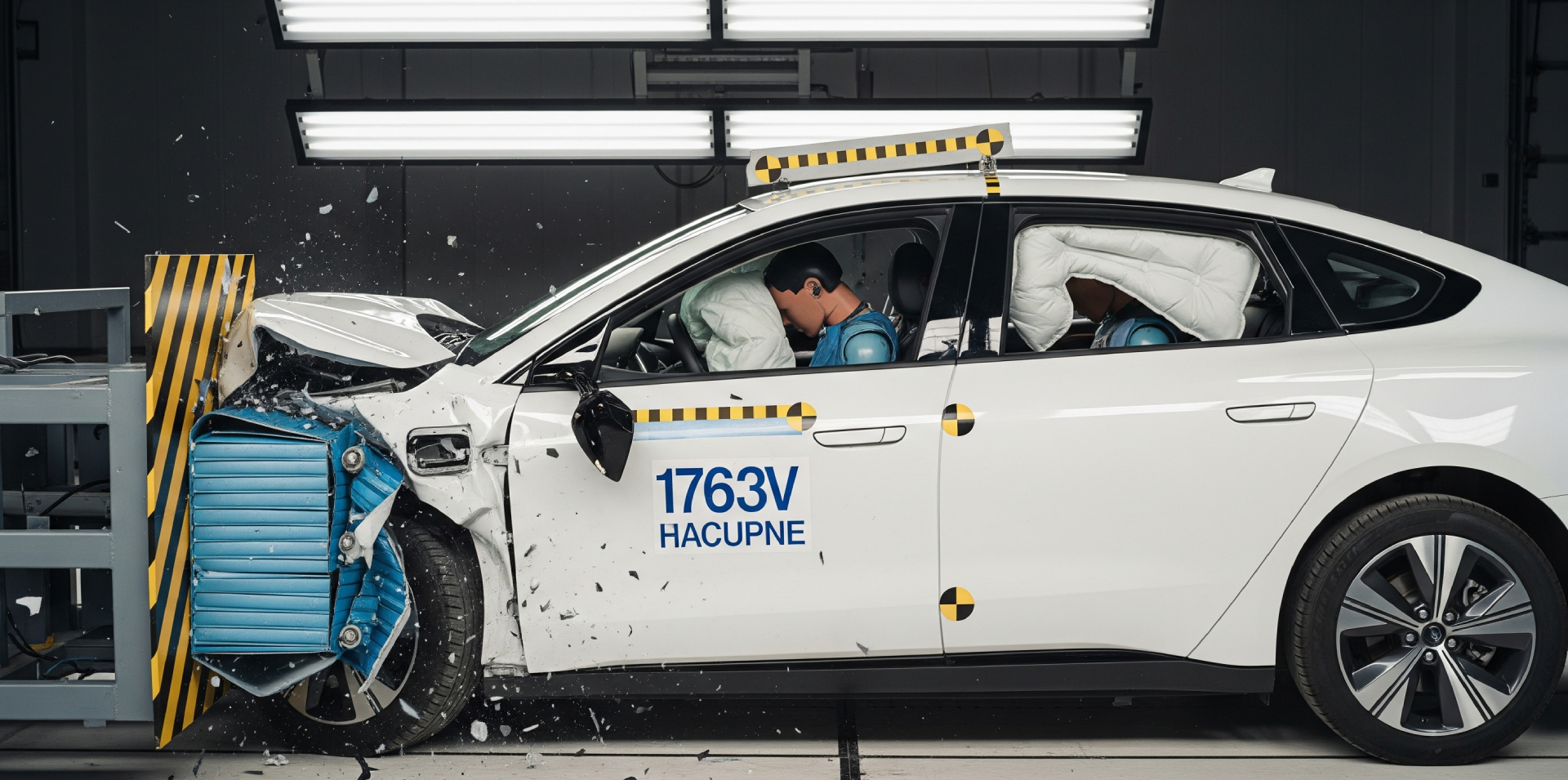
Electric cars are usually designed from the placement of the battery, which is integrated into the floor. After all, in the event of a collision, the battery pack must be well protected, which is why the floor and side panels of an EV are extra strong – the battery is contained in a virtually indestructible box, so to speak. That strong structure also contributes to occupant protection, of course. In the crash tests of Euro NCAP, for example, many electric models score high. An additional advantage: because there is no fuel engine in the nose, the front end is a large crumple zone that absorbs the impact of a collision, although this varies from model to model.
Fire safety electric car: facts and misconceptions
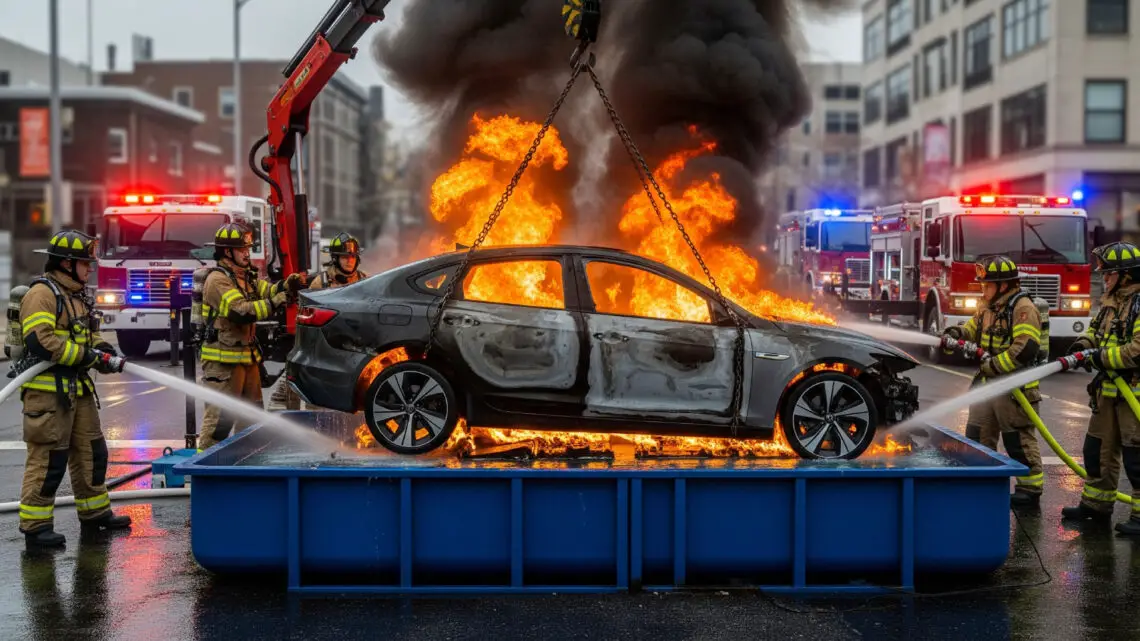
A common objection to EVs is fire danger from the battery. In fact, the number of fires per mile driven is lower than gasoline and diesel cars. Lithium-ion batteries, however, can burn violently if damaged or overheated. Such a battery fire is difficult to extinguish and often requires a lot of water. For this reason, electric cars are sometimes placed in an immersion pool to cool down during incidents.
Manufacturers are therefore working with multiple layers of safety: temperature management, automatic disconnection of high voltage in the event of a collision and the already mentioned robust housing. Charging technology has also improved, with systems that prevent “overcharging. The risk of fire is very small, but not zero – just as with traditional fuel cars.
Where electric cars may be less safe
Despite all the advantages, there are also challenges for electric cars. A major issue is the high weight. Because of the battery pack, an EV is hundreds of pounds heavier than a comparable gasoline car. As a result, in a collision, an EV has a greater impact on the “other party,” such as cyclists and small cars.
Also, the silence of EVs at low speeds is a risk to pedestrians and cyclists. Therefore, EVs should produce a warning signal up to 20 mph. Also, the fierce acceleration of some EVs can be dangerous if the driver underestimates the pulling power.
Occupant safety; but watch driving behavior
For the occupants, an electric car is generally safe. The occupant compartment is sturdy and modern safety systems often work together to protect them. However, driver behavior is the overriding safety factor. A car with advanced technology can compensate for much, but it is not “lout-proof. Speeding and insufficient distance keeping remain risks – just as in other cars.
As a rider, what can you do yourself?
As a driver, you have a lot of influence on safety – even in your electric car. Some practical tips.
- Regular maintenance; have not only brakes, tires and suspension checked, but also the condition of the battery cooling system and charging cables.
- Pay attention to tires and tire pressure: higher weight causes tires to wear faster. Underinflation affects handling and increases braking distance.
- Use the charging infrastructure wisely: charge at certified charging stations and avoid excessive use of fast chargers. This extends battery life.
- Use driving assistance systems, but stay alert: ADAS helps, but does not replace an alert driver. Always stay in control yourself.
- Be aware of acceleration: especially in powerful models, it is wise to accelerate slowly on wet roads and in heavy traffic.
- Adjust your driving style to the weight: keep more distance and start braking earlier, especially at high speeds.
Electric car safety versus conventional car
Comparing EVs to conventional cars, EVs often score high on active safety and crash protection. The low center of gravity and the presence of modern assistance systems are also advantages. Fire safety is similar and even slightly better in practice, although battery fires are more complex to fight and make the news more often.
The disadvantages are mainly in the higher weight and the silence that fellow road users are not used to. However, these can largely be overcome by conscious driving.
Future developments
Electric car safety continues to evolve. New battery technology such as solid-state batteries promise less fire hazard and higher energy density. Manufacturers are also working on even better integration of driver assistance systems with artificial intelligence, allowing cars to better anticipate dangerous situations.
Vehicle-to-vehicle (V2V) communication will also contribute to road safety, as cars warn each other of approaching danger. By the way, this applies not only to EVs, but also to gasoline and hybrid cars.
Electric car safety, better than conventional car?
Electric cars are generally just safe, often even safer than conventional cars. Still, there are concerns, such as high weight and silence. But the driver can do much to increase safety, especially through responsible driving. With the ongoing development of battery technology and driver assistance systems, the safety of electric cars is only increasing. But as always, the technology is only as safe as the person behind the wheel.