
The 10 most recycled car parts – and why it matters most
In the Netherlands, nearly 99% of the weight of discarded cars is beneficially reused. Professional car recycling companies extract many usable parts from old vehicles, giving them a second life. Through platforms such as Autoparts24, car owners can easily find, compare and purchase such recycled original parts directly from certified dismantling companies.
Here are ten car parts that are most often recycled – and why it matters.
1. Batteries (batteries).
Carbatteries (lead-acid batteries) are almost always recycled because of their hazardous contents. Among other things, a 12 V starter battery contains lead and acid that are very harmful to the environment if they leak. Therefore, it is prohibited by law to throw an old battery in the regular trash.
Professional recyclers disassemble the battery and extract the materials. The plastic casing is ground into granules for new casings, the lead is remelted into plates for new batteries and the sulfuric acid (battery acid) is neutralized. This reduces the need to extract new raw materials and keeps toxins out of the environment.
2. Tires
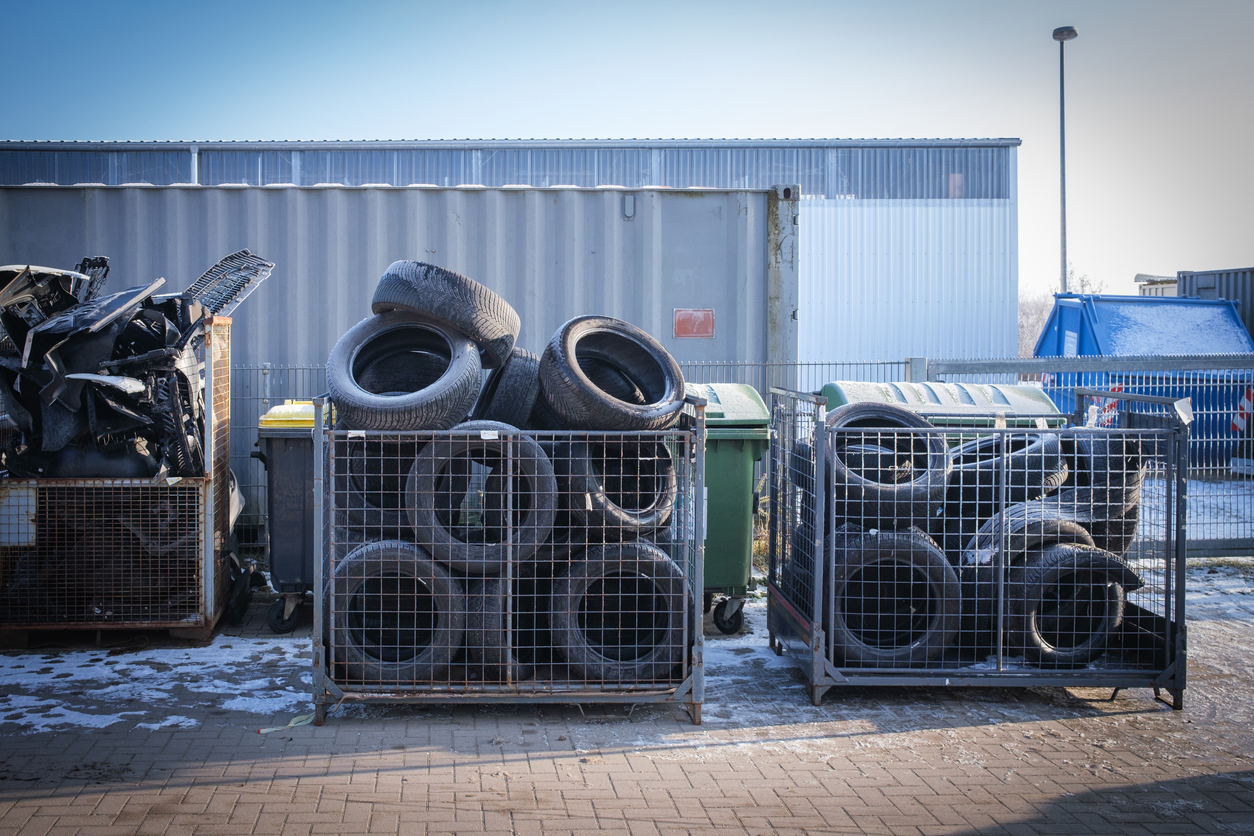
Discarded tires are a major waste problem if they are not recycled. Rubber tires do not decompose and take up a lot of space in landfills, while burning tires produces toxic smoke and oily residue. Such a burning tire smells pungent and leaves behind a black, sticky gunk – bad for air, soil and health.
Fortunately, old tires can often be usefully reused. For example, tires that are still in reasonable condition are given a second life on another car (after retreading the tread). Completely worn out ones are shredded into rubber granulate, which serves as a raw material for artificial turf fields, playground tiles or as an additive in asphalt, among other things. In this way, tons of rubber gets a useful use and does not remain floating around as waste.
3. Engine (engine block).
The engine is one of the most valuable parts to recycle. Often an engine still functions fine while the car around it is totaled; such an engine block can be taken out and placed in another car for a second life. Car recyclers test and rebuild usable engines, making a used powerplant a reliable and much cheaper alternative to a new one.
Even broken engines are useful. Defective ones are disassembled for usable components, or the metal is remelted as raw material. Aluminum engine parts are ideally suited for recycling because the metal hardly deteriorates in quality when remelted.
4. Gearbox (transmission)
Gearboxes (transmissions) are also widely reclaimed when dismantled. These complex but robust parts can often last for years in another car when the original fails. After overhaul, a used gearbox functions reliably again for a fraction of the new price.
Manufacturers and remanufacturers are therefore very interested in gearboxes from scrap cars because of the potential for reuse. If a box is still unusable, the metal components (steel gears, aluminum housing) are melted down and used as raw material.
5. Catalyst
The catalytic converter in the exhaust system is a treasure trove of precious metals. The ceramic honeycomb of the catalytic converter contains precious metals such as platinum, palladium and rhodium, which help purify the exhaust gases. Auto recyclers disassemble catalytic converters separately because these valuable metals can be recovered when recycling.
The recovery of these precious metals is crucial. Recycling catalysts avoids the need to extract new platinum and palladium from mines – a process that requires a lot of energy and causes environmental damage. This also reduces dependence on imports of rare materials.
6. Car windows (glass)
Car glass, such as windshields and side windows, no longer routinely ends up in the landfill. A windshield consists of layers of glass with a plastic film, which used to make recycling difficult. However, modern technology separates the glass from the film, turning the glass cullet back into raw material for new products.
Car glass is surprisingly versatile. Reclaimed auto glass is used in fiberglass insulation, new bottles and even jewelry, among other things. The PVB plastic film from a laminated windshield also gets a second life, such as as a raw material for carpet glue and other industrial applications.
7. Metal (body and chassis)
Most of a car consists of metal: from the steel chassis to the aluminum doors and rims. All that metal is eminently recyclable.
Once the dismountable parts are removed, the metal body of the vehicle is pressed into a compact cube. This wreckage then enters the shredder, where it is ground into small pieces. Magnetic and mechanical separators then sort the steel, iron, copper and aluminum for reuse.
This recycling process consumes significantly less energy than producing metal from ores. Thus, auto recycling saves precious raw materials and reduces CO₂ emissions through the efficient reuse cycle.
8. Plastic parts
Modern cars contain a lot of plastic: bumpers, dashboards, the fuel tank and even interior parts are often made of special types of plastic. Dismantlers remove these parts from the car and sort them by type of plastic. Intact pieces (such as a bumper or headlight unit) can be sold directly as used parts, while broken or worn plastic parts are ground up and melted into granules for new products.
Recycling plastic car parts is important to reduce plastic waste. Every year, an estimated 8 million tons of plastic ends up in the sea worldwide. Reusing the plastics from cars as raw materials means less new plastic needs to be produced, and less litter is released into the environment.
9. Starter motor and alternator
Starter motors and alternators (alternators) are typical parts that are often reconditioned after disassembly. If a car no longer starts due to a broken starter motor, a used one that has been refurbished by a specialist can help. New starter motors and alternators are pricey, so a remanufactured part saves the owner quite a bit of money.
These devices consist mainly of metal (copper, steel) that is excellent for recycling. When a starter motor or alternator is completely worn out, it is taken apart and the materials end up in metal recycling. Often, however, these parts can be given a second life – virtually as good as new – through overhaul.
10. Engine oil and oil filters
Engine oil and oil filters deserve special attention. A car contains several gallons of lubricating oil that pollutes during use, but does not “run out.” Waste engine oil can be cleaned and reused as a base for fresh oil, rather than ending up as harmful waste.
Even the oil filter itself is recyclable, despite being full of black oil sludge and having a steel casing. According to environmental regulations, waste oil filters must be treated as hazardous waste, but both the dirty oil and the steel can be recovered from them. Thus, that waste oil does not end up in the soil or groundwater, and the steel from the filter can be used as raw material.
Recycling of auto parts is both environmentally and economically important. Virtually every material from an end-of-life car can be reused, saving huge amounts of energy and scarce resources, and preventing tons of waste from ending up in landfills. There are also benefits for car owners: used original parts are much cheaper than new ones and often just as reliable, which means repairs cost less and cars last longer.