
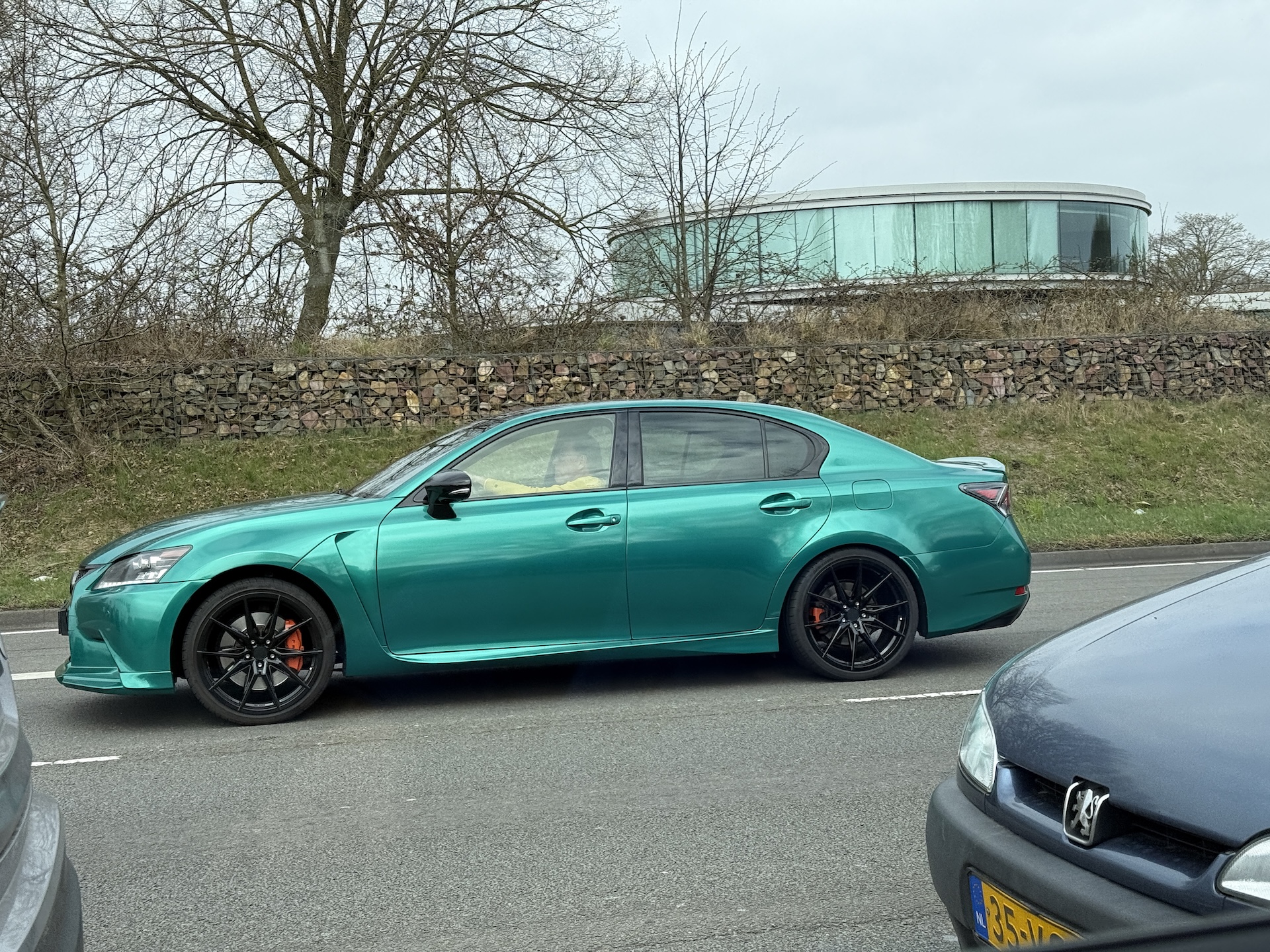
Spotted: this Lexus GS-F is going green!
A brief look at the Lexus GS
The Lexus GS debuted in 1991 as a luxury sports sedan, intended to fill the gap between the comfortable LS and the compact IS. The model gained worldwide recognition primarily for its build quality, comfort and reliability, but sporting ambitions were long in coming. The GS 430 and GS 460 did offer some extra spice, but the real fireworks were lacking. That changed with the introduction of the GS-F in 2015, based on the fourth-generation GS (L10).
The V8 in a world of turbos
The power source of the GS-F is one to drool over: a 5.0-liter atmospheric V8 codenamed 2UR-GSE, good for 351 kW (477 hp) and 530 Nm. We already knew this engine from the Lexus RC-F and IS-F. The V8 excels not only in linear power delivery, but above all in perception. No artificial engine sounds through the speakers, but a raw, authentic roar up to over 7,000 rpm. The engine is mated to an eight-speed automatic transmission.
What makes the GS-F truly special is the Torque Vectoring Differential (TVD). This system can actively distribute torque between the rear wheels, giving the car sharper cornering. There are three modes: Standard, Slalom and Track. In practice, this system gives the heavy sedan a surprisingly playful character.
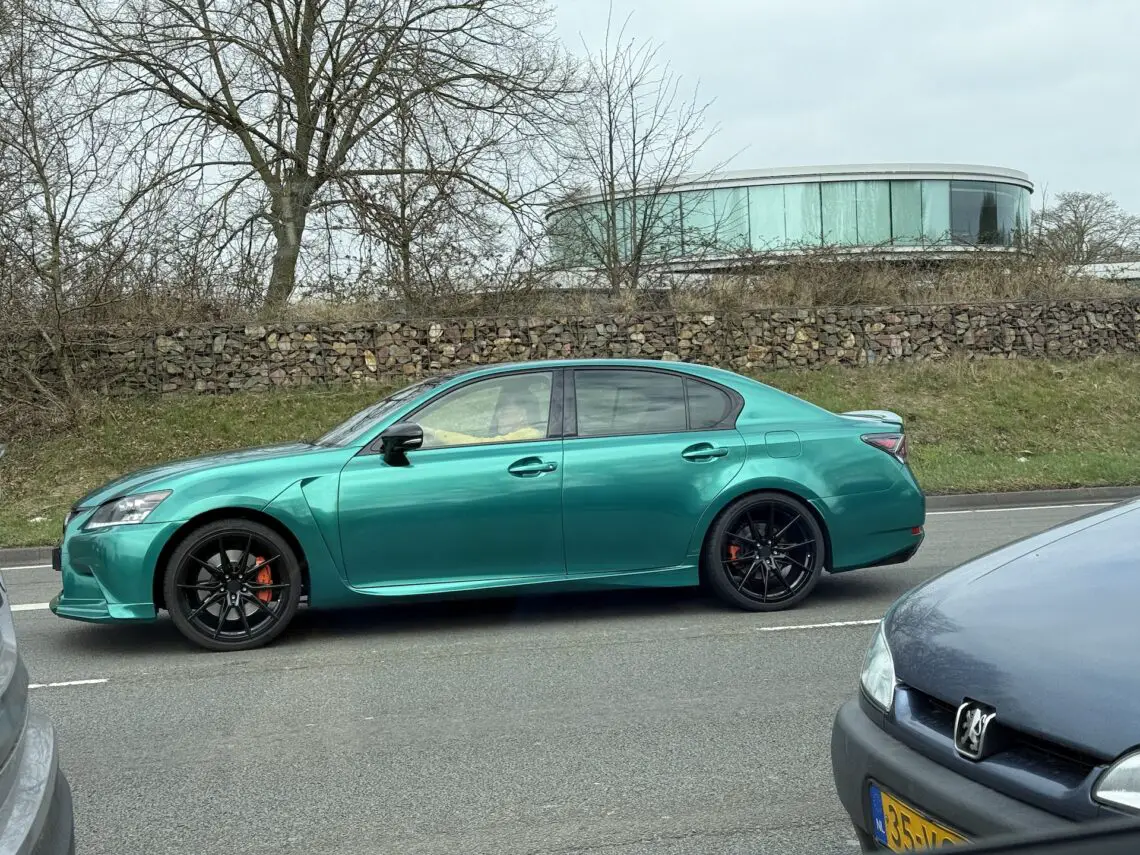
Fast enough, such a Lexus GS-F
Unlike its beefed-up German rivals, the Lexus GS-F is not a brutal powerhouse that overwhelmed its driver. The sprint to 100 km/h takes 4.6 seconds and the top speed is 270 km/h. That makes it fast, but not a record breaker. The secret is in the balance: the car feels nimble, predictable and communicative. With an empty weight of 1,830 kg, it is relatively light in its class.
Competition
The GS-F entered a hard-fought segment. Its main counterparts were:
- BMW M5 (F10): with a 4.4-liter V8 biturbo good for 411 kW (560 hp).
- Mercedes-AMG E 63 (W212): initially with atmospheric V8, later with 409 kW (557 hp) biturbo V8.
- Audi RS 6 (C7): with all-wheel drive and a 4.0 TFSI V8 of 411 kW (560 hp).
Compared to these models, the GS-F is less powerful, but that is precisely what sets it apart. It needed no artifice to impress – pure driving pleasure took center stage.
End of an era
The GS-F remained in production until 2020, after which the entire GS line was scrapped. The market for traditional sedans was shrinking and Lexus was focusing more on SUVs and electrification. But the GS-F remains a special model: a tribute to the V8 and a quirky counterpart in a world of turbo violence. A real enthusiast’s car, in other words.