
Skoda Kodiaq (2025) review – The most practical family car of the moment?
Pierced
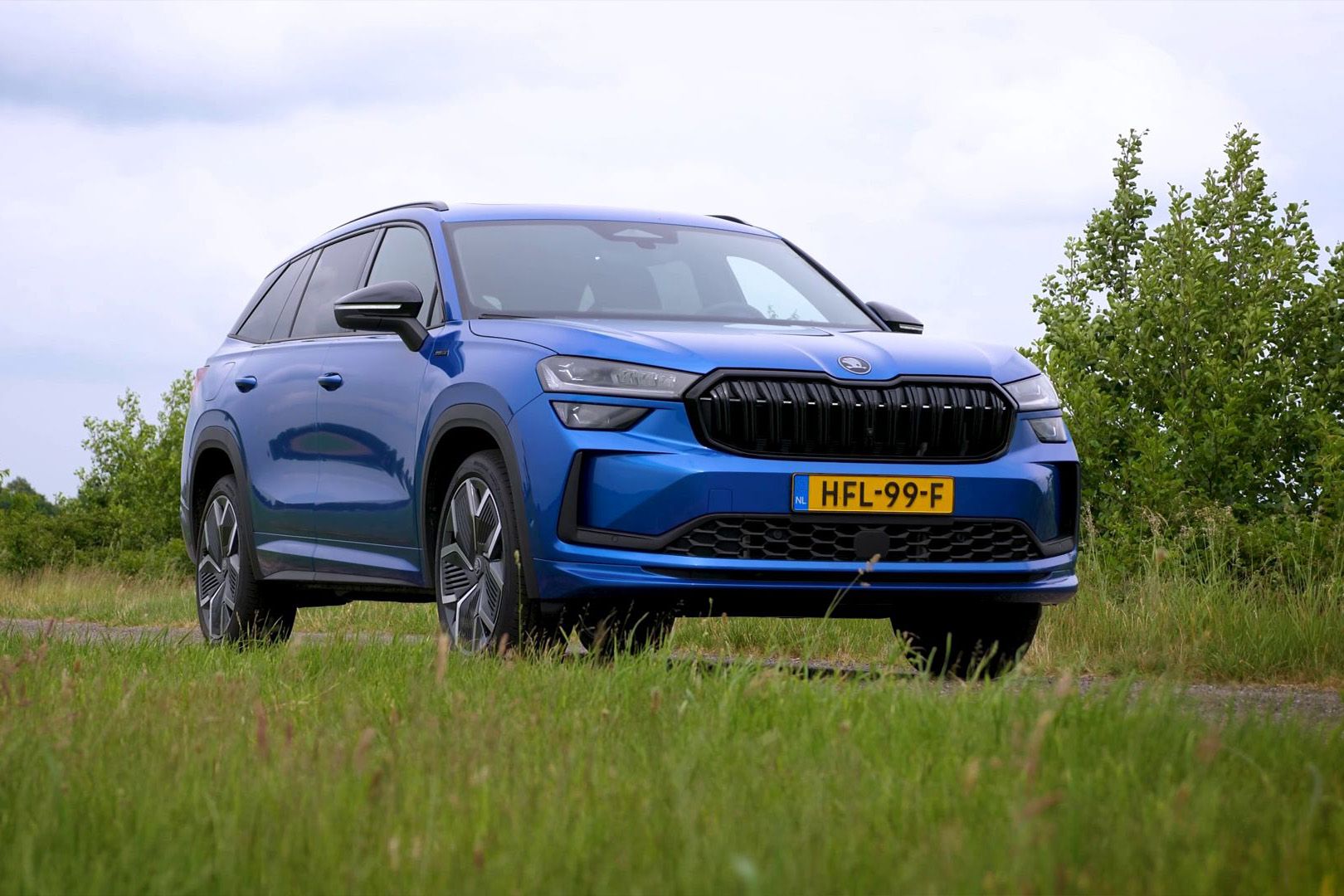
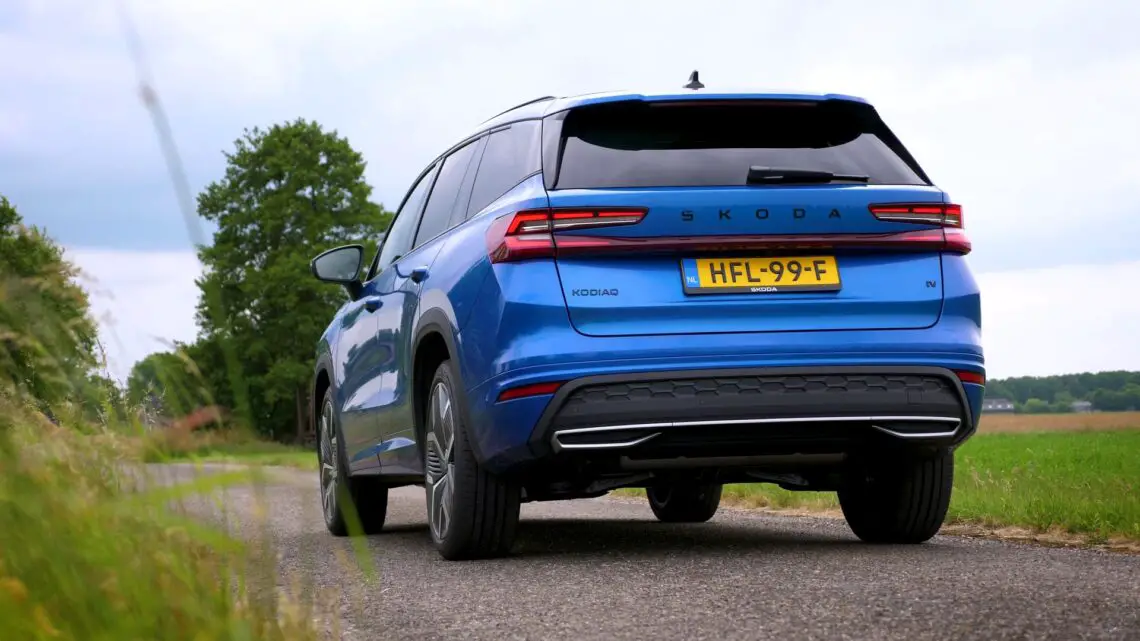
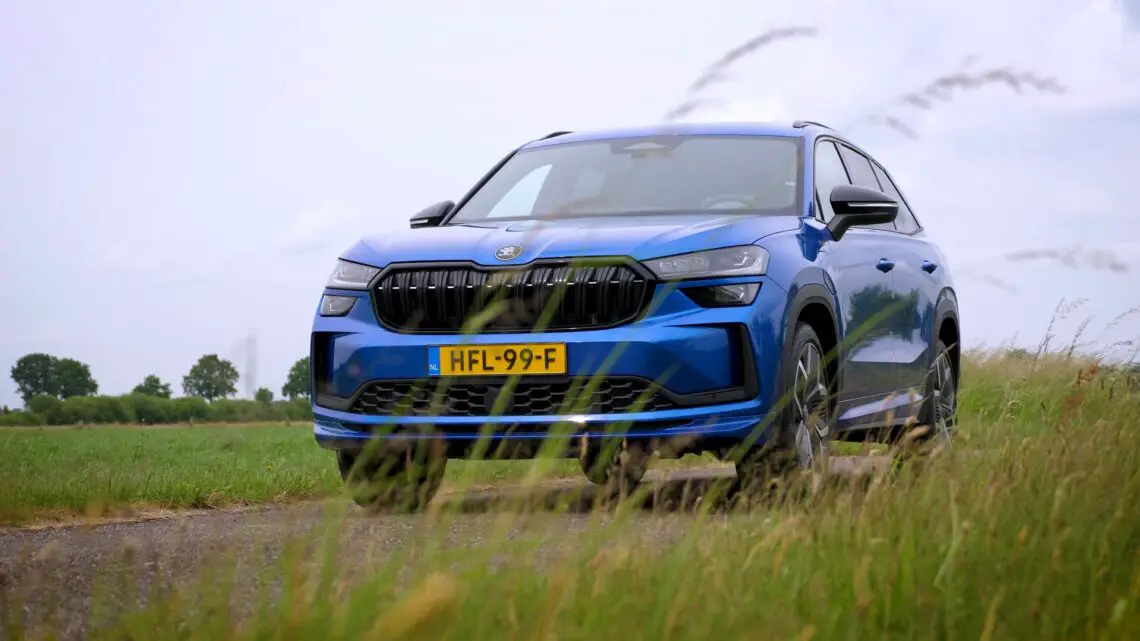
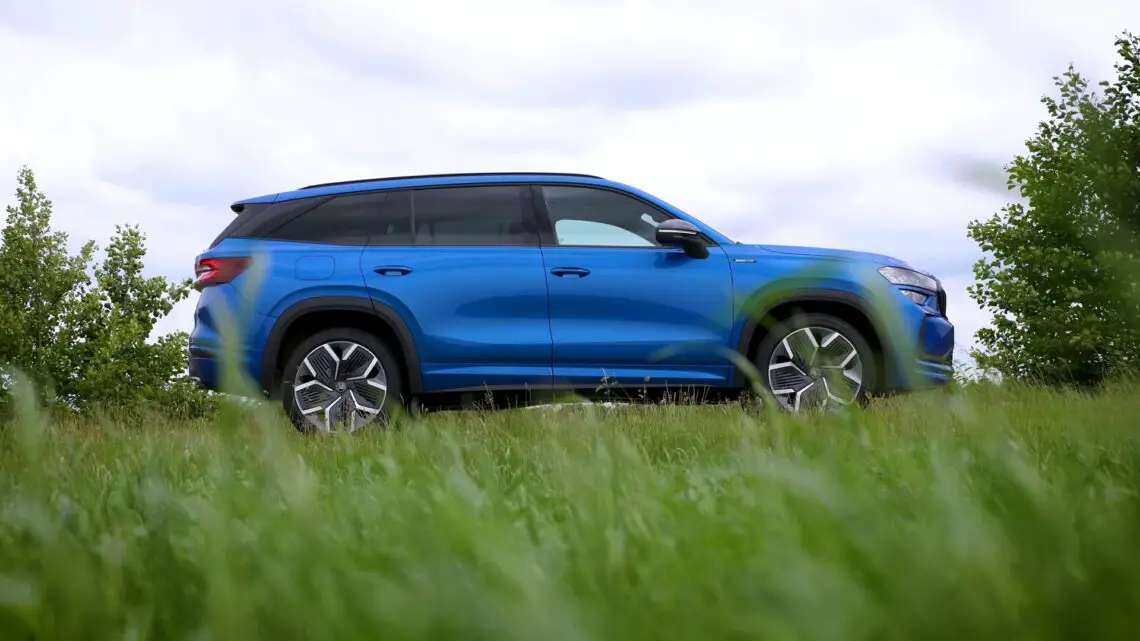
Put the new Kodiaq next to its predecessor and you immediately see that it has grown on. Literally. It is slightly longer. The grille is wider, the light units are slimmer and the sleek daytime running lights make it look modern without being overly futuristic. It stands a little less high on its legs, which also makes it look a little more “sporty.
Plug-in or mild hybrid
The Kodiaq is available with two forms of electrification: a mild hybrid (unplugged) and a plug-in hybrid (plugged). Both share the same base: a 1.5 TSI four-cylinder gasoline engine with 110 kW (150 hp). But the plug-in hybrid adds an electric motor to it, achieving a combined output of 150 kW (204 hp) and 350 Nm.
For a car weighing more than 1,900 kilograms, it feels smooth and agile, especially thanks to the electric motor. From 0 to 100 km/h goes in a neat 8.4 seconds and the top speed is 210 km/h. But much more interesting is the driving experience in daily use: the Kodiaq PHEV drives quietly, subdued and very relaxed. Ideal for commuting, school runs and highway miles.
Impressive driving range
Where many large plug-ins drop out after just 50 kilometers, the Kodiaq is a lot more ambitious. Thanks to a 27.5 kWh battery pack (of which 25.7 kWh are usable), up to 123 kilometers of electric driving is possible on paper. In practice, you can easily reach 80 to 110 kilometers. So it is truly fully electric for almost all daily driving. Charging can be done with 11 kW at the charging station (AC) or with 50 kW at a rapid charger (DC). This will take you from 10 to 80 percent in 25 minutes. At home it takes less than three hours for a full charge.
Emphasis on comfort
The Kodiaq doesn’t want to be a sporty SUV, and you notice that in everything. The suspension is comfortable without being soft. Bumps are smoothly filtered out and noise isolation is fine. Corners are taken with confidence, although you do notice that the weight is making itself felt. The steering is light but precise enough for everyday use. The car we tested has the optional adaptive suspension. This makes it corner just that little bit tighter.
Trusted Skoda
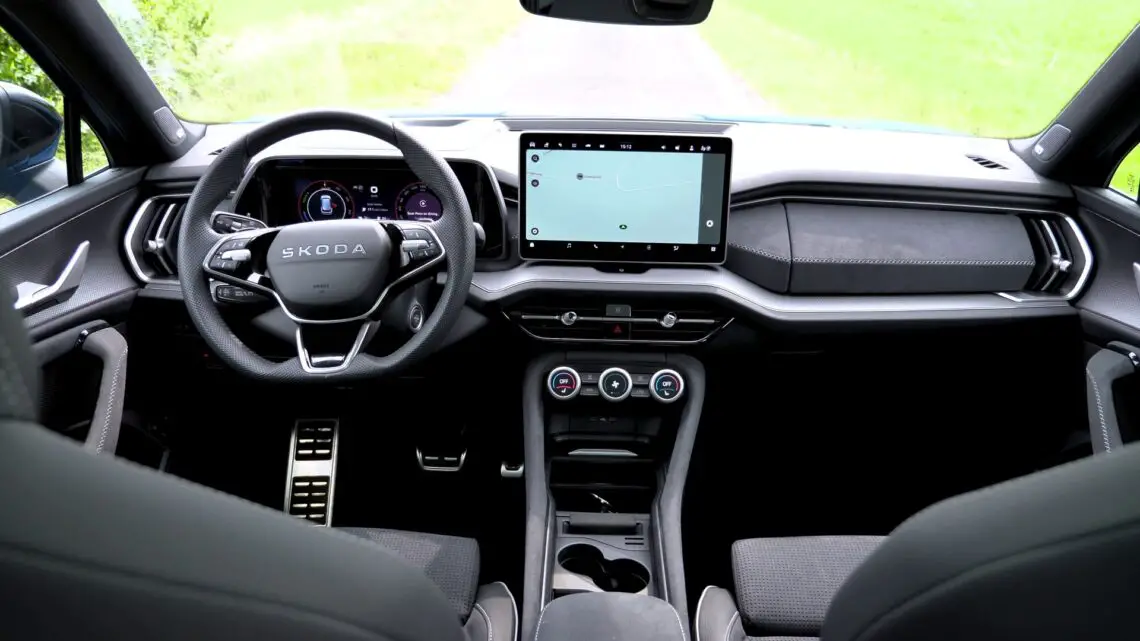
Inside, you’ll find the familiar Skoda approach: logically laid out, lots of physical buttons (hooray!) and just that little bit more sense of space than you get from other brands. The central touchscreen floats above the dashboard like a tablet and responds quickly. Fortunately, you don’t have to dive into submenus for climate control or driving modes: there are just large rotary knobs for those.
Of course, there are also the “Simply Clever” inventions. Like the familiar umbrella in the door, fold-out door bumpers, or a retractable trunk roll that you can unclip with one hand.
Plenty of room – but not for seven
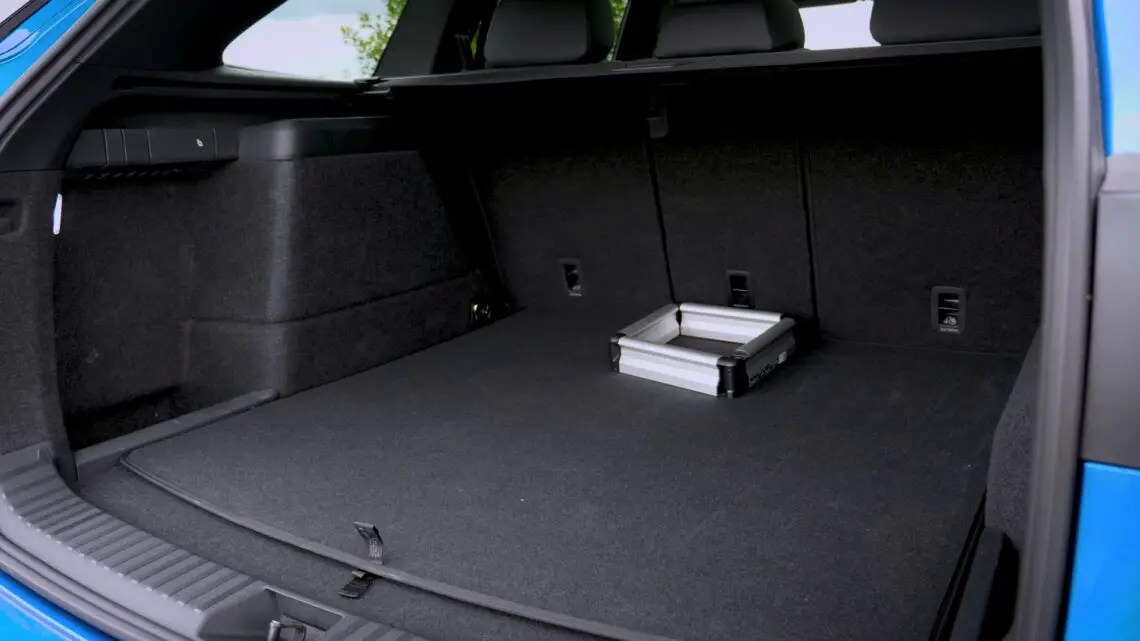
The Kodiaq was always a space cannon and it still is. The mild hybrid version comes as a five- or seven-seater. The PHEV always has to make do with five seats – the battery pack is under the floor of the luggage compartment and there is no room for a third row of seats. This is unfortunate, because really large families can only choose the mild-hybrid, which has less power and cannot drive electrically, but is a few thousand euros more expensive.
Luggage space Skoda Kodiaq
The range of space remains impressive in all versions: 745 liters of luggage space in the PHEV, rising to over 2,000 liters with the rear seats folded down. The MHEV offers a few hundred liters more. The floor is nice and flat and the loading sill is relatively low.
Caravan along? No problem
The PHEV variant – like the MHEV – is allowed to tow up to 1,800 kilos of braked weight – enough for most caravans. So for those planning a caravan vacation, but don’t want to visit a fast charger every 200 kilometers with their EV, the Kodiaq is the way to go. During long vacation trips, you can then drive on gasoline, while during the rest of the year in the Netherlands you’ll make almost all your trips on electricity.
Competition Skoda Kodiaq
Within the Volkswagen family, the Kodiaq competes with the Volkswagen Tiguan and the new Tayron. The SEAT Tarraco and Cupra Terramar also fish in the same pond. Beyond that, it has to compete against the Kia Sorento PHEV, Peugeot 5008 Hybrid, Renault Espace E-Tech and Opel Grandland. In terms of electric range, the Skoda scores above average and only the Tiguan, Tayron and Cupra Terramar come close. Not surprising since they have the same PHEV powertrain.
Conclusion
The new Skoda Kodiaq is in everything a further development of its predecessor: more spacious, more modern, smarter and, above all, more economical. The plug-in hybrid makes it future-proof without sacrificing practicality or comfort. No frills, no sporty pretensions – just a very practical family car that gets you through the week electrically, and on gasoline when you go on vacation. In the video below, we tell you more: