
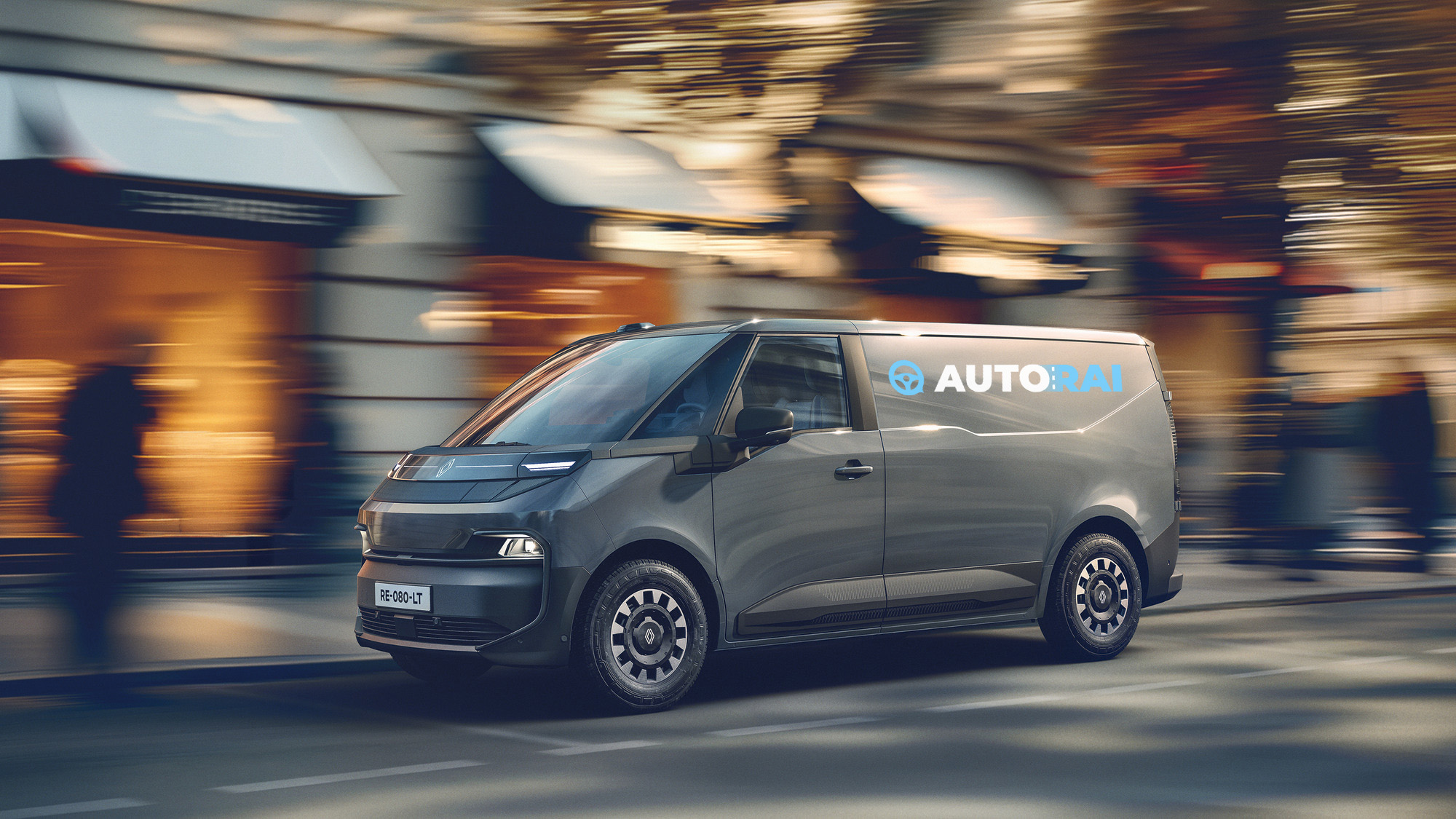
Renault sets electric tone: 800V technology in Trafic Van E-Tech electric
With this technology, a dedicated platform and a pronounced focus on deployability, Renault aims to set a new standard for electric commercial vehicles. We are curious.
New design, new technology
When you look at the Trafic Van E-Tech electric, you see that this electric scion looks a lot different and especially sleeker than the Trafic as we already know it. There are also some differences under the skin. Renault is building the model on a skateboard platform with the battery neatly under the floor and the electric motor in the back. This ensures not only stable roadholding, but above all a completely flat loading floor and efficient use of space. Loading volume, depending on length and height, runs from 5.1 to 5.8 cubic meters.
The battery pack technology is also remarkably mature. Renault supplies two variants: an LFP battery that reaches around 350 kilometers WLTP and a Long Range variant with NMC chemistry that heads toward 450 kilometers WLTP. Combined with the 800V charging system, that means you can charge from 15 to 80 percent in less than twenty minutes. You don’t have to be a math prodigy to see how that saves time in practice: short charge, fast through, less downtime. For entrepreneurs, that may be the most important innovation of all.
By comparison – Kia PV5
That 800V approach contrasts with what is happening elsewhere in the segment. Take the Kia PV5, so far the most modern electric commercial vehicle from a volume brand. Kia is opting for 400V architecture. In terms of range, the PV5 also has to lose out to the Trafic: range varies from 291 kilometers WLTP with the small battery pack to 397 kilometers WLTP with the larger 71.2 kWh pack.
The PV5 comes to 4.4 cubic meters of cargo volume in the Cargo version. This is less than the Renault, but also keep in mind that the PV5 is slightly more compact on the outside. The Trafic has a length of 4.87 meters and a width of 1.92 meters in the L1 version, the PV5 Cargo is 4.70 meters long and has a width of 1.90 meters. So the extra cargo space must come from the length and width in the Frenchman.
2,000 kg ‘clean on the hook’
The Trafic is powered by an electric motor with an output of 150 kW (the Kia 120 kW), good for 345 Nm of torque (the Kia 250 Nm). Thanks to this combination, the Trafic can not only keep up with traffic smoothly, but even more than that: it can tow a trailer of 2,000 kilograms and carry up to 1,250 kilograms of payload. This is all still subject to homologation, but the intention is clear. Renault wants this bus not only to be electric and efficient, but also to be real “tools” for professionals.
This is perhaps the one advantage of an electric work bus
That workable nature is further enhanced by the standard presence of Vehicle-to-Load (V2L) and Vehicle-to-Grid (V2G). Through an in-cab connection or with an adapter, you can power tools, a laptop or other equipment directly from the main battery. Ideal for mechanics who need to drill, grind or measure on site without lugging around an external generator.
Thanks to the bi-directional charging technology, the Trafic can also feed energy back into the electricity grid, which can become interesting, for example, for entrepreneurs who want to play smart with energy prices or use their fleet as a mobile buffer. We just have to wait until this technology can actually be used, but it is already being experimented with in Utrecht, for example.
Also a digital workplace
The Trafic Van E-Tech electric also takes a big step forward on the digital front. The new openR multimedia system with a 12-inch screen makes its appearance, which is at once the largest display Renault has ever installed in a light commercial vehicle. The system operates completely cloud-based and is specifically tailored to the realities of commercial vehicles.
For example, the navigation actively takes into account the dimensions of the bus, the load and even the height of the route. Thus, the system will not send you past a bridge that is too low or through a street that you simply won’t fit through with a full bus. In addition, the system calculates loading stops based on realistic consumption data, so there are no surprises.
All that is complemented by a fully integrated Google environment. Through Google Assistant, you can set the temperature, control the radio, set reminders or simply ask what the weather is doing without taking your eyes off the road. Google Play offers a growing catalog of apps suitable for use in commercial vehicles, from navigation to communication and from administration to entertainment. Useful is the presence of apps such as HBO Max, Prime Video and Vivaldi, which allow you to quickly update emails. This is not like a van with a screen, but more like a digital workspace – with occasional space for a well-deserved break.
When is the first day of work?
The new Renault Trafic Van E-Tech electric shows that electric commercial vehicles no longer have to be boring workhorses. With its surprising 800V technology, hefty 150 kW electric motor and a range of up to 450 kilometers, Renault is suddenly taking a big step forward in this segment. Add to this that later variants such as as chassis-cab, platform-cab, tipper, with open body and with closed body can be expected. When, we hear you ask? Late 2026. So just a little more patience….