
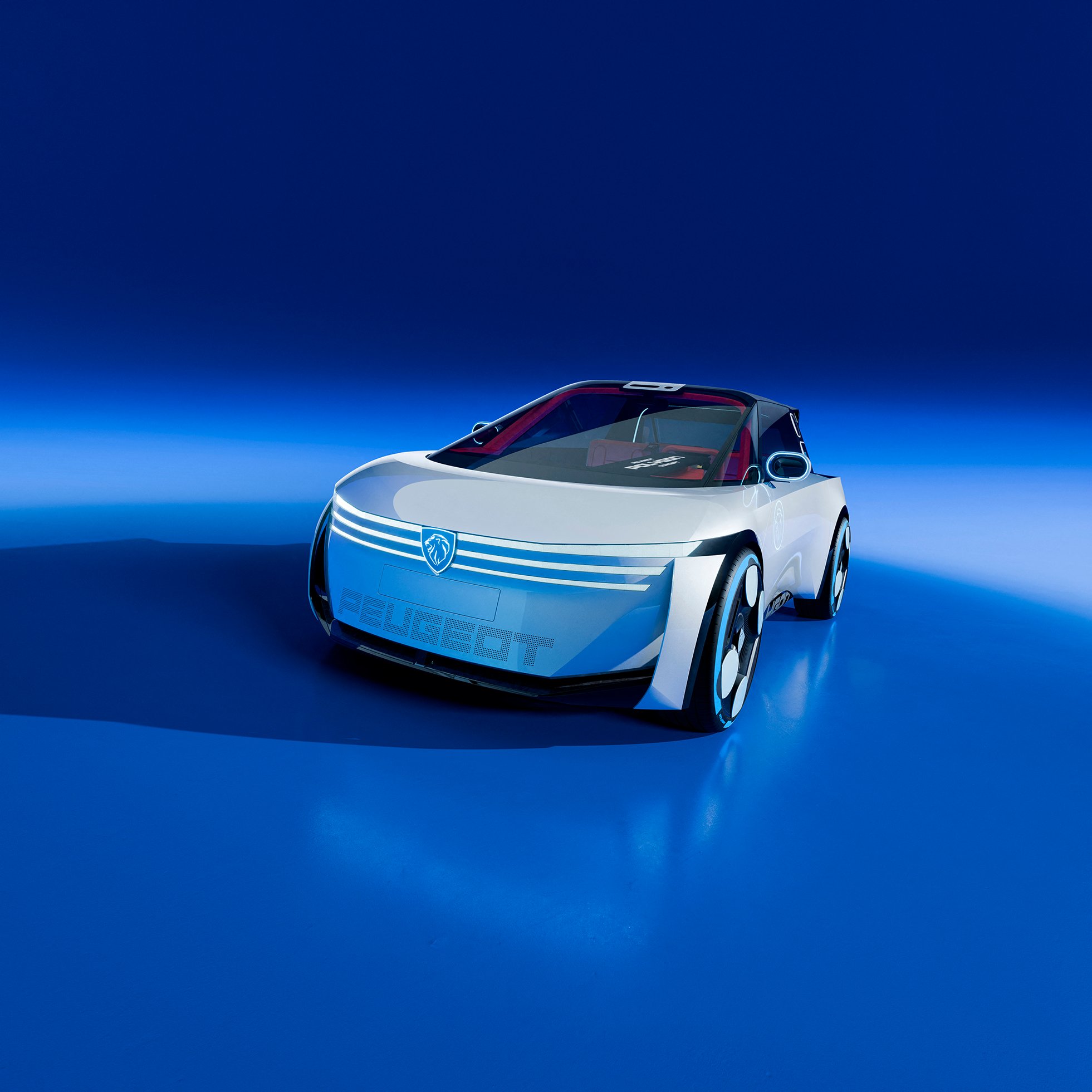
Peugeot Polygon Concept: test platform for sustainable materials
Hypersquare and Steer-by-Wire: a steering wheel without a steering column
The most striking element is the Hypersquare steering, a steering module with four control points in the corners. The shape differs from a classic steering wheel and is linked to Steer-by-Wire. Here there is no mechanical connection between steering wheel and front wheels; the car registers steering commands via electronic signals.
Peugeot especially emphasizes the variable steering ratio. At low speeds, the driver hardly needs to make any steering movements, while at higher speeds minimal input is sufficient to adjust the course. The maximum turning angle is limited to 170 degrees to either side. The manufacturer expects to achieve more precise control with this, although the final experience will depend on tuning in a later production version.
The technology also filters out unwanted vibrations and keeps usable feedback intact. In doing so, Peugeot positions the Polygon as a test environment for a different way of driving, where classic steering characteristics give way to digital interpretation.

Windshield as display: another form of information provision
In the interior, Peugeot replaces the conventional dashboard with a projection system that displays information on the windshield via a micro-led panel. The surface – 24 cm wide and 74 cm high – is reminiscent of a large screen in size, but its operation leans more toward head-up display technology.
The visualization changes with the selected driving program, with the atmosphere inside and outside moving synchronously. When stationary, animations are visible from the outside. Peugeot sees this as a way to link functions and mood to the car’s appearance. For the driver, it can provide a clear field of vision, although the lack of a classic instrument cluster also raises questions about readability in bright sunlight or rain.
New interpretation of the Peugeot design
The Polygon also demonstrates a design study. The familiar three-claw light signature returns, but in an animated horizontal micro-led arrangement. The rear also features similar elements. At the C-pillar, a separate display shows the charging status, intended to make information readable from the outside.
The bodywork consists of clean, geometric surfaces and large door areas. The Polygon has only two butterfly doors, which should simplify access but, in practice, can also create limitations in narrow parking spaces. Colors and accents vary by configuration; Peugeot deliberately sets the car up as a canvas for personalization.

Interior: bright, open and adaptable
Inside, it is especially striking how much attention is paid to space and flexibility. The fact that the dashboard is more compact – thanks in part to the Steer-by-Wire system without a steering column – creates more leg room and storage space.
The seats are constructed from a 3D printed shell and a single piece of foam. This construction should offer freedom of form and lower weight. Still, it remains to be seen how such seats hold up under long-term use, wear and tear and comfort requirements in a production car.
The interior receives plenty of natural light through larger glass areas and the absence of a B-pillar. It provides an open atmosphere, but the structural consequences of such a design are still unclear.
Sustainable use of materials as an experiment
Peugeot is using the Polygon Concept as a pilot platform for alternative production methods. Interior materials consist of recycled car seats, plastic from R-PET and paint made with recycled components from old tires.
Seats, hubcaps, dashboard panels and even the Hypersquare steering wheel are quickly replaceable, which should theoretically make the car longer usable. The number of parts was deliberately kept low to reduce weight, production complexity and disassembly.
Three faces: Urban, Player and Explorer
To show how far personalization can go, Peugeot is introducing three configurations:
- Urban, focusing on urban use
- Player, with sportier look
- Explorer, with off-road influences
The configurations are not meant to be concrete versions, but to illustrate the variability Peugeot envisions. All three can be viewed virtually in the Fortnite island Polygon City developed by Peugeot.
Why this concept car is relevant
For Peugeot, the Polygon Concept is primarily a way to test technical, ergonomic and visual ideas. The main pillars are:
- a new style of steering without a mechanical steering column
- an interior that presents information differently
- wider use of recycled materials
- modular components that are easy to replace
The model thus says something about the direction Peugeot may be taking. At the same time, it remains a concept car: many elements are experimental and must be tested for usability, regulations and cost at a later stage.