Is a solar car a good alternative to electric and hybrid cars?
What is a solar car?
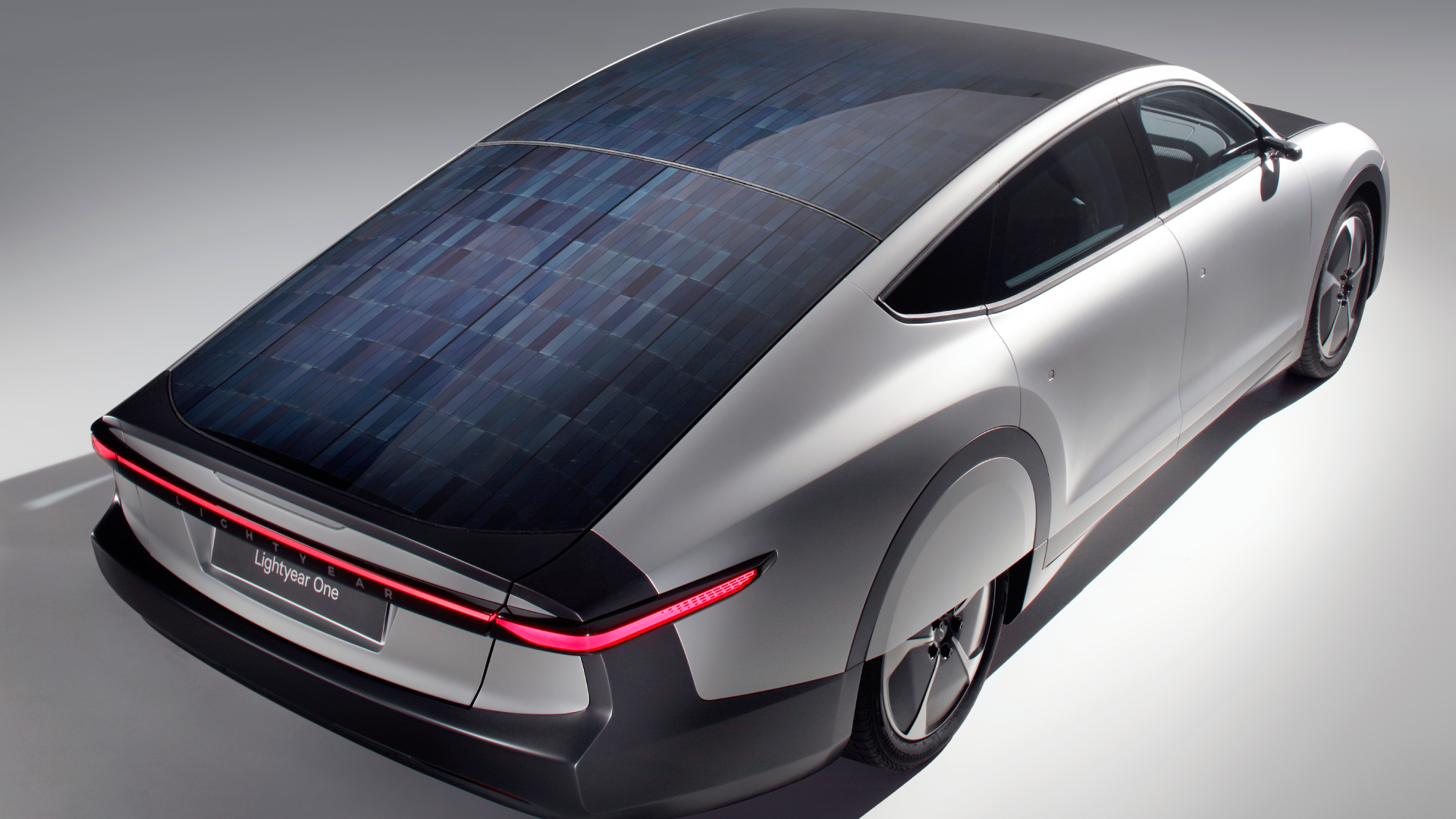
Solar cars are powered (at least partially) by solar energy. On the roof and sometimes on the hood and/or trunk lid are solar panels that convert sunlight into electricity. That solar power is stored in the battery, which powers the electric motor(s). This allows the car to drive without consuming energy from an external power source. It’s basically an electric car, but with an additional sustainable charging source.
Solar cars should be even more efficient than regular electric cars. They often consume less energy per kilometer and, in good weather, need to be charged less often at the charging station. In theory, you can drive – especially on short trips – for weeks without recharging at home or on the road.
Solar cars in the Netherlands: Lightyear
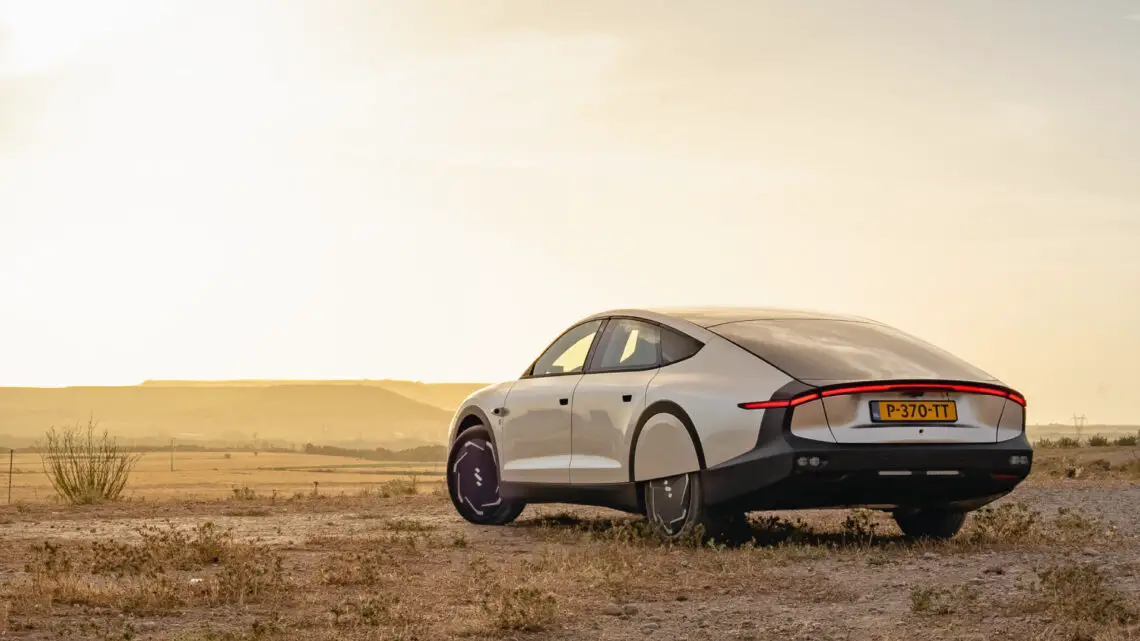
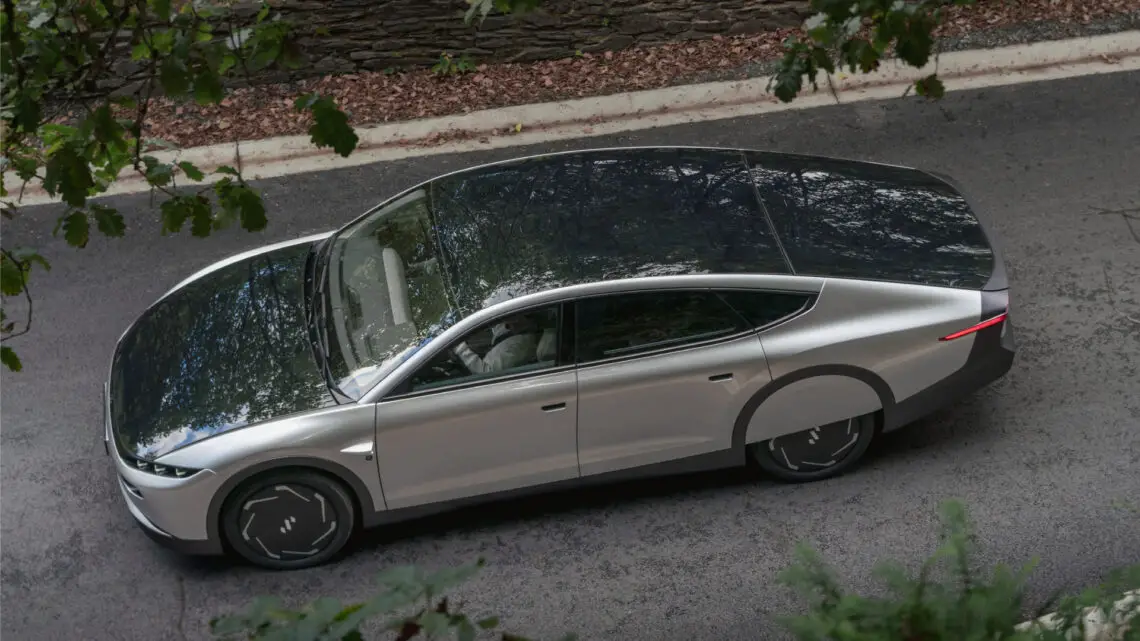
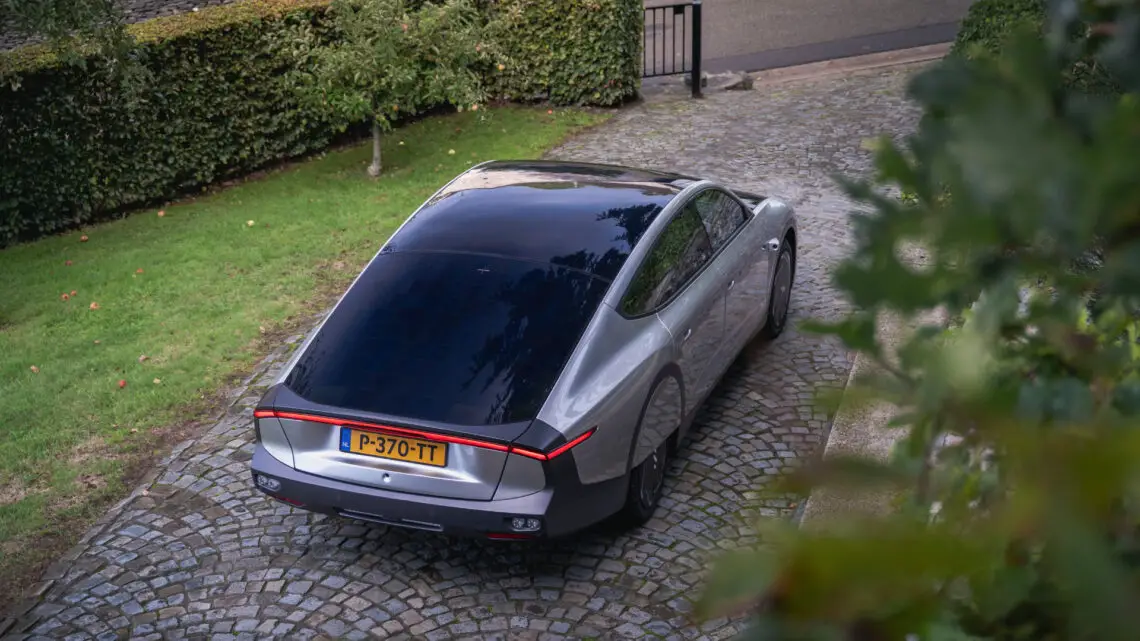
There were several solar cars in the pipeline, both in the Netherlands and abroad. The best-known solar car comes from home: the Lightyear. That Dutch brand introduced the Lightyear 0 a few years ago, an exclusive solar car with a price tag of more than 250,000 euros. Its production was barely underway when it stopped again. Lightyear then worked on a more affordable model, the Lightyear 2, reportedly priced under 40,000 euros, with a range of 800 kilometers, to which can be added up to 70 kilometers per day with solar power. But that too is not coming. Lightyear is now focusing on developing and producing solar panels for cars made by other manufacturers.
Sono Motors (Germany)
Another player was Sono Motors, with the Sion: a compact solar car with integrated solar panels. Unfortunately, this project was stopped at the end of 2023 due to financial problems. Still, the concept generated a lot of interest.
Aptera (United States)
American start-up Aptera is developing a three-wheeled two-seater solar car with extremely low consumption and an impressive range of up to 1,000 kilometers. To this, too, 60-70 kilometers of solar power can be added daily. Production and delivery is uncertain for now, but European interest is growing…
Cars that come closest now
So true solar cars are not there yet, but a few existing models have solar panels on the roof to generate electricity to power the electric motor.
- With the Hyundai Ioniq 5 Solar Roof Edition, you can drive about 1,500 additional kilometers a year thanks to solar power. In other words, for 1,500 kilometers a year, you don’t need power supplied externally. That’s an average of four kilometers per day.
- The Toyota Prius Plug-in Hybrid Solar Edition even provides up to five kilometers per day of additional range from solar power from solar panels on the car.
While these are distances you can also easily walk, these models combine solar power with the ability to charge at charging stations and are the forerunners of fully functional solar cars.
Advantages of solar cars
The main asset of solar cars is their sustainability. They generate their own energy via solar panels on the bodywork, without the intervention of fossil fuels or grid power. That means:
- less CO₂ emissions
- no nitrogen emissions
- less reliance on the power grid
Although purchase prices will still be high at first, consumption costs are lower. After all, you charge (partially) for free solar electricity. Especially for those who make mostly short trips and have a sunny parking spot, this can save considerable amounts of money per year.
With enough sun, you would hardly need a charging station. This makes solar cars ideal for those who don’t have a charging station nearby or who go off-grid on vacation. When your solar car is in the sun, it recharges.
Disadvantages of solar cars
Of course, there are disadvantages as well. Solar cars depend on the weather for their range. In the Netherlands that can be disappointing, especially in autumn and winter. Fortunately, you can also charge a solar car through the grid, just like an ordinary EV. But that was not the intention of the concept.
Solar cars are more expensive than comparable electric cars in the early days. Not only because of the solar panels, but also because of the lightweight, often expensive materials used to reduce energy consumption. They are also more technically complex and thus potentially more susceptible to failure.
The solar panels hardly add any weight, but the use of lightweight body materials may affect strength.
Differences with electric cars
| Feature | Solar car | Electric car |
| Energy source | Sun + mains power | Mains power only |
| Charging | Via sun and charging station | Via charging station only |
| Range | Variable, weather dependent | Constant and predictable |
| Environmental impact | Lower | Lower than gasoline, but higher than solar car |
| Price | Higher (preliminary) | Wider range, lower entry price |
You can charge a solar car like an electric car, via a charging station at home or on the road. So the solar panels on the car are an addition, not a replacement. In cloudy weather or at night, the car functions like a regular EV.
Business tax implications solar car
In the Netherlands, an additional tax rate of 17 percent applies to business electric cars in 2025 up to a list price of 30,000 euros – above that the rate is 22 percent. In 2026, all new cars will be subject to an additional tax rate of 22 percent. Small consolation: if the car is registered in 2025, the lower additional tax rate applies for a total of five years (formally: sixty months).
Subsidies (such as SEPP) are possible, provided the solar car is registered as fully electric. Deductions for entrepreneurs through MIA/VAMIL may also be of interest.
When will solar cars become commonplace?
The technology is already there, but the scale is not yet. That could change rapidly in the period up to 2030. However, that depends on:
- production costs – as solar panels become cheaper and large-scale installation feasible, the price drops;
- consumer confidence – the first affordable models have yet to appear and prove themselves on reliability and real-world use;
- government policies – more tax breaks or parking benefits can accelerate adoption;
- infrastructure – parking lots with optimal sun exposure and integration with smart charging technology help with acceptance.
Solar cars are expected to become a more realistic choice by 2030, especially for those who want to drive sustainably without relying on charging stations.
Will the solar car be a good alternative?
Yes, provided your expectations are realistic. Solar cars offer the ultimate sustainable alternative, with the potential to drive independently on the sun’s energy. For those who drive short distances, park in the sun during the day and value sustainability, a solar car could be an option in the future. But still: the technology is still under development and you are dependent on sunlight and prices will remain higher for the time being. Therefore, the solar car will remain a niche product for the time being.