
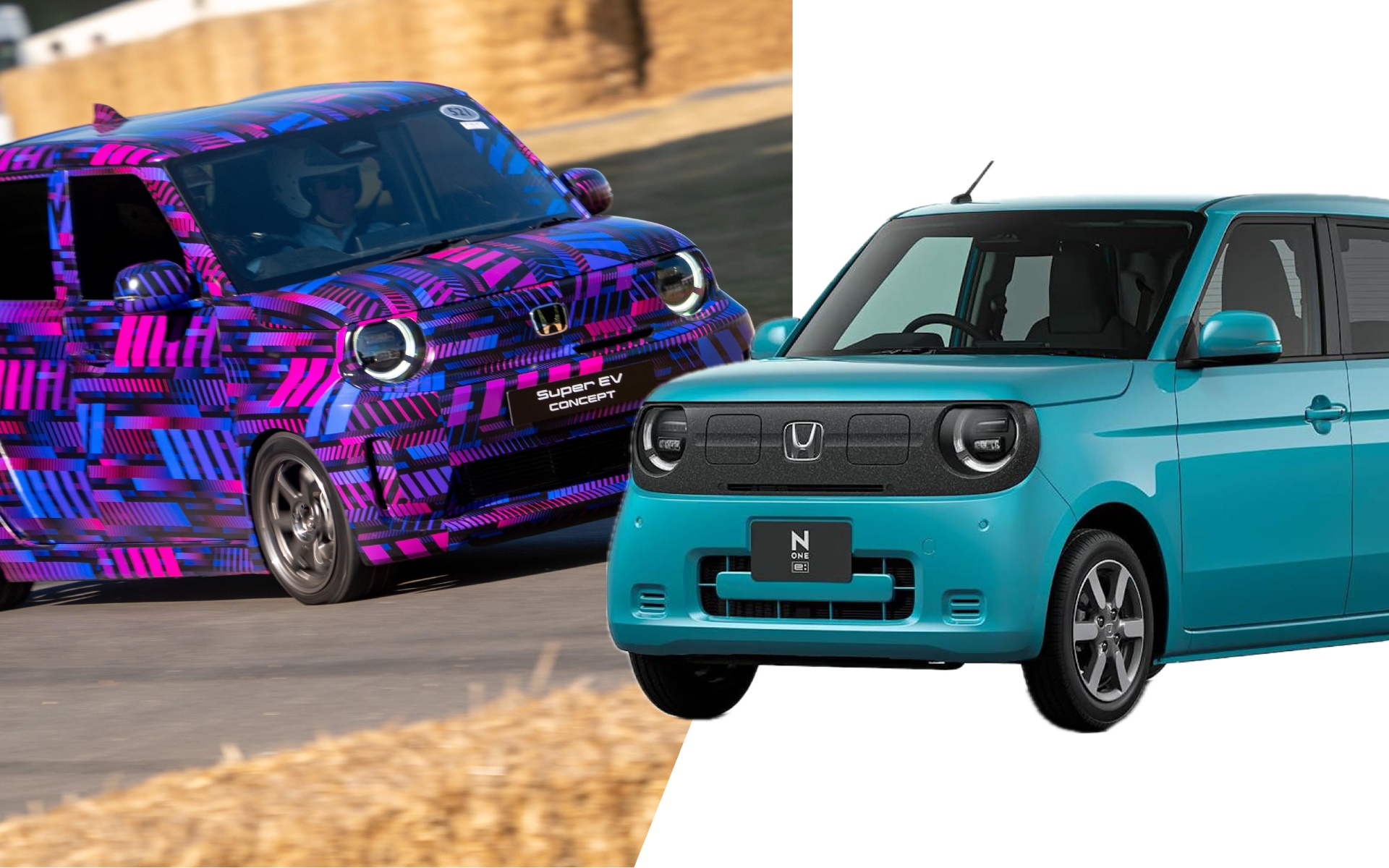
Honda’s A-segment EV gets closer
Goodwood Festival of Speed
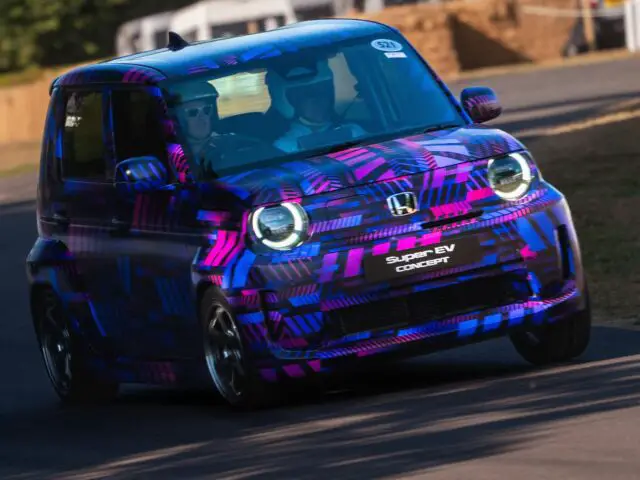
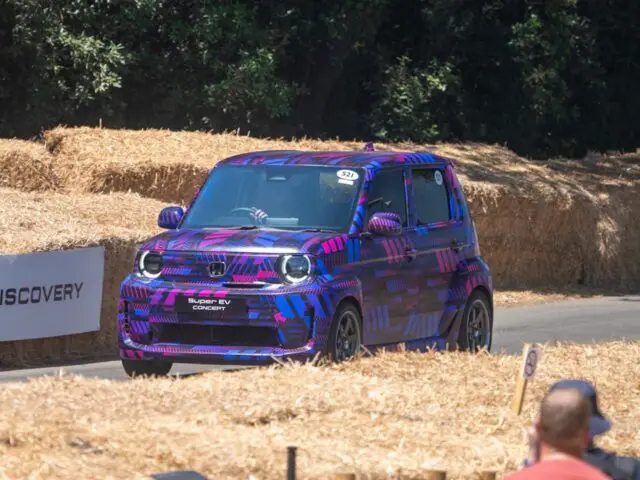
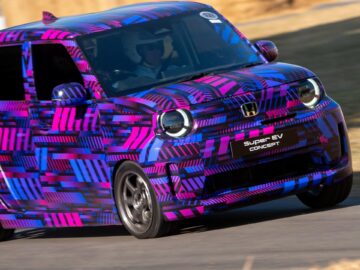
During the Goodwood Festival of Speed, a prototype of the electric Benjamin-Honda already briefly came into action on the famous 1.16-mile (1.856 km) hill climb on the grounds of the sprawling Goodwood Estate. Even then, the public responded enthusiastically. Especially because the Honda Super EV looks nice and sporty.
Honda Super EV Concept
Technical details were not given by Honda at that time. The brand did release the following information: “The Super EV Concept was developed as a compact A-segment EV that offers both practicality and driving pleasure. With its sporty and direct handling – characteristic of compact cars – the Super EV Concept offers an exhilarating and heart-stopping driving experience for the driver. With a view to a global market launch in the future, we have already conducted test work on public roads in the United Kingdom prior to the Goodwood event, with a test vehicle cloaked in a striking purple camouflage film.”

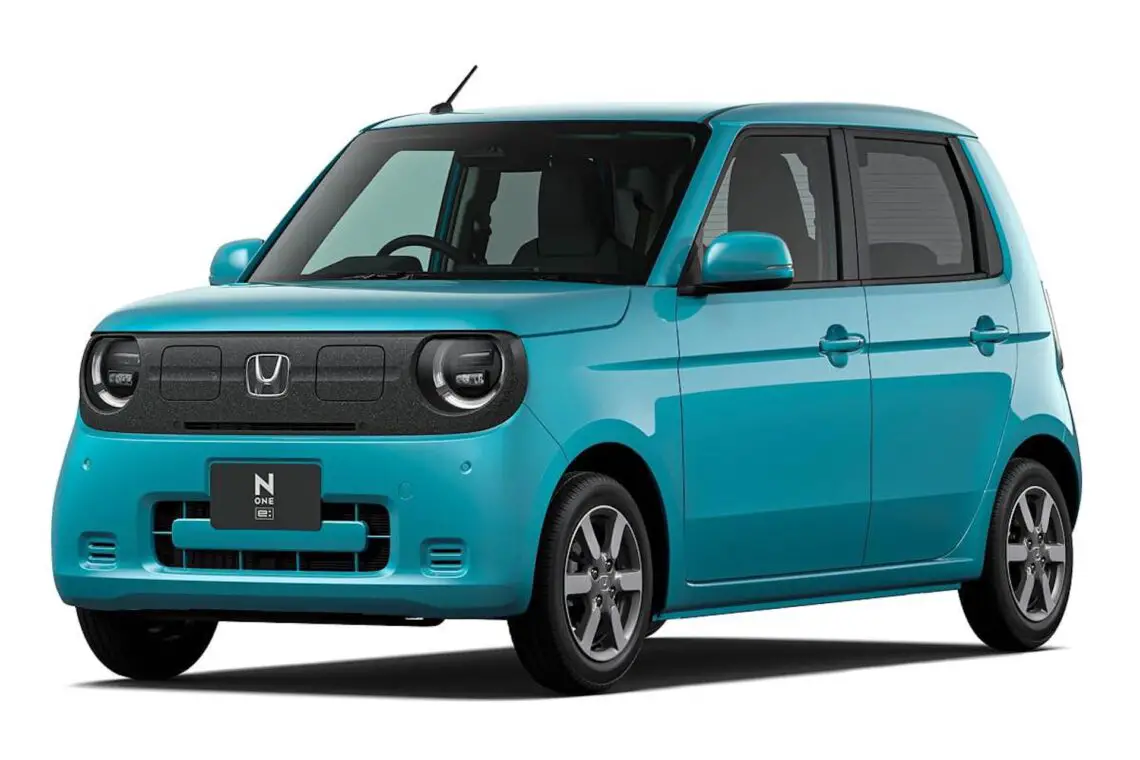
Honda N-One e:
Now that Honda has presented the Honda N-One e: in Japan, we can already get a little taste of what to expect in Europe. The compact electric car has a range of 270 kilometers in Japan according to the somewhat ambitious WLTC cycle. The Honda also supports vehicle-to-load (V2L) and vehicle-to-home (V2H) in Japan, which allows you to use power from the battery for household appliances or home emergency supplies, for example. The N-One e: also has a one-pedal driving mode.
Electric N-One
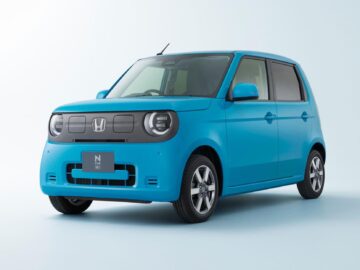
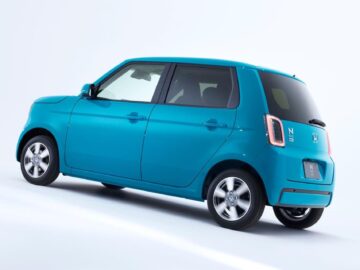
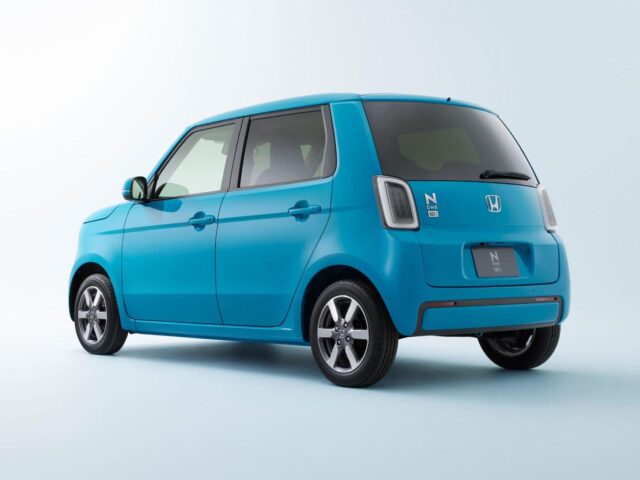
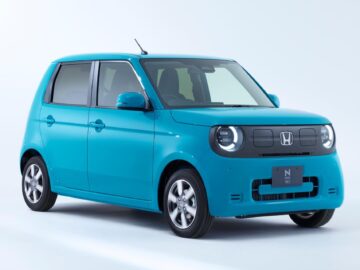
As usual with kei cars, the N-One e: has an angular, boxy design and a friendly appearance. On its Japanese website, Honda even describes her with a wink as, “So cute you’ll want to call her your partner. The electric N-One has a face you get attached to. You want to greet her every day with ‘How are you?'”
Discarded bumpers and old work clothes
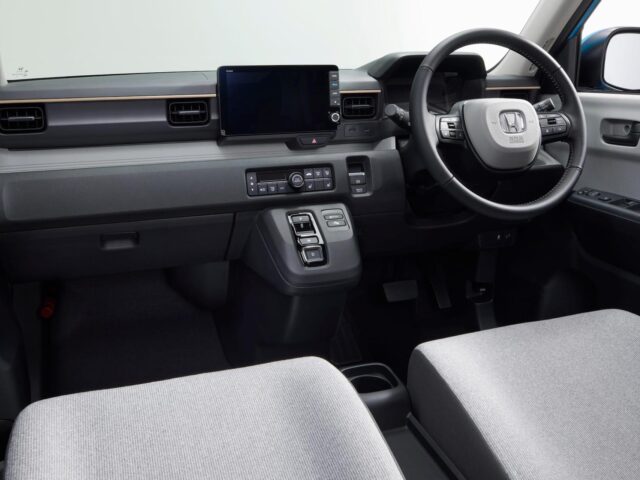
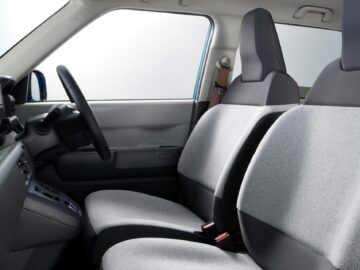
The car is also environmentally consciously built: recycled materials are used in several places. For example, the grille panel is made from discarded bumpers, while the carpet and insulation are made from recycled PET bottles and even old work clothes from Honda employees. The interior design is simple and flexible. The rear seat folds down in two parts (50:50) to form a flat cargo floor. The center console is missing, making it easy to slide between the front seats.
Freestanding infotainment screen
There is also a built-in shelf in the dash, handy for your smartphone thanks to USB ports just above it. A freestanding infotainment screen provides modern connectivity, while Honda has deliberately retained many physical buttons, for example for climate control controls.
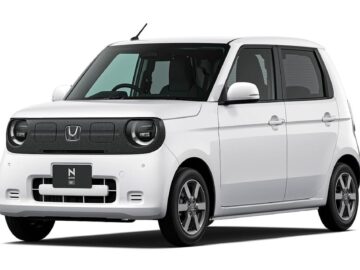
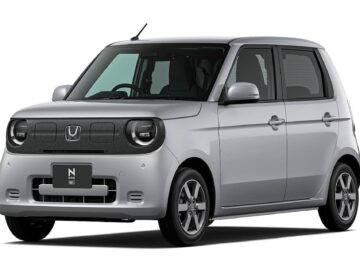
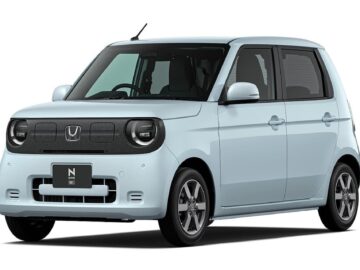
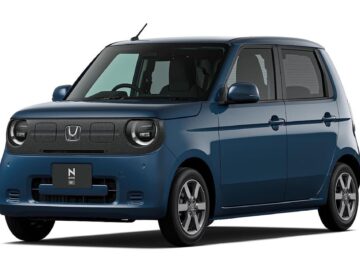
Different colors
The market launch of the Japanese model is scheduled between September and November. There will then be a choice of an L and G variant. There is a choice of dark blue, light blue, silver gray, white and turquoise blue colors.
Japan is likely to get a narrow-body version, while the variant for Europe and other markets outside Japan will feature widened wheel arches and a wider track. By the way, this is not new for Japanese automakers: the Suzuki Jimny was also offered in Japan with narrower axles and thus a narrower track, while the European version was only available as a wide variant.
Kei car
In Japan, the Honda N-One e: takes on the Nissan Sakura, one of the most popular electric kei cars in Japan, among others. China’s BYD is also reportedly working on a kei car for the Japanese market. A kei car is a specific type of small car from Japan that falls under a separate category with tax breaks and other privileges. A kei car must meet specific requirements set by the Japanese government.
The rules (as of 1998) are a maximum length of 3.40 meters, a width of 1.48 meters and a height of 2.00 meters. The engine must be a maximum of 660 cc and produce a maximum of 47 kW (64 hp). Kei cars are popular not only because they are small and economical, but also because of the benefits they offer. In Japan, they qualify for low road tax and insurance premiums and exemption from a parking permit.