
“Charging becomes fueling” – Fastned CEO Michiel Langezaal on the future of charging
Fastned
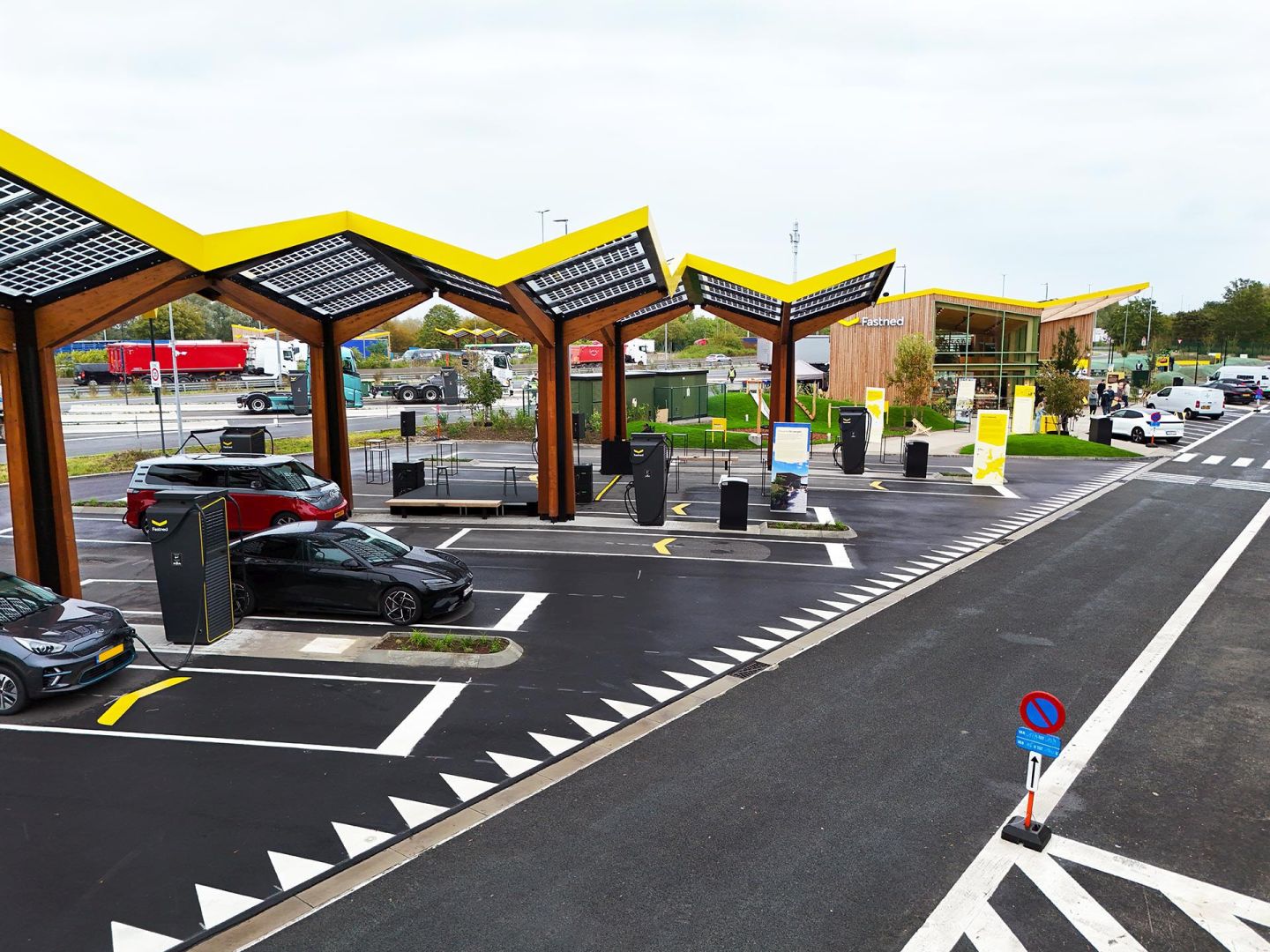
Whereas at most charging spots in Europe you get no further than a fast charger on a concrete floor – with any luck under a canopy – at the new Fastned location along the E17 in Belgium you get the same amenities as a traditional gasoline driver.
“Here on the E17, we were able to redesign the entire service area,” Fastned CEO Langezaal insists. “No existing shop that you have to build around, but carte blanche. Then you can build something that shows what charging is going to look like in the next 5 to 10 years: fast, comfortable and scalable.”
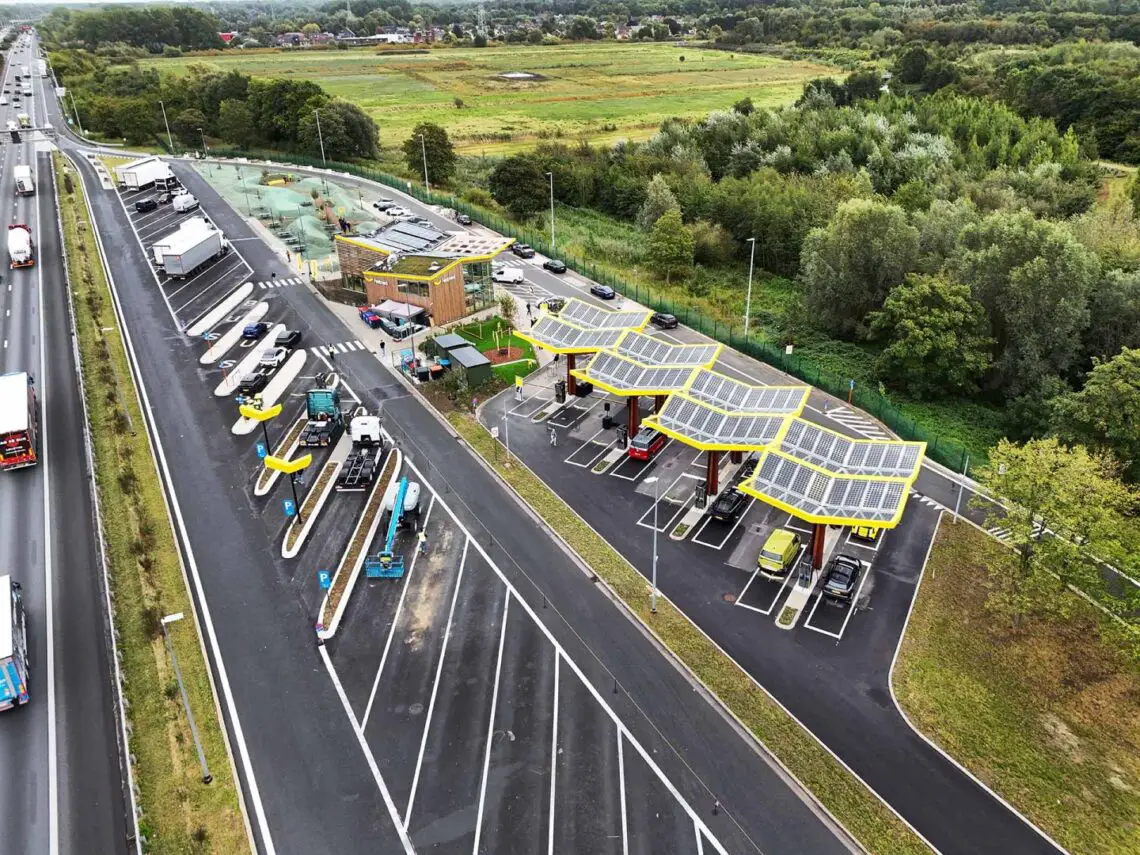
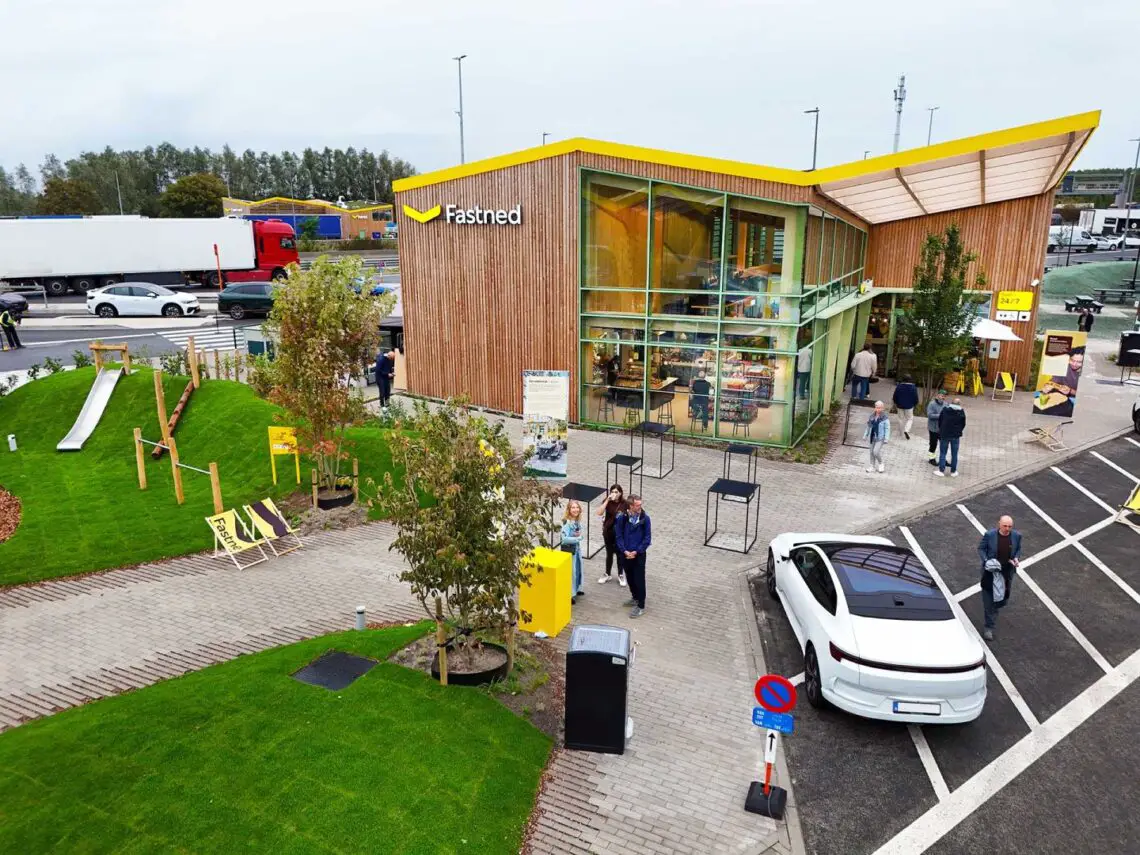
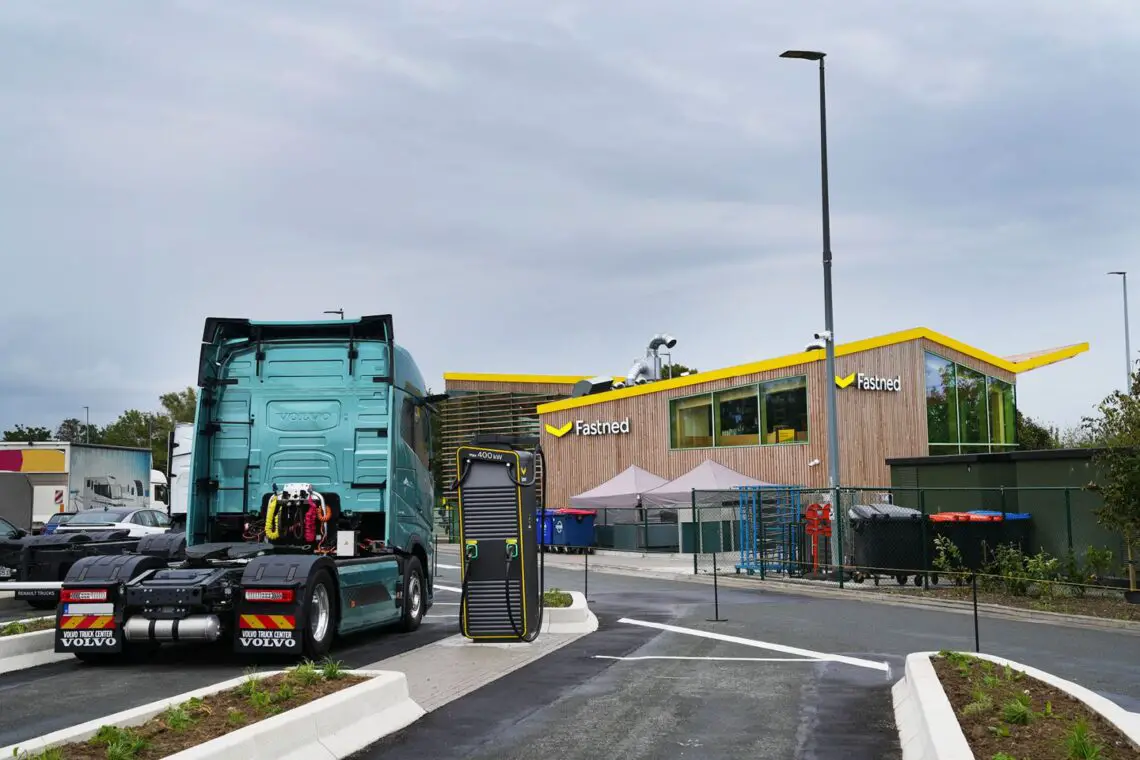
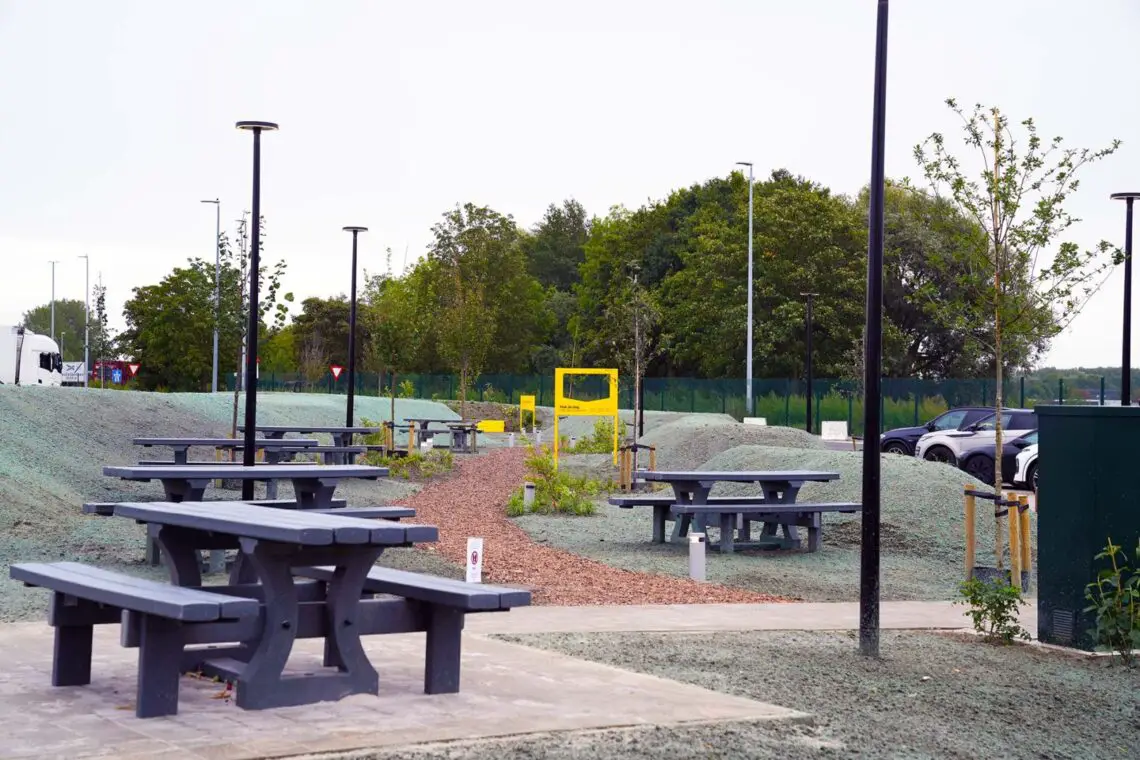
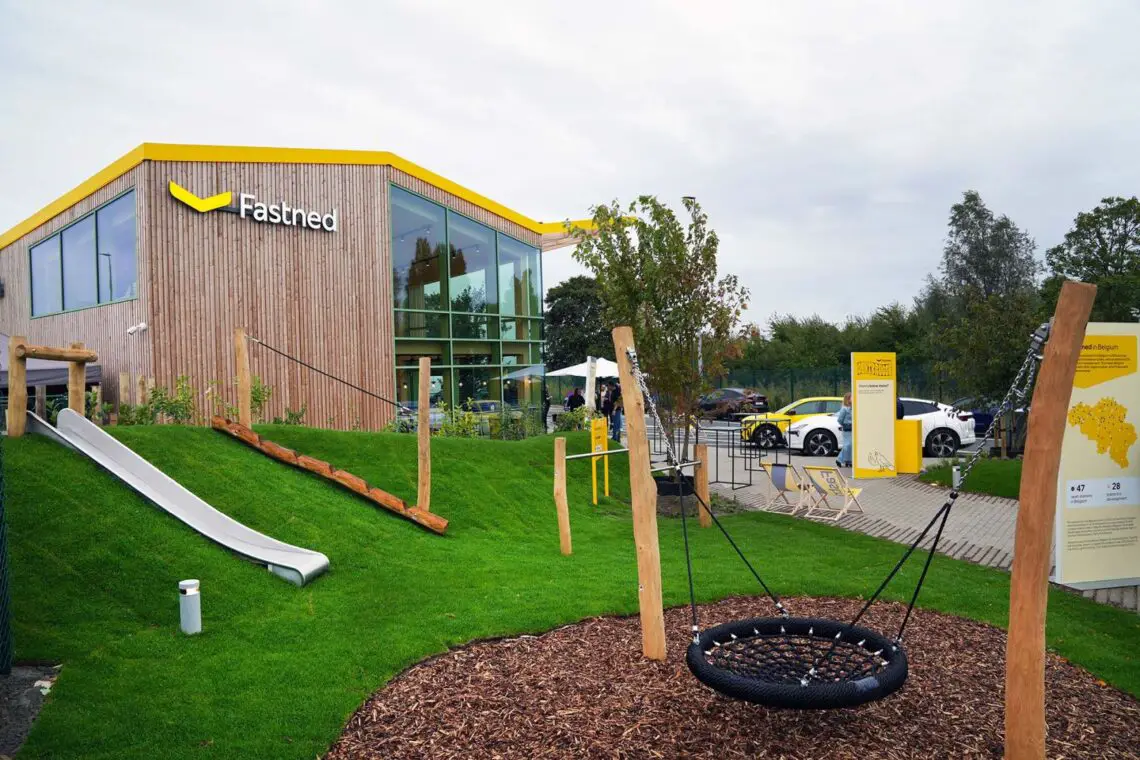
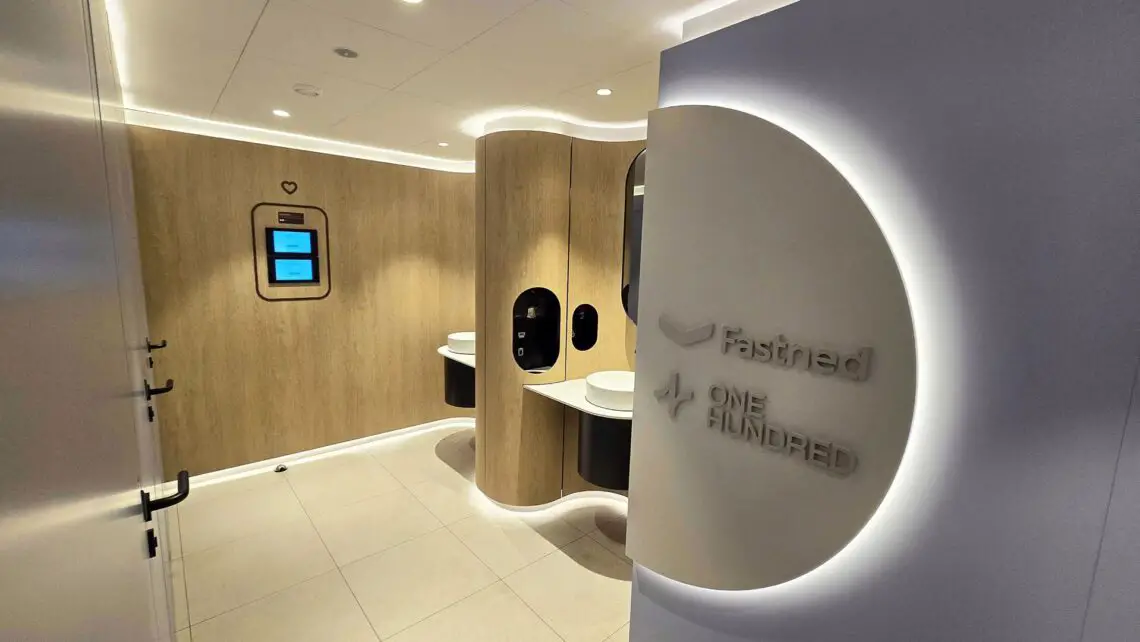
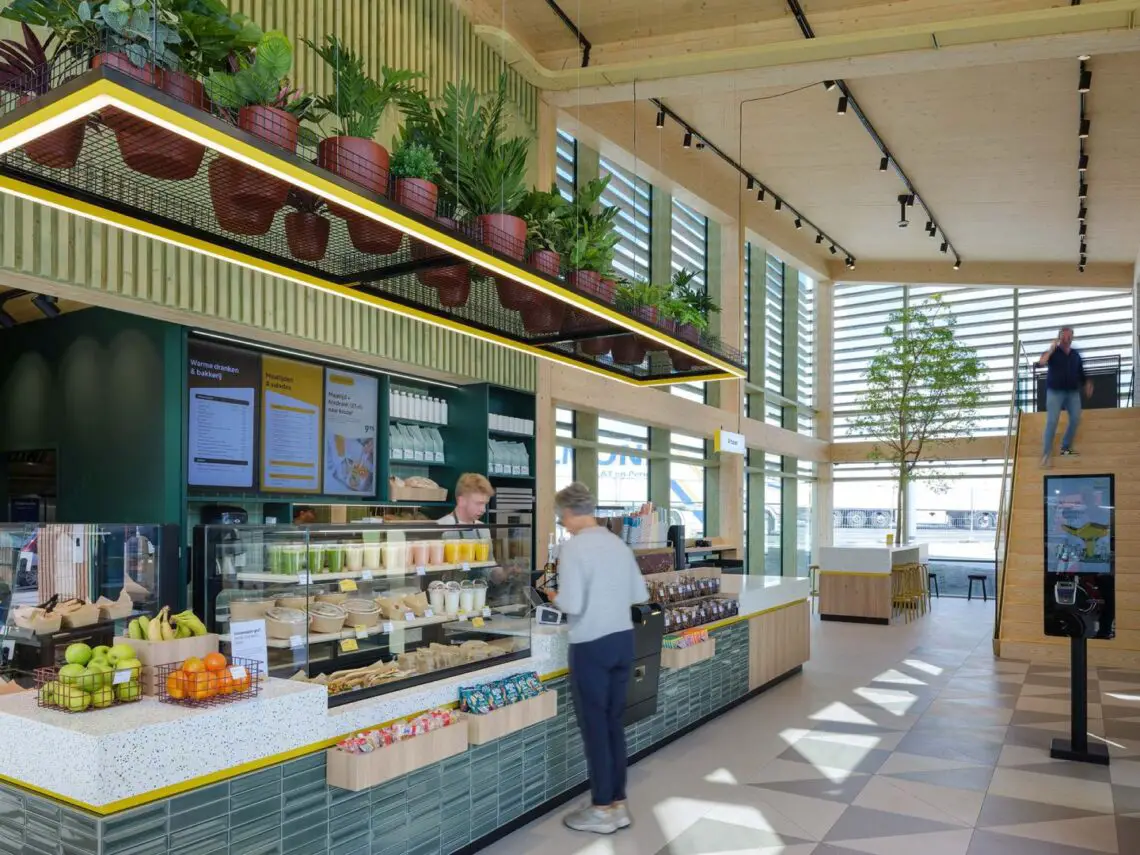
And you can see that right away: sixteen 400 kW fast chargers, loading spots for trucks and plenty of amenities for travelers: from restaurant and shop to restrooms, showers for truckers, workstations, a whole series of outdoor picnic tables and a playground for kids. In short: finally a place where you can pee while loading, get good coffee and food, and relax for a while. Sounds simple, but anyone who loads a lot knows how rare that is.
A1
Gentbrugge’s scale and luxury are in stark contrast to how it once began. In 2013, Fastned built its first charging station on the A1 near Barneveld. “We only had a few chargers there,” Langezaal looks back. “One CHAdeMO charger for the Japanese models of the time, some AC chargers and – very importantly – the very first CCS charger in public use. That was still a beta model at the time. Nobody was sure if that standard would make it. It has since become the standard throughout Europe.”
That first generation of chargers delivered a maximum of 50 kW, but in practice you often got no further than 30 or 35. “That felt fast at the time, but compared to what we’re doing now it’s no big deal. The industry has made huge leaps since then. From 50 to 150, to 300 and now to 400 kW.”
Why scale is all-important
The common thread throughout the conversation: scale. Small stations with a few chargers are simply not enough. “Look at Gentbrugge,” Langezaal says. “One of the busiest highways in Belgium, millions of vehicles a year. Then you need a lot of loading capacity. And that doesn’t just apply here: wherever there is traffic, you need big hubs. It is also the core of our business model. We build in places where a lot of people come. Then a station is used intensively from day one – and you earn back your investments. Scattering some poles here and there doesn’t work; strong locations do. That is the only way for the transition to succeed.”
The city
Quick chargers along the highway are one thing, but Langezaal sees another big growth area: the city. “Not everyone has their own driveway or charging station. I myself live in Amsterdam. There I often drive to a fast-charging hub to quickly recharge. With cars charging faster and faster, that’s the solution for city dwellers.
You can already see such a vision in Gentbrugge. The station is set up as a fully-fledged hub for all types of travelers: motorists, truckers, families and commuters. Cars with caravans can also come here without having to disconnect. And do you still drive on gasoline? Then you are just as welcome for a cup of coffee, a pee break or a quiet moment at one of the many picnic or work tables. The building is of course sustainably built with materials such as wood, runs largely on solar power and rainwater flushes the toilets.
Politics must come along
So Fastned’s new flagship store is not in the Netherlands, but in Belgium. When will it be our turn? In the Netherlands there is already a roadmap for the future, Langezaal explains. “The previous cabinet already wrote down that fossil stations should be phased out where possible, and that concessions should be made for charging stations. When those contracts expire, you have to transform gas stations into fast-charging stations. The plans are there, now the implementation must follow. This station in Gentbrugge is a showcase: this is what it can look like if you follow through.”
Yet policy in The Hague is currently stalling, he points out. “Few knots are being cut. A pity, because time is running out. If you want to have these kinds of stations everywhere by 2030, you have to make choices now.”
‘Charging as if you were refueling’
What will his dream image look like ten years from now? Langezaal doesn’t have to think long. “It depends on the location, but think 8 to 40 (or more) fast chargers per location. And megawatt charging for cars at scale. Electric driving will be better than refueling: just as fast, cleaner, easier.”
From pioneers to a multinational
Fastned started small, but has grown steadily in recent years. The counter now stands at more than 375 stations in nine countries. “We are now a top-three player in Europe, alongside Tesla and Ionity.” Twelve years ago, Fastned set up its first charging station. Now there are more than 375 stations in nine countries, with an investment of nearly half a billion euros and a team of 51 nationalities. “For me, this still mostly feels like the beginning,” Langezaal says. “There is still so much to be done. That’s exactly what makes it fun.”
Also see: Summer vacation with electric Audi A6 e-tron – 1300 kilometers ROADTRIP