
The best tools to monitor your driving style
What do we mean by a good driving style?
A good driving style is not necessarily slow or boring. It’s about driving efficiently, consciously and fluidly. This means, for example, not accelerating unnecessarily or braking without necessity, assessing traffic situations well and anticipating what may happen. Economical driving is an important aspect: keeping your engine revved up where necessary, but not revving it excessively. At the same time, you avoid excessive wear if you accelerate slowly, shift gears on time and always keep your tires at the correct pressure.
Interaction with other road users also plays a role. If everyone has a predictabledriving style, indicates direction in time and drives in the right place on the road, it increases road safety and traffic flow. Whether you drive a city car, a van or an electric SUV: a good driving style is universal.
Gaining insight into your driving habits: here’s how to do it
To improve your driving style, you need to know what your driving habits are like. Fortunately, there are numerous tools you can use to make that insightful. Some systems are built into modern cars as standard; others are available as separate accessories or apps. What they have in common: they collect data about your driving behavior and translate that into practical insights.
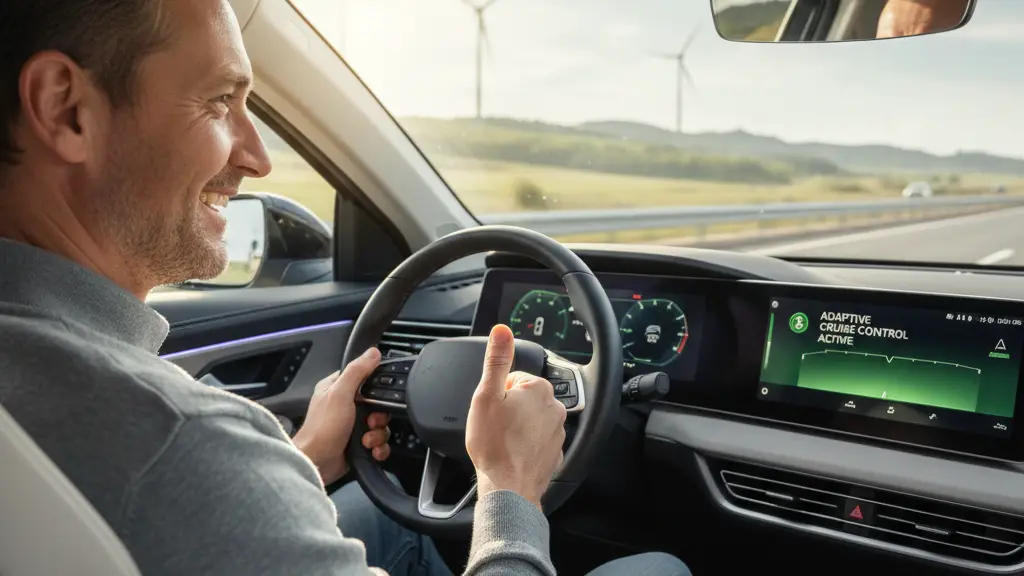
Many modern cars come standard with systems that record your driving habits. Think of on-board computers that show your fuel consumption, adaptive cruise control that registers how often you intervene and, in old cars, the nervous ‘econometer’ that indicates that you are driving economically (or not) with that little needle that sweeps drily from the green to the red area. Increasingly, car manufacturers are using telematics: cars send information about driving behavior automatically to an app or online dashboard. So after each drive, you can see how economically you drove, how smoothly you accelerated and how much you braked – then you can conclude that braking is a waste of energy… Even in an EV with energy regeneration, because you never recover all the braking energy.
OBD2 dongle
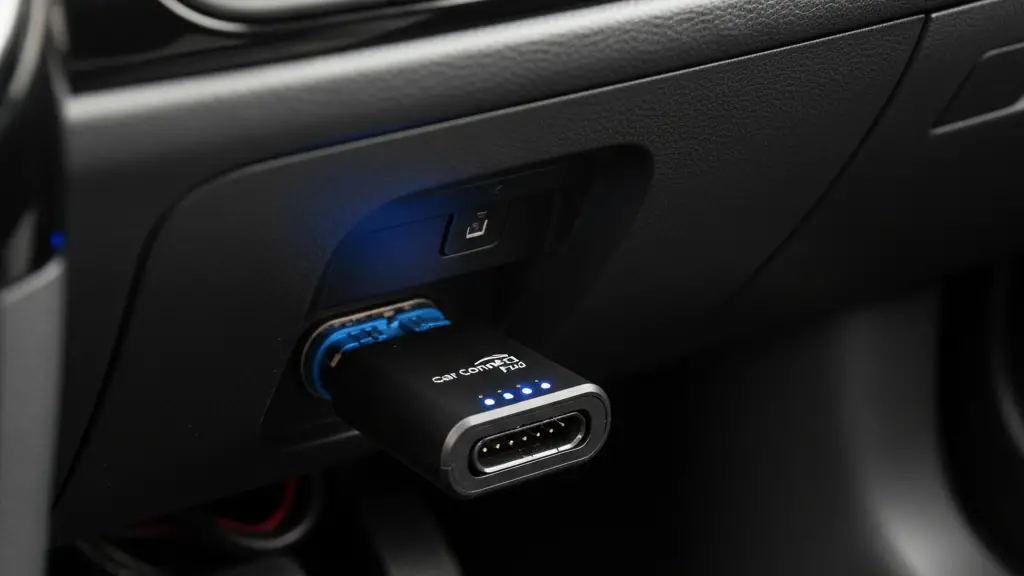
There are also universal tools available that you can use in almost any car. A well-known example is the OBD2 dongle: a small device that you plug into your car’s diagnostic port. This dongle reads data from your engine management system and sends it via Bluetooth or Wi-Fi to an app on your smartphone. There you get insight into your revs, acceleration, braking behavior and fuel consumption. Some dongles also provide tips based on your driving style.
Apps
Apps are an approachable way to chart your driving style. There are several apps available that use the GPS and sensors in your smartphone to analyze your driving behavior. For example, they measure how fast you accelerate, how smoothly you take turns, whether you brake abruptly often and how constant your speed is. Most apps give you a score after each drive, possibly supplemented by tips or graphs.
Insurance companies
Insurance companies also take advantage of this. Some insurers offer “driving style insurance,” where your premium depends on how well you drive. For this, you then use a specific app or dongle. The data collected often revolve around safety and anticipatory driving behavior. Speeding too often or braking suddenly? Then that can affect your rating. The idea behind this is not only to make the premium fairer, but mainly to make motorists drive more consciously.
Tools from car manufacturers themselves
Several car brands offer their own systems for driving style analysis. Tesla, for example, uses its in-car screen and app to show energy consumption per trip, including regeneration behavior. BMW has integrated “Driving Style Analysis” into certain models, which gives you tips on how to save energy. Toyota works with hybrid coaches that help you make the best use of the electric motor. Mercedes-Benz offers an “ECO score” in some models that gives you feedback on your driving behavior per trip.
Driving style analysis
Driving style analysis also plays an important role in electric cars. This is because the range is highly dependent on your driving style. Accelerating too quickly or driving at high speeds can drain the battery quickly. Smart navigation systems in EVs take this into account: based on your driving behavior, a realistic estimate is made of the remaining range.
Accessories for driving style analysis
In addition to apps and built-in systems, there are also accessories available that are specifically designed to measure your driving style. Consider dashcams with accelerometers, which can record when you suddenly brake or accelerate. Some dashcams link that information to footage, allowing you to review exactly what happened.
There are also smart mirrors or displays that provide real-time feedback while driving. This allows you to see on the road if you are braking too much or accelerating too fast. These accessories are especially popular with driving schools and fleet owners, but are becoming more accessible to individuals.
Some lease and fleet operators use sophisticated fleet management systems. Those systems measure everything from speed to cornering G-forces, engine load to idle time. All that data is used to evaluate not only driving style, but also maintenance risk and the driver’s safety score. As an individual, you usually don’t have direct access to this, but some systems are also available to consumers.
Improving driving style: practical tips
Once you understand your driving habits, you naturally want to do something with them. Fortunately, there are simple ways to improve your driving style. First, look far ahead in traffic. By looking beyond your immediate surroundings, you can anticipate traffic situations. Do you see that the traffic light ahead is turning red? Then release the gas in time and roll out, instead of braking abruptly. That way you save fuel and brake pads.
Slow acceleration is also an important part. Many people step on the gas pedal full blast at a green traffic light, but that consumes energy unnecessarily. It is better to accelerate evenly and shift up in time. With electric cars, it also helps to consciously use regenerative braking. Some EVs have one-pedal driving, where you can accelerate and decelerate using only the accelerator pedal. This allows you to drive even more efficiently.
Also pay attention to your tire pressure. Tires that are too soft create more rolling resistance, so your car uses more energy. In addition, they wear out faster. So check the pressure regularly and adjust it according to factory specifications.
Finally, cruise control is a useful tool. By maintaining a constant speed, you avoid unnecessary acceleration and braking. This makes your driving style not only more economical, but also more comfortable. In traffic jams or city traffic, you can use adaptive systems, which automatically maintain distance and react more calmly than a human foot.
The road to more conscious driving
A good driving style starts with yourself, but technology helps you get better. Today, thanks to apps, dongles, built-in telematics and smart accessories, you can analyze your driving habits in detail. You can see not only how much fuel you use, but also how smoothly you drive, how well you anticipate and where you can still improve. For those who want to optimize their driving style, drive more economically or be safer on the road: the right tool is literally at their fingertips. The more aware you drive, the more you save – on costs, on wear and tear and on stress.