More sustainable car production: from raw material to recycling
What do we mean by sustainability in the automotive industry?
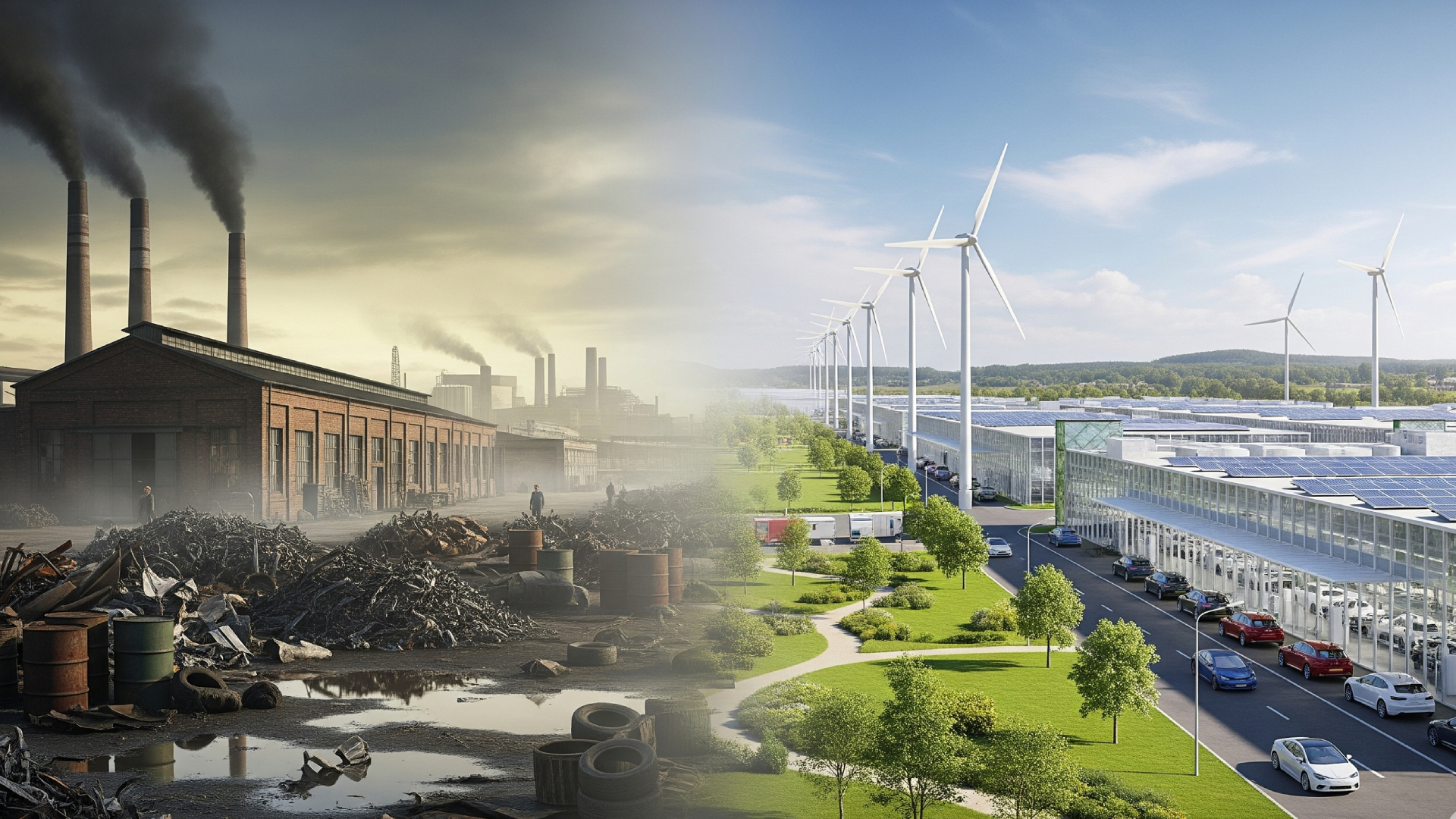
In general, sustainability means that processes are designed in such a way that this limits the impact on the environment and society. This can also benefit future generations. In the automotive industry, sustainability means that the production of cars emits less CO₂, generates less waste and increasingly uses renewable energy and recycled materials. So it’s not just about car emissions while driving, but about the entire life cycle of a car: from the extraction of raw materials to its scrapping and recycling.
Sustainability starts with the raw materials
An important starting point for any car is the extraction of raw materials. Modern cars require metals and minerals, such as lithium, cobalt and nickel for EV batteries, among others. That mining is of course very environmentally damaging, with high energy and water consumption and pollution.
However, manufacturers and suppliers are working to improve. New techniques make it possible to extract raw materials more selectively, causing less environmental damage. Mining is also becoming more sustainable through the use of green energy, among other things. There is growing enthusiasm to use alternative materials, such as bio-based plastics and lighter metals that cost less energy to produce.
Reuse and recycling of materials
The use of recycled materials is increasing rapidly. Manufacturers such as BMW, Mercedes-Benz and Volvo are increasingly integrating “secondary” raw materials into their models. Think recycled plastics in dashboards, recycled aluminum, seat foam and even textiles made from old fishing nets and PET bottles.
Steel and aluminum from old cars gets a second life. Because these metals are infinitely recyclable without loss of quality, the production of new body parts is less and less dependent on “primary” mining – that is, in nature. The proportion of recycled materials in a car is growing steadily, and recycling is expected to become the norm rather than the exception.
Transport and logistics: less carbon emissions
Not only the production itself, but also the transportation of raw materials and cars contributes to the carbon footprint. Manufacturers used to have cars transported by ship or truck without much concern for emissions and the environment, but now they are seeking more sustainable solutions.
Shipping companies are investing in cleaner fuels – LNG and biofuels – and experimenting with wind support on cargo ships. Within Europe, car manufacturers are increasingly turning to rail transport, which emits significantly less CO₂ locally than trucks. Electrification of internal transport in factories is also contributing to sustainability.
Energy consumption and production efficiency
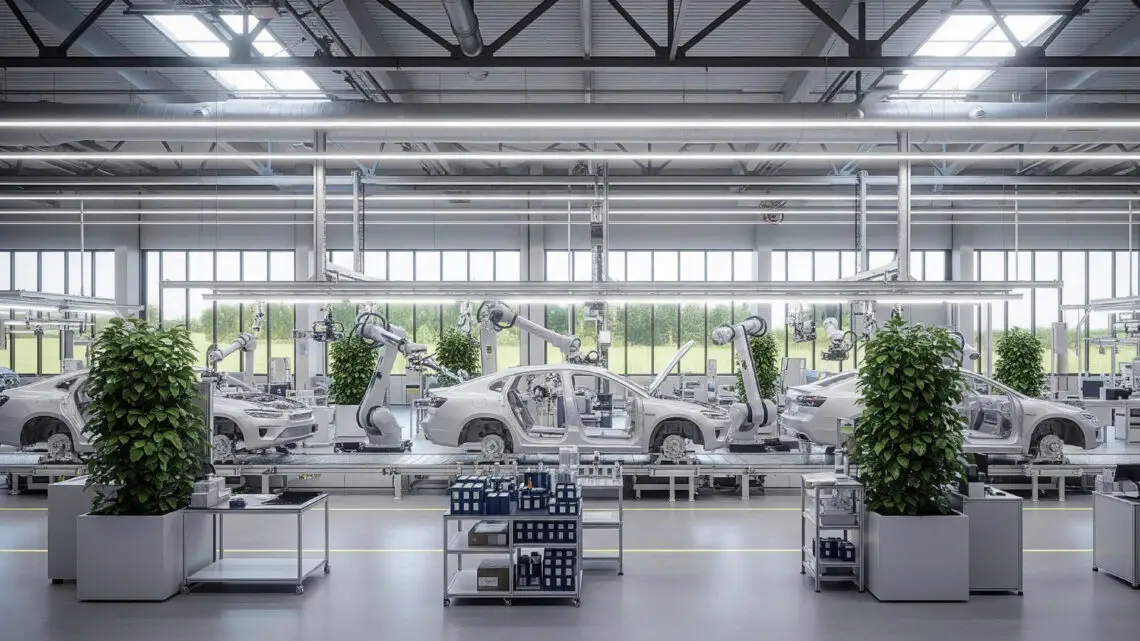
Car production requires a lot of energy – for pressing, welding, painting, lighting and assembly, among other things. Many car factories are therefore switching to green electricity and generating their own energy with solar panels or wind turbines on the factory site.
Tesla, Volkswagen and other brands have entire production facilities that run largely on renewable energy. In doing so, they are increasingly using advanced robots and AI systems that optimize production processes. This not only reduces energy consumption, but also wastes fewer materials.
The amount of waste materials also decreases. Paint processes are cleaner with water-based paints and filters that trap pollutants. Waste is separated within factories and reused whenever possible. The goal is to make factories fully circular, leaving virtually no residual waste.
Cars live longer and are more efficient
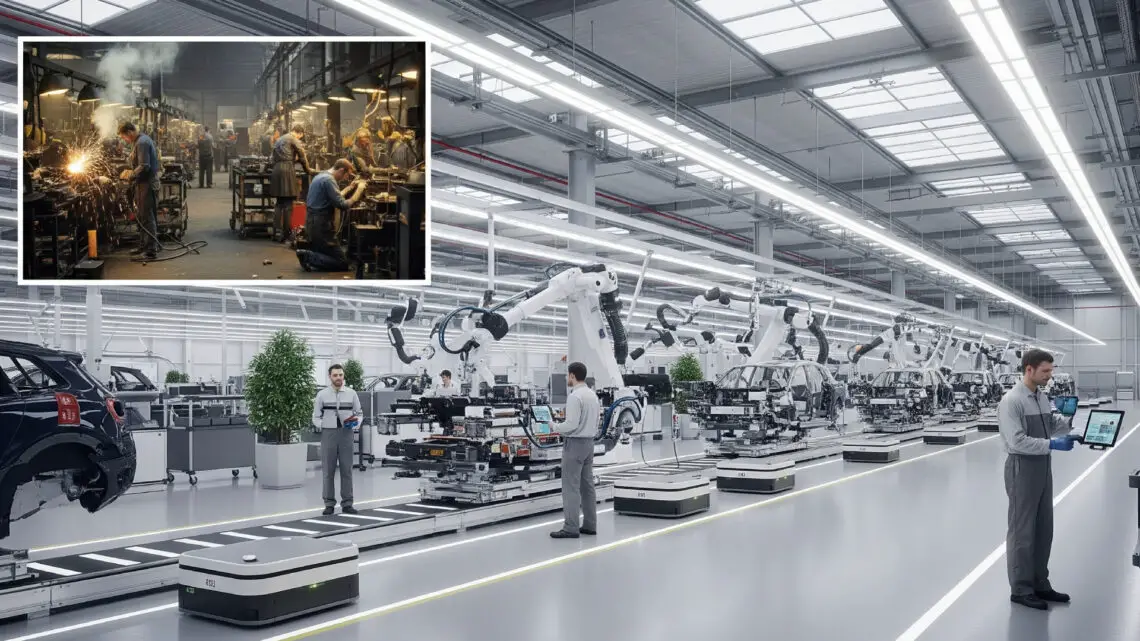
Another important factor for durability is the lifespan of cars. Cars in the 1970s and 1980s were often óp after ten years. Meanwhile, modern cars last much longer. Better rust prevention, wear-resistant materials and more reliable engines mean that, with proper maintenance, cars can easily last twenty years.
Electric cars add an interesting dimension. Although batteries wear out, their lifespan is also getting longer. Manufacturers today provide warranties of seven to 10 years, and solutions are emerging to give batteries a second life, for example in energy storage.
Longer car lifespans mean fewer new cars need to be produced and thus less pressure on resources and energy. At the same time, manufacturers are pushing for modular designs, making components easier to replace or update. This makes cars more future-proof and prevents them from ending up on the scrap heap prematurely.
End of life cycle: scrapping and recycling
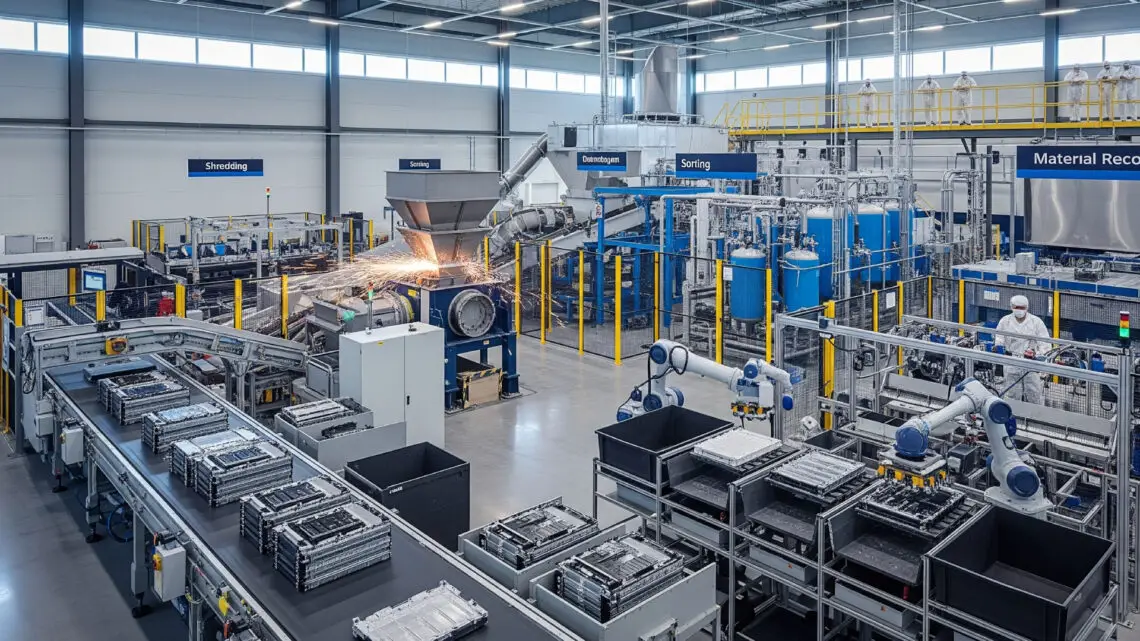
At the end of their useful life, cars end up at dismantling companies – increasingly from the car brand itself. Much waste used to end up in landfills, but recycling has now greatly improved. The Netherlands and other European countries have a mandatory recycling rate of 95 percent of a car’s weight.
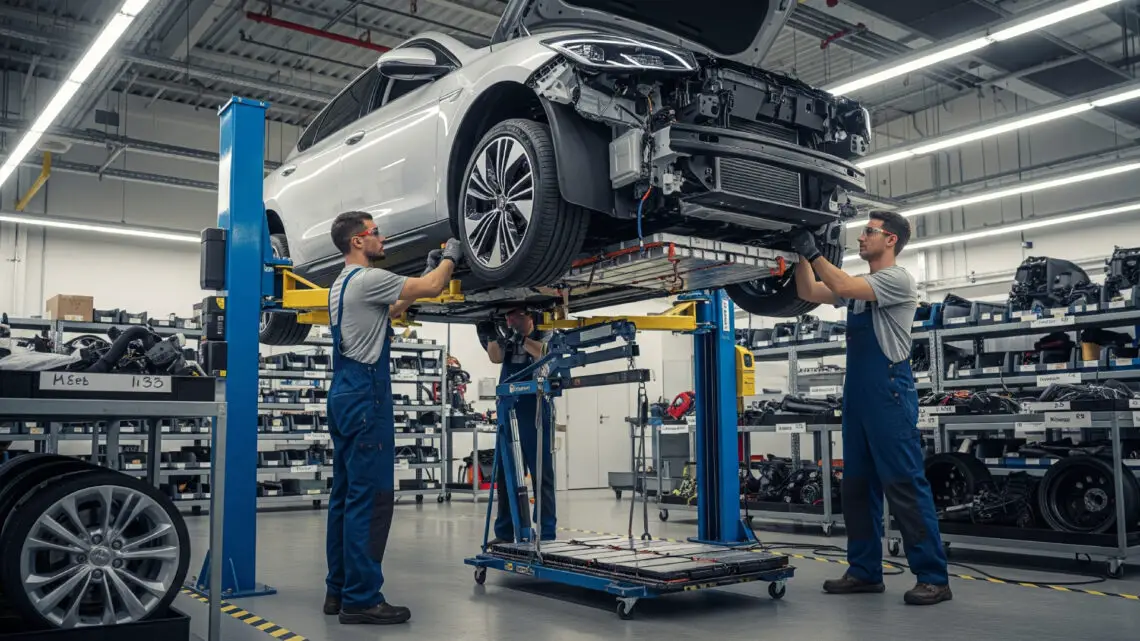
That means virtually all metals, plastics and glass are reused. Fluids such as oil and coolant are disposed of and processed responsibly. Special recycling plants are built for electric car batteries, where valuable metals can be recovered.
This process is expected to become even more efficient in the future. New methods such as hydrometallurgy make it possible to recycle batteries almost completely. This creates a circular chain in which old cars serve as the raw material for new ones.
Future of sustainable car production
In the coming decades, sustainability in automobile production will only become more important. Not only because of legislation, but also because consumers and investors place more value on environmentally friendly processes. We distinguish a number of trends:
- circularity: cars are designed with the reuse of virtually all parts in mind;
- green factories: production halls increasingly run on renewable energy and produce less and less waste;
- local production: less transportation by placing factories closer to markets;
- innovative materials: bioplastics, lighter metals and new composites that are less environmentally damaging;
- smart life cycle: cars stay current longer with software updates and modular construction.
In transition to sustainable future
Automotive manufacturing is in full transition to a more sustainable future. From the extraction of raw materials to the recycling of end-of-life vehicles, steps are being taken everywhere to reduce environmental impact. Recycling and reuse are increasing, the energy consumption of factories is decreasing and car transportation is also becoming greener. At the same time, the lifespan of cars is increasing and the end of life cycle is also getting better with more efficient recycling methods.
Sustainability in the auto industry is an ongoing development. Not only does the car of the future drive quieter and cleaner, it is designed for long life, made from recycled materials and comes from a clean factory that runs on green energy. That leads to a circular and climate-friendly auto industry.