
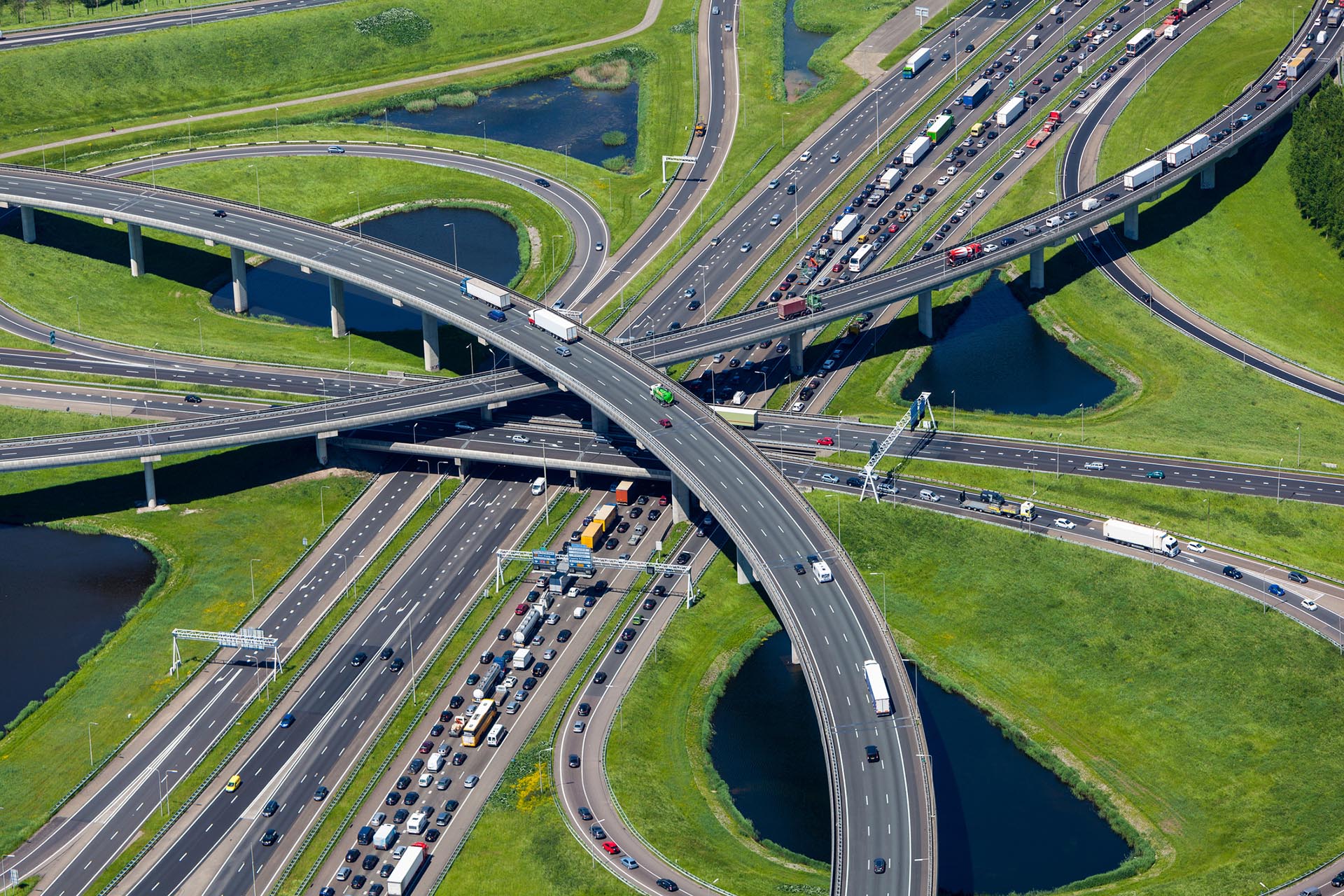
34.5 Billion deficit: pressure on Dutch infrastructure increases
Utrecht shows what is in store for the Netherlands
The impact of that task is already becoming visible in practice. In the Utrecht region, between April and October 2026, large-scale work is planned on major highways such as the A12, A27 and A28.
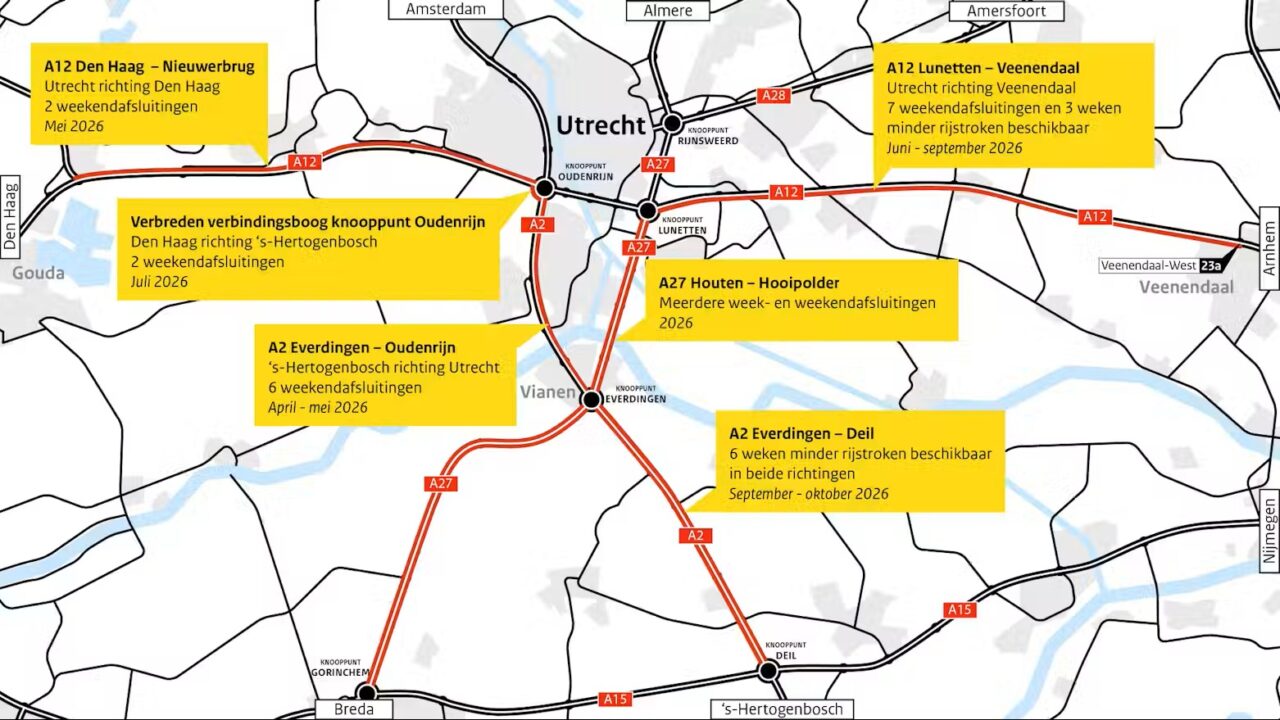
This region is a crucial hub in the Dutch road network. Closures and detour here directly cause extra pressure on surrounding roads and longer travel times. Rijkswaterstaat is taking considerable inconvenience into account and is urging road users to adjust their travel behavior wherever possible. We explain all national work in 2026 in this article.
Network by age, use at peak level
At the heart of the problem lies the age of the infrastructure. Many bridges, tunnels and highways date from the 1960s and 1970s and were designed for a different volume of traffic than today. Decades of intensive use will soon leave its mark. According to the Court of Audit, the available budget is insufficient to carry out all the necessary work. This is already having consequences: projects are being reconsidered, delayed or halted.
Selecting, phasing and reconsidering
In a letter to the Lower House, Minister Vincent Karremans and State Secretary Annet Bertram make clear that sharp choices are inevitable. Within the Multi-Year Programme Infrastructure, Spatial Planning and Transport (MIRT), priorities are being reassessed. This means that not every project will go ahead as originally planned. Some work is given priority, while others are postponed or adjusted in scope. In short, available resources increasingly determine the order and pace.
For road users, this means that the coming years will be characterized by a combination of more work and longer lead times. Major projects will cause temporary closures and detour, while delayed projects will result in longer use of aging infrastructure.
There is also the question of how the financial deficit will eventually be closed. Although no concrete measures have yet been announced, additional forms of funding have been discussed for some time.
New financing: who benefits, pays
It is notable that contributions from external parties are also being explicitly considered. Companies and landowners who benefit from improved accessibility may be able to co-pay for infrastructure projects in the future. The exact details of this have not yet been determined, but the principle is receiving increasing attention within policy circles.
Structural task without quick fix
With a deficit of tens of billions of euros, the Netherlands faces a long-term and complex task. The chosen approach focuses on making choices, improving efficiency and tapping additional resources.
Whether that will be enough to maintain the accessibility and quality of the network will have to be seen in the coming years. What is certain is that the effects for both policymakers and road users are becoming increasingly visible.