
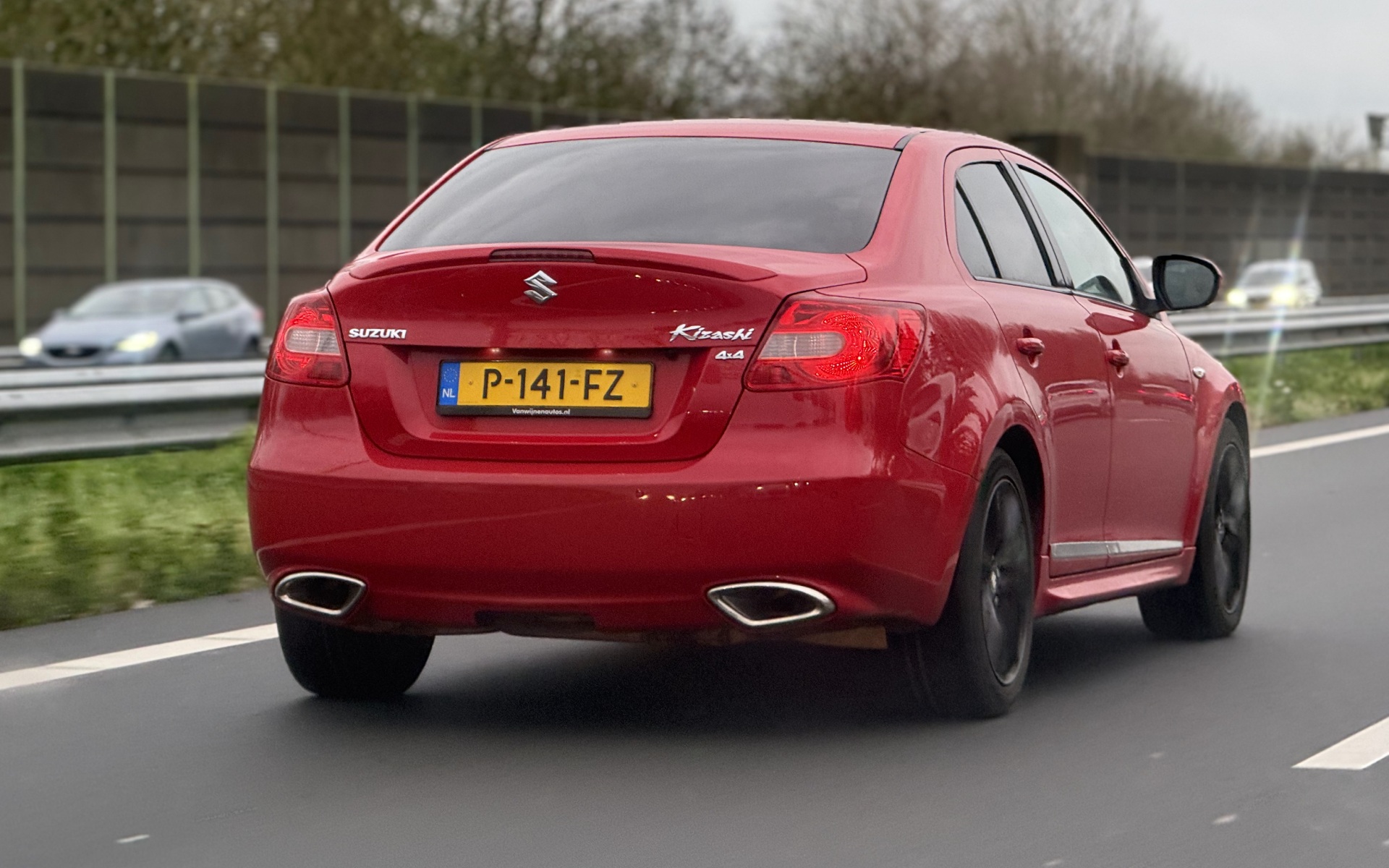
Spotted: Suzuki Kizashi in the unique color Fervent Red
Suzuki Kizashi and its competitors
The Suzuki Kizashi appeared in the late 2000s as Suzuki’s attempt to take a step up. Not toward luxury, but toward a more mature sedan that had to compete against mid-size models like the Volkswagen Passat, Opel Insignia, Mazda 6, Ford Mondeo and Toyota Avensis. Not an easy mission, as these are models in which manufacturers have decades of experience, while Suzuki made its name primarily with compact cars and off-road vehicles. Still, the brand decided it was time for something different.
Omen
The name Kizashi – Japanese for “an omen” – was supposed to indicate that this was the beginning of a new direction. Only in retrospect, that omen turned out to refer mostly to the end of Suzuki’s ambitions in this segment.
A forgotten sedan
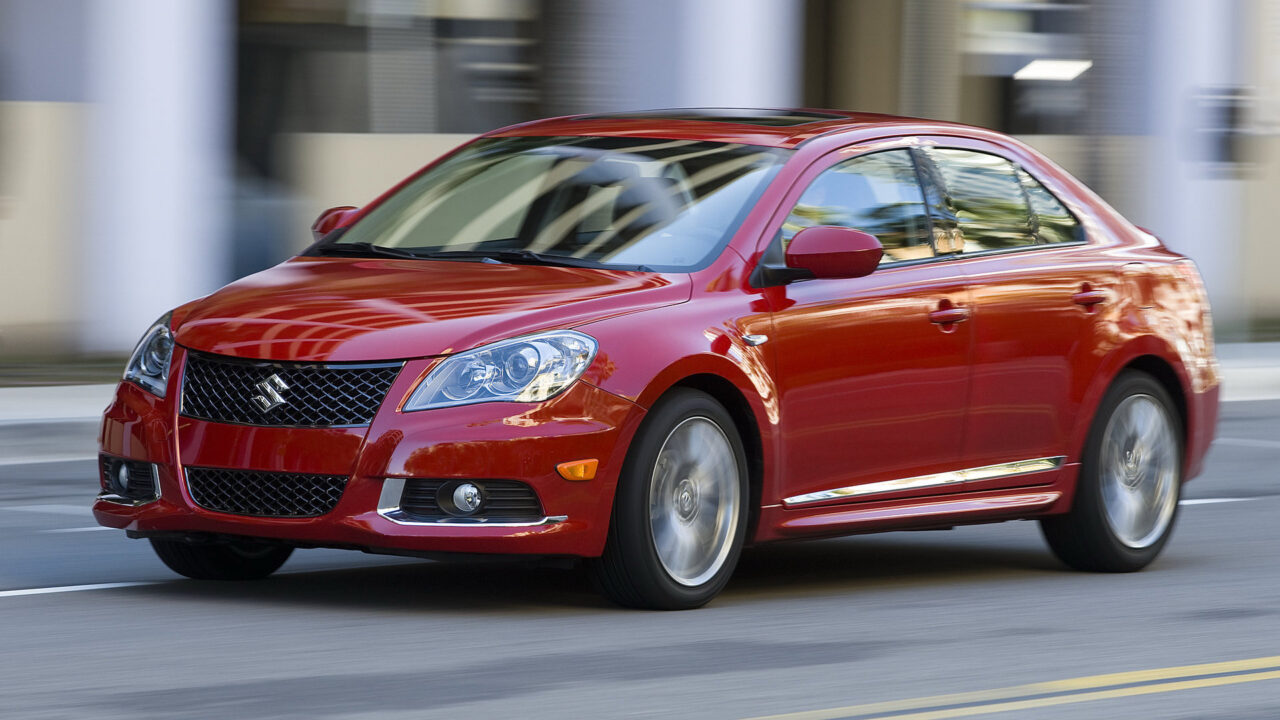
Yet the Kizashi is not just another forgotten sedan. Basically, it is a car that is surprisingly solidly built. The design looks muscular, but not overdone. The grille is reminiscent of a friendly bulldog and the wheel arches are subtly put on. The result is a sedan that doesn’t try to appear premium, but simply remains itself. And that is an achievement in itself these days.
2.4-liter four-cylinder
Under the hood, the choice in Europe was straightforward: one engine. A 2.4-liter four-cylinder gasoline engine, good for 131 kW (178 hp), a maximum torque of 230 Nm and mated to a six-speed manual transmission or a CVT automatic. Not intended for sprint records, but rather for a quiet, predictable driving experience. In some markets, the Kizashi was available with all-wheel drive, but that version remained a rarity in the Netherlands. Diesels were not available, which at the time was a logical requirement to compete seriously in the middle class. So the limited engine range did not really help sales.
Best lots of luxury
The inside of the Kizashi shows that Suzuki made an effort to give the model a serious look. No extreme shapes, no complicated infotainment system that makes you take a course first, but a solid looking dashboard with buttons that do what they are supposed to do. The seating position is pleasantly sporty and the seats offer enough support without giving you the idea that you are sitting in a trackday car. In short: an interior that radiates tranquility. And that suits the character of the car just fine.
Little supply
But why then do you see the Kizashi so little? Besides the limited engine lineup, timing played a role. The market for sedans shrank solidly due to the advance of SUVs and crossovers. Moreover, Suzuki in the Netherlands was already strongly focused on small models like the Swift and Alto. A large sedan simply did not fit the image consumers had of Suzuki. As a result, the Kizashi quickly became a rare sight in the Netherlands, although that now contributes to making every spotted Kizashi a mini-event of sorts.

Nice driving characteristics
The Kizashi ended up being delivered only briefly and did not get a direct successor. Still, the model showed that Suzuki could do more than build small cars. The car had fine handling, a quirky design and a name that provided food for thought. Whether the Kizashi was really an omen? Maybe so. Not of a more luxurious Suzuki line, but rather of the realization that you don’t have to compete in every segment to be successful as a brand.
Fervent Red
And then that color: Fervent Red. It makes the already striking appearance just a little more vibrant. You can tell at a glance that the driver wanted something different from the usual shades of gray. Perhaps that is exactly what the Kizashi stood for: a different choice, not necessarily better or worse, but just a little different. And sometimes that’s just enough to make a car interesting.