
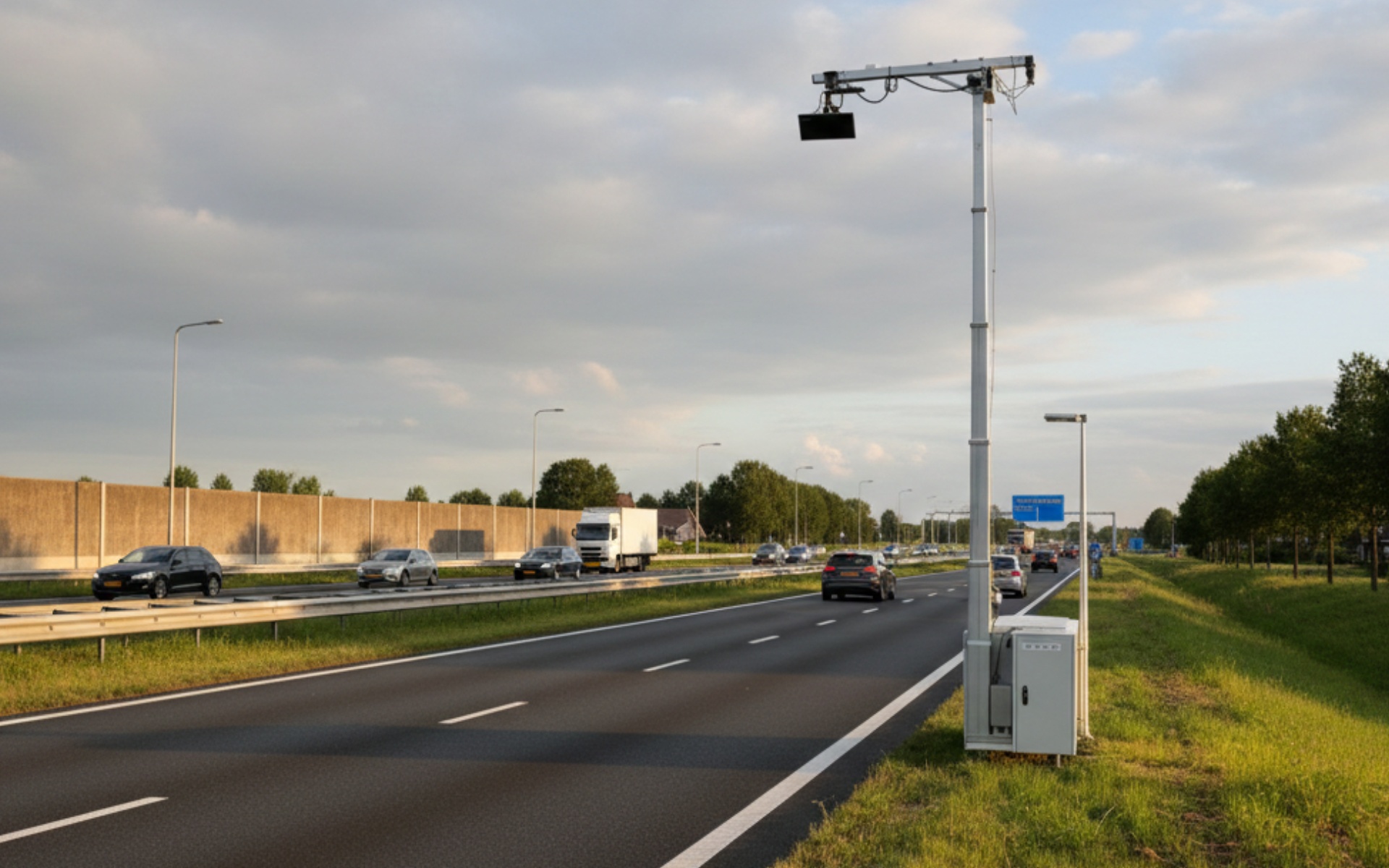
So-called focus flashes great success, here’s how they work
Focus flashes
Of the 248,020 violations, more than 73,000 were detected using so-called focus flash cameras. These cameras, commissioned this year by the Public Prosecutor’s Office, are specifically designed to detect handheld phone use. The remaining violations were detected by the police, through stops or with technical aids.
Expanding the number of focus flash units
According to the agencies involved, distraction by smartphones poses a serious risk to road safety. Therefore, the effort on this type of offense will be further increased. The number of focus flash units is to be increased to 50 by the end of 2026. This flexible deployment, where equipment is constantly placed in different locations, increases the chance of being caught and makes enforcement less predictable.
Half soccer field
The prosecutor’s office (OM) previously told us, “If you’re driving 50 km/h, and you look at a screen for three seconds, you’ve traveled 42 meters. That’s half a soccer field, where you haven’t had your attention on the road. And as a result, you may notice a red traffic light or pedestrian crossing too late. Those few seconds you spent looking at that message can make the difference between getting home safely and causing a serious accident. Still, many drivers can’t resist the temptation; research by the Stichting Wetenschappelijk Onderzoek Verkeersveiligheid (SWOV) shows that 75% of motorists do use a phone behind the wheel on occasion.”
Here’s how it works
The OM also explains exactly how everything works. “The focus flash unit has a camera that can detect the holding of a mobile electronic device. The focus flash unit is easy to move, allowing it to be deployed at varying locations throughout the Netherlands. Photos in which the system detects a cell phone in the driver’s hand are transmitted to the Central Judicial Collection Agency (CJIB). A special investigating officer (boa) then assesses the photos. If it turns out that the driver was actually holding a mobile device, the license plate holder receives a fine.”
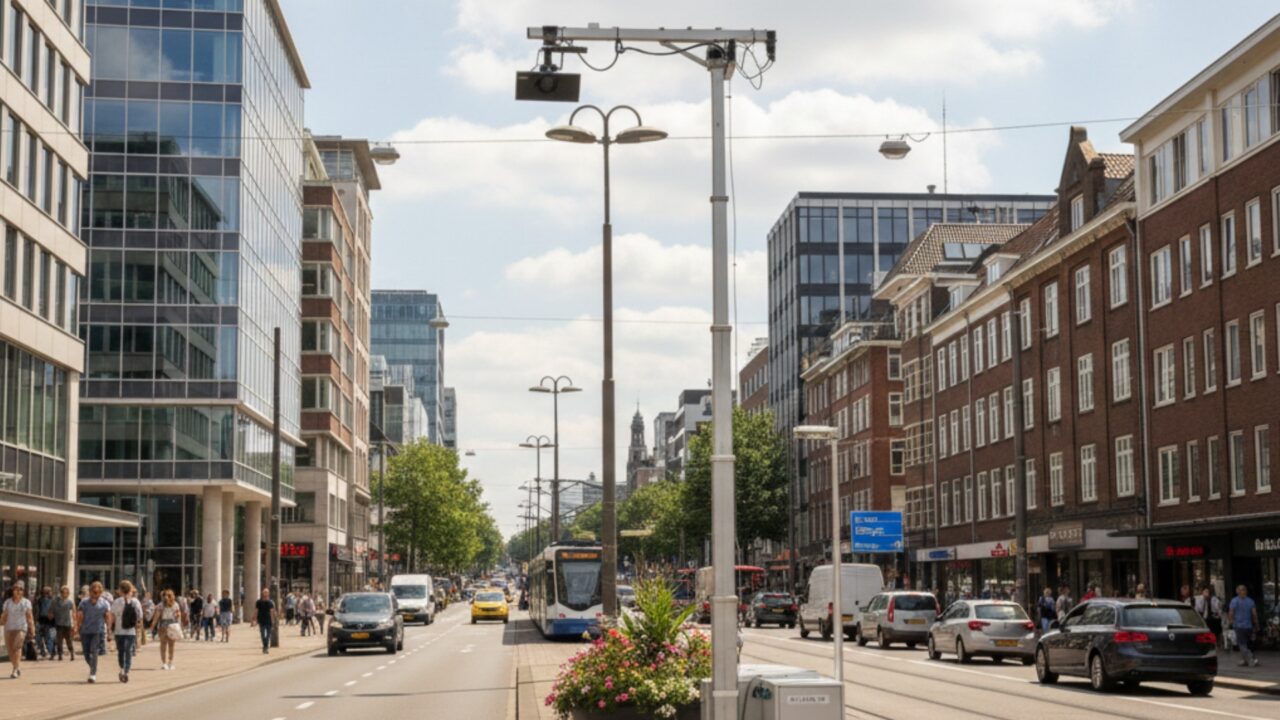
Better collaboration
The intensification of controls on telephone use is part of a broader collaboration between the Ministry of Justice and Security, the Central Judicial Collection Agency (CJIB), the police and the Public Prosecution Service. The aim is to get road users to behave more safely on a structural basis, rather than just locally or temporarily adjusting their driving style.
Standing posture
In addition to the increase in fines for handheld phone use, the number of disposals following stops also increased. In 2025, 589,281 disposals were imposed after a police stop, up from 510,420 in 2024. Other visible offenses, such as cycling without lights and not wearing seat belts, were also fined more frequently.
Speed fines
The total number of so-called Mulder fines came to 7,570,861 in 2025, down from 7,913,692 a year earlier. That decrease is mainly explained by nearly half a million fewer speeding fines, due in part to the replacement of enforcement equipment.
Environmental bans
In 2025, the ever-rising figures for violating entry bans because of environmental zones or car-free inner cities came to an end. That doubled in 2024 to nearly 300,000 but fell to over 230,000 in 2025. However, 40,934 fines were issued in 2025 for violations of the new so-called zero-emission zones.
Distractions behind the wheel
So although the total number of fines decreased, the sharp increase in fines for phone use shows where the focus will be in 2025: reducing distracted driving. With the continued expansion of focus flashers, that line will continue in 2026.