
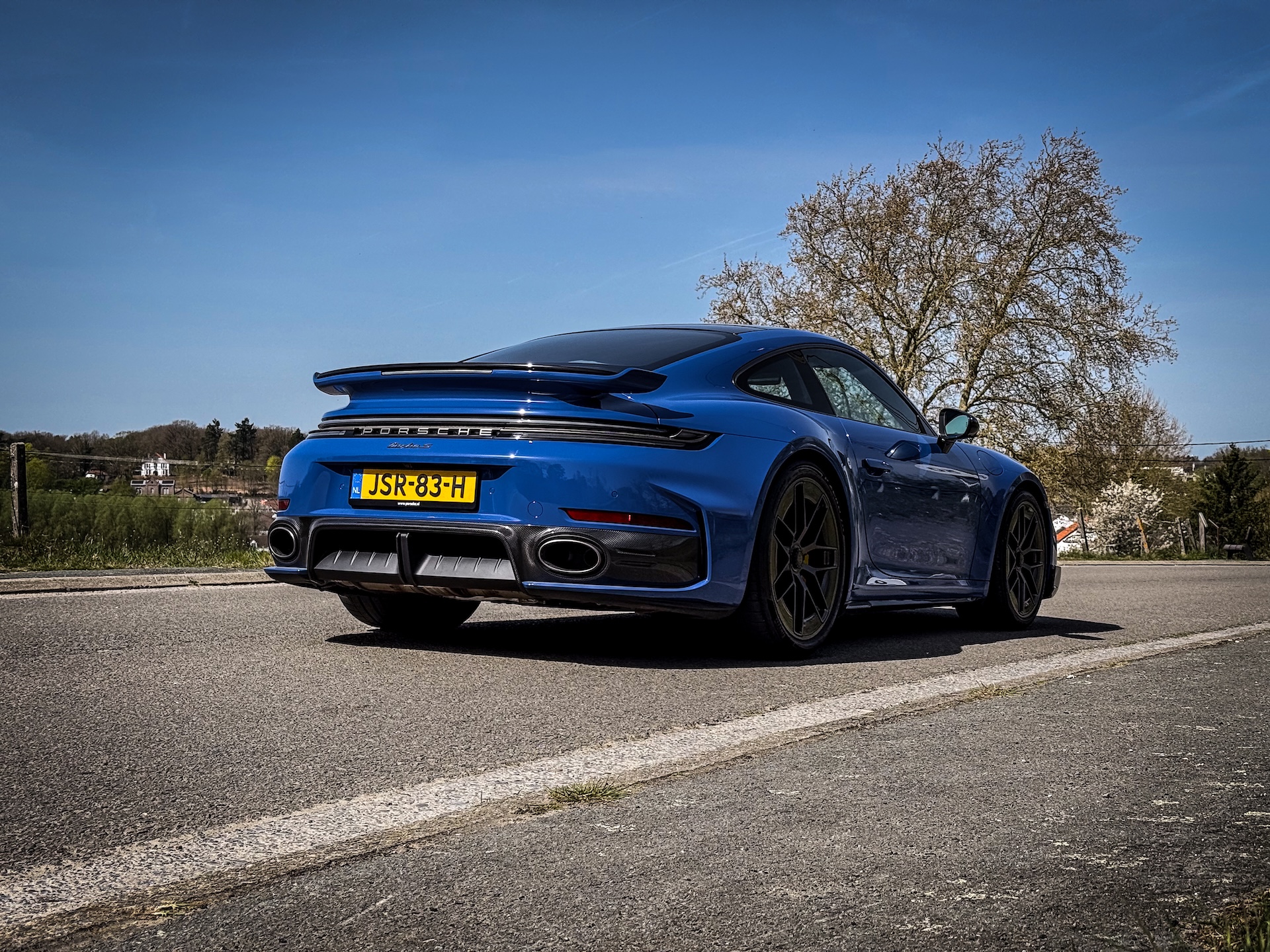
Review – Porsche 911 Turbo S (2026), the all-round supercar
Wide rev range
Granted, if you can afford a Porsche 911 Turbo S, a gallon more fuel surely doesn’t hurt. We get that, too. But it is interesting to see a supercar like the new 911 Turbo S pushed to its limits when it comes to fuel economy. First, some numbers. This new all-rounder from Porsche has an output of 522 kW (711 hp) and an impressive torque of 800 Nm, available over an extremely wide rev range from 2,300 to 6,000 rpm. The 0-100 sprint takes just 2.5 seconds and the top speed comes out to 322 km/h. Look, those numbers impress. But can you drive economically with all that power? Further on in this Porsche 911 Turbo S review the answer!
T-Hybrid
We first dive further into the powertrain, as it is particularly interesting. The power curve shows an unusually wide peak, as the full 711 hp is continuously available between 6,500 and 7,000 rpm. The remarkably lightweight T-Hybrid technology, which runs on a 400V system, provides a power gain of 61 hp over its predecessor. Whereas the recently unveiled 911 Carrera GTS uses a single electric exhaust turbo, this Turbo S is equipped with two eTurbos designed specifically for this model. This not only provides more pure power, but also significantly improves the responsiveness of the powertrain.
Lightweight high-voltage battery
The heart of the hybrid system is a compact, lightweight high-voltage battery with a capacity of 1.9 kWh. Power is transmitted to the wheels via an eight-speed PDK gearbox, which integrates an electric motor, in conjunction with Porsche Traction Management all-wheel drive. Despite the addition of the hybrid components, the new 911 Turbo S weighs only 85 kilograms more than its predecessor. However, this slight increase in weight has been more than compensated for by advances in driving dynamics. Absolute proof of this was provided on the Nürburgring Nordschleife, where a camouflaged test model clocked an impressive lap time of 7:03.92 minutes. This makes it some fourteen seconds faster than the previous generation.
Titanium rear shock absorber
The 3.6-liter boxer engine with two eTurbos uses asymmetrical timing, which adds additional frequencies and results in an audibly fuller and sharper engine sound. This is further enhanced by a new, standard-supplied lightweight sports exhaust system with titanium rear muffler and trim pieces, whose sound was composed specifically for this top-of-the-line model. At lower revs, this six-pitter sounds almost like a diesel engine. This is also because, at a speed of about 105 km/h, the engine turns no more than 1,000 rpm in Normal mode. Even then there is plenty of power available. Only at higher revs do you get to hear real six-cylinder boxer sounds and they still give you goosebumps.
Wide slippers for Porsche 911 Turbo S
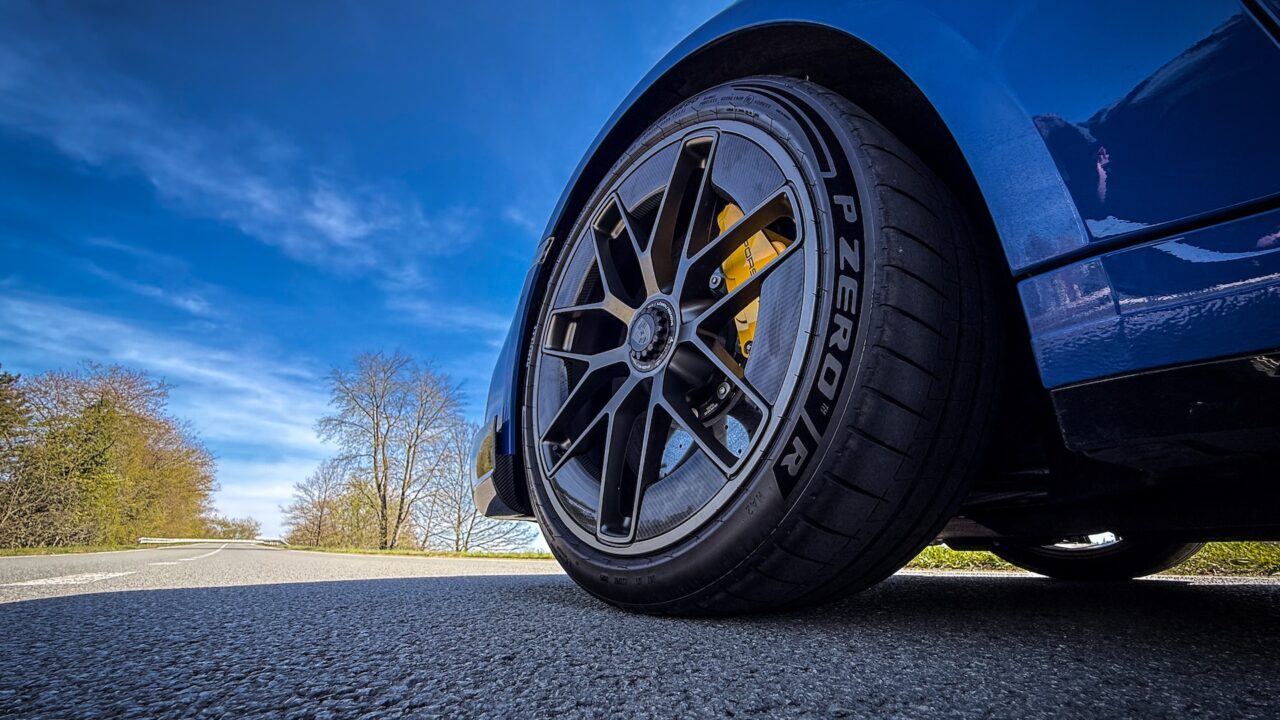
The rear axle is now on ten millimeters wider tires in size 325/30 ZR 21, while specimens in size 255/35 ZR 20 are fitted at the front. The standard ceramic brake system has also been significantly upgraded with stronger brake pads and larger discs. At 420 millimeters at the front and 410 millimeters at the rear, this is the largest ceramic braking system Porsche has ever installed in a two-door model.
Elevator system with GPS system: top!
Thanks to the powerful 400V system, the electro-hydraulic Porsche Dynamic Chassis Control is now standard. This system, via active oil-pressurized torque rods, reduces the body’s tendency to lean, ensuring safer and more predictable road handling. At the same time, the 400V system ensures that the optional front axle elevator system works much faster than before, improving daily usability. The latter feature in particular is indispensable on a Turbo S, all the way through the nose that sticks out far. Especially useful is the GPS function of the elevator system. In locations with high thresholds, the car – after you save the location in the system – automatically raises the nose.
Turbonite
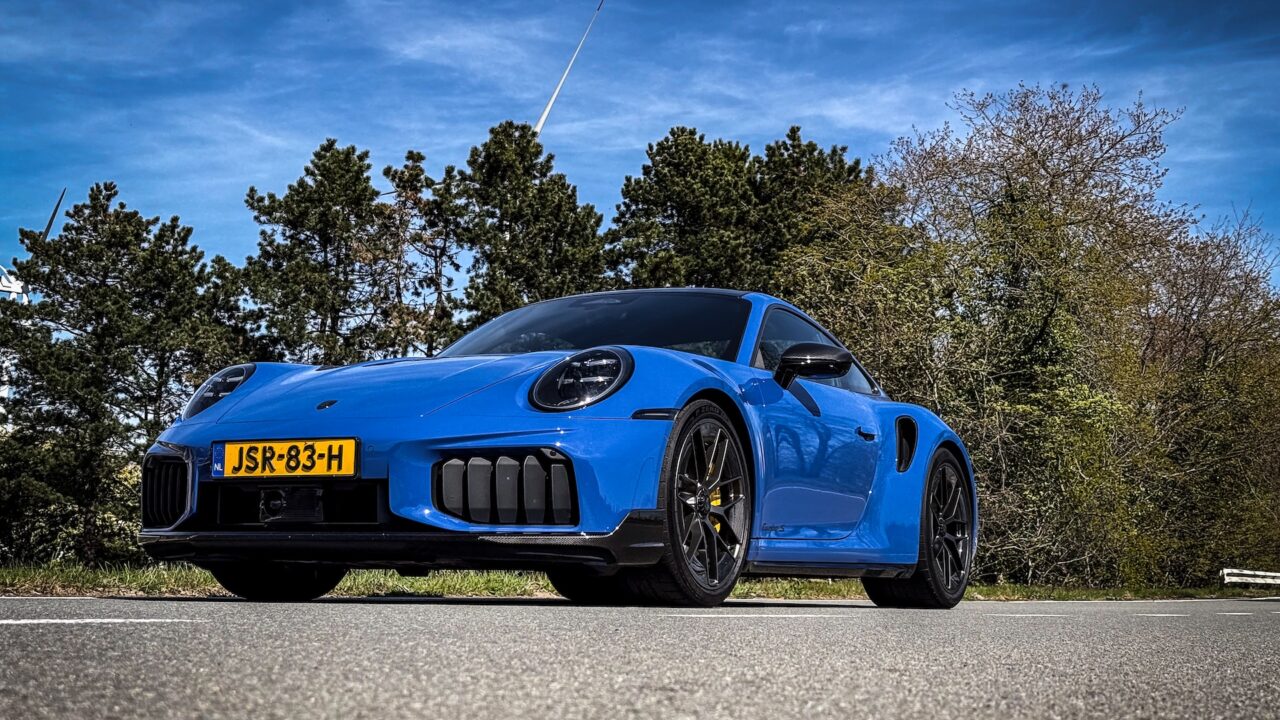
With this model, Porsche now introduces the specific Turbo design strategy within the 911 line. This manifests itself directly in the exclusive contrast color “Turbonite. Reserved for the Turbo versions, this hue is reflected in the Porsche shield, rear logos, rear wing inserts, window moldings and central wheel nuts of the new rim designs. Typical of the Turbo, this top model also features a visibly wider body and track width compared to the Carrera, complemented by distinctive openings in the rear side section and vents in the rear spoiler. At the rear, the dynamic pearl structure above the light strip and the optional oval titanium exhaust trim also catch the eye.
Chic interior
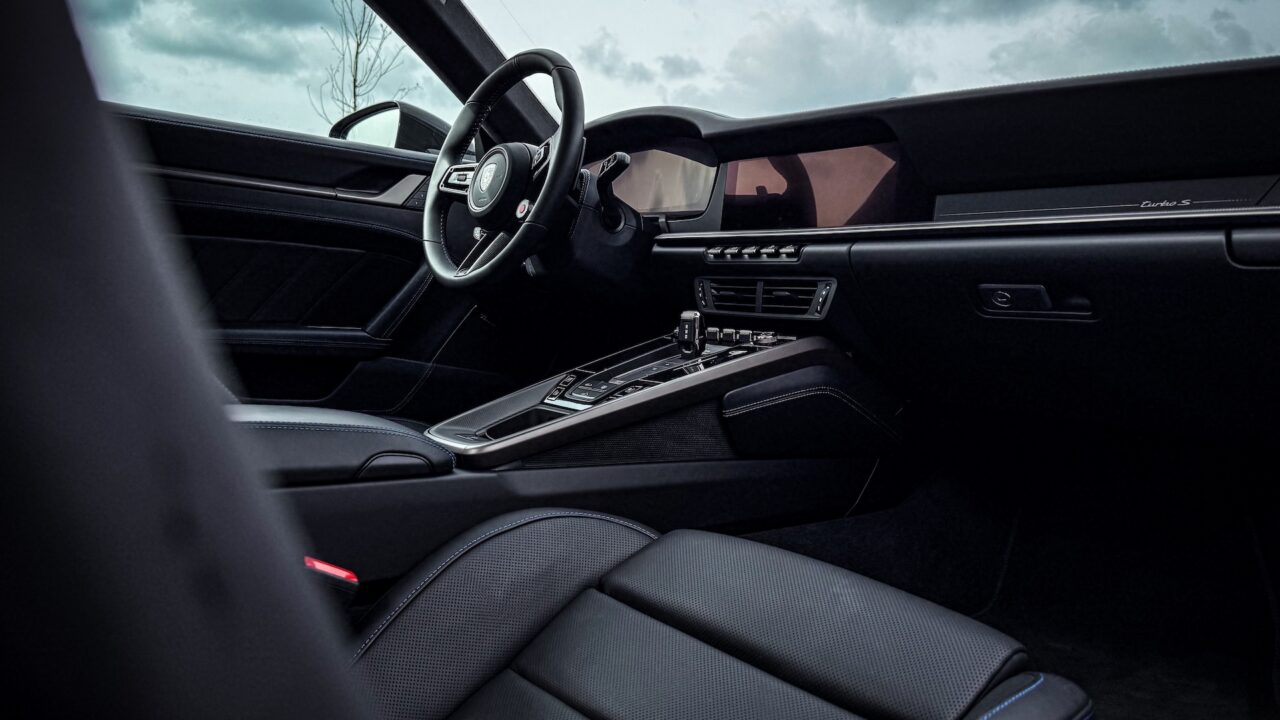
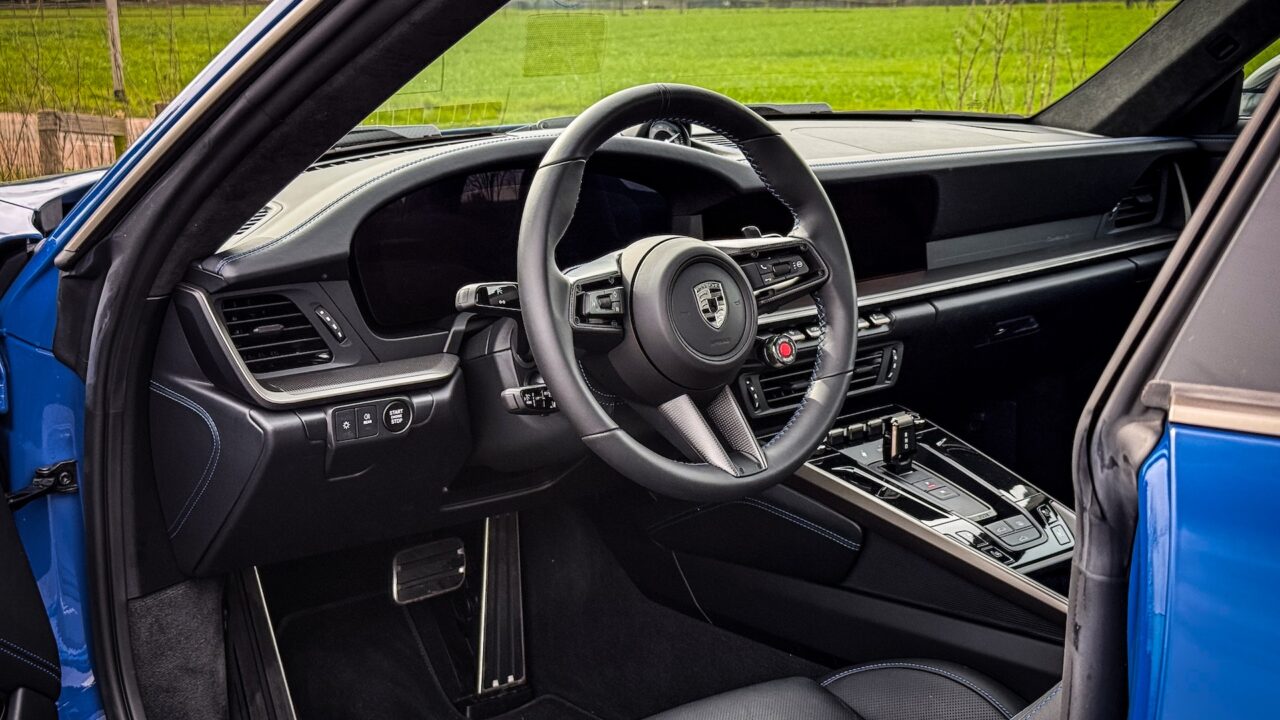
The interior also features lavish Turbonite accents, found on the door panels, steering wheel, dashboard, center console, instrument cluster and seat belts. For the first time in the interior, Porsche also applies trim strips with a carbon texture and neodymium finish, as well as a perforated microfiber headliner with a chic black backing. The Coupe leaves the factory as a standard two-seater, although a rear seat is available at no extra charge. The Cabriolet is configured as a 2+2 as standard. HD Matrix LED headlights, the Sport Chrono Package with tire temperature gauge, a model-specific PASM suspension and eighteen-way adjustable Sport seats Plus are all standard.
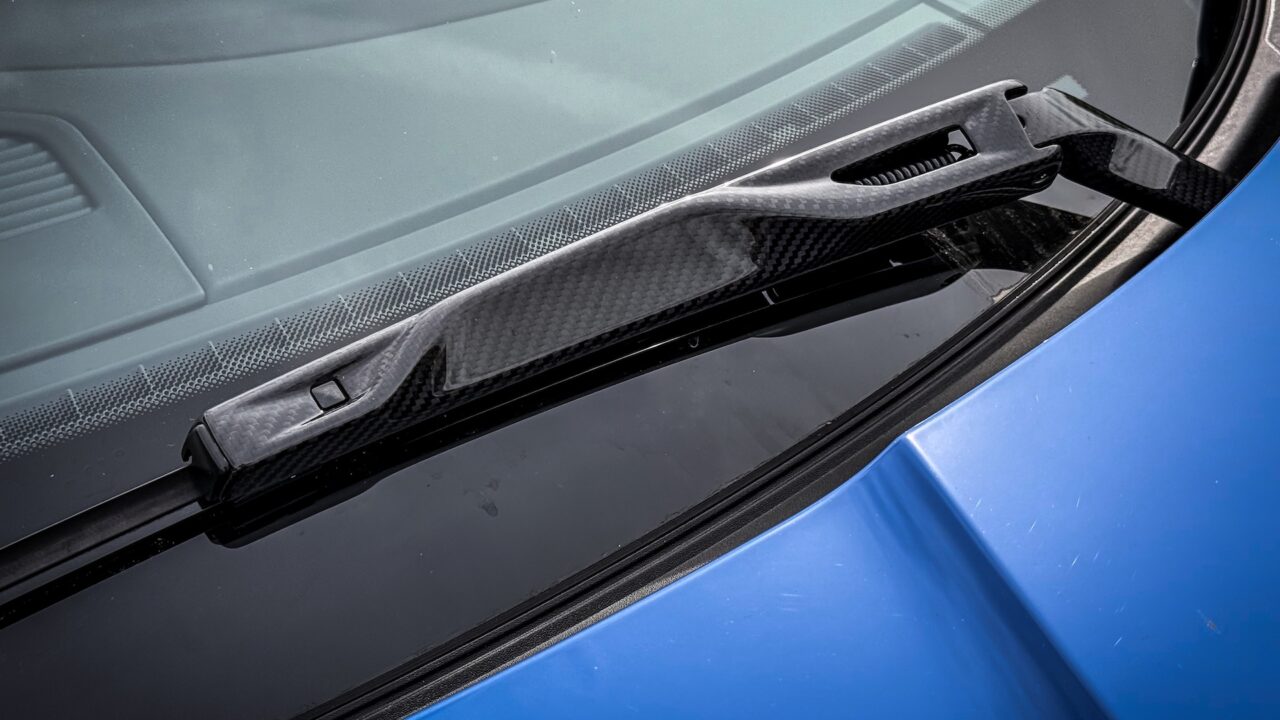
Anything is possible, including carbon wiper arms
Those who want to further tailor the car to their personal tastes can visit the extensive Porsche Exclusive Manufaktur catalog. Customers can choose from more than one hundred body colors and exclusive options such as carbon rim blades in neodymium, a lightweight carbon roof, special taillights and carbon air intakes. A special first on the options list are the lightweight carbon fiber wiper arms, which weigh fifty percent less than the standard ones. The interior can be further enhanced with contrasting stitching, personalized embossments, leather-trimmed seat consoles and car keys painted in body color.
New PORSCHE 911 TURBO S (2026) a SUSTAINABLE wonder? – REVIEW – AutoRAI TV
Porsche 911 Turbo S also economical?
All in all, the new Porsche 911 Turbo S is a powerful total package with performance that you can say hello to. This supercar makes huge strides when you floor the gas pedal. Returning to the initial question, is it possible to drive this car economically? Or is the fuel consumption always to cry over?
Multiple pathways
We drove several longer stretches with the new Porsche 911 Turbo S 992.2. In all cases, the outside temperature was around 22 and 23 degrees Celsius. Moreover, under the guise of hypermiling, we used a speed of 105 km/h. The first stretch was 106 kilometers, the second stretch 120 kilometers and during the third stretch we drove 100 kilometers. On average, we ended up with 8.5 liters per 100 kilometers. That amounts to 1 on 11.7. This puts us far below the average of what Porsche quotes. That is far below the average of what Porsche quotes, which is 11.5 liters per 100 kilometers, or 1 on 8.7. So it is possible to be economical with a 911 Turbo S. Even better: with an average fuel consumption of almost 1 on 12, this car is even more economical than some plug-in hybrids of owners who do not or hardly charge their batteries.
Conclusion review Porsche 911 Turbo S 2026
Superfast, employable every day, comfortable, practical, the Porsche 911 Turbo S has it all. To this we can add another quality as a result of this test: on-demand acceptable fuel consumption. In other words: relatively economical mileage is perfectly possible in this car. The new Porsche Turbo S is not only the most powerful 911 Porsche has ever produced, but it is also the most all-round 911 ever. That makes you greedy. Should you have 356,800 euros to spend … this is the one. Although, this particular example is already ticking up to 400,000 euros. But then you have carbon fiber wiper arms.