
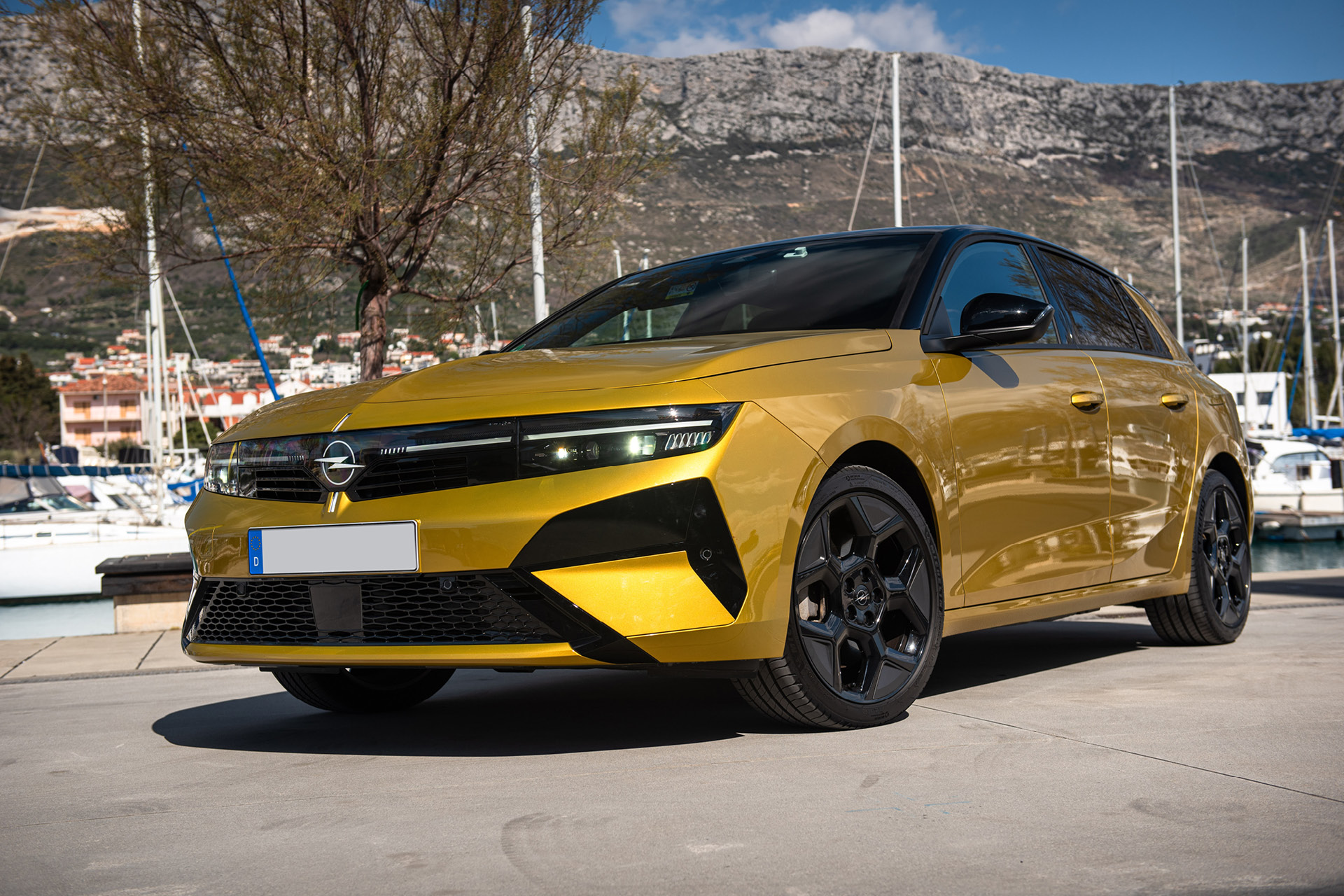
Review – Is the Opel Astra plug-in hybrid the way in between?
A powertrain that allows short trips to be fully electric, while for longer distances the combustion engine takes over. Sounds like an ideal balance, but how obvious is this position within the Opel Astra range in practice?
A wide range
The wide choice is perhaps the Opel Astra’s greatest strength. Whereas some competitors can only offer a hybrid, plug-in hybrid or an all-electric powertrain, Opel offers them all. This applies to both the hatchback and the station wagon, so there is something for everyone.
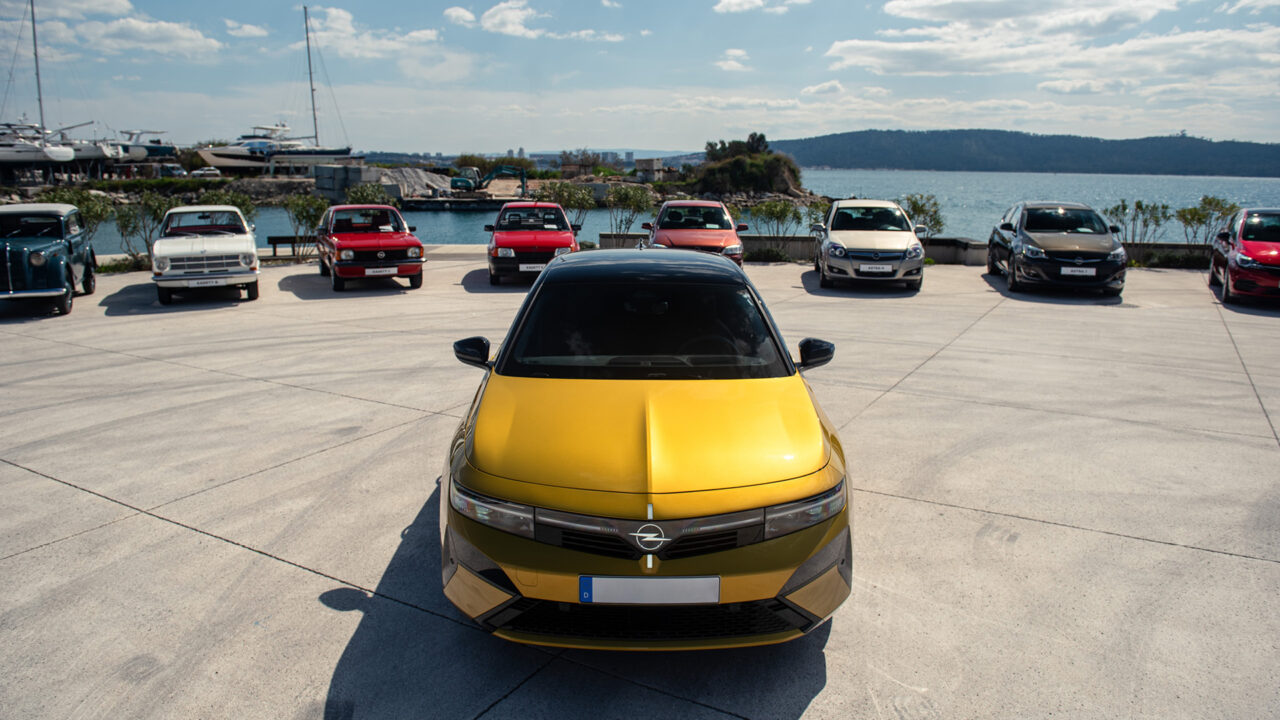
Subcutaneous improvements Astra
The diversification of powertrains is due to the versatile platform on which the Astra sits, shared with the Peugeot 308. The platform has recently undergone a number of improvements, particularly for the plug-in hybrid and electric Astra, but we briefly list all the variants for you.
The hybrid powertrain features a 1.2-liter three-cylinder that has 106 kW (145 hp) of power and 230 Nm of torque, mated to a six-speed automatic transmission and using 48V technology combined with a 0.9 kWh battery for subtle support to reduce consumption.
The news on the plug-in hybrid is bigger – literally and figuratively. Battery capacity was previously 12.4 kWh and is now 17.2 kWh, allowing the Astra to travel 82 kilometers (WLTP) all-electric on paper. A substantial difference compared to the outgoing model.
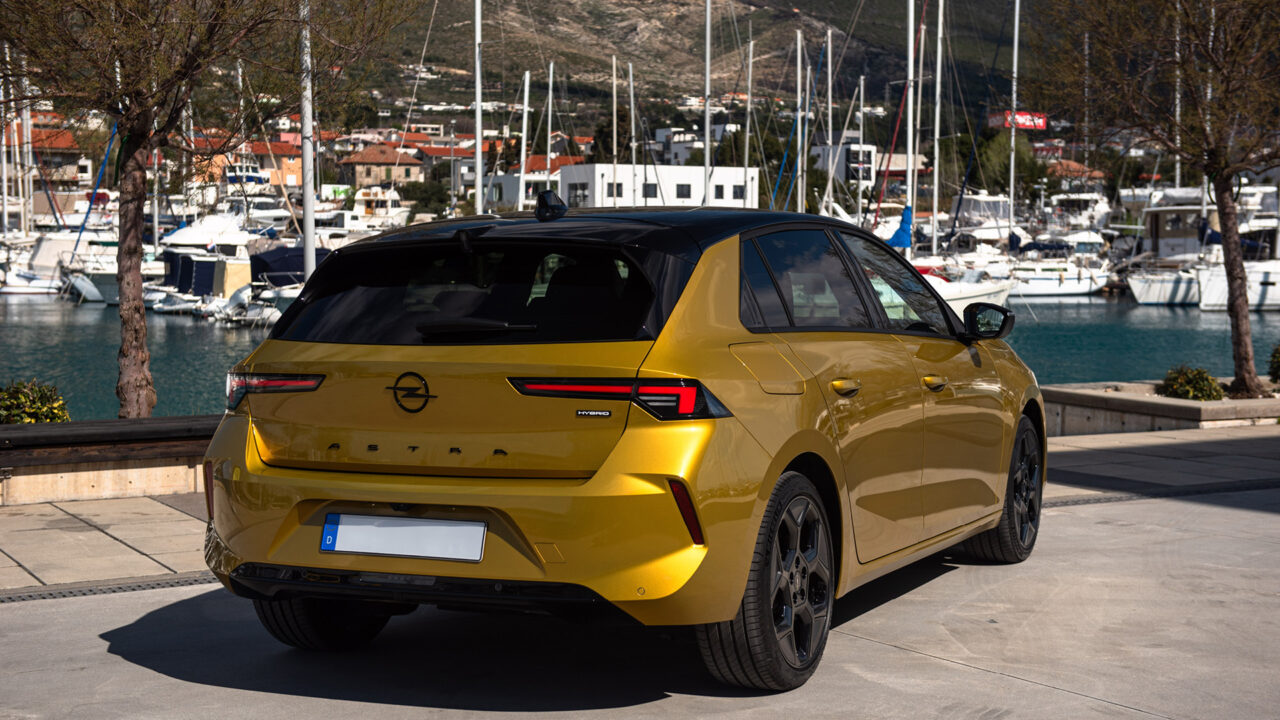
In addition, the power of the electric motor has also increased by 15 hp. The combined output is 196 hp and in addition, you have 250 Nm of torque, which is squeezed out of a 1.6-liter four-cylinder that is mated a seven-speed automatic transmission with a dual clutch – nice for driving comfort.
The electric Astra also makes an improvement. Battery capacity increases from 54 kWh to 58 kWh and that with an increase in weight of only 5 kg. This increases the driving range to 454 km for the electric Astra hatchback, the Sports Tourer gets 445 km according to the factory specification.
The strengths of the plug-in hybrid
That makes the plug-in hybrid the most powerful powertrain, considering the electric variant with 156 hp and 250 Nm of torque sits in between. The engine noticeably provides smoother acceleration than in the electric Astra, which is a nice feeling. It makes the Astra a confident car that is on point the moment you press the gas pedal.
Depending on which mode you drive – electric, hybrid, or sport – the gas pedal either responds fully electric, or the combustion engine jumps in. The transition is smooth if you yourself are also subtle with the throttle. In sportier driving, the engine revs up more emphatically, but without becoming truly distracting. The focus at the shift transitions is palpably on comfort. The gearbox reacts reasonably smoothly the moment you downshift for an overtake, but not super-fast.
The increased battery capacity allows the Astra to drive even further all-electric than before. The 82 kilometers is a respectable range, but it is not the norm within the segment. Take an example from the Seat Leon. This plug-in hybrid has a driving range of 132 kilometers and is offered at a similar price.
Not only is the flexibility to drive fully electric an advantage, but the plug-in hybrid is the variant with the highest towing weight of 1,330 kg. The hybrid powertrain is allowed to tow 1,150 kg braked. So this could make just the difference for your caravan, which, by the way, cannot be hung behind the electric Astra.
Wider driving range is less space on board
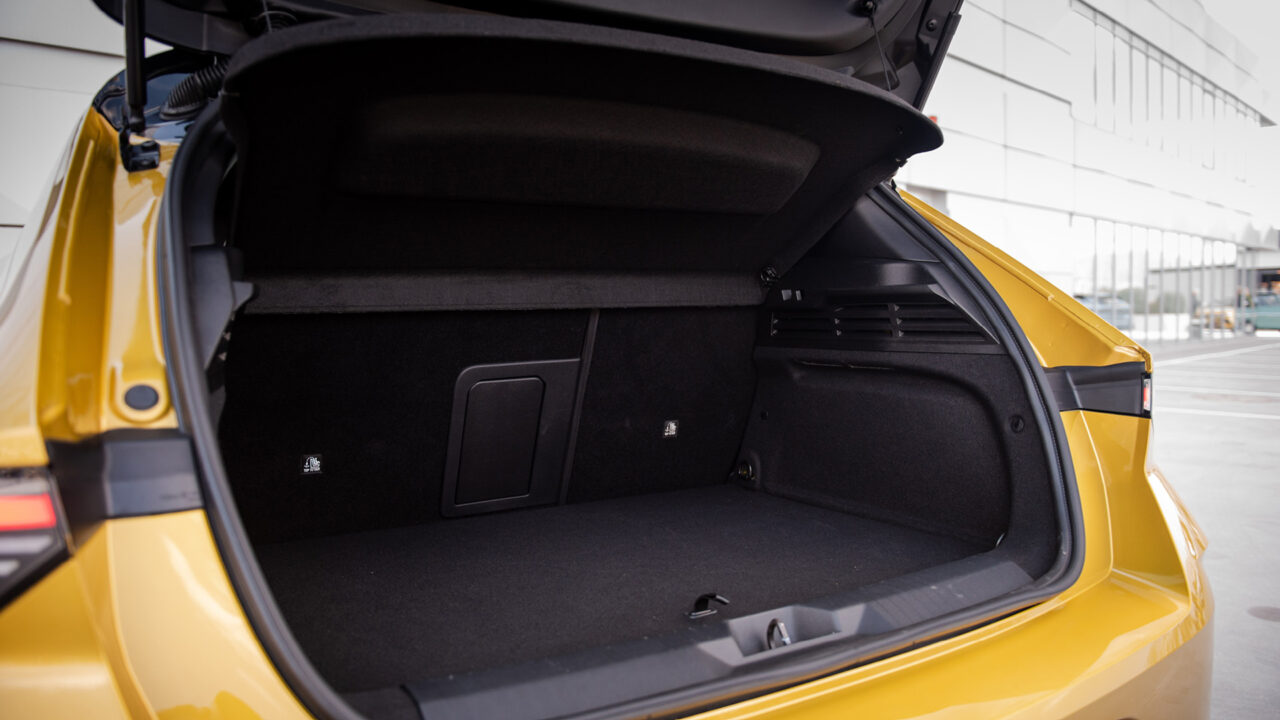
The only concession you will notice in daily use is that the plug-in hybrid has the smallest trunk space. This is a basic 308 liters in the hatchback, while the hybrid boasts 422 liters – a considerable difference comparatively speaking. With the rear seats folded down, a space of 1,236 liters is created; the hybrid adds another 103 liters.
Subtle facelift
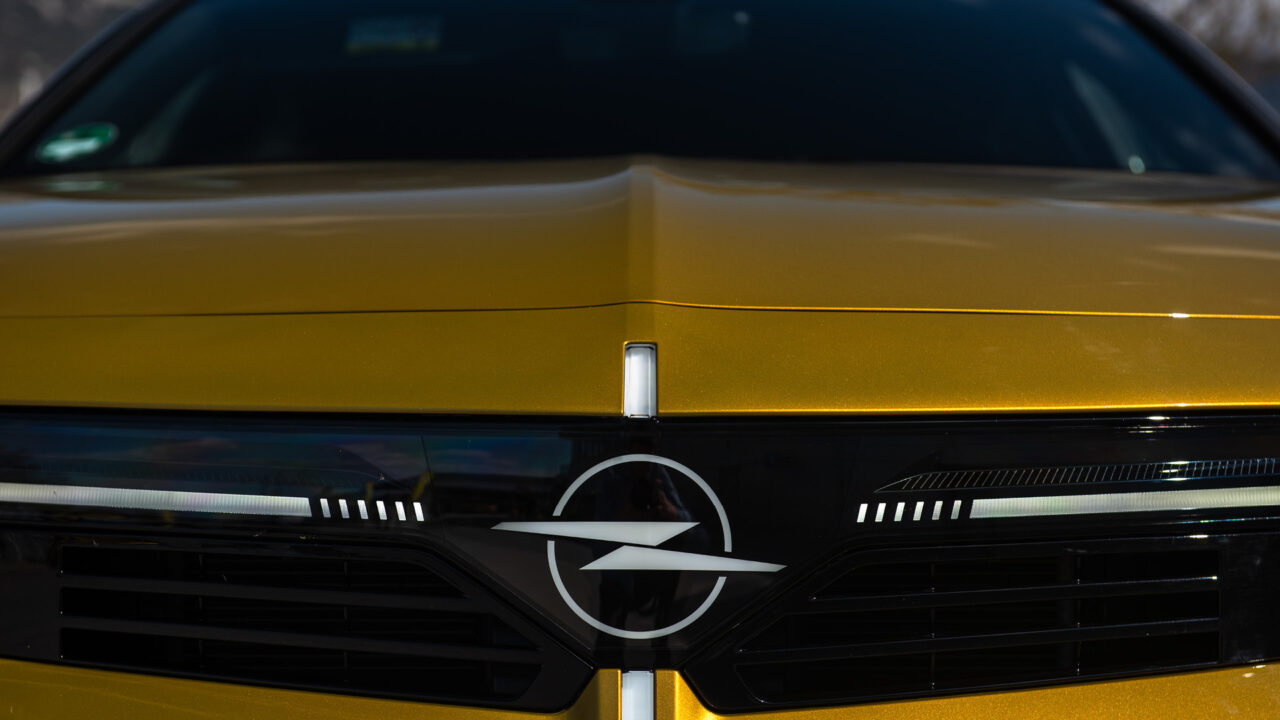
In addition to the subcutaneous improvements, there are also the necessary changes on the exterior and interior. From now on, the nose of the Astra knows its way around very well, even in the dark. In fact, on all versions, the Blitz and Compass are illuminated, making the Vizor an even more recognizable figurehead.
The headlights also feature Intelli-Lux HD lighting. With this technology, the light units feature pixel elements. Start counting, there are 50,000 in total. This precise construction allows the beam to be adjusted very sharply to prevent glare and increase driver visibility.
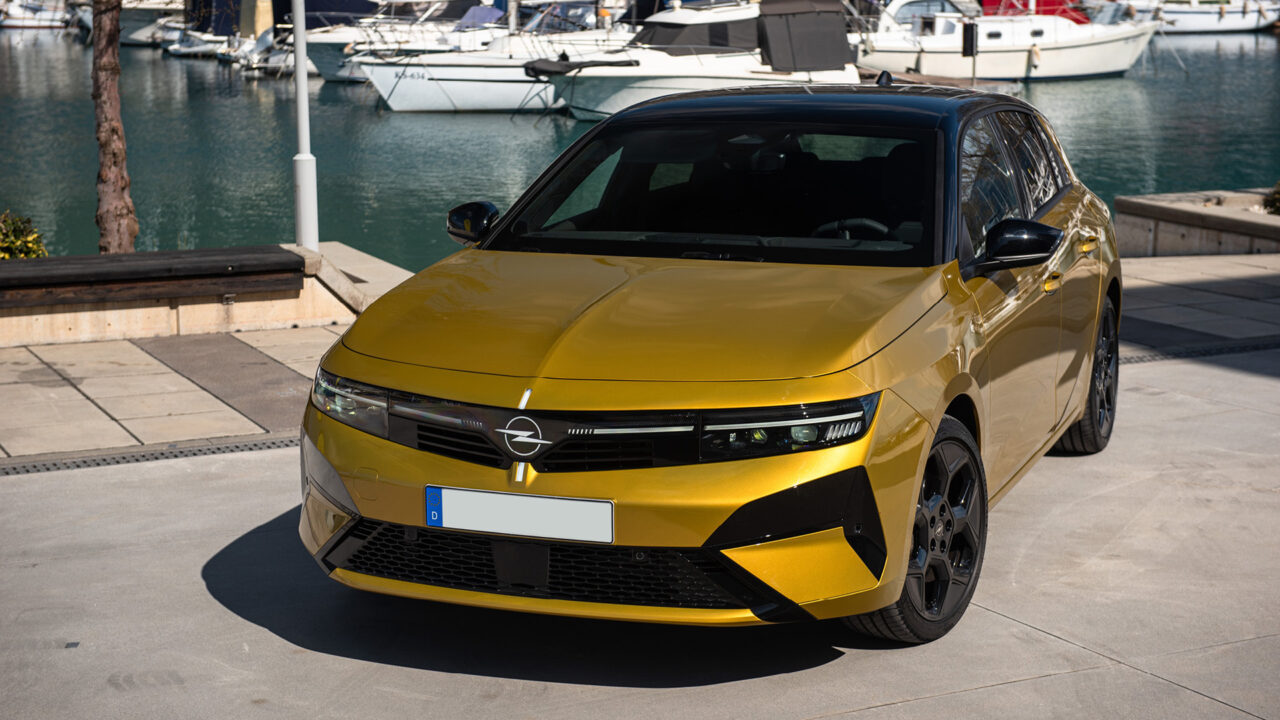
The other exterior changes include new alloy wheels, ranging from 16 to 18 inches, and the removal of chrome accents. In their place are black details. Combined with our gold-colored Astra, however, we do have a sporty-looking car.
Comfort without fuss
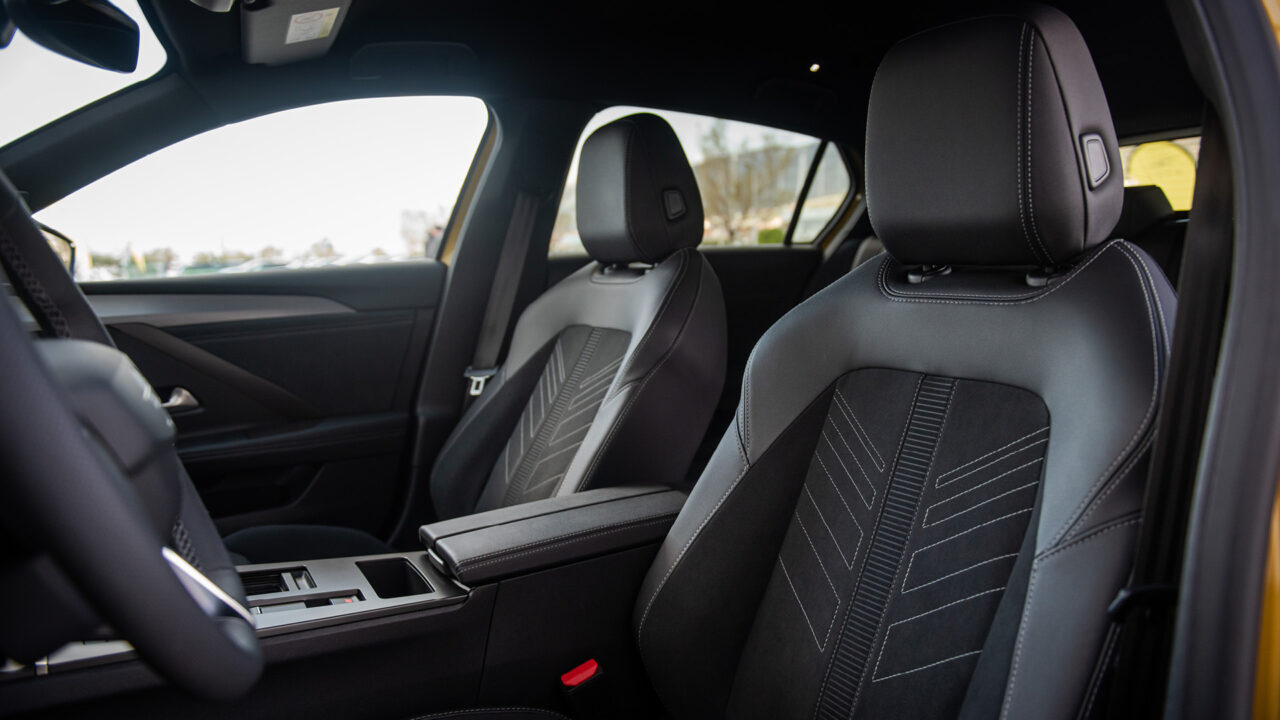
Inside, the Astra continues to do mainly what it was already good at: keeping things comfortable and logical. Depending on the version – starting with the Business Edition – the familiar and appreciated AGR seats are present. These offer ergonomic support and make especially longer journeys more pleasant.
When it comes to infotainment, the Astra has also moved with the times. The system supports over-the-air updates, keeping features and software current without the need to visit the dealer. There is also integration with ChatGPT, which takes voice control a step beyond standard commands. The system also supports wireless Android Auto and Apple CarPlay.
On the center tunnel you will also find – depending on the version – a wireless phone charger. Here it is noticeable that a farewell to the high-gloss black finish, a source of fingerprints, lint and annoying reflections when the sun is sharp.
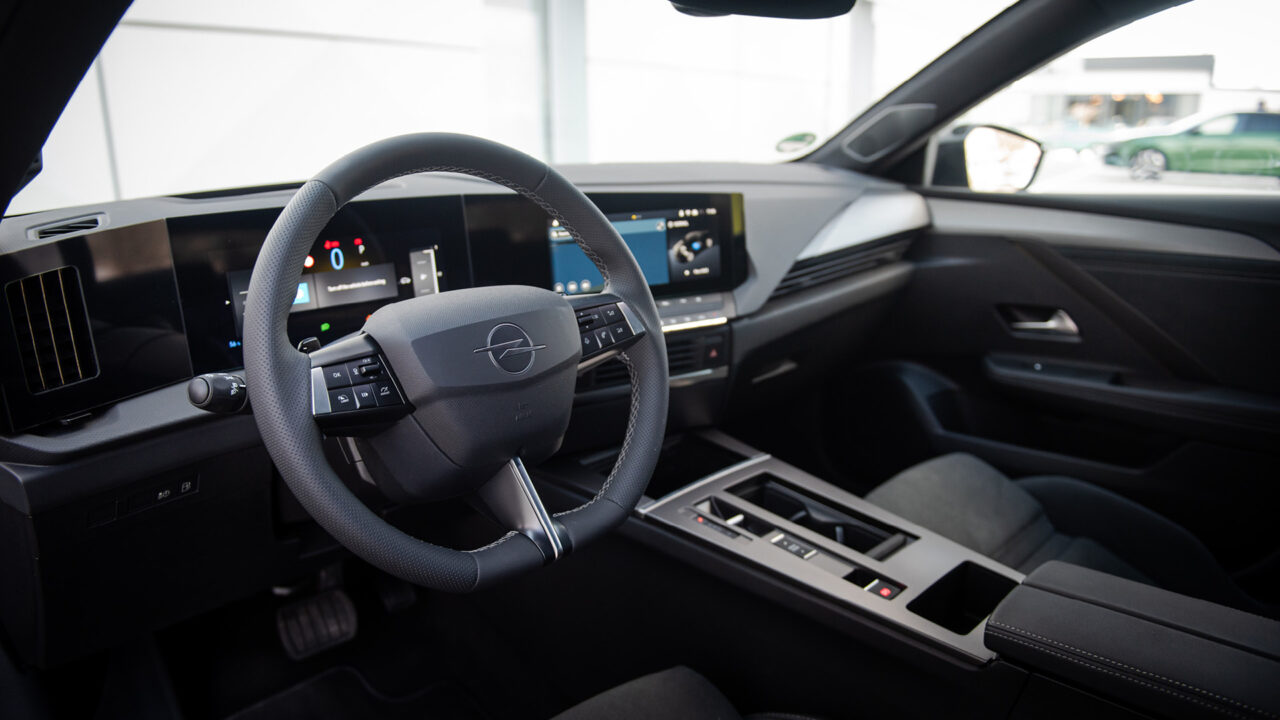
A matte gray surface has taken its place. It’s a subtle difference, but one we can appreciate. So are the physical buttons for climate control, as well as the shortcut for turning on or off – the latter more plausibly – certain driver assistance systems and alerts.
Edition vs. Business Edition: this is what you get extra
We dropped the word a moment ago: Business Edition. The offer of many car manufacturers is shaped to the Dutch market, to make it as interesting as possible for the business driver.
Not only is the plug-in hybrid a fiscally attractive option, the Business Edition also comes with a number of fine additional options. Think keyless entry, a rearview camera and the Multimedia Navi Pro system. Also included are a wireless phone charger and an automatic dimming interior mirror.
In addition, the added value is in acoustic laminated side glass, which reduces noise in the interior and, of course, the AGR seats. On the Sports Tourer, roof rails are also added, while dark-tinted windows in the rear make things just a bit fancier. The best thing about this listing? The prices of the entry-level version – the Edition – and Business Edition are identical, so business drivers can eat their hearts out here.
No middle ground in terms of price either
Anyone expecting the plug-in hybrid to be right in between the other powertrains in terms of price will be disappointed. In fact, it is the most expensive option within the Astra lineup, making it even pricier than the all-electric variant.
The Astra Hybrid starts at 35,499 euros, while the all-electric Astra Electric is available from 36,499 euros. The plug-in hybrid is thus even higher with a starting price of 37,499 euros. This price difference is easily explained, as you actually get two powertrains in one: a gasoline engine and an electric motor with battery pack.
On the other hand, the plug-in hybrid is the most complete car in several areas. For example, you benefit from the highest system power and solid torque, which makes it noticeably smoother in practice than the other powertrains. It also has the highest towing weight, which makes it more interesting for those who regularly drive with a trailer.
Moreover, the automatic transmission feels comfortable and allows the plug-in hybrid to travel short distances fully electric, for example in town or during commutes. At the same time, you always have the gasoline engine as a backup for longer trips, without depending on charging stations.
For business drivers, in addition, the additional taxable benefit still plays a role, which may actually make the plug-in hybrid interesting in certain cases in terms of monthly costs.
How does the Astra compare?
In a comparison with competitors, it is noticeable that Opel has its act together. Peugeot benefits from similar under-the-hood technology and is thus close behind with the 308 Berline and 308 SW, but is just a bit more expensive across the board.
What is particularly striking is how complete Opel’s offering is. Together with Peugeot, the brand is among the few players in this segment that offer hybrid, plug-in hybrid and all-electric powertrains within a single model range. The situation is different with other brands. Volkswagen, for example, does not offer such a similar palette with the Passat, nor does Skoda know how to offer such a thing.
Kia still comes closest, but is also forced to spread this across multiple models. Think of the EV4 as a competitor to the Astra Electric and the K4 as a competitor to the (hybrid) Sports Tourer.
Coincidentally, the EV4 and the Astra both have batteries with a capacity of 58 kWh and get around 440 kilometers. So they are evenly matched, but the Astra is cheaper: 36,499 euros versus 37,695 euros. The comparison between the Astra Hybrid and the K4 is as follows: 35,499 euros versus 35,495 euros.
How does the Opel Astra drive?
On paper, the plug-in electric hybrid has everything to keep the driver happy. With a system output of 143 kW (196 hp) and 250 Nm of torque, the Astra is smooth enough for daily use. The sprint to 100 km/h takes 7.6 seconds.
In practice, what is especially striking is how quietly the Astra uses its electric side. At low speeds, it drives quietly and smoothly. As soon as more power is required, the 1.6-liter petrol engine kicks in. This transition is generally smooth, although when accelerating strongly you notice that the engine jumps in. It does not become disturbing; Vauxhall clearly chooses comfort over sportiness.
The 7-speed automatic transmission matches this well, shifting unobtrusively. On the road, the Astra remains stable and predictable, with a suspension geared toward comfort and long distances. The steering wheel sits comfortably in the hand and feels light without becoming distant. Combined with the AGR seats, you experience a relaxing driving experience.
Conclusion: middle ground or intermediate solution?
Basically, the Opel Astra remains what it has always been: an accessible and versatile everyman’s friend. Within that wide range, the plug-in hybrid feels like the logical middle ground on paper. In practice this is more nuanced, but in return for less luggage space and a higher purchase price, there are also a number of advantages. In any case, the German brand offers you the choice, as an everyman’s friend would.