
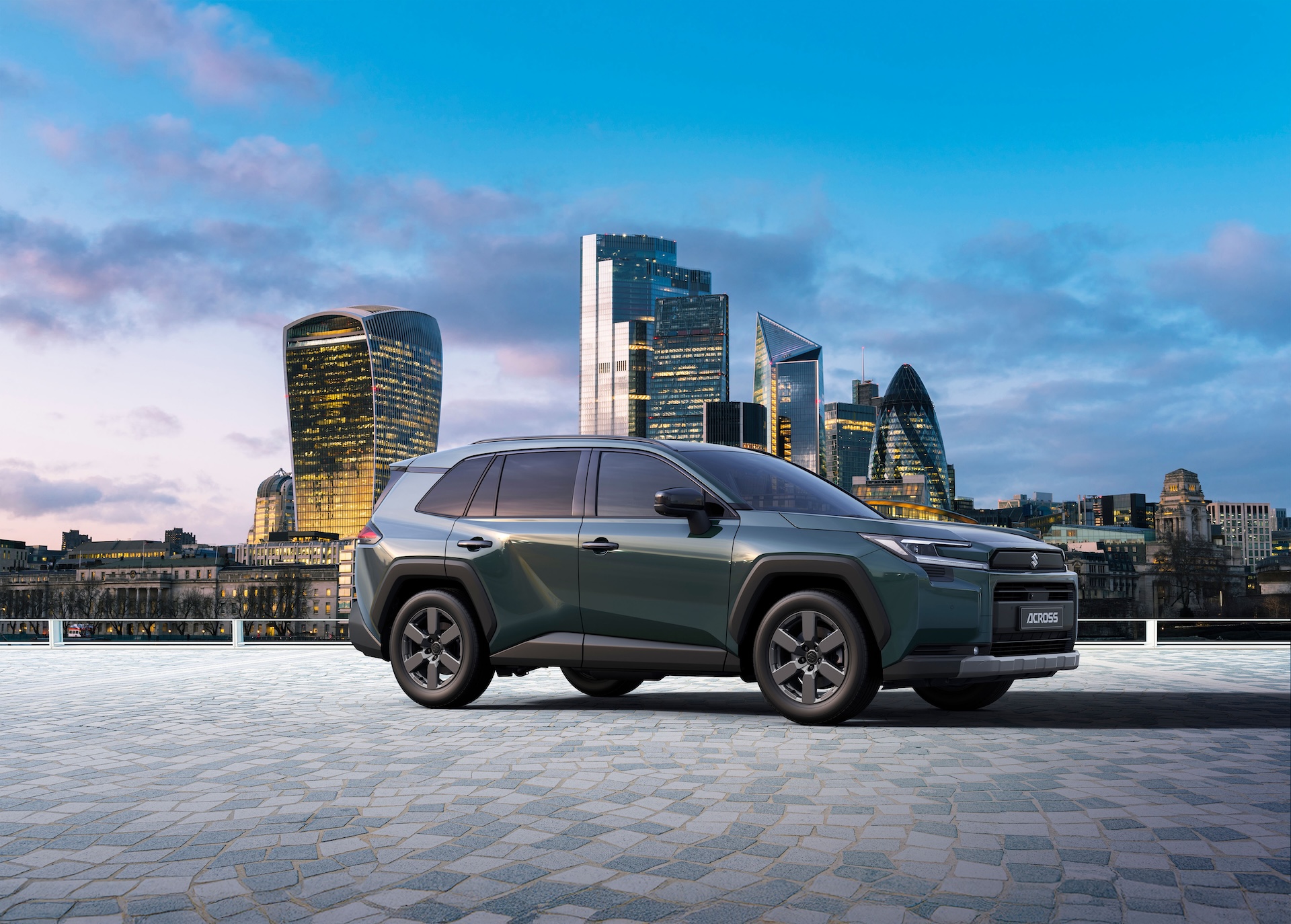
New Toyota RAV4 and Suzuki Across: cannibalism?
Suzuki Across as the Toyota RAV4
The fact that in the Netherlands both the Suzuki Across and the Toyota RAV4 receive as much as 10 years of factory warranty need not in itself cause direct cannibalism between the two models. It depends mainly on pricing, positioning and customer preferences. That both cars offer the same long warranty mainly means that both brands want to give confidence to buyers in the exciting segment of plug-in hybrid SUVs. In the Netherlands, such a long warranty is increasingly used as a buying argument, especially for hybrid and electric cars. The warranty limits risk for buyers and can make the total cost of ownership more attractive. Residual value also remains good.
Other factors also come into play
Yet warranty is only one factor in a buyer’s choice. Other factors such as price, equipment level, brand perception, appearance and dealer experience play just as big a role. If two technically nearly identical vehicles offer the same length of warranty, the decision often falls back on pricing, brand preference and equipment level. The previous generation RAV4 and Across were close in terms of starting price, sometimes with the Suzuki variant actually more richly equipped as standard. Toyota, on the other hand, offered a bit more options.
The powertrain
Developed in collaboration with Toyota, the new Suzuki Across shares its technical base with the latest generation Toyota RAV4 Plug-in Hybrid. That means the Across benefits from Toyota’s hybrid expertise, including the 2.5-liter four-cylinder gasoline engine and the E-Four all-wheel drive system. In doing so, Suzuki chooses its own design interpretation and equipment strategy, but under the skin the similarity to the new Toyota RAV4 is evident. Both models use a plug-in hybrid powertrain with a system output of 227 kW (304 hp) and electric support on both the front and rear axles.
Plug-in hybrid powertrain with 22.7 kWh battery
Central to the new Suzuki Across is the updated plug-in hybrid powertrain with a battery capacity of 22.7 kWh. This relatively large battery allows daily trips to be largely electric, depending on use and conditions. For longer distances, the system automatically switches to a combination of gasoline and electric propulsion.
First encounter of new TOYOTA RAV4 (2026): lots to tell! – AutoRAI TV
The specifications
The powertrain consists of a 2.5-liter four-cylinder gasoline engine (105 kW / 143 hp) with direct and indirect injection. When combined with two electric motors, a total system output of 227 kW (304 hp) is created. The sprint from 0 to 100 km/h takes 6.1 seconds, while the top speed is 180 km/h.
The electric motor on the front axle delivers 150 kW (204 hp) and 271 Nm. The electric motor on the rear axle delivers 40 kW (55 hp) and 123 Nm. Together, they provide electric all-wheel drive with no mechanical connection between front and rear axles. The integration of the Power Control Unit and DC/DC converter in the front eAxle makes the powertrain more compact. The use of silicon carbide power semiconductors reduces energy losses and increases efficiency.
E-Four all-wheel drive with Trail mode
The Suzuki Across comes standard with E-Four all-wheel drive. The system continuously distributes torque between front and rear axles depending on grip and driving conditions. It also takes understeer and oversteer into account. In addition to the NORMAL, ECO and SPORT driving modes, the Across features an E-Four TRAIL mode. In this mode, torque distribution is adjusted for driving on loose or slippery surfaces. Braking and drive forces are controlled in an integrated manner to optimize traction.
Dimensions and space
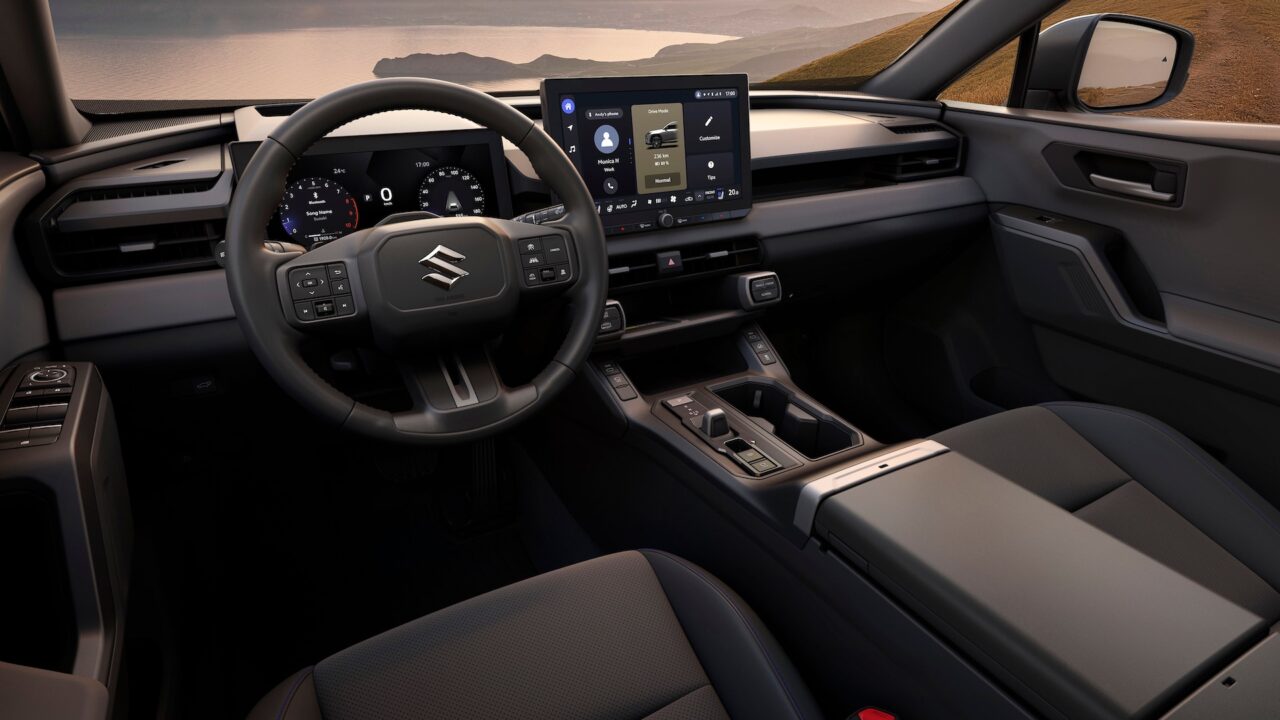
With a length of 4,600 mm, a width of 1,855 mm and a height of 1,685 mm, the Suzuki Across is in the mid-segment of the SUV market (D-segment). The wheelbase is 2,690 mm, providing a spacious seating position for both front and rear passengers. Luggage space measures 446 liters according to the VDA method with the rear seats in use. Folding down the rear seats creates additional cargo space for larger items. The compact placement of the battery preserves the functionality of the luggage compartment. The electrically operated tailgate can be opened hands-free via foot movement. The maximum towing weight is 2,000 kg (braked), making the Across suitable for caravan or trailer use.
Design Suzuki Across
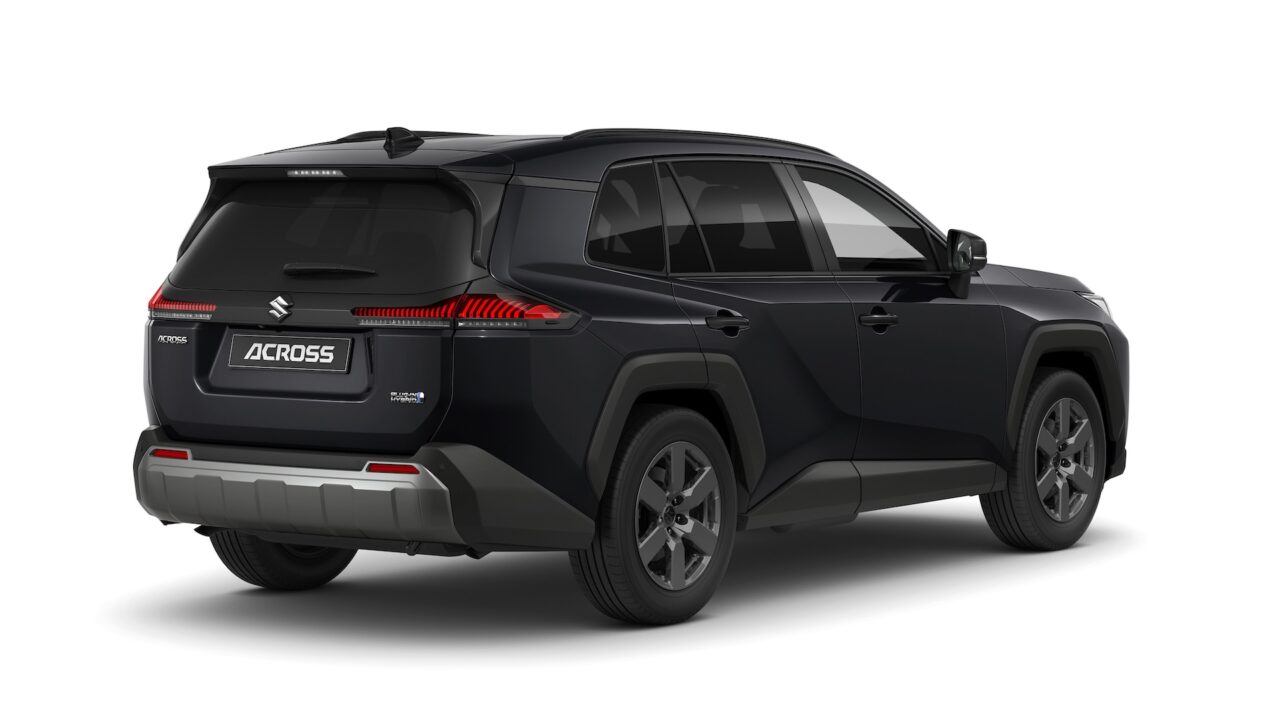
The new Suzuki Across gets a recognizable front end with a high-set grille and a so-called hammerhead nose. The wide stance and pronounced wheel arch guards underscore the SUV character. Track width is 1,595 mm at the front and 1,615 mm at the rear. The minimum turning radius is 5.7 meters. The Across sits on 18-inch wheels with tire size 235/55R18. Suzuki delivers the new Across in Massive Gray, Ever Rest, Super White or Attitude Black colors. Those who want more color, such as red for example, will have to rely on the Toyota RAV4.
Interior with ‘island architecture’
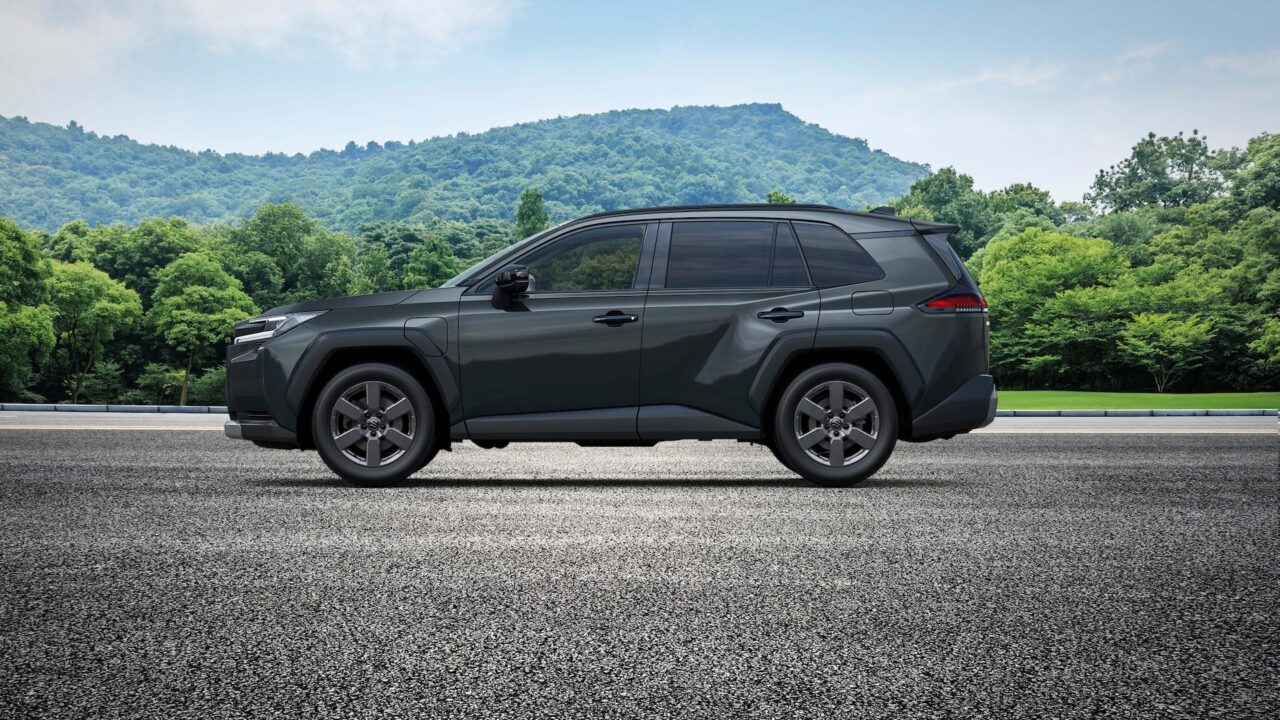
The interior of the Suzuki Across is built according to the principle of “island architecture. Important controls are logically grouped around the driver. The 12.3-inch digital instrument cluster is fully configurable. The central touchscreen measures 12.9 inches and controls navigation, audio and climate control. Apple CarPlay and Android Auto are supported. A head-up display projects driving information onto the windshield at a virtual distance of four to six feet. Three display styles are available.
The driver’s seat is ten-way power-adjustable and has a two-position memory function. The passenger seat is eight-way power-adjustable. Both front seats are heatable in three positions. The interior features five USB-C sockets and a wireless charging point for smartphones.
Driving assistance systems
The new Suzuki Across is equipped with a comprehensive package of driver assistance systems. The Pre-Collision System uses radar and camera to detect pedestrians, cyclists and cross traffic. If necessary, the system can warn, automatically brake or provide steering assistance. Emergency Steering Assist supports evasive maneuvers within the lane. Dynamic Radar Cruise Control automatically maintains distance from ahead and can brake to a stop. The system uses navigation data to anticipate situations where speed needs to be adjusted.
In addition, the Suzuki Across features include Lane Tracing Assist, Lane Departure Alert, Lane Change Assist, Front Cross Traffic Alert, Proactive Driving Assist, Driver Monitor and a panoramic camera with 3D view. Prices are not yet known.
Suzuki Across technical data
Form of drive: plug-in hybrid
Gasoline engine: 2.5-liter four-cylinder (A25A-FXS)
Displacement: 2,487 cm³
Borex stroke: 87.5 x 103.4 mm
Compression ratio: 14.0:1
Maximum power of gasoline engine: 105 kW (143 hp)
Maximum torque of gasoline engine: 227 Nm
Fuel injection: indirect and direct injection
Front electric motor: 150 kW (204 hp), 271 Nm
Rear electric motor: 40 kW (55 hp), 123 Nm
System power: 227 kW (304 hp)
Transmission: E-CVT automatic
Drive: E-Four all-wheel drive
Battery capacity: 22.7 kWh
Fuel tank: 55 liters
Length: 4,600 mm
Width: 1,855 mm
Height: 1,685 mm
Wheelbase: 2,690 mm
Front track width: 1,595 mm
Rear track width: 1,615 mm
Minimum turning radius: 5.7 m
Number of seats: 5
Luggage space (rear seats up, VDA): 446 liters
Tire size: 235/55R18
Front brakes: ventilated discs
Rear brakes: ventilated discs
Front suspension: MacPherson with coil springs
Rear suspension: double wishbones with stabilizer
Maximum authorized mass: 2,570 kg
Towing weight braked: 2,000 kg
Towing weight unbraked: 750 kg
0-100 km/h: 6.1 seconds
Top speed: 180 km/h
Emission standard: Euro 6e-bis