New Mercedes-Benz VLE capitalizes on (Chinese) trend: the super-luxury passenger bus is on the rise
Let’s be clear right away: this type of car is particularly popular in China. The big car manufacturers from that country have been scoring for years with spacious “vans” equipped with an interior that would not look out of place in a top limousine. The German brand is now clearly capitalizing on that trend. According to Mercedes, it combines the space and versatility of a luxury MPV with the handling and comfort of a limousine. So feel free to think of the VLE as an extremely spacious E-Class with all the luxury and comfort you would expect with it.
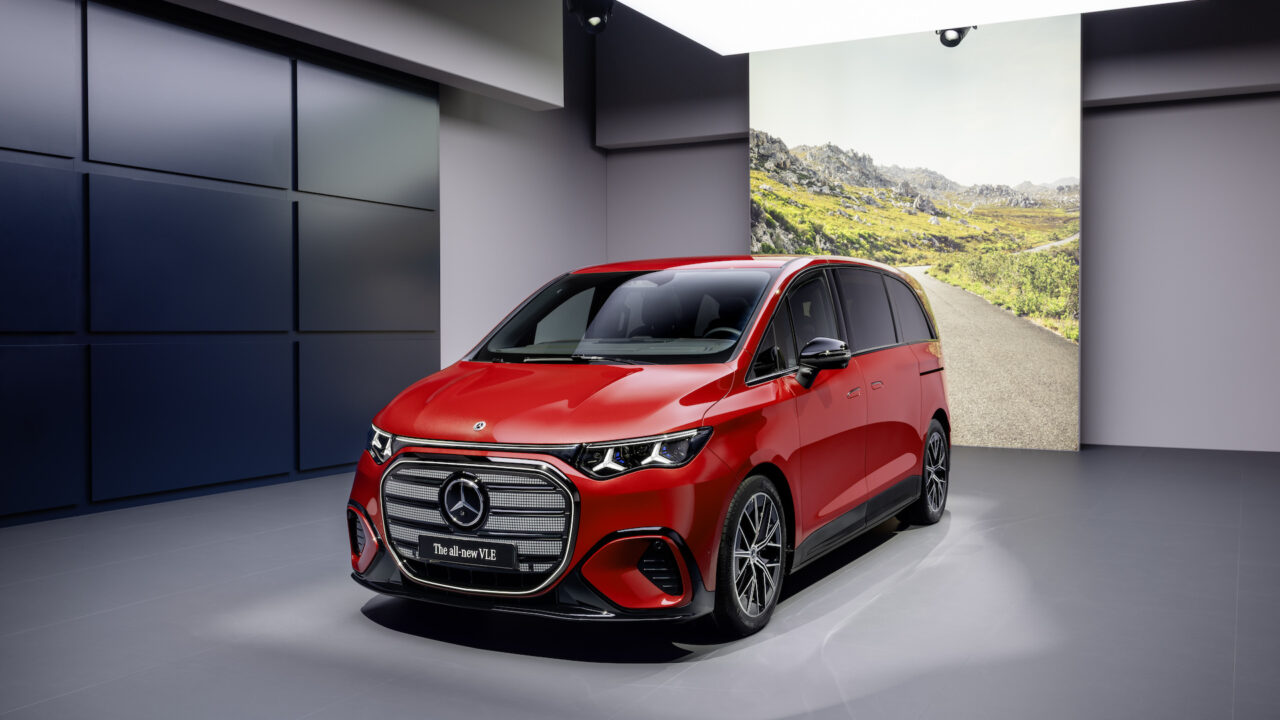
Remarkably, the new Benz will have its own bodywork and thus looks different from the upcoming Vito. The latter focuses even more on employability with a straighter, more square rear end, while the VLE is allowed to be slightly more elegant and gets a slightly sloping roofline. However, both models do share Mercedes-Benz’s new electric VAN.EA architecture. Read: very large battery packs for plenty of driving range, more compact electric motors and room for things like air suspension and all-wheel steering.
Mercedes-Benz VLE consumes less: 700 kilometers per charge
The VLE (by the way, the E does not stand for “electric,” but for this model’s place in the Mercedes-Benz lineup, as in the E-Class) gets a new lithium-ion battery with a usable capacity of 115 kilowatt hours. Combined with the more efficient powertrain and reduced drag, this results in a WLTP range of more than 700 kilometers. According to Mercedes-Benz, energy consumption is under 20 kWh per 100 kilometers – remarkably low for a tall car of this size. Converted, according to the manufacturer, that equates to the equivalent of less than two liters of diesel per 100 kilometers.
Basically, each VLE 300 gets a newly developed electric powertrain with a permanent-magnet synchronous motor with 200 kW (272 hp) of power on the front axle. Four-wheel-drive variants get a second electric motor on the rear axle. This acts as an intelligent “boost” drive: when extra power or traction is needed, the system automatically engages. If the power demand is low, the rear drive is disconnected to reduce resistance and thus optimize energy consumption and range. The VLE 400 delivers up to 305 kW (415 hp) of power; the maximum towing weight is 2,500 kilograms.
800 volts and smart air suspension: better suited for long trips
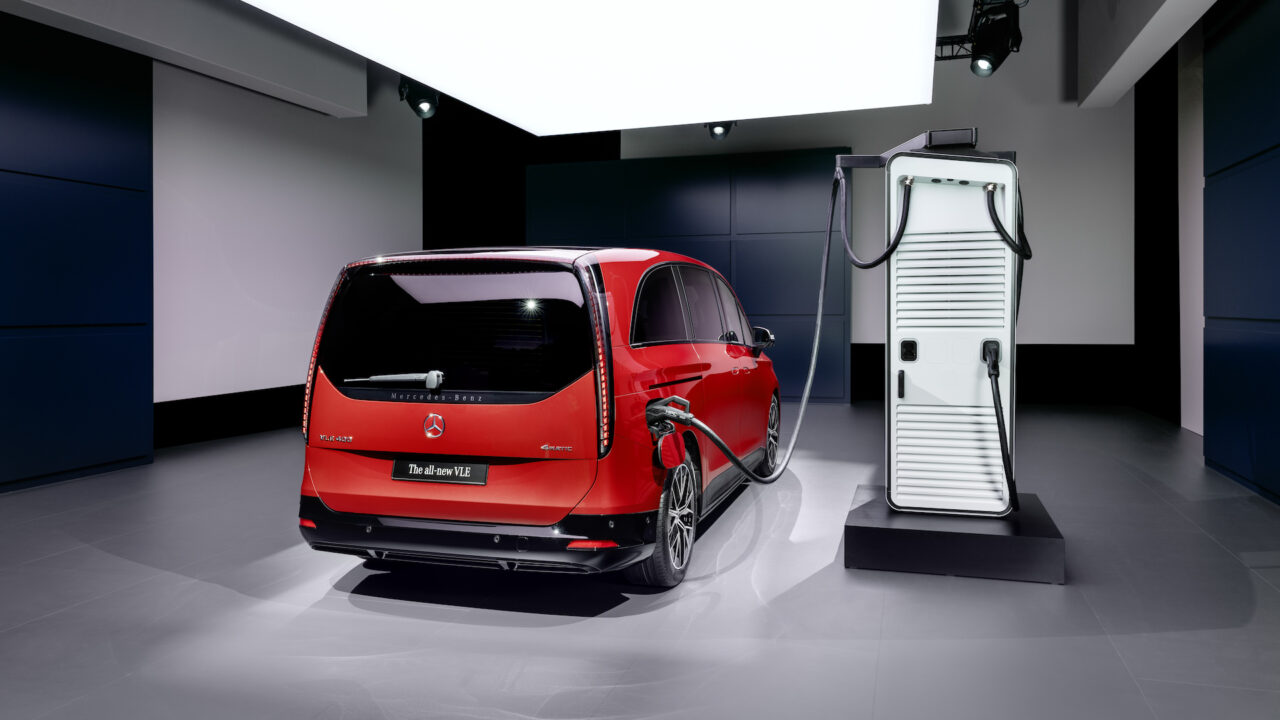
Although this type of exceptionally luxurious passenger van will be widely used in the Netherlands as a Schiphol or hotel shuttle, Mercedes-Benz says it has put a lot of work into making the VLE suitable for longer journeys. Thanks to the 800-volt on-board system, for example, it can charge very quickly: at a suitable fast-charging station with a capacity of up to 300 kW, you can top up about 355 kilometers of driving range in about 15 minutes.
You can also see from the chassis options that the Mercedes-Benz VLE was emphatically developed as a comfortable long-distance cruiser. For starters, the brand supplies the car in two lengths: the VLE with “short” wheelbase is 5.31 meters long, the extended version measures 5.48 meters. Optionally, it features Airmatic air suspension with intelligent damping and level control. For the first time, this system uses map data from Google Maps to optimize ride height. Thus, on highways, the car positions itself as low as possible to reduce drag and energy consumption.
Another innovation is a Car-to-X feature that recognizes speed bumps (using data shared by other cars via the cloud) and pre-adjusts damping for extra comfort, especially for rear-seat passengers. Rear axle steering is also available: with a maximum steering angle of seven degrees, the turning circle is reduced by about two meters to 10.9 meters. That still makes the hefty VLE quite maneuverable.
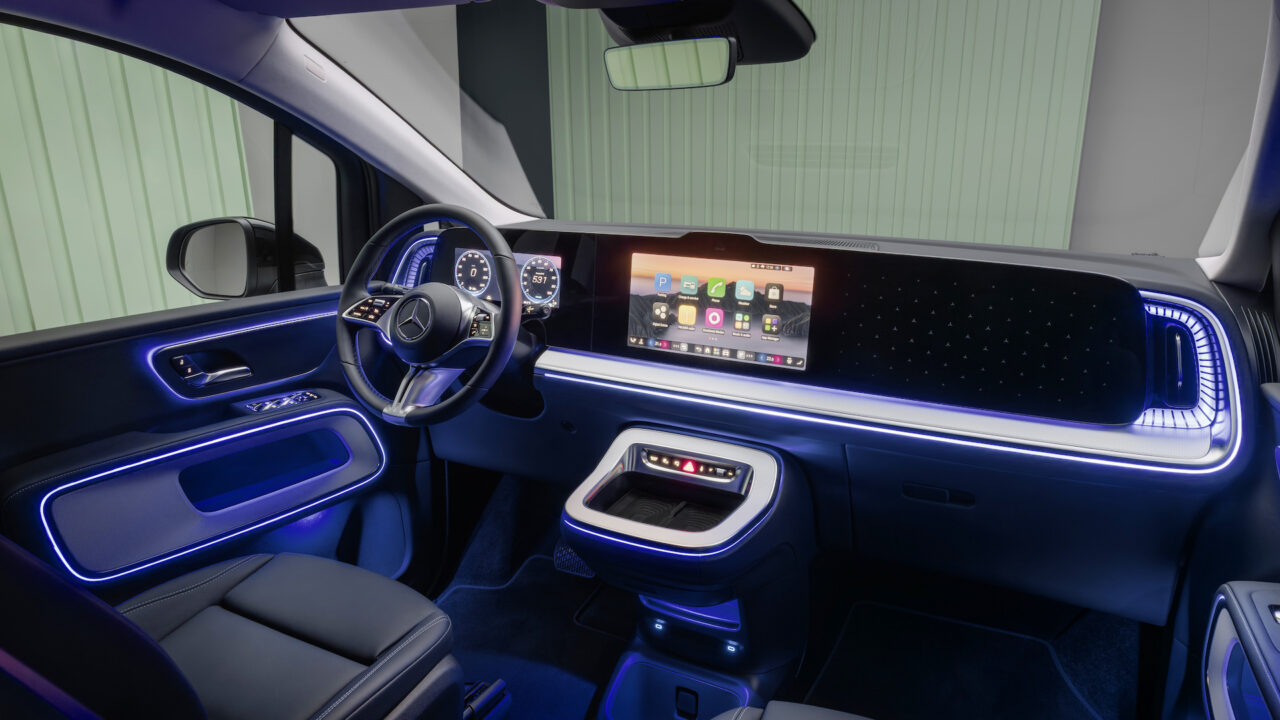
Mercedes VLE: business class interior with ceiling screen
For the front occupants, the new generation of the Mercedes-Benz User Experience (MBUX) infotainment system is available. The dashboard can be equipped with the “Superscreen,” which combines three displays under one large glass surface. The infotainment system also supports a virtual assistant with generative AI that can hold natural conversations and answer complex questions.
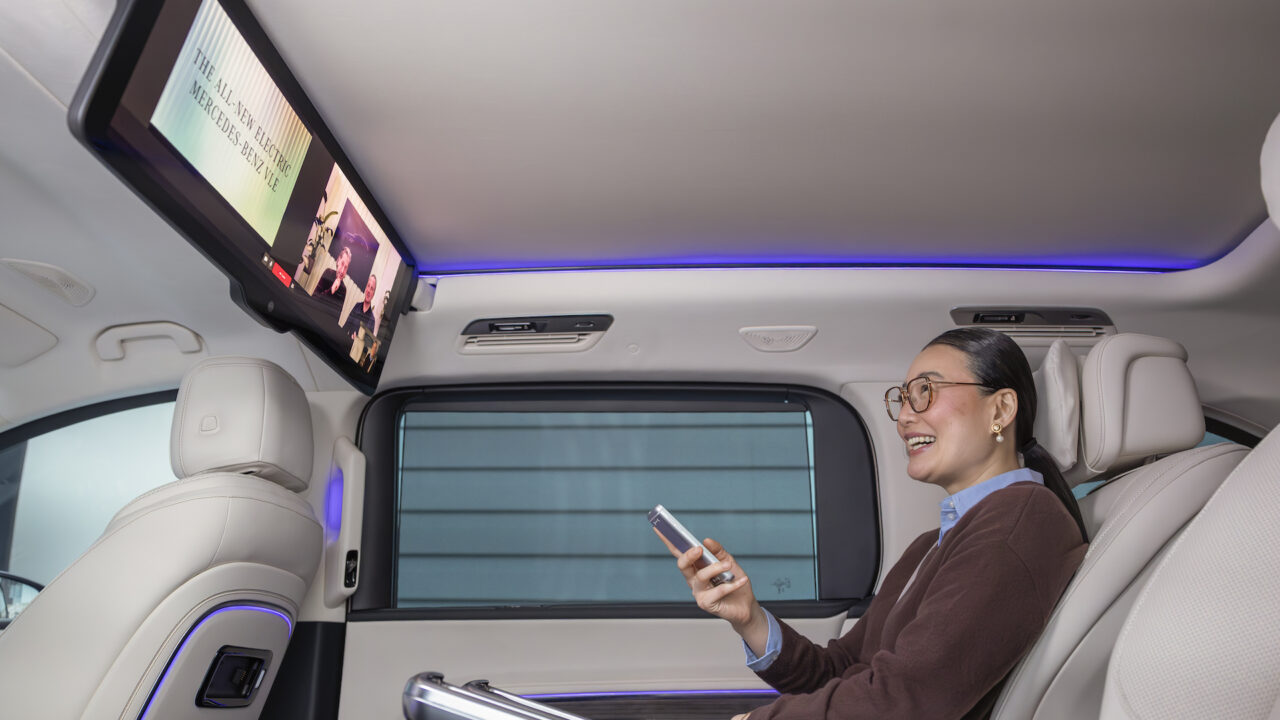
Furthermore, you can equip the VLE inside like a top-class limousine: a large panoramic screen that can slide out of the ceiling is available for the rear passengers. This allows you to turn the car into a mobile cinema or workspace, complete with video conferencing, streaming services and games.
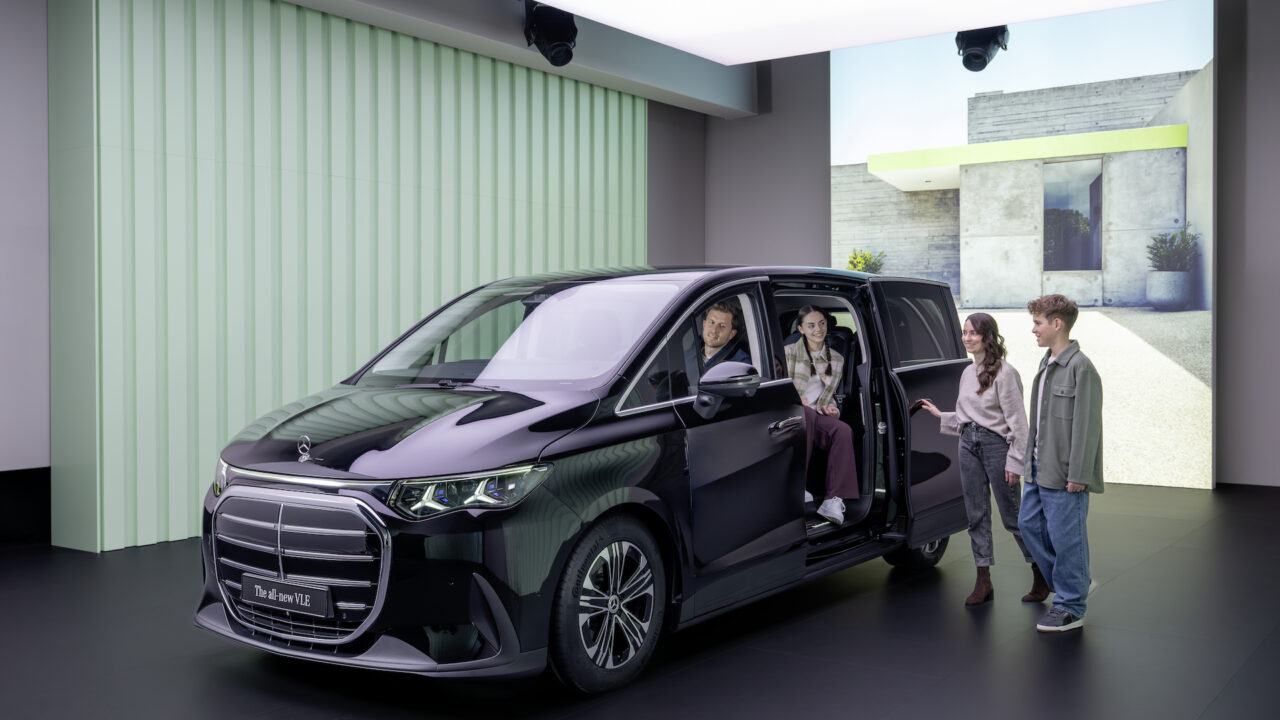
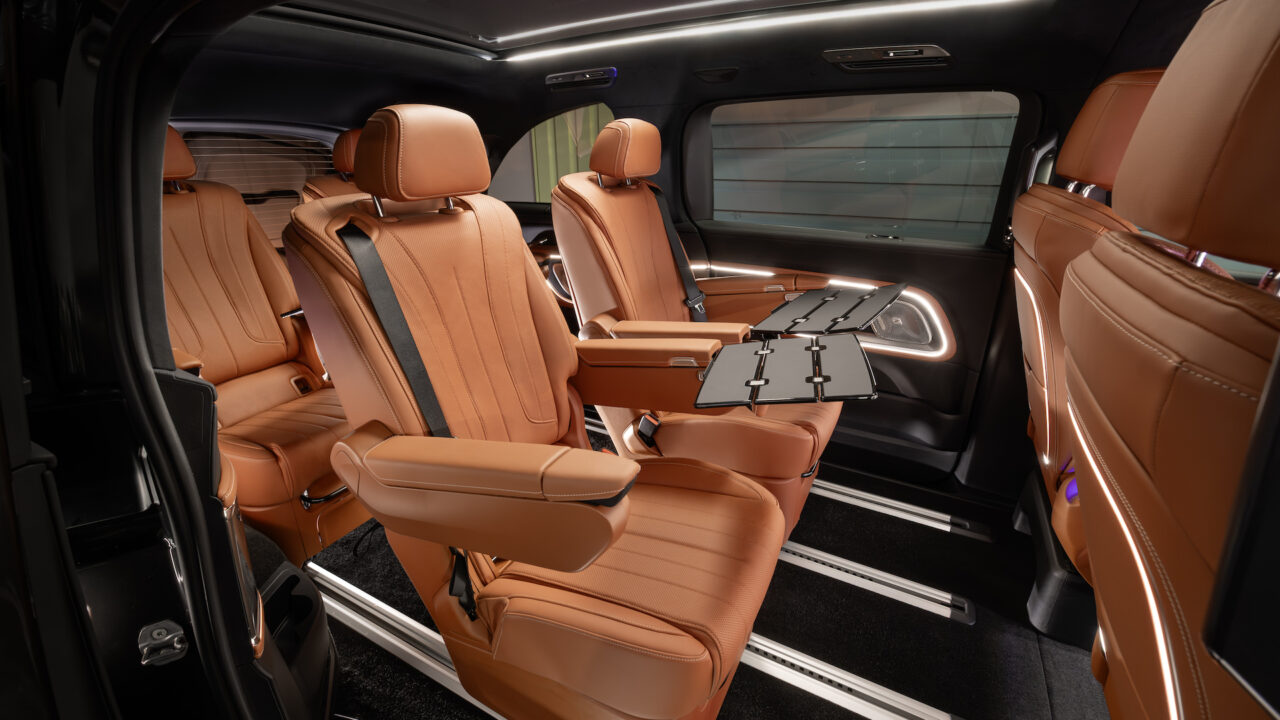
Interestingly, Mercedes has designed three different interiors. The standard furniture is fairly standard as you see now in an EQV, the “middle” seat type can be identified by the “scarf design” on the backrests (see photo below) while the top seats are super-deluxe, complete with footrests and soft pillows. Depending on the configuration, five to eight seats are possible. The Roll & Go concept allows you to easily shift or remove the seats. Owners of the V-Class complained, according to Mercedes, that the seats were too heavy to lift, so the brand mounts wheels underneath them in the VLE. Once you remove the seats from the car, the most practical configuration creates a cargo space of up to over 4,000 liters.
Striking design with GLC nose and starburst
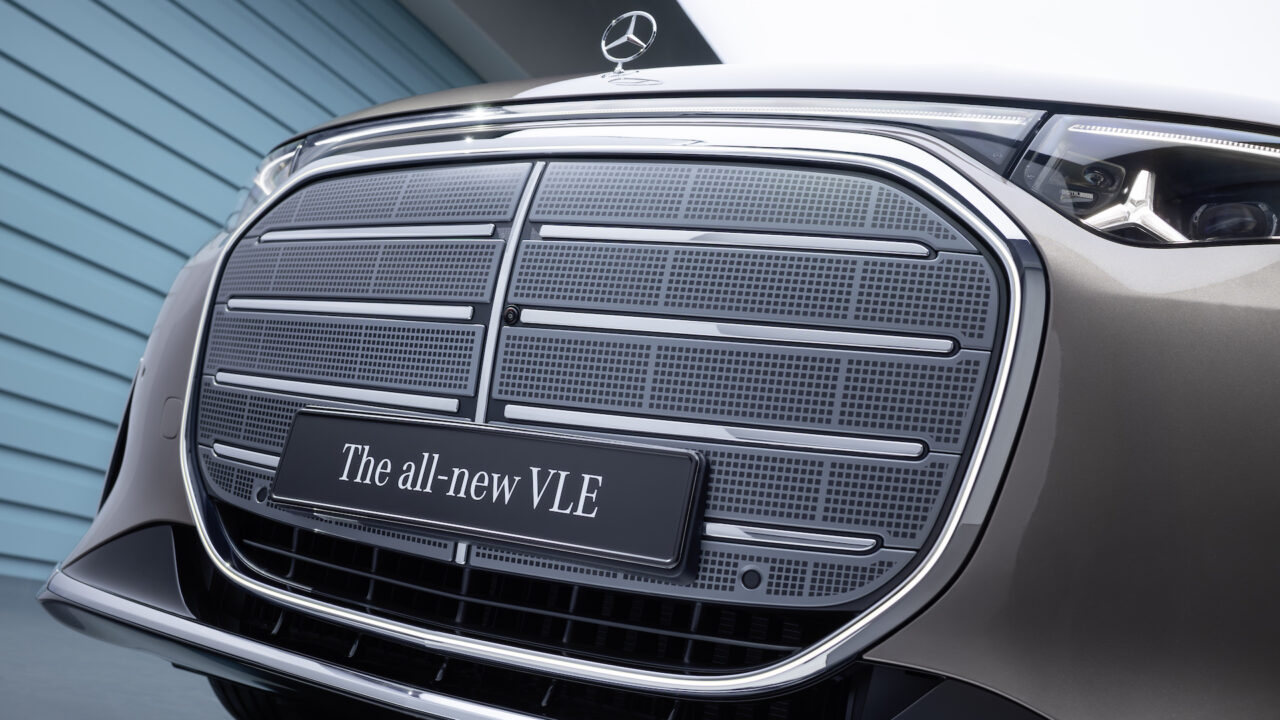
The design of the VLE is striking but what is in any case clear: the luxury space car taps from the same kegs in terms of design as the new GLC and the thoroughly redesigned S-Class. The hefty grille with illuminated frame and a characteristic light signature full of starburst is synonymous with the latest models from Mercedes-Benz these days. Also significant is the fact that – in a good sense almost old-fashioned – an upright star protrudes from the hood. Customers in China in particular reportedly value this, so that they can also see from behind the wheel that you have chosen a top-class product from “Das Haus.
The new Mercedes-Benz VLE will be available in the Netherlands in mid-2026. What the prices will be in our country is not yet known at the time of writing, but in the German-language press information the brand speaks of a starting price of “approximately 79,000 euros. Well, that too shows that we should not see the VLE as a “converted van,” but as a full-fledged passenger car including its price tag. Incidentally, a second model in Mercedes-Benz’ line of super-luxury space cars will follow later; this larger VLS operates one step higher than the VLE.