
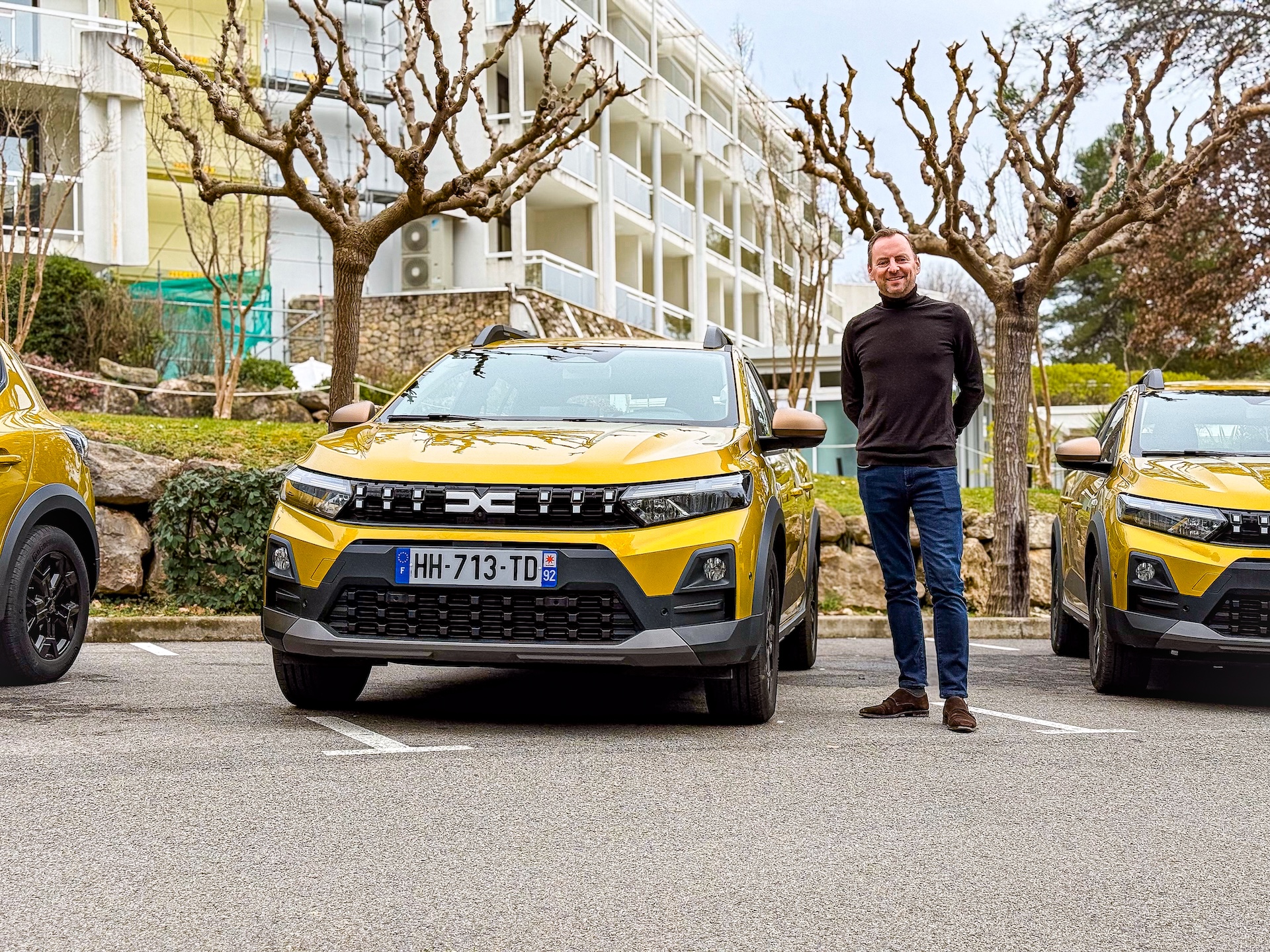
Dacia: “We are going to make huge strides”
Dacia, Renault Group’s sales cannon
Dacia is selling nicely. In 2025, the brand sold 697,408 cars, up 3.1 percent from 2024. In Europe, the brand has a 7.9 percent market share and that is partly due to the success of the Sandero. That model has been the best-selling model to individuals in Europe since 2017, or customers who buy a car with their own money. By 2025, Dacia sold 289,295 units worldwide. Then there is the Dacia Spring Electric, the most popular EV in the A-segment with 35,034 registrations in 2025. You could actually say that all of Dacia’s models are selling well. The Jogger (73,695 units), Duster (193,974 cars) and Bigster (67,573 units) all did extremely well in 2025.
C-segment
For Dacia, the Bigster is a special model, because with it Dacia operates in the C-segment. In fact, the Bigster is the epitome of the up-market movement that Dacia is currently undergoing. Dacia is becoming more and more mature. The Bigster’s success in the C-segment tastes like more. Blok explains where things are going with Dacia. “The Duster sees Dacia as a B-segment SUV. The Bigster is a C-segment SUV. In the latter segment we want to grow extra. We are therefore coming up with a new model in the C-segment,” Blok said.
Code name C-NEO
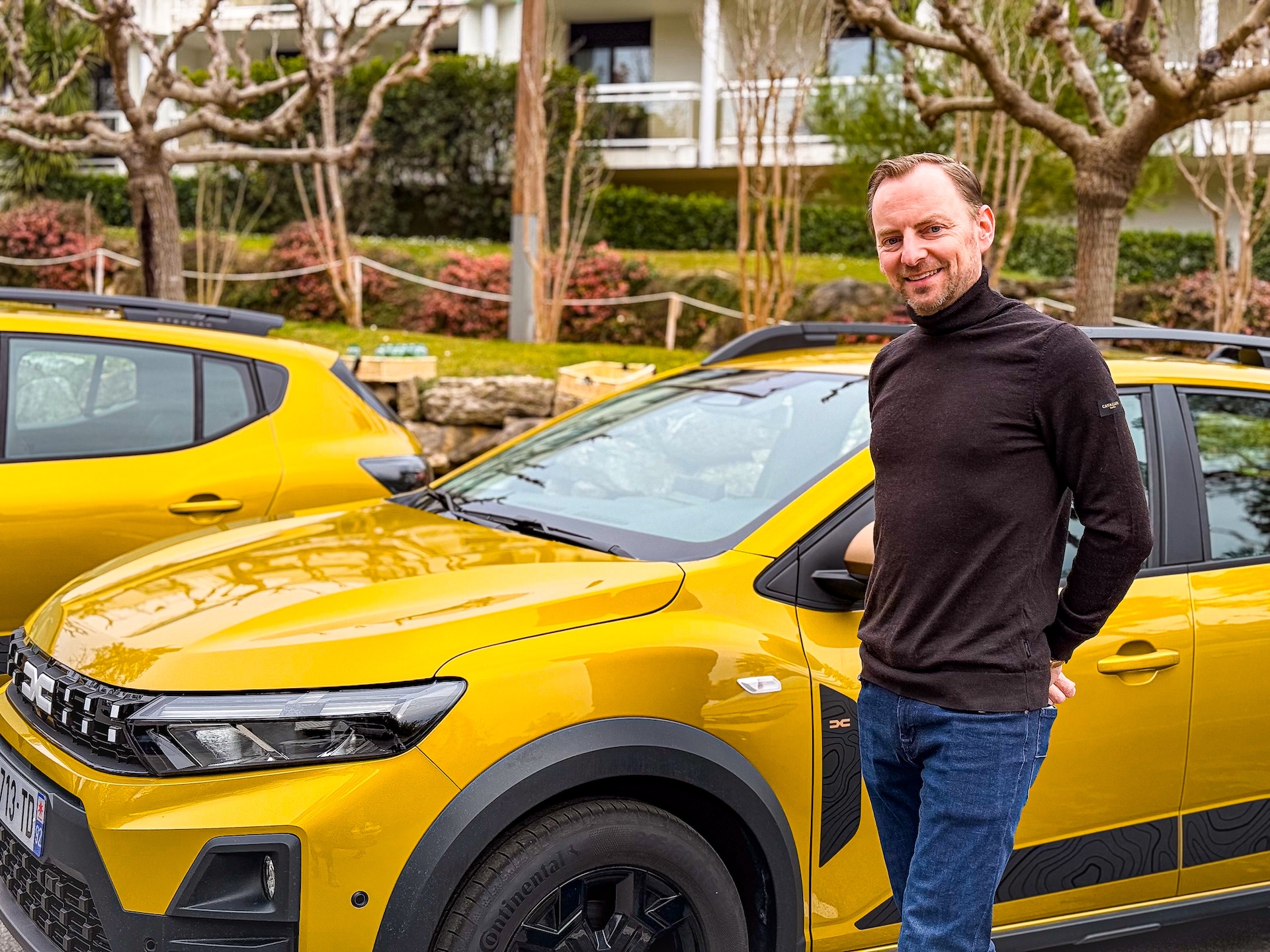
Previous interviews with Patrice Lévy-Bencheton, Vice-President Dacia Product Performance, already revealed that Dacia is developing this model under the code name C-NEO. The production name logically differs. According to Lévy-Bencheton, Dacia’s new C-segment model will come in between the Duster and Bigster, and its market launch will take place in 2027. Dacia would like to give the model an off-road look. Initial reports speak of a crossover-like car. That would be a logical choice, as the market demands it.
Dacia is reportedly aiming for a starting price of around 26,000 euros, but Blok can neither confirm nor deny that. “The C-segment is one of the most strategic segments on the European market, so it is important that we continue to grow in that segment, without losing sight of the B- and A-segments as well.”
New A-segment EV
A key pillar of Dacia is to further electrify its model range. “Within three years we will have a BEV in the main segments. That is, in the A-segment, B-segment and C-segment,” Blok says. Which models are in the pipeline, he is not yet allowed to tell. Looking at Dacia’s range, the Sandero and Duster are big hits. So don’t be surprised to see a Sandero Electric or Duster Electric. What Dacia has already confirmed is that there will be a new A-segment EV on the market, based on the new generation Renault Twingo. Technically, the differences are small. In design terms, on the contrary, they are big. Dacia’s car will have a completely different design, both inside and out. Count on the no-nonsense look of Dacia, with tough bumpers.
Specs Renault Twingo
The price is expected to be below that of the Twingo. So count on about 20,000 euros. For imaging purposes, the Renault Twingo is 3.79 meters long, has five doors, an electric motor with 52 kW (80 hp) and a whopping 360 liters of luggage space. Thanks to a 27.5 kWh LFP battery, the Twingo can travel up to 262 kilometers on a full charge of electricity. An AC 6.6 kW charger is included as standard with the Twingo, and an 11 kW AC charger and 50 kW DC charger are optional. By the way, the Renault Twingo E-Tech Electric costs 20,990 euros. The car then has sliding and folding rear seats, smartphone pairing via openR link and rear park assist. There is a choice of six colors.
Temporarily two A-segment EVs
The current generation Dacia Spring will remain in the lineup after the introduction of Dacia’s new A-segment EV, Blok can confirm. “They will remain side-by-side in the lineup first,” he explains. However, the Spring as we know it today is expected to disappear from the market, leaving the new small EV to have the A-segment realm alone. So Dacia will sell two A-segment EVs in early 2027. Cannibalism? There is no question of that, according to Blok. “We can offer a nice evolution to the target group. Within the Renault Group there will be diversification between the Twingo target group and the target group of the successor to the Spring.”
Dacia in five years
Where will Dacia be in five years? Blok: “We will have made a huge step by then, especially with what is coming in the future. We also have to do that with European regulations, because 2030 is a rock-solid deadline to expand the range with electric models. I think we can achieve very steady growth with the right models, looking at the success of the Bigster in the Netherlands, the brand awareness that continues to grow and the positive twist of our image. Dacia is becoming more and more mature. The quality of Dacia is also all over the place. The image is good and what also helps Dacia is the European regulations in the field of ADAS. As a result, Dacia models automatically benefit from all available ADAS within Renault Group. That has a huge positive impact on our brand, especially since we also want to stay very competitive in terms of price. Dacia has become a serious player in recent years and I see that development continuing to grow.”